
A Dutch oven does two things no other single pot does: it browns on the stovetop and then goes straight into the oven, and it holds a steady temperature through hours of low cooking. Almost everything worth making in one exploits one of those. The rest of what gets suggested is a large pot doing a large pot’s job. Our roundup of Dutch ovens covers choosing one.
Quick Answer
Braises, stews, soups, chili, and anything that starts with browning and finishes slowly. Cast iron versions also handle bread and hard searing. Coated pots cover the wet cooking and should skip the high-heat applications.
Key Points
- Stovetop-to-oven in one pot is the defining advantage.
- Braises benefit most, since they need both stages.
- Bread is a cast iron application, not a coated-pot one.
- Acidic dishes suit enamel and coatings, not bare iron.
- Deep frying works and is messier than it sounds.
What It Does Better Than Anything Else
Braises
Brown the meat, add liquid, cover, and move the whole thing to the oven. One pot, no transfer, and the browning stays in the dish rather than in a discarded pan. This is the application the pot was designed around, and it is the one that most clearly justifies owning one at all. A braiser handles a shallower version of the same job, and our guide on what to cook in a braiser covers where the wider, lower shape wins.
Stews and chili
Long low cooking with the lid on, where thermal mass keeps the temperature steady rather than cycling. Chili in particular benefits from the browning stage that a slow cooker skips, since the fond left on the bottom after searing dissolves into the sauce and is most of the depth in the finished dish.
Soups and stocks
A wide heavy pot holds a gentle simmer without scorching the bottom, which is the failure mode of a thin pan on a low burner. Thermal mass evens out the hot spot directly over the flame.
Beans and pulses
Hours at a low steady temperature, either on the stove or in the oven. Dried beans particularly suit the oven route, where the heat surrounds rather than comes from below, and where the temperature holds without adjustment.
What Depends on Your Material
Bread
The technique that made Dutch ovens popular with home bakers needs a very hot empty pot, which is a cast iron application. Coated pots should not be used this way. Our guide to choosing cast iron cookware covers why.
Hard searing
Cast iron holds enough heat to sear without the temperature crashing when meat goes in, which is the entire mechanism behind a good crust. Lighter coated pots drop temperature faster, so browning works and a hard crust is harder to get, particularly if the pan is crowded.
Acidic dishes
Tomato-heavy sauces and wine-based braises strip seasoning from bare cast iron over time. Enameled and coated pots handle them without complaint, which is why most long tomato cooking ends up in one of those rather than in a bare pan.
Deep frying
High sides contain splatter and thermal mass keeps oil temperature steady when food goes in, which is what prevents soggy results. Cast iron does this best, and coated pots are limited by their heat tolerance.
What I Actually Make in Mine
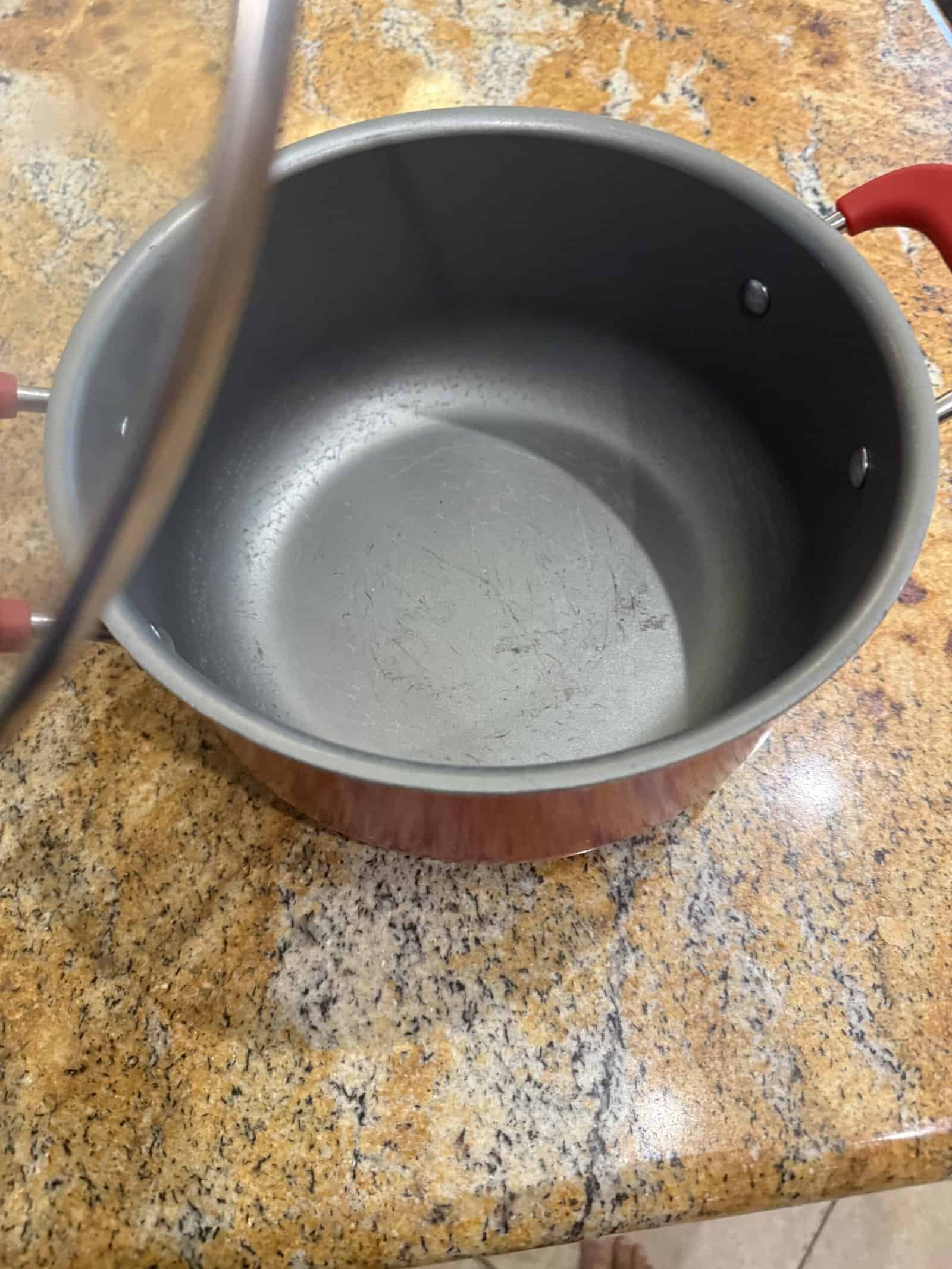
Mine is a coated pot rather than cast iron, and what goes in it is taco meat, sausage, that kind of thing. Browning ground meat and sausage over moderate heat, which is well inside what the pot is comfortable with.
Nothing has stuck or burned on, which is the coating doing its job. It also means cleanup is a rinse and the dishwasher rather than a soak, because there is no baked-on residue to deal with.
What I do not do in it is bread, and I would not, given what a long high-heat preheat does to a coating. That is the one genuinely popular Dutch oven application that owning the coated version closes off.
So my honest range is narrower than the pot’s range. The braises, the long oven cooks, the deep frying, those come from research rather than from things I have made in it. The pot could probably do more than I ask of it.
What Not to Bother With
Anything quick
Cast iron takes time to heat and time to cool, which makes it poor for anything needing fast temperature changes. A regular pan responds when you turn the burner down; a heavy pot carries on doing what it was doing for several minutes afterward.
Delicate fish
The heavy base and high sides make it awkward to get a spatula under a fillet, and the shape offers no advantage for something that cooks in minutes.
Boiling pasta
It works and it is heavier than it needs to be, and you will be washing a much larger pot. A stockpot is the right tool. Our comparison of Dutch ovens and stockpots covers the split.
Reheating small amounts
All that thermal mass has to be heated before the food is, which is slow and wasteful for one portion. A small pan or a microwave does the job in a fraction of the time and washes more easily afterward.
Getting the Most From It
Brown properly before adding liquid. The whole reason to use this pot rather than a slow cooker is that browning stage, and rushing it wastes the advantage. Work in batches if the base is crowded, since meat packed tightly releases moisture and steams instead of searing.
Do not overfill. A pot filled to the rim will not simmer gently and may boil over in the oven, and food needs room to move. Around two thirds is the usual working limit, which leaves headroom for the liquid to bubble without escaping.
Use the oven for long cooks rather than the stovetop where you can. Heat surrounding the pot cooks more evenly than heat from below, which is the difference that reduces scorching and removes the need to stir. A stovetop simmer concentrates heat at one point on the base, and that point is where things catch. Our comparison of slow cookers and Dutch ovens covers when to use which.
Related reading: our note on cleaning cast iron, our comparison of Dutch ovens and cast iron skillets, our roundup of Dutch ovens under fifty dollars, and a guide to enameled cast iron cookware.
Dutch Oven Cooking FAQ
What is a Dutch oven best for?
Anything that starts with browning on the stove and finishes slowly, which means braises above all, then stews, chili, soups, and beans. The defining advantage is going from burner to oven in one pot without transferring anything.
Can I bake bread in any Dutch oven?
Only cast iron ones. The technique needs a very hot empty pot, and that heat damages non-stick coatings. If bread is why you want one, the material matters more than the shape.
Can I use it for acidic foods?
Enameled and coated pots handle tomato, wine, and vinegar without issue. Bare cast iron loses seasoning to prolonged acidity, so long tomato braises are better made in a coated pot.
Is it good for deep frying?
Cast iron versions are excellent, since high sides contain splatter and thermal mass holds oil temperature when food goes in. Coated pots are limited by their heat tolerance, so check the manufacturer’s ceiling first.
Can I cook rice in it?
Yes, and it is not the tool’s strength. A heavy pot holds heat well after the burner goes off, which can overcook rice at the bottom during the resting period. A rice cooker or a lighter pan gives more control over exactly when cooking stops.
Do I need to brown first?
Not always, and it is usually the point. Browning creates the flavor base that makes a braise taste like a braise, and skipping it means you have essentially used an expensive slow cooker. If you are not going to brown, a slow cooker will do the same job with less washing up.
How full should it be?
Around two thirds at most. A pot filled higher will not simmer gently, may boil over in the oven, and leaves food no room to move as it cooks.
Stovetop or oven for long cooks?
The oven, where the heat surrounds the pot rather than coming from below. That cooks more evenly and dramatically reduces the chance of scorching the bottom, which is the usual failure on a stovetop simmer.
Recommended Reading
See our note on choosing the right cookware.
