
Reservoirs are sized for several brews, and most people either top up every morning or fill to the line and forget about it. Both work, and the trade between them is not what people assume.
Filling full is convenient and leaves water sitting for longer. Filling small means fresher water and more refills. Neither is wrong, and which suits you depends on how often the machine actually gets used. Our roundup of single-serve coffee makers covers the machines.
Quick Answer
Fill to just under the maximum line and use it within a few days. Leaving water for a week or more encourages growth in the reservoir, and running the machine near empty risks air in the pump.
Key Points
- Just under the line avoids spills when moving the tank.
- Water sitting for a week is the practical limit.
- Running dry can draw air into the pump.
- Filtered water reduces the scale that ends these machines.
- Emptying for a holiday matters more than daily habits.
Why Not Right to the Top
Reservoirs have a maximum line and most tanks lift out for filling, which means anything above the line sloshes over the edge on the way back to the machine.
A little under the line holds essentially the same amount and stays where it belongs. The difference in brews is negligible and the difference in wiping the counter every morning is not.
Some models also have an internal overflow path that only works below a certain level, which is another reason the line exists. Our note on choosing a coffee maker covers tank designs.
How Long Water Should Sit
Water standing in a plastic tank at room temperature is a reasonable environment for growth, particularly where light reaches it through a clear-sided reservoir. A few days is unremarkable and a couple of weeks is not.
The practical rule most people arrive at is filling what you will use in three or four days and refreshing rather than topping up indefinitely. Topping up a tank that never fully empties means some of the water is always old, which is the version of this problem nobody notices because the level never looks low.
If a machine sits unused for a week or more, empty the reservoir and let it dry. Refilling with fresh water costs nothing and removes the question. Our note on descaling a coffee maker covers the related maintenance.
How I Do It
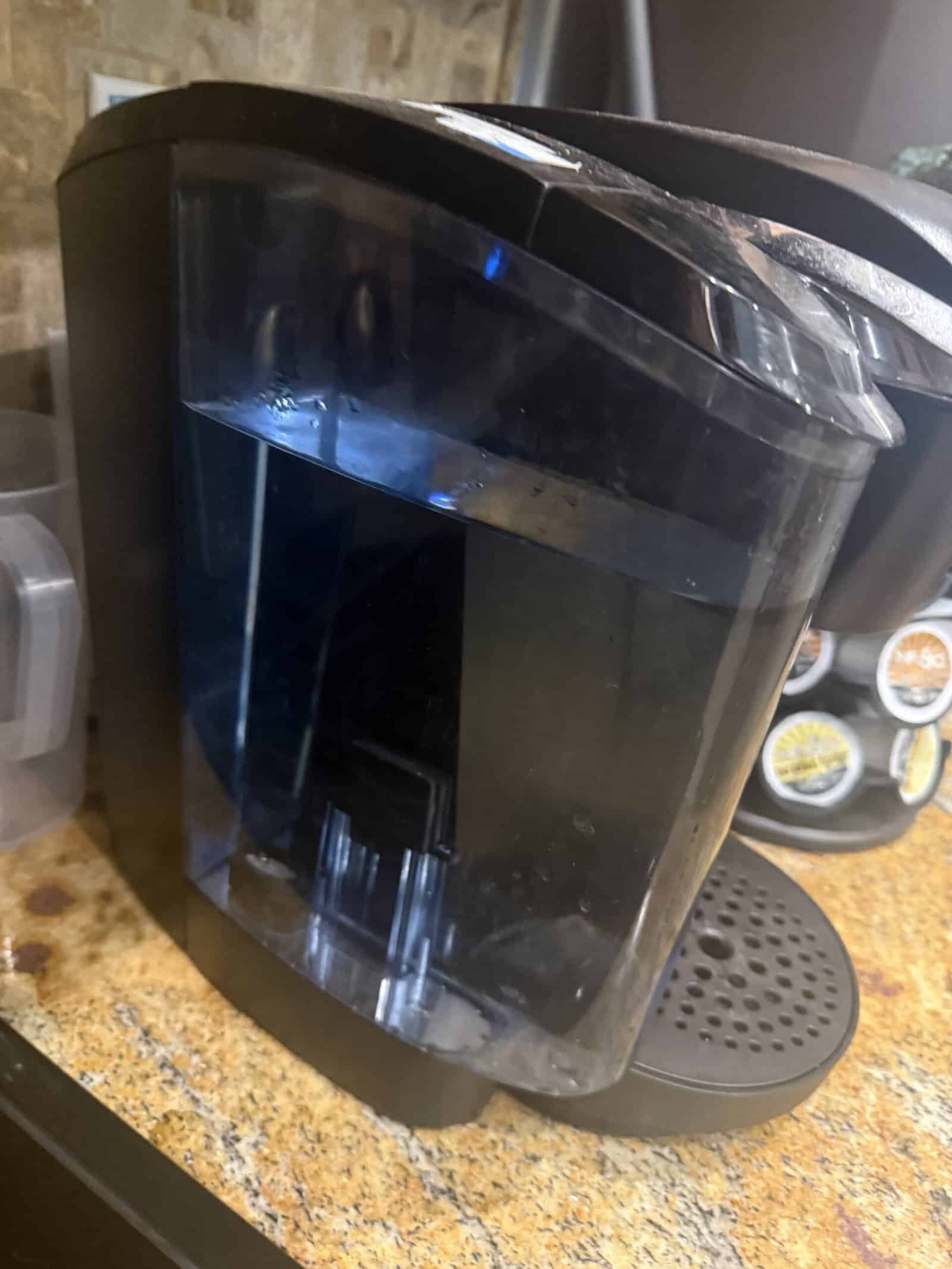
I fill mine a little bit under the top. That is not a considered decision about water freshness, it is that filling to the very top means carrying a full tank back to the machine and losing some of it on the way.
It gets used daily, so the water does not sit long enough for the standing-water question to come up in practice. The tank turns over on its own simply because the machine is in regular use, which is the situation most daily coffee drinkers are in.
Three machines in over the years and this has been the same routine each time. Fill under the line, brew, repeat, and refill when it gets low rather than tracking anything.
What I would say is that the fill level matters far less than what you put in it. Water quality is what determines how long these machines last, and the amount in the tank on any given morning does not.
Running It Low
Most machines detect a low reservoir and refuse to brew, which is a protection rather than an inconvenience. Pumps are designed to move water and pushing air through one is not good for it, which is why the machine stops rather than trying.
A machine that brews a short cup and stops has usually run out mid-brew, and the fix is refilling and running a cleansing brew without a pod to clear the line. The pod in the holder at that point is spent and should be thrown out rather than rebrewed.
Repeatedly running to empty is worth avoiding, though a single occurrence is not a problem. Our note on coffee makers under seventy-five dollars covers pump failure.
Cleaning the Reservoir
Tanks come out on most machines and wash with warm soapy water, which is worth doing periodically rather than only when something looks wrong.
Slime or a film on the inner walls is biofilm, and it forms in any container holding standing water. A soft cloth or bottle brush removes it, and abrasives scratch plastic in ways that give it more surface to form on next time.
Most reservoirs are not dishwasher safe, since heat warps the plastic and can distort the seal where the tank meets the machine. The manual specifies, and hand washing is the safe default when it does not.
Drying with the lid open rather than reassembling wet is the part people skip, and it matters more than the washing itself. Our note on choosing a water filter covers what goes in afterward.
Water Quality Matters More Than Level
Mineral content is what builds scale inside the machine, and scale is what narrows the water path until a brewer stops pushing water through at all. That is the most common way these machines end, and it happens gradually enough that nobody notices until it is finished.
Filtered water reduces that considerably, which in a hard-water area is the single highest-value habit available. Many machines also take a small charcoal filter in the reservoir, which addresses taste and does less for scale than a jug filter does.
Distilled water is generally not recommended, since some machines rely on mineral content for their water level sensors and will not read an empty or full tank correctly. Our roundup of water filter pitchers covers the options.
Going Away
Empty the reservoir before any absence longer than a few days, and leave the lid open so it dries rather than staying damp in a closed tank for a week.
Running a cleansing brew without a pod on your return clears whatever sat in the internal lines while you were away, which emptying the visible reservoir does not reach at all.
For longer storage, emptying the internal tank as well is worth doing, since water sits in there regardless of what the visible reservoir shows. The procedure varies by model, so the manual is the reference rather than a general instruction.
Keurig Reservoir FAQ
Should I fill the reservoir to the top?
Just under the maximum line is the practical level, since removable tanks spill on the way back to the machine when filled to the brim. The capacity difference is negligible.
How long can water sit in the reservoir?
A few days is unremarkable. Beyond a week, standing water in a plastic tank at room temperature is worth replacing rather than topping up, since topping up means some of the water is always old.
Is it bad to run the machine empty?
Most machines detect a low tank and stop before it matters, which protects the pump from drawing air. A single occurrence is not a problem, and doing it repeatedly is worth avoiding.
Should I use filtered water?
In a hard-water area it is the most useful thing you can do, since mineral scale is what eventually stops these machines brewing. It also improves taste, which is the secondary benefit rather than the main one.
Can I use distilled water?
Generally not recommended, since some machines use mineral content to read the water level and will not detect the tank correctly without it. Filtered tap water is the usual recommendation.
Does the reservoir filter do much?
The small charcoal filter mainly addresses taste by reducing chlorine. It does less for mineral scale than a jug filter, so it is not a substitute for filtered water in a hard-water area.
Should I empty it when I go away?
For anything longer than a few days, yes, and leave the lid open to dry. Running a cleansing brew without a pod when you return clears the internal lines, which emptying the tank does not reach.
Why does my machine say add water when the tank is full?
Usually a sensor or seating problem rather than an actual water level issue. Removing and reseating the tank solves it often, and persistent errors can indicate scale affecting the sensor or a fault.
Recommended Reading
See our note on choosing the right coffee grinder.
