
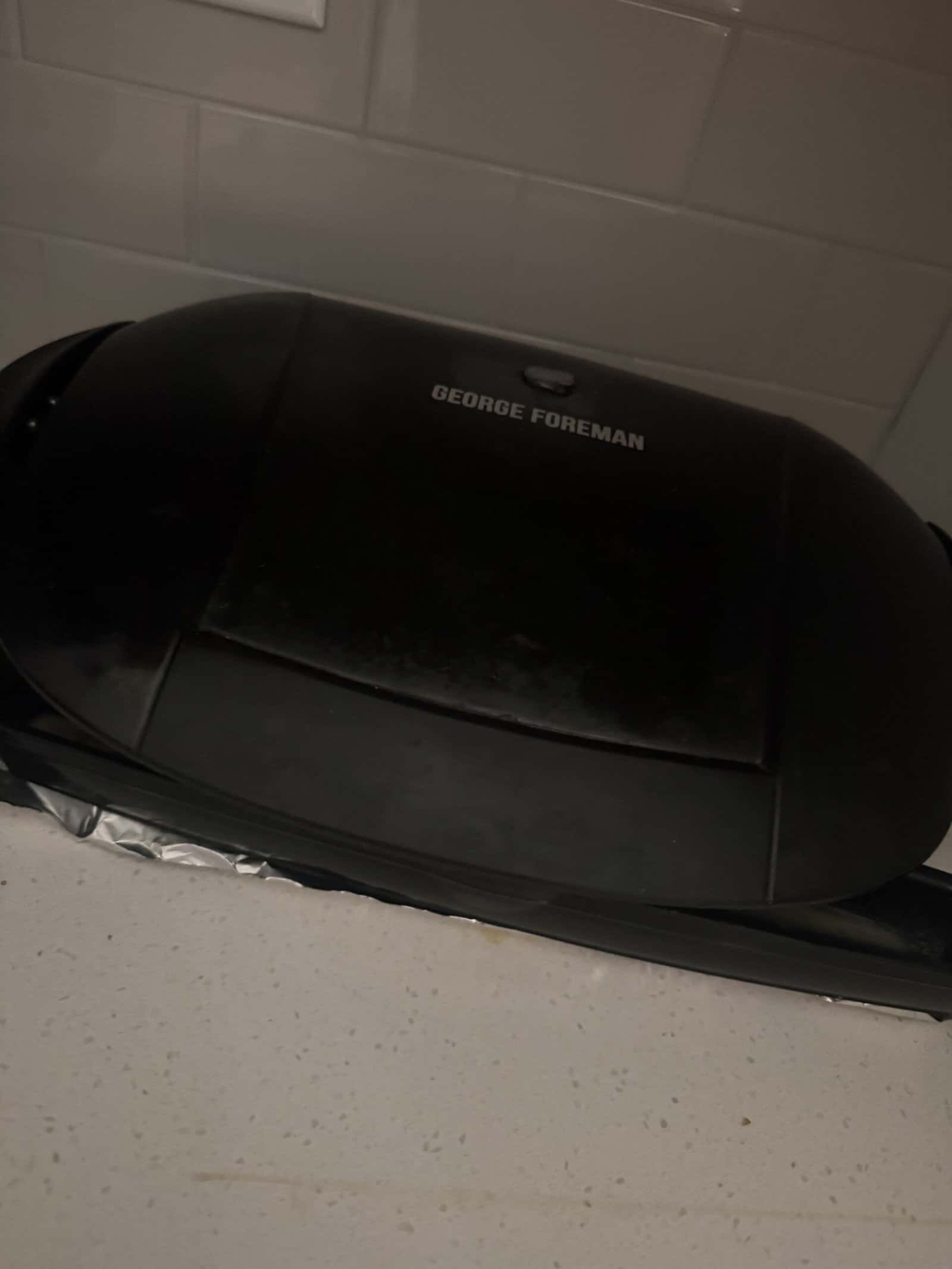
An indoor grill will brown a steak. Whether that counts as searing depends on what you expect from the word, and the honest answer is that it gets close enough to be worth using without matching what a heavy skillet does.
This covers what actually happens on the surface, the technique that improves the result, and where the limits sit. Our roundup of indoor grills covers the units themselves.
What Searing Actually Requires
| Factor | Why it matters |
|---|---|
| Surface temperature | Browning reactions need real heat |
| Thermal mass | Holds temperature when cold meat lands |
| Contact area | Ridges touch less than a flat surface |
| Dry surface | Moisture steams before it browns |
| Recovery speed | How fast heat returns after a drop |
| Ventilation | Determines how hot you can run it indoors |
Ridges Change the Geometry
A ridged grill surface touches meat along raised lines rather than across the whole face, which is the central difference between a grill and a skillet.
Those lines get hot contact and brown quickly. The valleys between them sit slightly off the surface and brown far less, which is where grill marks come from in the first place.
The visual result is attractive and the flavor result is partial, because a large share of the surface never makes firm contact with anything.
A flat skillet gives every square inch of the underside the same contact, which is why the crust comes out continuous rather than striped.
Neither is wrong. They are producing different things, and knowing which you want makes the choice straightforward. Our comparison of grill pans covers the stovetop version of the same tradeoff.
Moving the Steak Is What Fixes It
Flip more than once
Repeated flipping spreads contact across the face.
Shift position between flips
New ridges meet new parts of the surface.
Do not chase the perfect mark
Leaving it still gives lines, not coverage.
Watch the edges separately
They never touch the surface lying flat.
How I Actually Cook Steak on Mine
I flip and move the steak quite often rather than setting it down and leaving it, which means the browning ends up spread across the whole face instead of sitting in stripes where the ridges were.
That runs against the usual advice to leave meat alone for clean grill marks. I would rather have the surface browned properly than have four neat lines and pale meat between them.
For the edges I use tongs to stand the steak up on its side and hold it there. Nothing about a flat grill surface will brown the sides otherwise, since they simply never touch anything.
That step takes a few seconds per edge and it is the difference between a steak browned on two faces and one browned all the way around.
Butter and garlic go on during cooking, which our guide on basting a steak with butter covers in more detail than belongs here.
Where Cast Iron Is Better
Cast iron makes a noticeably better steak, and there is no point pretending otherwise.
The crust is continuous rather than striped, because the whole underside meets hot metal at once instead of meeting raised lines.
Thermal mass is the other half of it. A heavy skillet holds its temperature when cold meat lands on it, while a lighter surface gives up heat faster and takes longer to recover.
That recovery gap is where steaming happens. A surface that drops too far cooks the meat in its own released liquid for a while before browning resumes.
Anyone whose priority is the best possible steak should reach for the skillet. Our roundup of cast iron skillets and our guide on cooking steak on the stove both cover that route.
Thermal Mass Explains Most of the Gap
The single biggest difference between the two surfaces is not temperature but how much heat the surface is holding when the meat arrives.
A heavy skillet stores a large amount of energy across its mass, so a cold steak barely moves its temperature and browning starts immediately.
A lighter grill plate stores much less, so surface temperature drops on contact and has to be replenished by the element underneath.
During that dip the meat releases liquid faster than the surface can boil it off, and the steak sits in it for a moment rather than browning.
This is also why a second steak cooked immediately after the first frequently comes out better, since the surface has fully recovered by then.
Where the Indoor Grill Wins Anyway
Convenience is the honest argument for it, and convenience decides what gets cooked on a weeknight.
There is no preheating a heavy pan, no managing a burner, and considerably less spitting fat across a cooktop.
Cleanup is usually simpler, particularly on units with removable plates, and that alone changes how often something gets used.
Fat drains away from the meat rather than pooling around it, which some people prefer on flavor grounds and others prefer on other grounds.
A steak cooked on a weeknight beats a better steak that never got cooked, and that is not a small consideration. Our note on whether indoor grills are worth it weighs the broader case.
Getting the Best Out of It
A few things move the result more than the equipment does.
Dry the surface of the meat thoroughly before it goes down. Surface moisture has to boil off before browning starts, and that wastes both heat and time.
Let the grill reach full temperature before the steak touches it. Putting meat on a surface still climbing to temperature is the most common reason a steak comes off gray.
Do not crowd the surface. Two steaks pressed together trap steam between them and cook each other’s facing edges.
Thickness matters more than most people expect. A thin steak overcooks through the middle before any surface develops, which no amount of technique fixes.
Rest the meat after cooking regardless of which surface it came off. Our roundup of tools for cooking steak covers tongs and thermometers.
Choosing Between Them
Cast iron for the result
Continuous crust, better browning, more control.
Indoor grill for the frequency
Faster setup, easier cleanup, less mess.
Thick cuts favor the skillet
Thermal mass matters more as thickness rises.
Either works with good technique
Dry surface, full heat, and movement matter most.
Common Mistakes to Avoid
Leaving the steak still for clean marks
Neat lines come at the cost of pale meat between them. Moving it browns the whole face.
Forgetting the edges entirely
The sides never touch a flat surface. Stand the steak up with tongs to reach them.
Starting before the surface is hot
Meat on a surface still heating up releases liquid and steams instead of browning.
Expecting skillet results
Ridged contact and lower thermal mass produce a different crust. That is the design, not a fault.
Recommended Reading
See our guide on choosing an indoor grill, our note on what to cook on one, our comparison of indoor grill versus air fryer, our roundup of meat thermometers, and our guide to cleaning an indoor grill.
Indoor Grill Searing FAQ
Do indoor grills really sear?
They brown meat, though contact happens along raised ridges rather than across the whole surface. Whether that qualifies depends on what you expect from the word.
Why is my steak only browned in stripes?
That is the ridges doing their job. Flipping and shifting position between flips spreads browning across the face.
How do I brown the sides?
Stand the steak on its edge with tongs and hold it there. Lying flat, the sides touch nothing.
Is cast iron better for steak?
For the result, yes. Continuous contact and higher thermal mass give a better crust. The indoor grill wins on convenience instead.
Why does my steak steam instead of browning?
Usually surface moisture, a surface that has not reached full heat, or crowding. Dry the meat and give it room.
Does an indoor grill work for thick cuts?
It struggles more as thickness rises, since thermal mass matters more. Thin steaks have the opposite problem and overcook through before any crust forms.
Should I press the steak down?
Pressing squeezes out liquid that would otherwise stay in the meat. Contact improves more from moving the steak than from forcing it down.
Do I still need to rest the meat?
Yes, and it makes the same difference regardless of what the steak was cooked on.
