
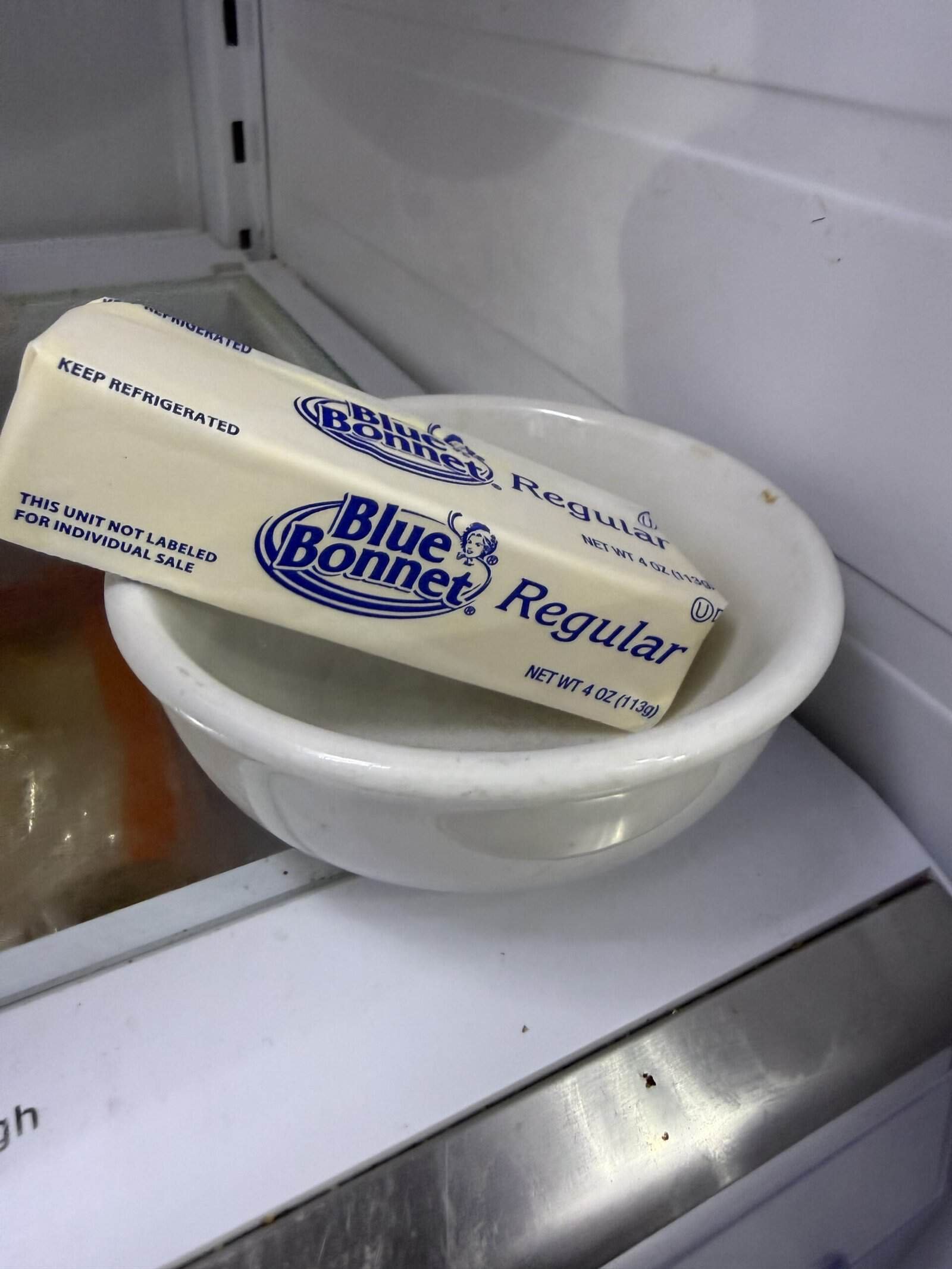
Salted butter can sit out for one to two days safely at normal room temperature, and many people go longer without incident, but the failure mode is rancidity rather than food poisoning. How long butter can sit out depends on salt content, light, air and how warm your kitchen actually gets, which is why the same butter dish behaves differently in two houses.
| Situation | How long out | What limits it |
|---|---|---|
| Salted, covered, cool kitchen | A day or two comfortably | Rancidity over time |
| Salted, covered, warm kitchen | Shorter, and it softens badly | Heat and oxidation |
| Unsalted butter | Shortest, refrigerate it | No salt to inhibit growth |
| Uncovered on a plate | Hours before it degrades | Air and light |
| Whipped or spreadable blends | Refrigerate, they contain water | Added liquid |
| Butter crock with water seal | Longest, if water is changed | Water going stale |
Quick Answer
The USDA advises refrigerating butter and limiting time at room temperature to a day or two. Salted butter kept covered in a cool kitchen tolerates that easily. Unsalted butter, whipped butter and anything in a hot kitchen should go back in the fridge, and the honest reason to be careful is flavor going off rather than anything dramatic.
Why Butter Is More Forgiving Than Most Dairy
Butter is mostly fat with very little water, and bacteria need water to grow. That is the whole reason it behaves differently from milk or cream on a counter.
Salt adds a second layer, since it lowers water activity further and inhibits growth in the small amount of moisture that is present.
What does happen over time is oxidation. Fat exposed to air and light goes rancid, which is a chemical change rather than a microbial one, and it produces that stale crayon smell people recognize without being able to name.
Rancid butter is unpleasant rather than dangerous. That distinction is why the advice varies so widely between sources and between your grandmother and a government agency.
What My Butter Dish Actually Does
Mine is a small bowl rather than the flat rectangular tray most people picture when they hear butter dish. It holds the butter, it has a lid, and that is the extent of it.
The part that surprises people is that I barely ever leave butter out at all. It lives in the fridge, and that is where it stays the overwhelming majority of the time.
When I do leave it out, one to two days is my limit, and I never do it in summer. That is not a rule I read anywhere, it is just where I landed, and it happens to match what the USDA advises.
So the dish is not a room-temperature station for me. It is where the butter sits while it is actively in use, and then it goes back. Our roundup of butter dishes covers the shapes, including the crocks built for the opposite approach.
That also means I cannot tell you what a week on the counter does, because I have not done it. The long-storage half of this page is research rather than something I have lived.
Salted Versus Unsalted Changes the Answer
Salted butter is the one that tolerates counter storage. The salt content in standard salted butter is meaningful enough to suppress growth in the trace water present.
Unsalted butter has none of that protection, which is why baking butter should stay refrigerated. It also picks up fridge odors more readily, so keep it wrapped.
Whipped and spreadable butters are a separate category again. Whipping incorporates air and many spreadable blends contain added water or oil, both of which change the calculation and push them back to the fridge.
Cultured butter sits somewhere in between, since fermentation lowers pH, though the sensible default is still refrigeration.
Covered Beats Uncovered by a Wide Margin
Air and light do most of the damage, so a lid matters more than the shape of the dish.
An uncovered stick on a plate develops a darker, harder surface within hours. That surface is oxidized fat, and while you can scrape it off, it tells you what is happening to the rest.
Ceramic and opaque dishes outperform clear glass for this reason, since they block light as well as air.
A butter crock with a water seal is the most protective option, because the butter sits inverted in a bell submerged in water and never meets air. It only works if you change the water every few days, and a neglected crock is worse than a plain lid.
Room Temperature Is Doing a Lot of Work in That Phrase
Most guidance assumes a kitchen around the low seventies Fahrenheit. Plenty of kitchens are not.
A hot kitchen in summer without air conditioning turns a stick to liquid at the edges, and softened butter that re-firms has a grainy texture that never quite comes back.
Near a stove, above a dishwasher, or in direct afternoon sun are all worse than the room average suggests. Where the dish sits matters as much as the season.
If your butter is visibly soft to the point of slumping, the room is telling you it is too warm for counter storage regardless of the calendar.
My own rule is simply not to leave it out in summer, which in a hot climate takes the decision away entirely. Winter counter storage and summer counter storage are not the same practice, even in the same kitchen with the same dish.
How to Tell When It Has Gone
Smell first. Rancid butter smells sharp, waxy or faintly like old cheese, and the change is obvious once you know it.
Look at the color. A yellower or darker outer layer against paler butter underneath is oxidation working inward from the surface.
Taste a small amount if smell and look are ambiguous. Rancidity is unmistakable on the tongue and harmless to test in a small quantity.
Actual mold, in contrast, means the whole thing goes. That usually indicates contamination from a knife rather than age, which is a good argument for not double-dipping a buttery knife back into the dish after it has touched bread.
Where the Rest of the Fridge Comes Into It
Butter absorbs odors readily, which is the other reason wrapping matters. An unwrapped stick next to onions or leftovers picks both up within a day.
Strong-smelling produce is the usual culprit, so keeping it contained helps the whole shelf rather than just the vegetables. Our roundup of produce savers covers those.
Freezing works well for butter and is underused. Wrapped tightly, it keeps for months without meaningful change, so buying on offer and freezing the surplus is straightforward. Our roundup of food storage containers covers what to wrap it in.
Worth reading next: how long food lasts in the refrigerator for the rest of the dairy shelf, how to store bread since the two usually sit together on a counter, and refrigerator organizer bins if the shelf itself is the problem.
Butter Storage FAQ
How long can butter sit out?
The USDA advises limiting butter to a day or two at room temperature. Salted butter kept covered in a cool kitchen handles that comfortably, and many households go longer. The limiting factor is rancidity from air and light rather than bacterial growth.
Does butter need to be refrigerated?
It keeps far longer refrigerated, and unsalted, whipped and spreadable butters should be. Salted butter can live on a counter for short periods if it is covered and the kitchen is cool. I own a butter dish and still keep mine in the fridge nearly all the time, which is a perfectly normal way to do it.
Can butter go bad on the counter?
Yes, but usually by going rancid rather than by becoming unsafe. Rancid butter smells sharp or waxy and tastes obviously off. Visible mold is different and means discarding the whole piece, and it usually comes from a contaminated knife rather than from age.
Is salted butter safer to leave out than unsalted?
Considerably. Salt lowers water activity and inhibits growth in the small amount of moisture butter contains. Unsalted butter has no such protection and also absorbs fridge and kitchen odors more readily, so it belongs refrigerated.
Does a butter crock let you leave it out longer?
Yes, when maintained. The butter sits inverted in a bell submerged in water, so it never contacts air, which is what causes rancidity. The catch is that the water must be changed every few days, and a neglected crock is worse than a simple covered dish.
Why does my butter go soft and greasy in summer?
Because the room is warmer than the guidance assumes. Butter that partially melts and re-firms develops a grainy texture that does not fully recover. If it slumps in the dish, move it to the fridge until the kitchen cools down.
Can you leave whipped butter out?
Better not to. Whipping incorporates air, and many spreadable products contain added water or oil. Both change the storage picture, and the manufacturer’s instruction is nearly always to refrigerate.
What is the best way to store butter you use daily?
Keep the bulk in the fridge and one stick in a covered dish for current use. That gets you spreadable butter when you want it without leaving a pound of it exposed to air for weeks.
Sources
- United States Department of Agriculture, Food Safety and Inspection Service, guidance on dairy storage and room-temperature limits.
- Food and Drug Administration, consumer guidance on refrigerated food storage.
