
I have a dog, carpet in the bedrooms, and one big low pile rug over hardwood. All of it gets vacuumed every 2 to 3 weeks, and shedding is part of why. What none of it gets is a carpet cleaner, because I do not own one.
A carpet cleaner pushes solution into the pile, agitates it, then pulls the dirty water back out with suction, and that second half decides your result. The best carpet cleaners split into six distinct machine types, and picking the right type matters more than picking a specific unit. Most people shop for one after dry vacuuming stops helping, so shore up that routine first with a capable cordless vacuum for apartments.
Water in, water out, air across the fibers. Nearly every carpet cleaning disappointment traces back to one of those three steps going wrong.
Extraction does the cleaning work, not detergent, so suction-only passes matter more than any formula on the shelf. Over-wetting causes the rest: slow drying, odor, and dirt wicking up from the backing. Tank size decides how often you stop, brush stiffness must match your pile height, and some machines only scrub without recovering water.
How We Picked
We compared machine categories rather than individual units, because model lineups turn over constantly while the underlying designs stay stable. Each section below describes one type and what it does well, and you then shop that type using the search link provided.
We ranked the categories on four things: how completely they recover water, how much area they cover before refilling, how long carpet stays damp, and how they handle different pile heights.
Pile height deserves an early mention because it changes which machine helps. If your soft flooring is mostly rugs, a small machine plus durable low pile rugs for high traffic solves more with less equipment.
The Short Version
Upright deep cleaners suit whole rooms and wall-to-wall carpet. Portable spot cleaners handle individual accidents and cost far less. Low-moisture systems suit anyone who cannot wait a day for drying. Choose by the area you clean most often, then by how fast the carpet must be walkable.
The Carpet Machine I Do Not Own, and What I Use Instead
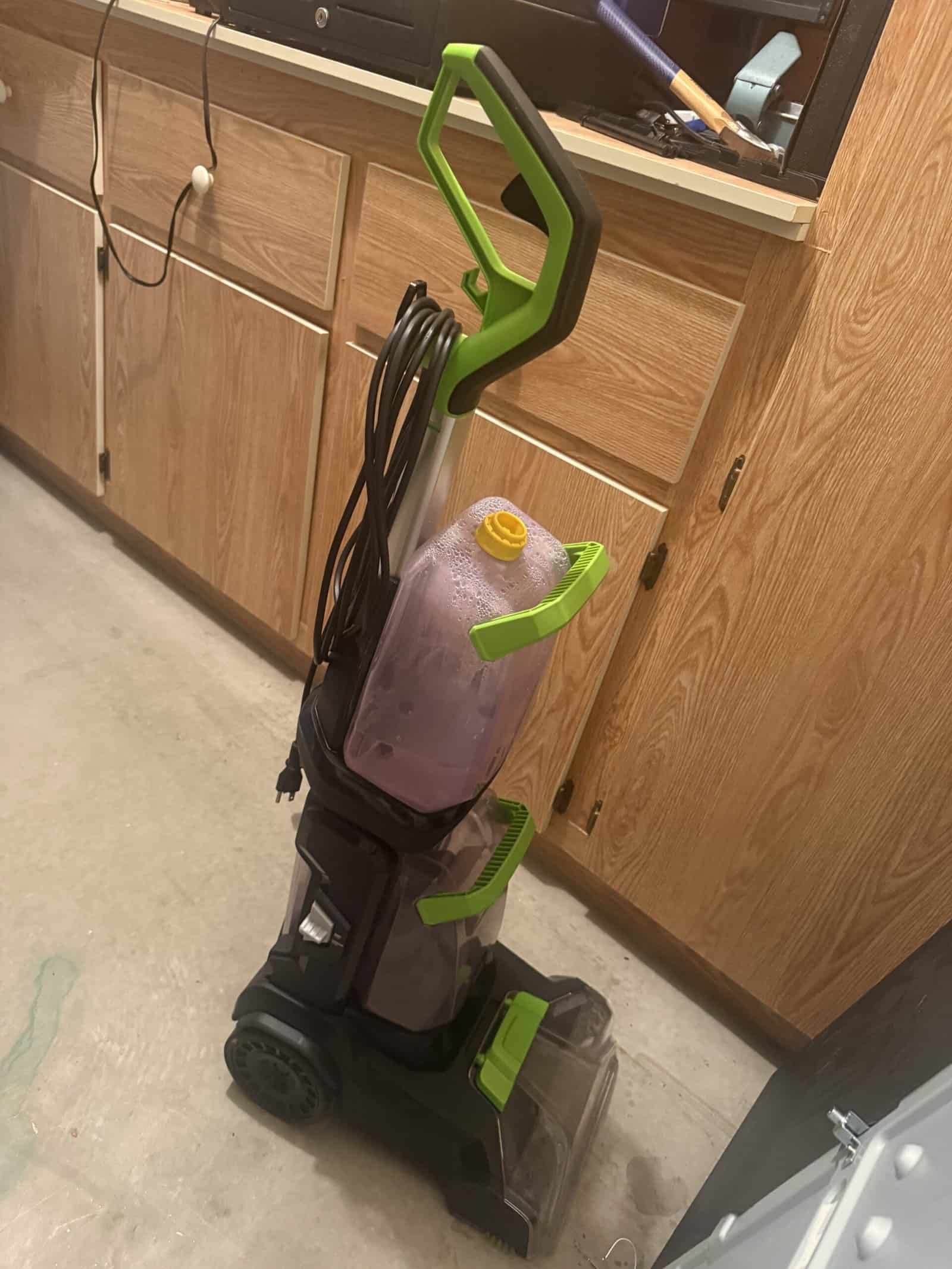
Three machines cover the floors. A full-size corded upright, bagless, goes over the whole floor. A cordless handheld with a crevice tool and a hose comes out reactively, and a steam mop handles the hardwood.
The upright is three to five years old, and the handheld is a year or two old. The smaller tool answers a narrower question, which is what a handheld vacuum is good for.
The steam mop stays on the hardwood, never on the bedroom carpet and never on the rug. It has run there for years, and the finish shows a little cloudiness. Steam belongs on sealed hard flooring, and carpet sits outside what the tool does.
Carpet only exists in the bedrooms. One very large low pile rug covers part of the hardwood, with the coffee table on it and nothing else. No rug pad sits under it, and hardwood stays visible around the edges.
A big rug held down by furniture behaves nothing like a small loose one. That gap is the whole argument over rug pads on hardwood floors.
The numbers are small. I vacuum every 2 to 3 weeks, not weekly and not on a schedule. The handheld comes out a couple of times a week, when I notice something rather than by routine.
One friction comes with the upright. The noise scares my dog.
Now the part that matters below. I do not own a carpet extractor, a spot cleaner, or a steam cleaner. With carpet in the bedrooms only, I cannot compare these machines from use. The six sections that follow are research.
1. Upright Deep Cleaners for Whole-House Carpet
Why It Stands Out
The full-size upright is the default for wall-to-wall carpet. It carries separate solution and recovery tanks, drives a powered brush roll, and pulls water back through a wide nozzle. That width lets you finish a room without stopping, which matters because disconnected patches leave visible overlap lines.
Worth Knowing
These machines are heavy, and they get heavier as the recovery tank fills. Stairs and tight corners are awkward, and storage takes real closet space.
Over-wetting is the other risk, since a wide nozzle drives a lot of water into the padding. Recovering it takes patience.
Best for: Homes with wall-to-wall carpet across multiple rooms, where coverage per hour is the priority. Skip it if your soft flooring is mostly area rugs in the living room.
2. Portable Spot Cleaners for Individual Stains
Why It Stands Out
Spot cleaners are small tanks with a hose and a hand tool, built for one mess at a time. You carry the machine to the stain instead of dragging a full upright across the house. Setup takes seconds, and that speed is the real advantage, since fresh spills respond far better than set stains.
Worth Knowing
Coverage is tiny. Cleaning a whole room with a spot machine means dozens of refill trips, and the tank feels small within minutes.
Hand tools also apply less agitation than a powered brush roll. Ground-in traffic lanes need more mechanical action than a small nozzle delivers, so treat these as stain tools. For fabric that comes off the floor, a laundry stain remover works better.
Best for: Households with occasional spills and rental apartments that want a fast response tool. Skip it if you plan to clean full rooms.
3. Compact Carpet and Upholstery Machines for Pet Messes
Why It Stands Out
Pet-focused machines sit between a spot cleaner and an upright. They pair a compact main unit with a hose, a crevice tool, and an upholstery head, so carpet, stairs, and furniture all get covered. Odor handling is the other draw, because repeated flush-and-extract passes remove far more residue than blotting.
Worth Knowing
Hair is the enemy of these machines. Fur collects around the brush and inside the recovery path, and buildup creates the same problem that makes a vacuum smell bad. Rinse tanks and tools after every session.
Urine that reached the subfloor is beyond any surface machine. Extraction pulls what sits in fibers and padding, nothing deeper.
Best for: Pet households dealing with accidents on carpet and upholstery. Skip it if you want a machine you can ignore between uses.
4. Low-Moisture and Dry-Compound Systems for Fast Drying
Why It Stands Out
Low-moisture systems use very little water, and dry-compound systems use almost none. Compound methods spread absorbent material into the pile, agitate it so it grabs soil, then vacuum it out. Carpet stays walkable in a fraction of the usual time, which suits rooms with no airflow and humid basements.
Worth Knowing
These systems clean the upper pile well and reach deep soil less effectively than wet extraction. Heavy traffic lanes may need a wet machine eventually.
Compound residue is the other consideration. Skip a thorough vacuum afterward and granules stay in the pile, then show up on socks. Plan several slow passes with a machine that handles carpet properly.
Best for: Renters, humid rooms, and anyone who needs the floor usable within a couple of hours. Skip it if your carpet carries years of ground-in traffic soil.
5. Deep Cleaners With Built-In Water Heating
Why It Stands Out
Heated machines warm the solution on its way to the nozzle, or hold tank temperature longer than an unheated unit would. Warmer water loosens oily soil more readily. Tap water also cools fast in a plastic tank, so heating keeps the last pass closer to the first.
Worth Knowing
On-board heating is a modest boost, not a transformation. Most units warm water by a limited amount rather than producing steam.
Heat also does not excuse over-wetting. Warm water still has to come back out, and a heated machine used carelessly leaves the same soggy padding. For real steam on hard surfaces, use a steam mop.
Best for: Carpet with oily or greasy soil and high-traffic entry areas. Skip it if your main need is fresh spills.
6. Multi-Surface Wet Cleaners That Also Handle Hard Floors
Why It Stands Out
Multi-surface machines wash and vacuum at the same time, on carpet and on sealed hard floors. One unit replaces a mop bucket and a small carpet machine, which suits mixed flooring. Dirty water goes into a separate tank rather than back onto the floor.
Worth Knowing
Carpet performance is the compromise. A roller built to glide across tile cannot agitate deep pile, so treat this as maintenance cleaning rather than restoration.
Transitions need care too. Wet rollers moving from tile onto a rug push moisture where you do not want it, which is how backing stains appear. Good rug pads for hardwood floors keep damp backing off the finish.
Best for: Mixed-flooring homes that want one machine for routine cleaning. Skip it if heavily soiled carpet needs restoring.
Best Carpet Cleaners at a Glance
| Machine Type | What It Is Good At | The Tradeoff |
|---|---|---|
| Upright deep cleaner | Whole rooms per session, strong brush agitation | Heavy, awkward on stairs, easy to over-wet |
| Portable spot cleaner | Fast response on fresh spills, easy storage | Tiny tank, limited agitation, not for full rooms |
| Carpet and upholstery for pets | Tool variety for stairs, furniture, and accidents | Hair clogs the recovery path, needs cleaning after use |
| Low-moisture or dry compound | Shortest drying time, safe in humid rooms | Less reach into deep soil, residue if under-vacuumed |
| Built-in water heating | Better on oily and greasy soil, steadier temperature | Modest gain, no help with over-wetting |
| Multi-surface wet cleaner | One machine for carpet and sealed hard floors | Weakest carpet agitation of the six types |
What to Look For in the Best Carpet Cleaners
How Well Does the Machine Recover Water
Recovery capability is the most important feature, and it gets the least attention. A machine that lays down solution well but leaves padding wet makes your carpet dirtier in the long run, because trapped moisture pulls soil from the backing up to the surface as it dries. Judge recovery by suction-only passes, since good units keep pulling visible water after the trigger is released.
How Big Are the Clean and Dirty Water Tanks
Tank capacity decides how often you stop, and stopping is where sessions die. Small tanks are fine for spots and miserable for whole floors, since every refill means a trip to the sink. Check both tanks too, because a large solution tank paired with a small recovery reservoir still stops you constantly.
What Brush Roll Suits Your Pile Height
Brush design has to match the carpet. Stiff bristles cut through dense low-pile carpet, while on plush or shag the same bristles fuzz fibers and distort the pile. Adjustable brush height helps in homes that mix wall-to-wall carpet with rugs over hard floors.
How Long Will the Carpet Take to Dry
Drying time depends on how much water went in and how much air moves afterward. Wet extraction typically leaves carpet damp for hours, and a saturated room stays damp much longer. Air movement is the part you control, so open windows, aim fans across the surface, and keep traffic off until the pile feels dry.
Extraction Machines vs Scrub-Only Machines
What an Extraction Machine Does
An extractor performs two jobs in sequence: it applies solution with agitation, then vacuums the dirty liquid into a separate tank. Soil physically leaves the room, and every machine above with a recovery tank belongs to this group. That second job is the reason suspended dirt has somewhere to go instead of settling back into the fibers.
What a Scrub-Only Machine Leaves Behind
Scrubbers and shampooers agitate solution into the carpet without pulling it back out. They look effective immediately, because agitation evens out surface appearance. The soil, however, stays in the pile with detergent residue.
Residue then attracts new dirt, so carpet cleaned by scrubbing alone often re-soils faster than before. Hand methods share the limitation, as anyone who has cleaned a couch without a steam cleaner has seen.
Common Misconceptions
More Detergent Means Cleaner Carpet
Extra solution is the most common self-inflicted problem. Detergent that is not fully recovered stays in the pile as a sticky film, and that film grabs soil from shoes immediately.
Use the dilution the machine calls for, then follow with clear-water passes. Suction accomplishes more than extra chemical ever will.
One Slow Pass Is Enough
Single-pass thinking is where over-wetting starts. The correct rhythm is one wet pass to apply solution, then several suction-only passes until the nozzle stops pulling water. Those dry passes cost nothing, and skipping them leads to wicking, odor, and sometimes a musty room that re-cleaning will not fix.
Any Brush Roll Works on Any Carpet
Buyers assume the brush is a detail. It is closer to the main event, since agitation frees the soil that suction carries away.
Dry vacuuming also reduces how hard that brush must work. A robot vacuum and mop combo handles that maintenance layer between deep cleans.
Recommended Reading
Sorting out routine vacuuming first? This robot versus cordless vacuum comparison covers which one keeps grit out of the pile, and boot trays and entryway mats stop the grit that causes the wear in the first place.
Frequently Asked Questions
Do the best carpet cleaners actually remove old set-in stains?
Sometimes, depending on what caused the stain. Extraction removes soil and water-soluble residue well, so traffic lanes and food spills usually improve a lot. Dye-based stains bonded to the fiber may never fully lift. Treat old marks as improvable rather than guaranteed, and pre-treat before the first pass.
How long does carpet take to dry after cleaning?
Wet extraction commonly leaves carpet damp for several hours, and a saturated room stays damp far longer. The variables are how much water went in, how many suction passes followed, and how much air moves afterward. Low-moisture and dry-compound methods finish far faster.
Is a spot cleaner or a full upright better for a small apartment?
For most apartments, a spot cleaner covers the actual need. Spills, pet accidents, and small traffic areas come up most, and a portable unit handles those in minutes. A full upright earns its storage space only with wall-to-wall carpet across several rooms.
Can you use a carpet cleaner on upholstery and stairs?
Yes, when the machine includes a hose and a hand tool. Upholstery heads apply less water and pull it back over a small area, which suits cushions and stair treads. Check the fabric code first, since some upholstery is not water-safe.
How often should carpet be deep cleaned?
Once or twice a year suits most homes, with pet and high-traffic households at the shorter interval. Frequency matters less than consistent dry vacuuming between sessions. Loose grit grinds fibers down, so routine vacuuming does more for appearance than extra deep cleans.
Will a carpet cleaner damage a wool or natural-fiber rug?
It can, so caution is warranted. Wool reacts poorly to excess water, high heat, and aggressive brushing, and natural backings can shrink or bleed color. Low-moisture methods are the safer route on those materials. For antique pieces, professional cleaning avoids risks a home machine cannot control.
