
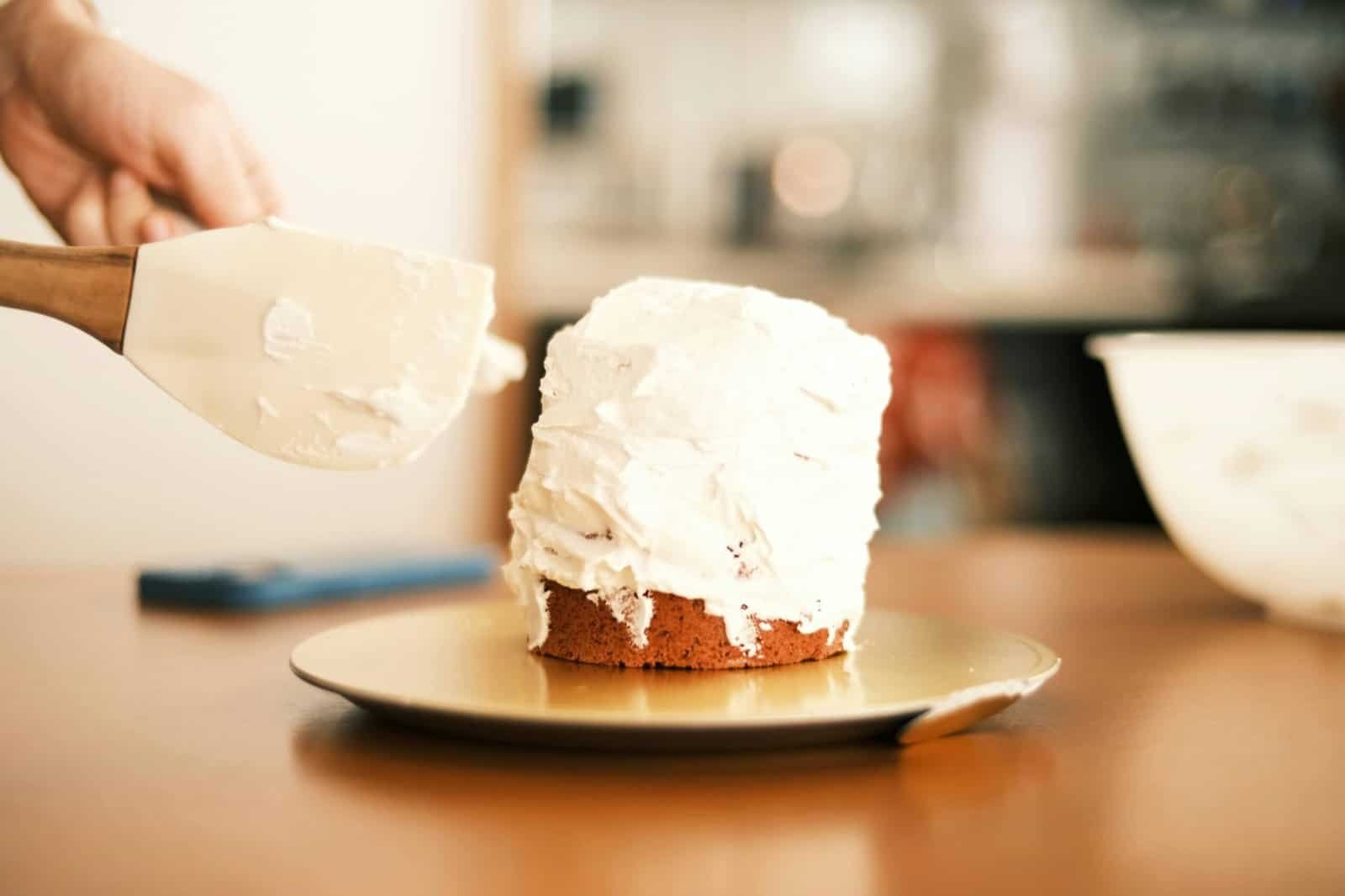
A decorating kit is mostly tips, and the tips you use are a handful of the ones you get. The best cake decorating kits and piping bags come down to bag material, tip quality, and whether a coupler lets you change tips without emptying the bag. Start with a small starter kit, add a reusable bag and a coupler, and skip the hundred-piece sets until you know which shapes you reach for.
That is the honest verdict, and it holds for almost everyone. Large kits look like value and mostly deliver duplicates in sizes nobody pipes with.
Decorating also depends on what happens before the frosting. Our piece on why cakes turn out dense covers the layer underneath, because no tip fixes a heavy crumb.
Cake Decorating Kits and Piping Bags at a Glance
| Item | What it does | Reusable | Beginner priority |
|---|---|---|---|
| Starter decorating kit | Core tips, bags, coupler in one box | Partly | Buy first |
| Reusable piping bags | Cloth or silicone bag you wash | Yes | Buy first |
| Disposable piping bags | Single-use plastic bags | No | Buy alongside |
| Tip and coupler sets | Adds shapes, allows tip swaps | Yes | Add second |
| Spatulas and smoothers | Flat frosting and clean sides | Yes | Add second |
| Fondant and modeling tools | Shaping, embossing, cutting | Yes | Later, if at all |
Key Points
- Most decorating uses a round tip, a star tip, an open star, and a leaf tip.
- A coupler is what lets you change tips on a filled bag, and cheap kits leave it out.
- Reusable bags cost less over time, and disposables handle cream cheese and grease better.
- Seamless stainless tips pipe cleaner lines than folded tin ones.
- An offset spatula and a bench scraper do more for a finished cake than extra tips do.
- Hundred-piece kits mostly add shapes you will never pipe with.
How We Picked
We compared kit and bag types rather than individual sets, because branded bundles change constantly while the tools inside them do not. Each section covers one category and where it belongs in a build-up.
We ranked items on four things: how often a home baker actually uses them, whether the construction holds up to washing, how comfortable they are to grip while full, and whether they work with standard couplers.
We excluded kits sold purely on piece count, and we have not stated tip numbering equivalences, since numbering differs between makers.
1. All-in-One Starter Decorating Kits
Why It Stands Out
A compact starter kit puts the core tips, a coupler, and a few bags in one box for less than buying them separately. For a first cake, that removes a lot of guesswork.
Small kits also force a useful discipline. Learning four tips well beats owning forty badly.
Worth Knowing
Check that a coupler is included, because many cheap kits omit it and that single part changes the whole workflow. Without one, every tip change means a new bag.
Storage cases in these kits are usually flimsy. Most people move the tips into a drawer organizer, the same approach covered in our guide to kitchen drawer organizers.
Best for: First-time decorators and anyone starting from nothing. Skip it if you already own bags and a coupler.
2. Reusable Cloth and Silicone Piping Bags
Why It Stands Out
Reusable bags cost less across a year of baking and feel better in the hand than thin plastic. Coated canvas grips well even when the outside gets slippery.
Silicone bags flex more and wash out more easily than cloth, which matters with stiff buttercream.
Worth Knowing
Grease is the enemy of reusable bags. Cream cheese frosting and heavy butter content leave residue that needs hot water and real attention.
Bags stretch out at the tip end over time, which loosens the coupler fit. Buy two and rotate them rather than wearing one out.
Best for: Anyone decorating more than a few times a year. Skip it if you bake once at Christmas and dislike washing up.
3. Disposable Piping Bags
Why It Stands Out
Disposables handle multiple colors in one session without washing between them. For a cake with four frosting shades, that is the difference between an hour and an afternoon.
They also deal with greasy frostings that stain reusable bags permanently.
Worth Knowing
Thickness varies a lot, and thin bags split under pressure at exactly the wrong moment. Heavier gauge bags cost slightly more and fail less.
They are slippery when hands warm up. Many decorators fold a cuff or use a bag holder, and a turntable reduces how much you have to reposition.
Best for: Multi-color work and greasy frostings. Skip it if you decorate often and dislike the waste.
4. Piping Tip Sets and Couplers
Why It Stands Out
Buying tips separately lets you get the shapes you actually pipe in good stainless rather than a full kit of thin tin. Seamless tips produce cleaner lines and hold their shape.
Couplers are the real unlock here. One filled bag plus four tips beats four filled bags every time.
Worth Knowing
Tip numbering is not standard across makers, so a number from one brand may not match another. Judge by the opening shape rather than the number.
Large tips need large couplers, and standard couplers do not fit them. Check sizing before adding oversized tips.
Best for: Anyone past their first few cakes who knows which shapes they use. Skip it if you have not yet found your favorites.
5. Offset Spatulas, Scrapers, and Smoothers
Why It Stands Out
Flat frosting is what makes piping look deliberate, and no tip delivers that. An offset spatula and a straight-edge scraper do most of the work on a finished cake.
A bench scraper against a turning cake produces sharp sides in a way freehand spreading never will.
Worth Knowing
Spatula length matters more than people expect. A short one cannot span a layer cake, and a long one is unwieldy on cupcakes.
Metal scrapers give crisper edges than plastic ones. Chilling the cake between coats also helps, and our guide to cooling racks covers getting layers fully cool first.
Best for: Anyone who wants clean sides and level tops. Skip it if you only ever pipe onto cupcakes.
6. Fondant and Modeling Tool Sets
Why It Stands Out
Fondant tools cover a different craft: rolling, cutting, embossing, and shaping figures. For themed cakes and sharp geometric finishes, nothing else does the job.
Modeling sets also work with gum paste and modeling chocolate, so they are not fondant-only.
Worth Knowing
This is the category most likely to sit unused. Buy it when a specific cake calls for it rather than as part of a starter haul.
Fondant needs a smooth surface and a rolling pin that will not stick. Our guide to rolling pins covers which surfaces suit it.
Best for: Themed cakes, figures, and sharp-edged finishes. Skip it if buttercream is where your interest ends.
What to Look For in Cake Decorating Kits and Piping Bags
Does the kit include a coupler?
A coupler screws into the bag and holds the tip, letting you swap tips without emptying the bag. Kits without one force a bag per tip, which wastes frosting and time.
Standard couplers fit standard small and medium tips. Large tips need their own size, so check before mixing.
How are the tips made?
Seamless stainless tips pipe cleaner shapes and survive washing indefinitely. Folded tin tips have a visible seam that shows up in the piped line.
Rust is the usual failure on cheap tips. Drying them fully before storage doubles their life.
Which bag suits your frosting?
Stiff buttercream needs a bag you can grip hard without it slipping. Greasy frostings stain reusable bags and wash straight off disposables.
Bag size matters too. Oversized bags are harder to control, and undersized ones need constant refilling.
What are you decorating onto?
Cupcakes need a large star tip and little else. Layer cakes need spatulas, a scraper, and a turntable before they need more tips.
Cake shape changes the tools as well. Our guide to bundt pans covers shapes that get glazed rather than piped.
How will you store the tips?
Loose tips in a drawer bend at the opening, and a bent tip pipes a crooked line permanently. That is how most sets get quietly ruined.
A compartment box or a tip organizer keeps each shape separate and visible. Seeing what you own is half of using it.
Dry them fully before they go away. Trapped moisture rusts even stainless tips at the crimped seam.
Are you decorating at a table or a counter?
Piping at standing height beats sitting for control, because you can put your shoulder behind the squeeze. Counter height also lets you circle the cake.
Whatever the surface, the cake needs to sit stable and turn freely. A slipping cake board wastes a whole coat of frosting.
Work in a cool spot as well. Frosting behaves differently beside a warm oven, and that is exactly when most people decorate.
Big Kits vs Building Your Own
Where a big kit wins
One purchase, one price, and everything arrives together. As a gift or a first step, that convenience is genuine.
Large kits also let you discover shapes you would never have bought individually. Occasionally one becomes a favorite.
Where building your own wins
You end up with better metal in the tips you actually use and no drawer full of duplicates. Cost per useful piece is far lower.
It also spreads the spend across time. Start with a small kit, add a scraper and a turntable, then add tips as specific cakes demand them, the same staged approach as our guide to bakeware sets describes.
What Trips People Up
Piping onto a warm cake
Frosting slides and melts on a cake that has not cooled through. Let the layers reach room temperature completely, then chill them before the final coat.
Overfilling the bag
A bag filled past halfway is hard to control and squeezes out of the top. Fill less and refill more often.
Skipping the crumb coat
A thin first layer traps crumbs so the visible coat stays clean. Missing that step is why home cakes often look speckled.
Buying tips before learning three
A round, a star, and an open star cover most of what beginners want to pipe. Adding shapes before those feel easy just adds clutter, much as kitchen tools you never use pile up elsewhere.
Worth reading next: lining cake pans with parchment covers releasing layers cleanly so there is less to hide, why cakes sink in the middle covers the structural problem decorating cannot solve, and cake pans cover the tins that produce even layers in the first place.
Frequently Asked Questions
What are the best cake decorating kits and piping bags?
A small starter kit that includes a coupler, plus a couple of reusable bags, covers almost everything a home baker pipes. Add an offset spatula and a bench scraper before adding more tips, because flat frosting improves a cake more than extra shapes do.
How many piping tips do you actually need?
Four cover most work: a round tip, a closed star, an open star, and a leaf tip. Everything beyond those is for specific effects rather than general decorating.
Are reusable or disposable piping bags better?
Reusable bags cost less over time and grip better, while disposables save washing between colors and handle greasy frostings. Most decorators keep both and use disposables for multi-color sessions.
What does a coupler do?
It sits inside the bag and holds the tip with a threaded ring, so you can unscrew one tip and fit another without emptying the bag. Kits that leave it out make every tip change into a new bag.
Can you decorate a cake without piping bags?
A zip-top bag with a corner cut off works for simple lines and filling, and a spatula handles swirled finishes. The results are less precise, and for a first attempt that is often fine.
Why does my frosting come out uneven?
Air pockets in the bag and inconsistent squeeze pressure are the two usual causes. Pressing the frosting down to remove air before you start fixes most of it.
What frosting holds a piped shape best?
Stiffer buttercreams hold detail, while cream cheese frosting softens and spreads. Chilling the piped cake briefly helps any frosting keep its shape.
Do you need a turntable to decorate a cake?
Not strictly, though it makes smooth sides far easier. Turning the cake against a stationary scraper is what produces a clean edge, and doing that by hand is much harder.
