
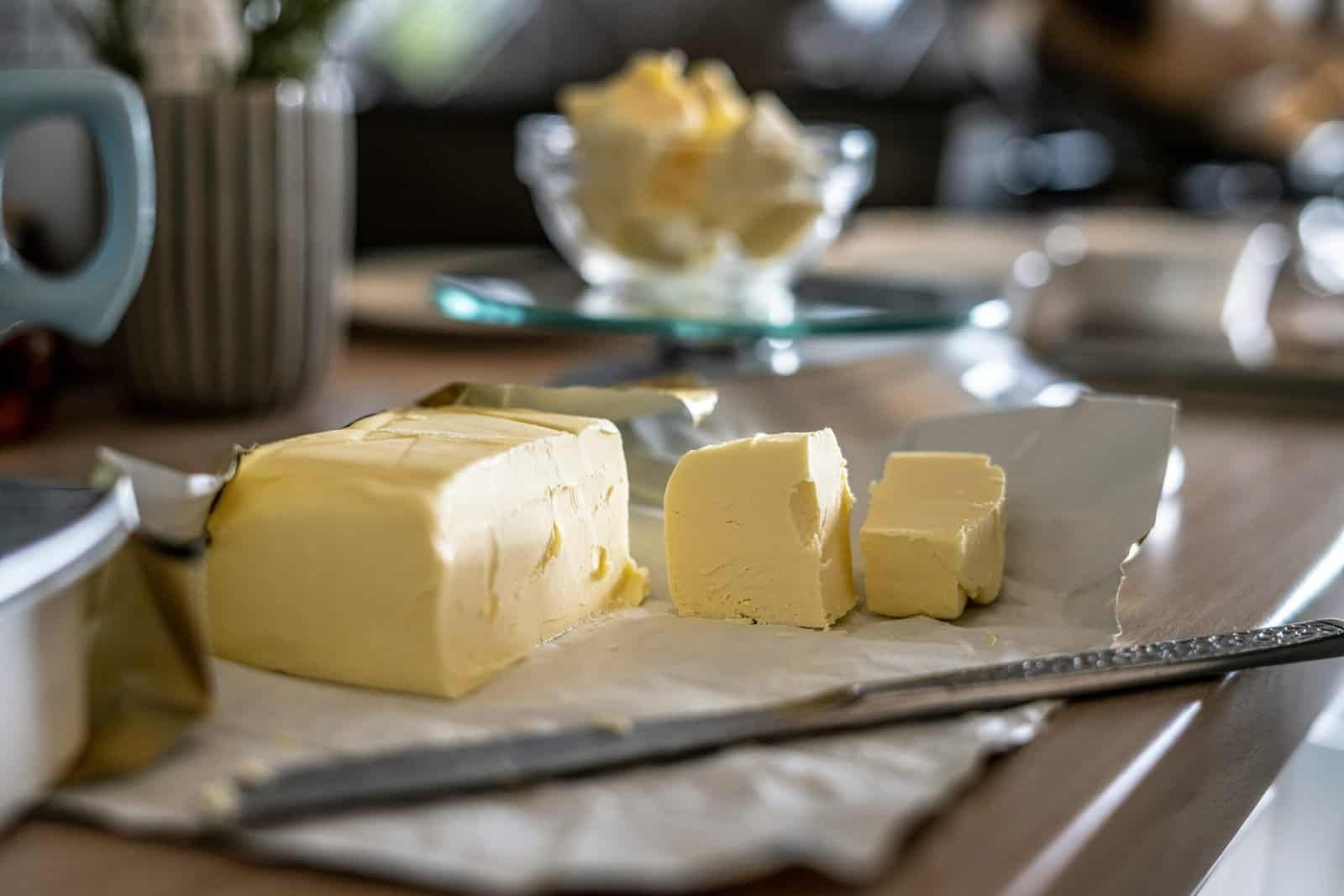
“Bring butter to room temperature” is one of the most common recipe instructions and one of the most commonly ignored. Many home bakers either skip the step entirely (using butter straight from the fridge) or microwave the butter for 30 seconds (which melts it partially). Both shortcuts produce different baked goods than the recipe author intended, often without the baker realizing why.
Butter temperature affects how it behaves when creamed with sugar, how it incorporates with eggs and flour, and ultimately how the baked good rises and what texture it has. The instruction isn’t arbitrary precision-perfectionism. It’s central to how many baking recipes work.
This guide explains why butter temperature matters, what “room temperature” actually means in baking terms, how to get there reliably, and what happens when you skip the step.
Key Takeaways
- “Room temperature” butter in baking means around 65-68°F: cool to the touch, gives slightly to finger pressure, but doesn’t squish or smear
- Creaming butter and sugar incorporates air into the fat structure; this only works properly at room temperature, not cold or melted.
- Cold butter doesn’t cream well and produces dense baked goods; melted butter produces flat, greasy results because the air structure is destroyed.
- The fastest, most reliable way to get room-temperature butter is to cut it into small cubes and let it sit out for around thirty to forty-five minutes.
What “Room Temperature Butter” Actually Means
“Room temperature” in baking has a specific meaning that’s narrower than the literal temperature of your kitchen. The target is around 65-68°F (about 18-20°C). At this temperature, butter is malleable but firm. You can press into it with your finger and leave an indentation, but the butter doesn’t squish flat or feel greasy.
The window matters. Butter much below this range is too cold to incorporate air properly. Butter much above this range is too soft to hold the air structure. The narrow target temperature is where butter does its specific job in baking.
This is also colder than most kitchens during summer. If your kitchen runs warm, butter left out for a long time can actually exceed the right temperature and become too soft for proper creaming. The instruction isn’t just “leave it out until it’s not cold.”
What Creaming Butter and Sugar Actually Does
The creaming step in many recipes (beating room temperature butter with sugar until light and fluffy) is doing specific work. The sharp edges of the sugar crystals cut tiny pockets into the butter fat. Air gets trapped in these pockets. The resulting butter-and-sugar mixture is full of microscopic air bubbles distributed evenly throughout. A water-sealed crock is the usual way to keep butter spreadable on the counter without it turning.
These air bubbles are the foundation of the cake or cookie’s texture. During baking, the leavening (baking powder, baking soda, or eggs) expands these existing air bubbles. The bubbles get bigger as the structure sets around them. The final baked good is light because of these expanding air pockets.
If the butter isn’t at the right temperature when creaming starts, the air-pocket creation doesn’t work properly. Cold butter is too stiff for the sugar to cut into effectively. Melted butter is too liquid to hold air pockets at all. In both cases, the leavening has fewer existing air bubbles to expand, and the baked good comes out denser, flatter, or differently-textured than intended.
What Happens to Cold Butter
Cold butter doesn’t cream properly. When you try to beat cold butter with sugar, you get:
Lumpy mixture. The butter stays in chunks that don’t fully incorporate with the sugar. You see distinct butter pieces rather than a smooth, fluffy mixture.
Less air incorporation. The cold butter is too rigid for the sugar crystals to cut effectively. Few air pockets are created.
Mixer struggle. Stand mixers and hand mixers will fight the cold butter. The motor works harder, the mixer may bounce, and the mixing time extends without producing the right consistency.
Dense, heavy results. Without the air pockets that creaming should have created, the cake or cookies don’t rise as light as they should. The texture is denser, often described as “heavy” or “tough.”
This is the most common pattern when bakers skip the room-temperature step entirely. They use cold butter, struggle through the creaming, and get a result they describe as “the recipe didn’t work”. The reality is the recipe didn’t work because the butter wasn’t right.
What Happens With Melted Butter
The mirror-image problem. Some bakers, knowing they should have softer butter, microwave the cold butter for a short time. The result is often partially melted butter, with liquid in some spots and solid in others, which is worse for creaming than properly soft butter.
With melted or partially-melted butter:
No air structure. Liquid butter can’t hold air pockets. You can beat melted butter with sugar all day; you won’t create the same fluffy aerated mixture as with properly soft butter.
Different chemistry. Melting changes butter’s fat crystal structure. Re-cooling melted butter produces something with different baking behavior than butter that was never melted.
Greasy, flat results. The baked good often comes out flatter and greasier than intended. The cookies spread too much. Cakes are dense.
If you’re in a hurry and tempted to microwave butter to soften it, the safest approach is short bursts (a few seconds at a time) with checking between. The moment any of the butter starts to liquify, stop. Even then, the result is usually slightly worse than patiently waiting for natural softening.
How to Get Room Temperature Butter Quickly
If you forgot to take the butter out an hour ago, several techniques speed up the process.
Cut the butter into small cubes. Small cubes (around half-inch on each side) warm faster than a full stick. Spread them out on a plate so they’re not touching. This approach gets cold butter to room temperature in around thirty to forty-five minutes rather than two hours.
Grate the butter. Run cold butter against a coarse box grater. The thin shreds soften in around ten to fifteen minutes. This is the fastest, most reliable method without using heat.
Pound the butter. Wrap the cold butter in parchment or plastic and pound it with a rolling pin to flatten it. The thin flat piece warms much faster than a thick stick. Our roundup of rolling pins covers tools that work for this.
Warm water glass method. Fill a glass with hot water, let it sit for a minute, then dump the water out. Invert the warm empty glass over the cold butter on a plate. The trapped warm air softens the butter in around 10 minutes. This works but is finicky.
Microwave very carefully. If you must, use very short bursts at low power, checking between each burst. The moment any portion starts melting, stop. Most butter ends up uneven this way, but it’s better than not having soft butter at all.
How to Tell When Butter Is Ready
The classic test: press your finger into the butter with moderate pressure. The butter should:
Yield to the pressure. Your finger should make a clear indentation.
Not squish flat. If your finger sinks in easily or the butter feels greasy, it’s too soft.
Hold its shape. A piece of butter standing upright shouldn’t slump or spread on the counter at room temperature.
Feel cool, not cold. Cold butter feels distinctly chilly to the touch. Right-temperature butter feels just slightly cool, similar to cool ambient room temperature.
If you’re unsure, use an instant-read thermometer. Insert it into the butter; the target is around 65-68°F.
Why Some Recipes Specifically Want Cold or Melted Butter
Not all recipes want room-temperature butter. Some specifically need cold or melted. The instruction matches what the recipe needs to work.
Cold butter: Pie crusts, biscuits, scones, and other flaky pastries need cold butter that stays in distinct pieces in the dough. The pieces create steam during baking that produces the layered flaky texture. Room-temperature butter would just blend into the dough and produce a dense result.
Melted butter: Quick breads, some cakes, brownies, and pancakes often call for melted butter. These recipes don’t depend on creamed air structure; they get their lift from chemical leaveners or beaten eggs. Melted butter incorporates more easily and produces a denser, fudgier texture that these recipes want.
Room-temperature butter: Standard cakes, butter cookies, pound cakes, and many other recipes depend on the creamed air structure. The room temperature is right because creaming works at this temperature.
The recipe is telling you which texture path it’s on. Follow the butter instruction the recipe gives, not the one you think it should give.
📑 Recommended Read: A quality hand mixer or stand mixer makes the creaming process much faster and more thorough than mixing by hand. Check out our tested breakdown of the hand mixers to find options that handle butter creaming consistently.
Recipe-Specific Considerations
How important is room-temperature butter to your specific recipe? It depends on what the recipe is doing.
Maximum sensitivity: Cakes (especially pound cake, butter cake, classic yellow cake), butter cookies (shortbread, sugar cookies, classic chocolate chip), and other recipes that depend on creamed air structure. Getting butter wrong here changes the final texture noticeably. Our piece on why cakes sink in the middle covers other ways cake structure can fail.
Moderate sensitivity: Many quick breads, muffins, and bar cookies. The butter temperature matters, but the recipe is forgiving enough that small variations don’t ruin it.
Low sensitivity: Brownies (often use melted butter intentionally), most yeast breads (the butter integrates with the dough through kneading), and recipes that specifically melt the butter as part of the process.
If you’re new to baking, focus on getting butter right for the high-sensitivity recipes first. As you build experience, you’ll notice which recipes are forgiving and which aren’t.
Common Mistakes and How to Avoid Them
Skipping the room-temperature step. The most common error. Recipes that say “room temperature butter” mean it; using cold butter changes the final result.
Microwaving for too long. Partial melting is worse for creaming than not softening at all.
Mistaking “soft” for “room temperature.” Squishy, greasy butter is too warm. You want firm-but-pliable.
Using only the finger test without context. Some butter brands are firmer than others at the same temperature. If you have a thermometer, use it.
Trying to fix wrong-temperature butter once you’ve started. Once you’ve mixed cold butter into sugar and it doesn’t cream properly, you can’t really recover. Start over with properly tempered butter.
Not adjusting for room temperature. If your kitchen is 80°F in summer, butter softens faster than the recipe assumes. Adjust accordingly.
Frequently Asked Questions
How long should I leave butter out before baking? Depends on the starting temperature and the kitchen temperature. From the fridge, generally around thirty to forty-five minutes if cubed, longer if left as a full stick. A cool kitchen extends this; a warm kitchen shortens it.
Can I just microwave butter to soften it? Risky. Even at low power for short bursts, butter often ends up partially melted. If you must microwave, use 5-second bursts and check frequently.
What temperature exactly is “room temperature butter”? Around 65-68°F (18-20°C). Cool to the touch, it gives slightly under finger pressure, but doesn’t squish or smear.
What if I forgot to take my butter out and need to bake now? Grate the cold butter or pound it thin between parchment sheets. Either method gets the butter to a usable temperature within ten to fifteen minutes.
Does it matter what brand of butter I use? Mostly no, but European-style butters have higher fat content than typical American butter, which affects results in some recipes. For most baking, standard unsalted butter works fine.
Can I substitute oil or shortening for butter? Sometimes, but the recipe behavior changes because oil and shortening don’t cream the same way butter does. Cakes made with oil are often more tender and moist; cakes made with shortening are more stable but can taste different. Each fat has its own characteristics.
Related Reading
Explore more: how to soften butter quickly. Also explore: moka pots.
More Kitchen Guides
Recommended Reading
See also our guides to how to soften butter quickly. See also our guides to whisks, how yeast actually works, and why pie crust gets tough.
