
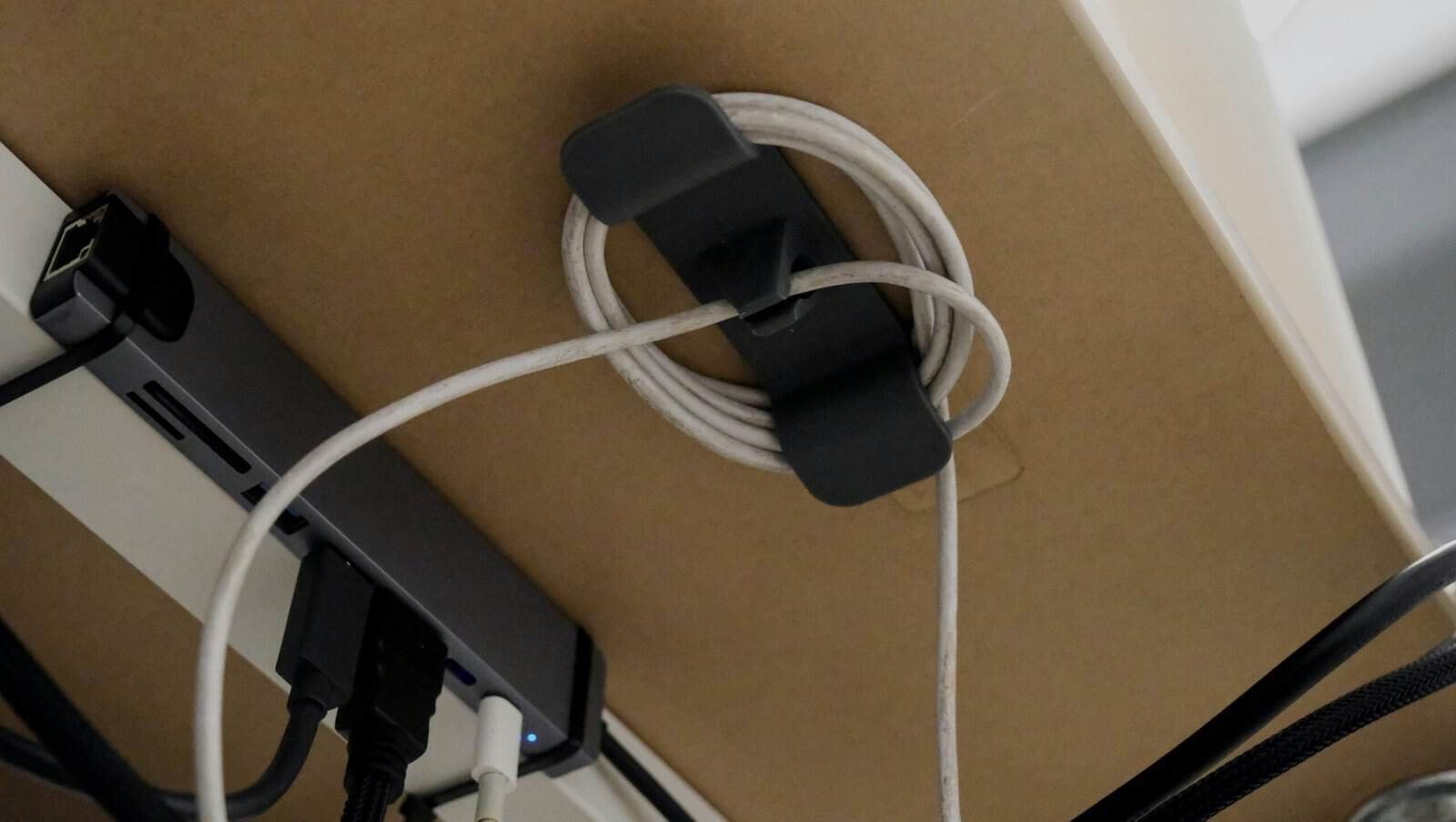
A wall-mounted TV with a bundle of black cables hanging below it undoes the whole point of mounting it. The best cable raceways and cord covers are paintable PVC channels, because once they are painted to match the wall they stop being visible at all. Everything else in the category is a compromise against that.
The choice really comes down to two questions. Can you put adhesive or screws on the wall, and does anyone walk over the cable?
Those two answers pick the product for you. Our TV wall mounts roundup covers the step that creates this problem in the first place.
Cable Cover Types at a Glance
| Type | Mounting | Paintable | Walk Over | Best Use |
|---|---|---|---|---|
| PVC raceway channel | Adhesive or screws | Yes | No | Walls, best finish |
| Flexible adhesive cover | Adhesive only | Usually | No | Renters, curves |
| Floor cord protector | Sits on the floor | No | Yes | Walkways |
| Fabric cable sleeve | None, wraps cables | No | No | Bundling behind furniture |
| Under-desk tray | Screws or clamps | No | No | Desks and workstations |
| In-wall pass-through kit | Cut into drywall | Hidden entirely | No | Owned homes |
How We Picked the Best Cable Raceways and Cord Covers
We compared cover types rather than named products, because the specific items rotate constantly while the mounting methods and shapes stay the same.
Each section covers one type, the situation it suits and where it falls short. We weighted four things: how well it hides cables, what it demands of the wall or floor, how much cable it swallows, and whether it can be removed without damage.
We have not published channel dimensions or cable capacities. Those vary by product and by how thick your cables are, and a figure quoted here would mislead anyone buying for a specific run.
1. Paintable PVC Raceway Channels, Best Overall
Why It Stands Out
Rigid channels with a snap-on lid, usually white, designed to be painted after installation. They come in straight lengths with corner and joint pieces.
Paint is the reason these win. An unpainted white channel on a colored wall is obvious, and a painted one reads as trim.
The rigid lid also stays shut and keeps its shape, unlike flexible covers that bulge where cables bunch up.
Worth Knowing
Cutting lengths to fit takes a hacksaw or a miter box, and the corner pieces have to be planned. This is a short project rather than a five-minute job.
Mounting is adhesive or screws. Screws hold better on textured walls, and adhesive on a painted wall can pull paint when removed.
Best for a permanent install where the finish matters. Our soundbar wall mount brackets picks cover the other wall-mounted half of a TV setup.
2. Adhesive-Backed Flexible Cord Covers, Best for Renters
Why It Stands Out
Soft channels or split tubing with a peel-and-stick backing, bending around corners without separate fittings.
No cutting and no fittings makes installation genuinely quick. A run from a wall-mounted TV to an outlet takes minutes.
Flexibility also means one piece can follow a curve or a doorway edge that would need three rigid parts.
Worth Knowing
Adhesive is the weak point. Heat, textured paint and time all loosen it, and removal can still take paint with it.
Test a short piece in an inconspicuous spot first if you rent, and check your lease on wall fixings before committing to anything.
Best for renters and quick fixes. If you want the wall untouched entirely, a tray or a sleeve below furniture is the safer route.
3. Floor Cord Protectors and Ramps, Best for Walkways
Why It Stands Out
Low-profile rubber or vinyl ramps with a channel inside, built to be stepped on and rolled over without crushing the cable.
A cable crossing a room is a trip hazard, and tucking it under a rug does not fix that. This is the only type here designed for foot traffic.
The sloped edges also stop chair casters and vacuum wheels catching, which is what makes them practical in an office or living room.
Worth Knowing
They are visible by design, since a ramp has to be a ramp. Color options help on hard floors and not much on patterned carpet.
Thicker cable bundles need a correspondingly taller ramp, and a taller ramp is more noticeable underfoot.
Best for any cable crossing a path people use. Pair it with our low pile rugs for high traffic picks if the run crosses a rug edge.
4. Fabric Cable Sleeves and Wraps, Best for Bundling
Why It Stands Out
Neoprene or woven sleeves with a zip or hook-and-loop closure that gather several cables into one tidy tube.
Six thin cables look like a mess and one thick tube looks deliberate. That change alone handles most of the visual problem behind furniture.
They also attach to nothing, so they are completely renter-safe and move with you.
Worth Knowing
A sleeve tidies cables without hiding them. On a bare wall it is still a visible tube.
Bundling power and signal cables tightly together can also introduce interference on some setups, so keep them in separate sleeves if you notice it.
Best for the gap behind a media console or a desk. Our TV stands and media consoles roundup covers stands that handle this themselves.
5. Under-Desk Cable Trays and Baskets, Best for Desks
Why It Stands Out
Metal or mesh trays that mount beneath a desktop and hold a power strip plus the slack from every cable on the desk.
Getting the power strip off the floor is most of the benefit. Nothing to vacuum around and nothing sitting in dust.
Clamp-on versions need no screws at all, which makes them workable on a desk you do not want to drill.
Worth Knowing
Tray size needs to suit your power strip, and a long strip will not fit a short basket. Measure before ordering.
Screw-mounted trays also need a desktop thick enough to take the fixing without coming through the top.
Best for desks and workstations. See our surge protectors and power strips picks for what goes inside one.
6. In-Wall Cable Pass-Through Kits, Best Invisible Finish
Why It Stands Out
Two bracketed plates cut into the drywall, one behind the TV and one near the outlet, with the cables running inside the wall between them.
This is the only approach that makes cables genuinely disappear. There is nothing on the wall surface at all.
Kits include a cutting template and the plates, which makes the job far more approachable than it sounds.
Worth Knowing
You are cutting two holes in drywall, which rules it out for most renters and needs care about what is inside the cavity.
Mains power is the key limit. These kits are for low-voltage signal cables, and running a power lead through a wall is electrical work with its own code requirements, so an electrician handles that part.
Best for owned homes where the finish justifies the work. For the signal cables themselves see our HDMI cables for soundbars guide.
What to Look For in a Cable Cover
Capacity with room to spare
Cables get added, never removed. Choose a channel wider than your current bundle needs.
A removal path that protects the wall
Adhesive on fresh paint is the usual cause of damage. Screws into studs, or no wall contact at all, are the renter-safe options.
Paintability if it will be visible
A channel painted to match disappears. An unpainted one on a colored wall draws the eye straight to it.
The right type for foot traffic
Wall covers crushed underfoot fail and become hazards. If people walk over it, buy a floor ramp rather than adapting a wall product.
Enough fittings in the kit
Corners, joints and end caps are what make a rigid run look finished. Kits short on fittings mean a second order.
Surface Raceway or In-Wall?
When a surface raceway is right
It costs less, needs no cutting, suits rentals, and once painted it is close to invisible. For most people this is the sensible answer.
When in-wall is right
If you own the home, the wall is standard drywall and you want nothing visible, in-wall wins outright. It is more work and it is permanent, and the power cable still needs its own solution.
Common Cable Cover Mistakes to Avoid
Buying a channel that just fits
A full channel will not close, and forcing the lid stresses both the lid and the cables. Size up.
Running mains power through an in-wall kit
These kits are made for signal cables. Power inside a wall is electrical work, and that is a job for an electrician.
Sticking adhesive to a dusty or textured wall
Adhesive needs a clean smooth surface. Wipe it down first, and expect textured paint to defeat the stick regardless.
Hiding a walkway cable under a rug
It still trips people and the cable gets crushed and heated. A floor ramp exists for exactly this.
Forgetting the slack
Cables need somewhere to coil at each end. A tray, a basket or a loop behind the console stops a tidy run ending in a tangle.
Worth reading next: our guides to TV riser stands, pegboards and wall organizers, and smart plugs.
Best Cable Raceways and Cord Covers FAQ
What are the best cable raceways and cord covers?
Paintable PVC raceway channels give the cleanest result on a wall, because painting them to match makes them read as trim rather than an accessory. Adhesive flexible covers are the renter-friendly version, floor ramps are the only safe option across a walkway, and in-wall kits hide signal cables completely.
Can you paint a cable raceway?
Most white PVC raceways are designed for it. Clean the surface, use a primer suited to plastic, then apply your wall color. Painting after installation gives the best match because you can blend the edges.
Are cord covers safe for rental walls?
Adhesive covers are usually removable, but they can lift paint, especially on recently painted or textured walls. Test a small piece somewhere hidden first, check your lease, and consider sleeves or trays that touch no wall at all if you want zero risk.
How do you hide TV cables without cutting the wall?
A surface raceway painted to match the wall is the standard approach and looks close to invisible when done well. A cable sleeve plus a console that sits below the TV hides the run behind furniture instead. Neither requires any cutting.
Can you run a power cable inside the wall with a pass-through kit?
No. These kits are intended for low-voltage signal cables such as HDMI. Running mains power inside a wall is electrical work with code requirements, so it needs an electrician and the correct in-wall rated cable or a new outlet.
What size cable raceway do I need?
Bundle your cables, measure across the bundle, then choose a channel comfortably wider than that. Cables accumulate over time, and a channel sized exactly to today’s bundle will not close next year.
Do cord covers work on carpet?
Floor ramps do, though a thicker ramp is more noticeable on soft flooring. Adhesive wall covers do not stick to carpet at all. For a run along a carpeted wall edge, a ramp or a tucked sleeve is the practical option.
Will bundling cables together cause interference?
Usually not at household lengths, though tightly bundling power cables with audio or video cables can introduce noise on some setups. If you hear hum or see picture artifacts, separate the power run from the signal run into different sleeves.
