
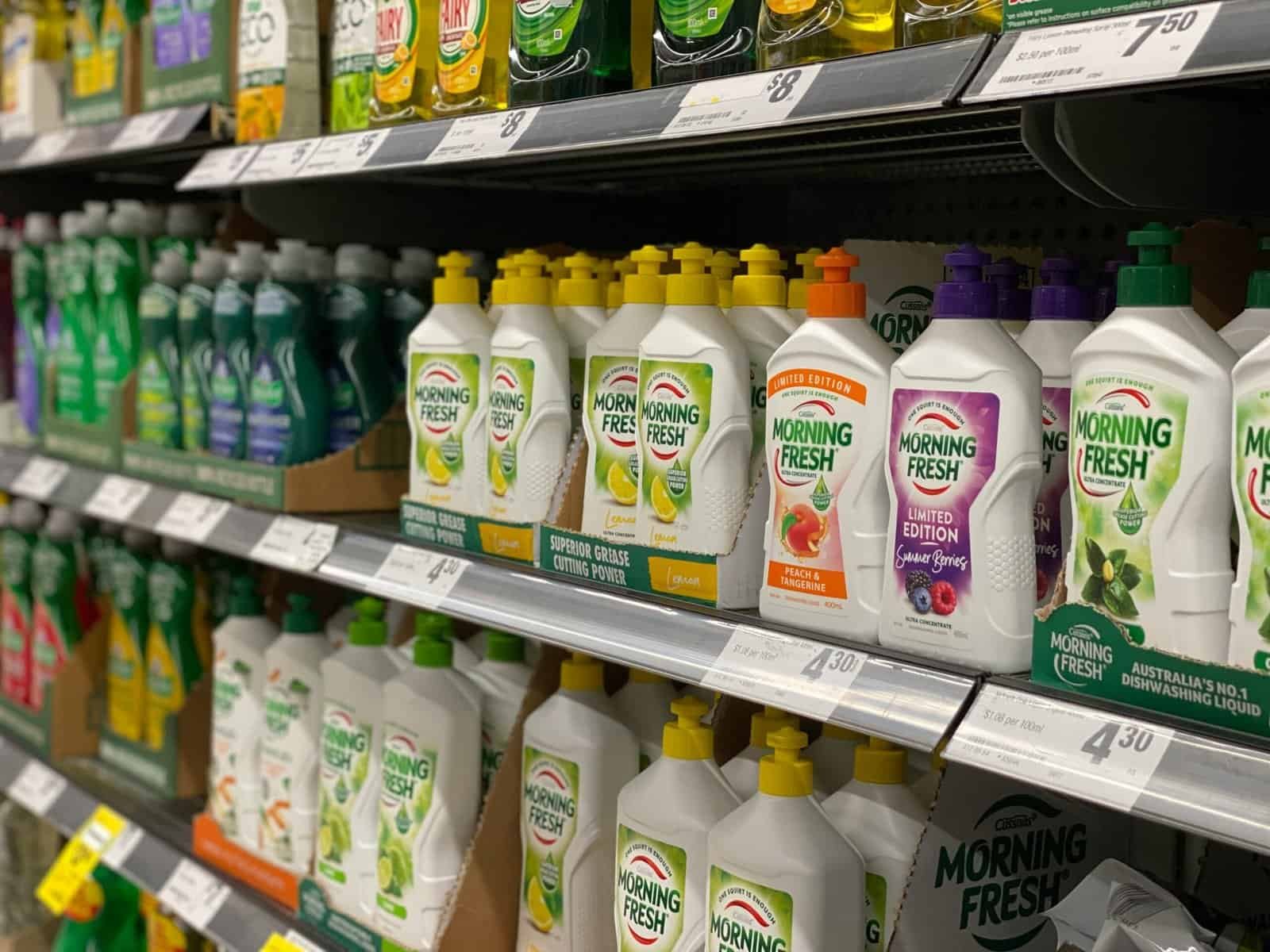
The best dishwasher detergents and rinse aids do two different jobs, and most people buy one while ignoring the other. Detergent breaks down food and lifts it off the dish. Rinse aid changes how water sheets off glass so it dries without leaving spots behind.
Water hardness decides more than brand does. The same pod that leaves dishes spotless in soft water leaves a chalky film in hard water, which is also why cleaning a dishwasher runs on a different schedule depending on where you live.
Quick Verdict
Enzyme pods handle most households with no fuss and no dosing decisions. Powder earns its place in hard water because you can raise the dose. Add a separate rinse aid regardless of which detergent you pick, because almost no pod delivers enough of it to replace the dispenser.
Key Takeaways
- Detergent removes soil. Rinse aid controls drying. They are not interchangeable.
- Pods are convenient and fixed-dose, which is a problem only in hard water.
- Powder lets you change the dose, which is the point of using it.
- Cloudy glass is usually hard water, not a weak detergent.
- Machine cleaner is a separate product from detergent and runs monthly.
- Fragrance-free versions exist across every format at similar prices.
How We Picked
We grouped products by what they actually do rather than by brand, because the useful decision is format first and label second. Enzyme content, dosing control, rinse aid separation and cost per load were the four criteria.
We also weighted hard water performance heavily. Most complaints about dishwasher detergent turn out to be water chemistry, and a product that copes with minerals solves more problems than a stronger cleaner does.
Cost per load is listed where it matters, because bulk pricing swings widely and a cheap box with a high dose is not cheap.
1. Enzyme Pods, Best Overall
Best all-round choice | Score: 9.2/10 | Price: ~$20 to $30 for 60 to 90 loads
Why It Stands Out
Enzymes break down starch and protein soils that surfactants alone leave behind. That is the difference between a clean plate and a plate with dried egg still on it.
Pods also remove the dosing question entirely. One goes in the main cup and the machine does the rest, which suits most households.
Most enzyme pods include some rinse aid and some water softening agent in the same tablet. That bundling is why they work acceptably almost everywhere.
Worth Knowing
The rinse aid inside a pod is a small amount. Filling the dispenser separately still improves drying noticeably.
Best for: anyone who wants one product that works without thinking about it.
2. Powder Detergent, Best for Hard Water
Best dose control | Score: 8.9/10 | Price: ~$10 to $18 for a large box
Why It Stands Out
Powder is the only format where you control the amount. In hard water the fix for film is more detergent, and a pod cannot give you that.
It is also the cheapest per load by a wide margin. A large box runs well past a hundred washes at a normal dose.
Powder lets you split the dose too, putting some in the pre-wash cup and some in the main cup. That helps on heavily soiled loads.
Worth Knowing
Powder cakes if it gets damp, so it wants a dry cupboard and a closed box. It also contains no rinse aid at all, which makes the dispenser mandatory rather than optional.
Best for: hard water households and anyone who wants the lowest cost per load.
3. Fragrance-Free Pods, Best for Sensitive Households
Best unscented option | Score: 8.7/10 | Price: ~$22 to $32 for 60 to 80 loads
Why It Stands Out
Fragrance is the component most people notice on a glass straight out of the machine. Removing it changes nothing about cleaning performance.
These pods usually drop dyes as well, which matters if you have ever found a blue residue in the detergent cup.
Enzyme content is typically the same as the scented version from the same maker, so the trade is scent only.
Worth Knowing
Unscented lines are stocked less consistently and often cost slightly more per load. Buying a larger pack is usually the cheaper route.
Best for: households that react to detergent scent, or anyone who dislikes perfumed glassware.
4. Liquid Rinse Aid, Best for Spot-Free Drying
Best drying improvement | Score: 9.0/10 | Price: ~$5 to $12 per bottle
Why It Stands Out
Rinse aid lowers the surface tension of water so it runs off in sheets rather than beading up. Beads leave minerals behind when they evaporate, and that is what a spot is.
It matters most on plastic and on modern condensation-drying machines with no heating element. Those rely entirely on water leaving the surface cleanly.
One bottle lasts a couple of months in normal use, which makes it the cheapest upgrade available to a dishwasher.
Worth Knowing
The dispenser has an adjustable setting on most machines. Turn it up in hard water and down if you see streaking or foam in the door seal.
Best for: every dishwasher, and particularly any machine without a heated dry cycle.
5. Machine Cleaner Tablets, Best for Maintenance
Best for descaling and odor | Score: 8.5/10 | Price: ~$8 to $15 for 6 to 12 tablets
Why It Stands Out
Detergent cleans dishes. It does very little for the scale and grease that build up in the sump, the spray arms and the door seal.
A cleaner tablet runs on an empty hot cycle and targets exactly that buildup. It is the single most effective thing for a machine that has started to smell.
Monthly is the usual interval, more often in hard water where scale accumulates faster.
Worth Knowing
A cleaner tablet does not replace cleaning the filter by hand. Food debris sits in the filter and no cycle flushes it out.
Best for: any machine that smells, drains slowly, or has visible scale on the interior.
6. Bulk Pod Packs, Best Budget
Best cost per load in pods | Score: 8.4/10 | Price: ~$25 to $40 for 100 plus loads
Why It Stands Out
Pod pricing is almost entirely about pack size. The same tablet costs dramatically less per load in a hundred-count box than in a twenty-count one.
For a household running the machine daily, bulk is the difference between pods being expensive and pods being reasonable.
Store brands at bulk sizes frequently use similar enzyme packages to the names at a noticeably lower price.
Worth Knowing
Pods absorb moisture and the wrappers can fuse together in a humid cupboard. Keep the tub sealed and out of the space under the sink.
Best for: daily users who want pod convenience without pod pricing.
Quick Comparison
| Format | Dose control | Rinse aid included | Best context |
|---|---|---|---|
| Enzyme pods | None, fixed | A small amount | Most households |
| Powder | Full | None | Hard water, lowest cost |
| Fragrance-free pods | None, fixed | A small amount | Scent-sensitive homes |
| Rinse aid | Dispenser setting | It is the rinse aid | Every machine |
| Cleaner tablets | One per cycle | Not applicable | Monthly maintenance |
| Bulk pods | None, fixed | A small amount | Daily use on a budget |
Why Glasses Come Out Cloudy
There are two kinds of cloudy and they have opposite fixes. Mineral film wipes off with vinegar on a cloth. Etching does not come off at all because the glass surface itself has been damaged.
Film means hard water, too little detergent, or no rinse aid. Raising the dose and filling the dispenser usually clears it within a few loads.
Etching means the opposite problem, generally soft water combined with too much detergent and very hot water. It is permanent, so the fix is prevention on the remaining glassware.
Testing which one you have takes a minute with a cloth and some vinegar, and it decides whether to add detergent or cut it.
Loading and Pre-Rinsing Change the Result
Enzyme detergents need something to work on. Scraping plates is useful and rinsing them under the tap is not, which runs against most people’s instinct.
That question gets its own treatment in whether to rinse dishes before loading, and the short version is that scraping beats rinsing.
Placement matters as much as chemistry. A pod in the pre-wash cup dissolves too early and the main wash runs with almost nothing in it.
Spray arm clearance is the other common failure, and loading a dishwasher covers what blocks what.
What Goes In and What Does Not
Cookware depends on the coating
Detergent is alkaline and abrasive enough to dull some finishes over time. Which pans survive it is the subject of dishwasher-safe cookware.
Glass jars usually do fine
Lids and seals are the limiting part rather than the glass, and whether mason jars go in the dishwasher breaks that down.
Cast iron never goes in
Detergent strips seasoning, which is the entire surface you spent months building. Hand washing is not optional there.
Anything you hand dry anyway
Items coming out wet get finished with a cloth regardless, and the options for that sit in microfiber cloths and cleaning rags.
Our Verdict
Start with bulk enzyme pods and a bottle of rinse aid. That combination covers the large majority of households for a few cents a load and removes every dosing decision.
Switch to powder if you have hard water and film that pods will not clear. The ability to raise the dose is the whole reason powder still exists.
Add cleaner tablets monthly whatever you choose, because no detergent maintains the machine itself. A clean dishwasher makes any detergent look better than it is.
Recommended Reading
- Dish sponges and dish brushes for everything that stays out of the machine.
- Dish drying racks for the hand-wash overflow.
- Descaling an electric kettle if hard water is the theme in your kitchen.
Frequently Asked Questions
What are the best dishwasher detergents and rinse aids for hard water?
Powder detergent with the dose raised, plus liquid rinse aid with the dispenser turned up. Hard water needs more of both, and pods cannot give you more of either.
Do I need rinse aid if my pods already contain it?
Yes in most cases. The amount inside a pod is small, and filling the dispenser separately produces a clear improvement in drying, especially on plastic.
Are pods better than powder?
Pods are more convenient and powder is cheaper and adjustable. In soft or average water pods win on effort; in hard water powder wins on results.
Why are my dishes still dirty?
Check the filter and the spray arms before changing detergent. A blocked arm or a clogged filter produces patchy results that no product fixes.
Can I use dish soap in a dishwasher?
No. Hand dish soap foams enormously in a dishwasher and the suds escape the door. Cleaning that up takes longer than the wash would have.
How often should I run a cleaner tablet?
Monthly suits most machines, and more often in hard water. Run it on an empty hot cycle with nothing else inside.
Does cheap detergent damage a dishwasher?
Not usually, though weak detergent means more residue which means more buildup over time. The machine’s condition tracks maintenance more than detergent price.
