
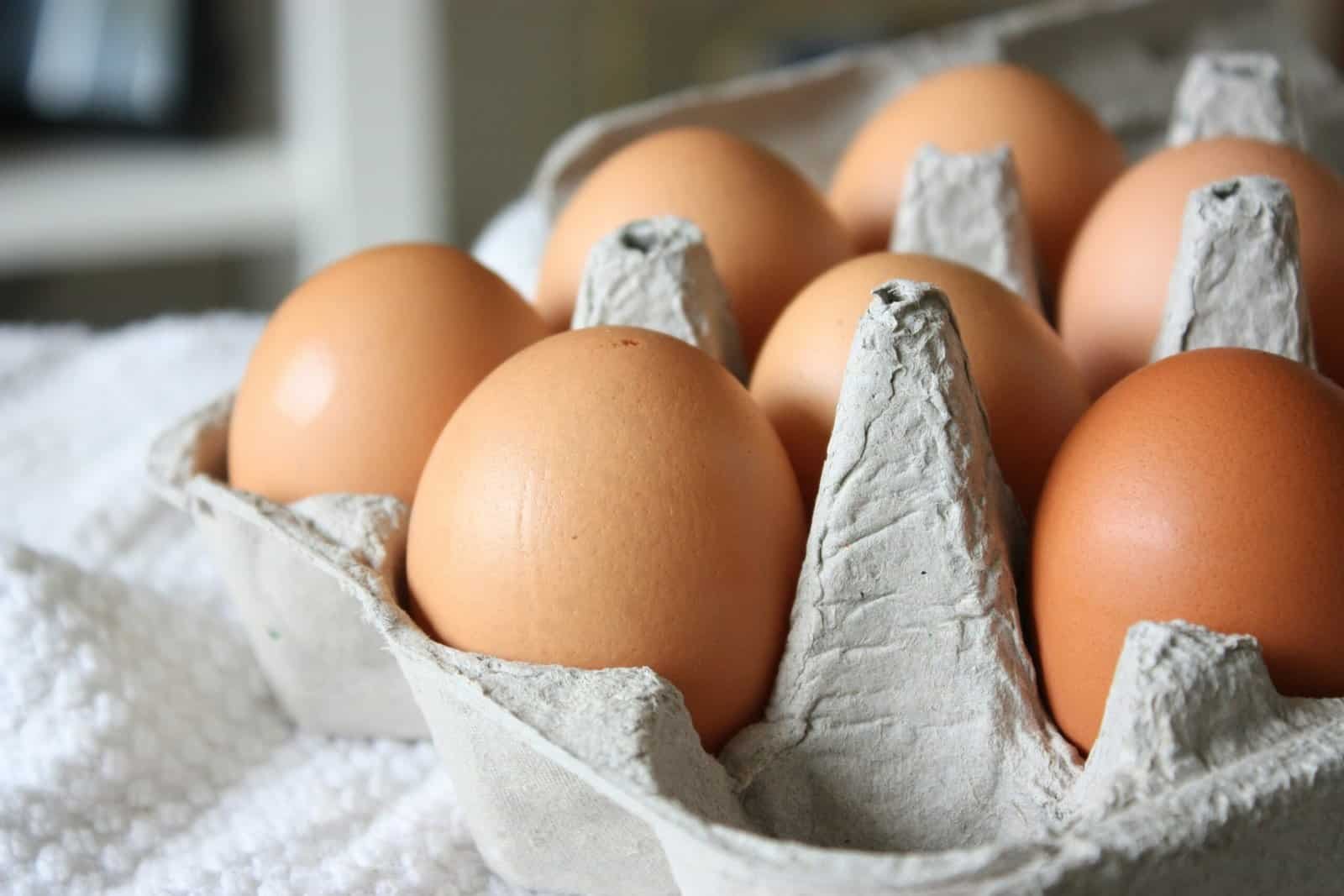
An egg is essentially a small bag of protein in water with a fat-rich yolk in the middle. Apply heat in different ways, and you get dramatically different results: hard-boiled with firm yolk and white, soft poached with runny yolk and barely-set white, scrambled with curds, fried with crisp edges. The same ingredient produces a huge range of textures because of how proteins respond to heat under different conditions.
The principles behind these different outcomes are simpler than they seem once you understand what’s happening to the proteins. This guide walks through the science, explains why classic egg-cooking techniques work the way they do, and clarifies the common myths that lead to overcooked or rubbery eggs.
Key Takeaways
- Egg whites set at lower temperatures than yolks; this difference is what allows runny-yolk preparations to exist.
- Egg whites firm up around 145-180°F; yolks firm up around 150-170°F; full set occurs slightly higher.
- Different cooking methods control how heat reaches the proteins, producing radically different textures.
- Overcooking eggs causes the proteins to over-coagulate, squeeze out water, and become rubbery; gentle low-heat cooking produces the best texture.
What’s in an Egg
An egg has three main parts that matter for cooking.
The shell. Calcium carbonate, porous, with a thin membrane just inside. Important for boiled-egg techniques, but doesn’t affect what happens to the contents during cooking.
The white (albumen). Mostly water (about 90%) with about 10% proteins dissolved in the water. The proteins are mostly ovalbumen, ovotransferrin, ovomucoid, and others. When heat or other denaturing conditions hit these proteins, they unfold and link together, transforming the liquid white into a solid white.
The yolk. More complex than the white. Contains proteins, fats (about 30% by weight), and water. The fat content is what makes the yolk rich and what makes it behave differently from the white during cooking.
The proteins in egg whites and yolks denature (unfold) and coagulate (link together) at different temperatures. This temperature difference is the key to almost every egg-cooking technique.
Setting Temperatures
The basic temperature thresholds:
Egg whites begin to coagulate around 145°F. Visible firmness develops around 150-160°F. The full set occurs around 180°F.
Egg yolks begin to thicken around 150°F. Become spoonable around 158°F. Fully set around 170°F.
Complete denaturation of both white and yolk happens well above 180°F. Continued cooking past this point starts to expel water and produce a rubbery texture.
Look at the temperature ranges: an egg cooked to 160-165°F has barely-set whites and creamy yolks. An egg cooked to 195°F has fully firm whites and crumbly yolks. These different outcomes come from controlling how hot the egg gets and how long it stays at that temperature.
Boiled Eggs
Putting an egg into boiling water (212°F) heats the outside of the egg through to the inside over time. The shell and outer white reach boiling temperature first; the inner yolk takes time to heat up.
This creates a thermal gradient: by the time the yolk reaches setting temperature, the outer white has been well past setting temperature for a while.
Result patterns:
3-4 minutes. Soft-boiled. White is mostly set but still tender. The yolk is runny.
5-7 minutes. Medium-boiled. White is firm. Yolk is jammy-soft to almost set.
9-12 minutes. Hard-boiled. Both white and yolk are fully set. Yolk has a crumbly texture.
The exact times depend on egg size, starting temperature, and altitude. The pattern (more time = more cooked through) is consistent.
The risk with boiling: overcooking. A 15-minute hard-boiled egg has the unappetizing dry chalky yolk and rubbery white because both proteins have been over-coagulated and have squeezed water out. The greenish ring around very hard-boiled yolks is a sulfur-iron compound that forms when eggs are overcooked.
The fix: cook hard-boiled eggs only until the yolk is just set (about 10 minutes), then immediately shock in cold water to stop the cooking. The center remains tender and yellow.
Poached Eggs
Poaching exposes the egg directly to hot water (typically 180-200°F, just below boiling) without the shell. The white sets relatively quickly because it’s in direct contact with the heat. The yolk takes longer because heat has to penetrate through the white.
The result is a tender just-set white around a runny yolk. The texture depends on cooking time: 3 minutes produces a barely-set white with very runny yolk; 4-5 minutes produces a fully-set white with somewhat firmed yolk.
The technique requires fresh eggs (older eggs have thinner whites that scatter in the water) and a gentle approach to keep the egg in a cohesive shape. Vinegar added to the water (a tablespoon per quart) helps the white coagulate faster, reducing scattering.
The temperature being lower than boiling matters: water at a gentle simmer doesn’t disrupt the egg as much as vigorous boiling, allowing the egg to stay in one piece. Plus, the slightly lower temperature is closer to the natural setting range, which produces more tender results than aggressive boiling.
Scrambled Eggs
Scrambling involves agitating eggs as they cook. The proteins set, but the disruption breaks them into curds rather than producing a solid mass.
The key variable: temperature. Low heat, slow scrambling produces creamy, soft curds. High heat, fast scrambling produces dry, tough curds.
The science: at higher temperatures, the proteins coagulate fast and squeeze water out aggressively. The result is dry, tight curds. At lower temperatures, the proteins coagulate slowly with the water still partially incorporated. The result is creamy small curds.
French-style soft scrambled eggs use low heat over an extended time (sometimes 10-15 minutes), often with constant stirring. The result is a creamy, almost custard-like texture. American-style scrambled eggs typically use higher heat for faster results with larger, drier curds.
Adding fat (butter or oil) to the pan and to the eggs helps. Fat coats the proteins, slows coagulation, and contributes to the rich texture of soft scrambled eggs. Some recipes add small amounts of milk, cream, or water for similar reasons.
The most common scrambled egg mistake: high heat. Eggs cooked on full burner heat with no stirring produce dry, rubbery curds. Cook more slowly and stir more.
Fried Eggs
Frying involves cooking the egg in a hot pan with fat. The pan transfers heat to the bottom of the egg directly, while the top cooks more slowly through ambient pan heat and steam.
Sunny-side up: only the bottom contacts the pan; the top remains liquid until it’s been heated enough through steam to set. Sometimes covered briefly to set the top with steam.
Over-easy: same as sunny-side up but flipped briefly at the end to lightly set the top of the white without cooking the yolk.
Over-medium: flipped and held longer to partially set the yolk.
Over-hard: flipped and held until the yolk fully sets.
The fat in the pan affects the texture significantly. Butter produces tender eggs with a richness from the milk solids’ browning. Olive oil gives a different flavor profile. Bacon grease has its own distinctive contribution. A properly hot pan with sufficient fat prevents sticking and produces clean edges; an underheated pan with insufficient fat produces stuck, rough-edged eggs.
For more on what controls the browning that happens at the edges and bottom of fried eggs, see our article on why food browns when cooked.
Custards and Other Egg-Based Preparations
Custards (crème brûlée, flan, custard pies) use eggs to thicken liquid into a smooth, set texture. The science involves the proteins forming a delicate network that traps liquid without separating.
The keys to proper custard texture:
Low temperature throughout cooking. Custards are usually baked in a water bath (bain-marie) to keep them below boiling. Temperatures above about 180°F start to overcoagulate the proteins, producing scrambled curdled custard rather than a smooth set.
Adequate egg ratio. Too few eggs produce a custard that’s too liquid; too many produce a custard that’s too firm. Recipes have proportions worked out; following them matters.
Don’t overcook. Custards continue to set after removal from the heat (residual cooking). Pull them when they’re still slightly jiggly in the center.
Why Eggs Get Rubbery
Overcooked eggs (whether boiled, scrambled, or fried) get rubbery because the proteins have been heated so much that they’ve expelled most of the water that was trapped in the protein network.
The progression: as proteins coagulate, they form a network that holds water. Gentle heat produces a soft network with lots of water. More aggressive heat tightens the network and squeezes water out. Eventually, you have a dense, dry, tough protein mass with much of the original water in the pan or air rather than in the egg.
The fix: lower heat and shorter cooking times. Stop cooking before the eggs reach the rubber-stage temperature. Eggs continue to cook for a minute or two after removal from the heat, so factor in that residual cooking.
This is why French-style soft scrambled eggs that look almost liquid in the pan finish with a perfect creamy texture by the time they’re plated. The residual heat completes the cooking without overcooking.
📑 Recommended Read: Precise temperature control is the key to perfectly cooked eggs (and meat, and most other proteins). A quality instant-read thermometer takes the guesswork out of cooking eggs to specific doneness. Check out our tested breakdown of the meat thermometers for fast accurate options that work for eggs, custards, and all protein cooking.
Why Eggs Whip Into Foam
Beating egg whites produces a foam: air bubbles trapped in a thin network of proteins. This is the basis for meringues, soufflés, angel food cake, and many other preparations.
The mechanism: mechanical agitation unfolds the egg white proteins, similar to how heat does. The unfolded proteins surround air bubbles and stabilize them. As beating continues, more air gets incorporated, and the foam becomes denser and stiffer.
Factors that affect foam quality:
Fat is the enemy. Even trace fat (a tiny bit of yolk in the white, oil on the bowl, residue from previous use) prevents proper foam formation. Clean equipment and careful yolk separation matter.
Temperature affects results. Room temperature egg whites whip better than cold ones. Many recipes specify pulling whites from the fridge ahead of time.
Sugar timing matters. Adding sugar too early limits foam volume. Add it after the foam starts forming for best results.
Acid (cream of tartar, vinegar, lemon juice) helps stabilize the foam. The acid affects protein chemistry and produces a more stable structure that holds up to subsequent baking.
For more on the chemistry of stable meringues specifically, see our article on why meringue won’t stiffen.
Yolks in Cooking
Egg yolks serve different functions than whites in cooking:
Emulsifying. Yolks contain lecithin, a natural emulsifier that helps blend oil and water. This is why yolks make mayonnaise possible and stabilize many sauces and dressings.
Enriching. The fat content in yolks adds richness and improves texture in baked goods, custards, and ice cream.
Thickening. Yolks thicken sauces and custards through protein coagulation as they’re gently heated.
Coloring. Yellow pigment in yolks contributes to the color of breads, pastas, custards, and many other foods.
Using just whites or just yolks (rather than whole eggs) produces different results in many recipes. Whites-only meringues are pure foam. Yolks-only sauces and custards are rich and emulsified. Most recipes specify when it matters.
Common Mistakes and How to Avoid Them
Cooking eggs at high heat for everything. The default high-heat approach produces rubbery scrambled eggs, overcooked fried eggs, and chalky hard-boiled eggs. Lower heat almost always improves egg dishes.
Overcooking hard-boiled eggs. 15+ minutes produces dry green-ringed yolks. 10 minutes plus immediate cold shock produces perfect hard-boiled eggs.
Using old eggs for poaching. Older egg whites scatter in the water. Fresh eggs (within a week or two of laying date) hold together better.
Adding salt before cooking scrambled eggs. Salt can break down protein structure if added too early, producing watery scrambled eggs. Add salt at the end or just before serving. Or add it just at the start of beating and use it immediately.
Letting the fat in egg whites, you want to whip. Even a tiny bit of yolk prevents proper foam. Separate carefully and use clean equipment.
Treating eggs as if temperature doesn’t matter. Eggs are temperature-sensitive proteins. Pay attention to the heat, and you’ll cook eggs much better.
Microwaving eggs without precautions. Eggs in shells can explode in microwaves due to internal pressure buildup. Egg yolks in microwaves can superheat and burst. Microwave eggs only in properly designed setups.
Skipping the rest after cooking. Eggs continue to cook from residual heat. Stop short of the desired final texture and let them finish on the plate.
Frequently Asked Questions
Why does the yolk turn green when overcooked? Iron from the yolk reacts with sulfur compounds from the white to form ferrous sulfide. The reaction happens when eggs are overcooked. Properly cooked eggs (cooled promptly after sufficient cooking time) don’t develop this.
Why are some scrambled eggs creamy and others rubbery? Heat and time. Low heat, slow scrambling with constant motion produces a creamy texture. High heat, fast scrambling produces rubber. The same ingredients can produce very different results based on technique.
Can I substitute egg whites for whole eggs? Sometimes. In baking, the fat and emulsifier from the yolk matter for richness and texture. Pure egg-white substitutions usually produce drier, less rich results. In some applications (omelets, certain custards), it works fine.
Why do recipes call for room-temperature eggs? Cold eggs whisk into batters less smoothly and can cause butter-based mixtures to seize. Room temperature mixing works better. Pull eggs out 30 minutes before baking.
What’s the safest internal temperature for eggs? 160°F kills Salmonella. Most cooked eggs reach this easily. Runny yolks (still around 145-150°F) don’t reach this threshold and carry some salmonella risk, though it’s small with proper sourcing.
How can I tell if scrambled eggs are done? They should look slightly underdone in the pan. Residual heat finishes them. Glossy, slightly moist eggs on the plate are perfect. Dry-matte eggs are overcooked.
Why does adding milk to scrambled eggs sometimes help and sometimes not? Small amounts of milk can produce slightly softer scrambled eggs through dilution and added moisture. Too much milk produces a watery, weak texture. The “should I add milk” debate has merit on both sides; a tablespoon per two eggs is the rough range that helps without overdoing it.
What’s the best fat for cooking eggs? Butter for most preparations because of its flavor and the milk solids that contribute richness. Olive oil works fine and adds its own flavor. The fat that matters is having enough of it; insufficient fat is more often the problem than the wrong choice of fat.
Related Reading
Explore more: how to cook steak on stove.
More Kitchen Guides
Recommended Reading
See also our guides to egg slicers, herb scissors, and pizza cutters.
Related guides: why do eggs stick to the pan.
