
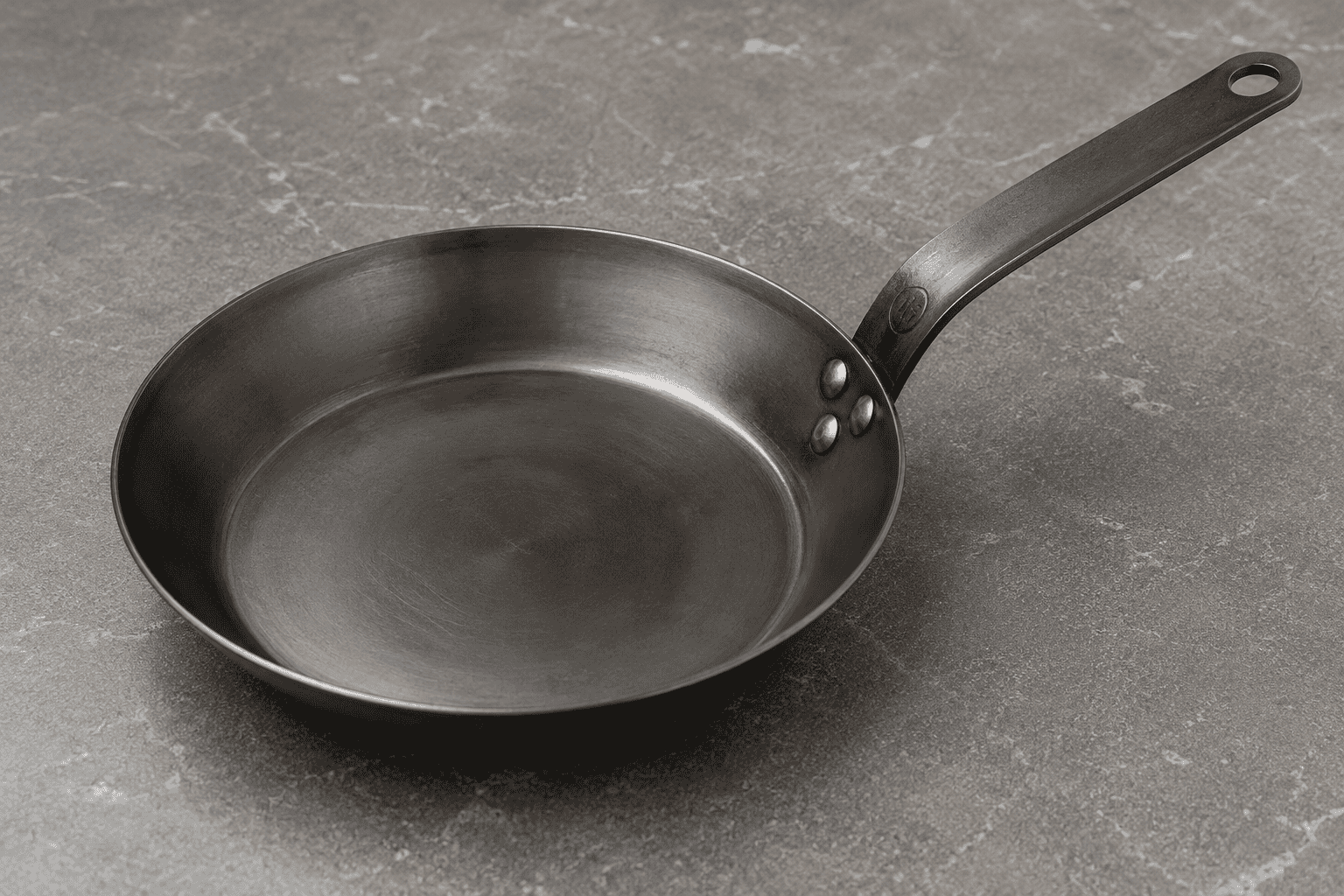
The best carbon steel pans give you cast-iron searing in a body light enough to flip an omelet, which is why restaurant lines run on them. Season one and it turns slick on its own. The Lodge is the cheapest, easiest way in. Cook daily and want something heirloom, or chase a hard steakhouse sear, and the De Buyer and Matfer take over.
Quick verdict: The Lodge is the carbon steel pan to start with, pre-seasoned, cheap, and ready to cook. Spend more for the De Buyer Mineral B if you want an heirloom build, the Matfer Bourgeat if you sear hard and often, or the Yosukata if stir-fry is your thing.
| If you want | Best pick | Why |
|---|---|---|
| The best all-around value | Lodge Carbon Steel | Pre-seasoned and budget friendly |
| A premium heirloom pan | De Buyer Mineral B | Heavy-gauge French steel, induction ready |
| Restaurant-grade searing | Matfer Bourgeat | Pro standard, takes blistering heat |
| Stir-fry and high-heat tossing | Yosukata | Wok-style shape and fast response |
| An everyday lighter skillet | BK Black Steel | Manageable weight for daily use |
Disclosure: SmartLifeItems is reader-supported. As an Amazon Associate, we earn from qualifying purchases made through links on this page, at no extra cost to you.
How We Picked the Best Carbon Steel Pans
Carbon steel sits between cast iron and stainless: it sears like iron but heats faster and weighs less, and with seasoning it develops a slick, naturally nonstick surface as polymerized oil bonds to the metal. The best carbon steel pans get that balance right, with even heat, a comfortable weight, and a finish that seasons well. Those are the qualities we judged. Pans this hot spit, and a mesh screen contains it without steaming what you are browning.
Searing power led the way, since that is the whole reason to reach for carbon steel over nonstick. Weight and balance mattered nearly as much, because a pan you can actually lift and toss is one you will keep using. Seasoning ease and stove compatibility, induction included, settled the rest. The picks run from budget pre-seasoned to professional and wok-style.
Lodge Carbon Steel: Best Overall
Why It Stands Out
Lodge brings its cast-iron experience to carbon steel with a pan that arrives pre-seasoned and ready to cook, which lowers the entry barrier for first-time carbon steel users. It sears well, builds seasoning quickly, and costs a fraction of premium imports. For most home cooks curious about carbon steel, it is the easy, low-risk place to start.
Worth Knowing
It runs a bit heavier and rougher out of the box than ultra-smooth French pans, so the early seasoning takes a little patience. The pre-seasoning is a starting layer, not a finished one. If you are weighing carbon steel against cast iron, our best cast iron skillets roundup covers the heavier alternative.
De Buyer Mineral B: Best Premium Pick
Why It Stands Out
The De Buyer Mineral B is the pan serious cooks tend to settle on. The heavy-gauge French steel delivers even, powerful heat and seasons to a deep, glassy finish over time, and it works on induction as well as gas and electric. With care it lasts for decades, which makes the higher price easier to justify.
Worth Knowing
It ships bare with a protective coating you must scrub off and season yourself, so there is upfront work before the first cook. The heft that aids heat retention also makes it less nimble than a light skillet. New owners should read up on seasoning, covered in the care section below.
Matfer Bourgeat: Best for Searing
Why It Stands Out
The Matfer Bourgeat is a restaurant-line staple, prized for taking blistering heat without flinching. It seasons to a smooth, reliable nonstick surface and delivers the hard, fast sear that steaks and proteins want. If your main goal is restaurant-grade browning at home, this is the pan that does it.
Worth Knowing
Like other bare pans it needs initial cleaning and seasoning, and the riveted handle gets hot, so a towel or mitt is a must. It is a tool built for performance rather than looks. Pair it with solid technique and the right oil for the best results, as outlined in the seasoning section.
Yosukata: Best for Stir-Fry
Why It Stands Out
The Yosukata brings carbon steel’s fast heat response to a wok-style shape made for stir-frying. The sloped sides make tossing easy, and the thin, responsive steel reacts instantly when you adjust the burner, which is exactly what high-heat stir-fry needs. It seasons up to a slick surface for eggs and noodles too.
Worth Knowing
A round-bottom version needs a wok ring on many home stoves, while a flat-bottom model suits standard burners and induction better. As with all bare carbon steel, season before first use. For everyday flat cooking, a standard skillet still has its place; see the nonstick comparison in our cookware guides.
BK Black Steel: Best Lightweight Everyday Pan
Why It Stands Out
The BK Black Steel is a more manageable everyday option for cooks who find heavy pans tiring. It keeps carbon steel’s searing ability and quick heat response in a lighter, easier-to-handle body, which makes it a practical choice for daily eggs, vegetables, and quick proteins. It seasons well and suits most stovetops.
Worth Knowing
The lighter build holds a little less heat than a heavy French pan, so it recovers temperature slightly slower with cold ingredients. It still needs seasoning and hand care. For pans that come ready to use instead, our best nonstick pans that actually last guide is the lower-maintenance route.
Recommended read: New to seasoned cookware? The technique transfers directly from cast iron, and our guide on how to season a cast iron skillet walks through the same polymerization process step by step.
How to Choose a Carbon Steel Pan
Weight and Thickness
Thicker, heavier pans hold and spread heat more evenly and recover temperature faster, which helps with searing. Lighter pans are easier to lift, toss, and use daily. Pick the weight you will actually cook with, since the best pan is the one you reach for.
Pre-Seasoned vs Bare Steel
Pre-seasoned pans are ready to cook sooner and forgiving for beginners. Bare steel ships with a protective coating you scrub off and season yourself, which is more work upfront but lets you build the finish from scratch. Both end up nonstick with use.
Induction and Stove Compatibility
Carbon steel is magnetic, so it works on induction as well as gas and electric. A flat bottom matters most for induction and smooth tops, while round-bottom woks need a ring on standard burners.
Handle and Shape
A riveted steel handle is durable but gets hot, so plan on a towel or mitt. Sloped sides suit tossing and stir-fry; straighter sides suit searing and sauces. Choose the shape around the cooking you do most.
Seasoning Potential
A smoother surface seasons to nonstick faster, while a rougher finish takes longer but gets there. Either way, regular cooking with a little oil builds the finish, and avoiding harsh soap and long soaks preserves it.
How to Season and Care for Carbon Steel
Initial Seasoning
Scrub off any factory coating, dry the pan fully, then heat a very thin layer of high-smoke-point oil until it darkens and bonds to the metal. Repeating this builds the base layer that becomes your nonstick surface, and normal cooking deepens it from there.
Everyday Cleaning
Rinse with hot water and a soft brush, dry immediately to prevent rust, and wipe a trace of oil over the surface before storing. Skip the dishwasher and long soaks, and let the seasoning build rather than scrubbing it away.
Fixing Problems
If food sticks early on, the seasoning simply needs more cooking time to develop. If rust appears, scrub it off, dry the pan, and re-season the spot. Carbon steel is forgiving: almost any issue is fixable with cleaning and another seasoning pass.
Common Carbon Steel Mistakes to Avoid
The biggest mistake new owners make is expecting nonstick performance before the seasoning has built up. A fresh pan, even a pre-seasoned one, needs cooking time to develop its slick surface, so early sticking is normal rather than a defect. Cooking fattier foods and wiping on a little oil after each use speeds the process along. The second mistake is scrubbing that seasoning away with harsh soap and abrasive pads, which sends you back to the start; hot water and a soft brush are almost always enough.
Letting the pan sit wet is the fastest way to invite rust, so dry it fully and warm it briefly on the burner before storing, then wipe a trace of oil over the surface. Cooking very acidic foods like tomato sauce for a long stretch can also strip young seasoning, so save those dishes for a well-established pan or a different pot. None of these mistakes are permanent, since a quick clean and another seasoning pass fixes nearly anything.
Frequently Asked Questions
What is the best carbon steel pan?
The Lodge Carbon Steel pan is the best all-around choice. It arrives pre-seasoned, sears well, and costs far less than premium imports, which makes it the easiest entry point. Cooks after an heirloom pan tend to prefer the heavier De Buyer Mineral B.
Is carbon steel better than cast iron?
Carbon steel heats faster, weighs less, and responds more quickly than cast iron, while cast iron holds heat longer and costs less. Carbon steel suits searing and tossing; cast iron suits long, steady heat like baking and frying. Many kitchens keep both. Anyone drawn here purely by weight should also look at lighter cast iron skillets before deciding.
Do carbon steel pans work on induction?
Yes. Carbon steel is magnetic, so it works on induction as well as gas and electric cooktops. A flat bottom is important for good contact on induction and smooth-top stoves, while round-bottom woks need a support ring.
How do you season a carbon steel pan?
Remove any factory coating, dry the pan, then heat a very thin layer of high-smoke-point oil until it darkens and bonds. Repeat to build the base layer, and let normal cooking deepen the nonstick finish over time.
Why does food stick to my carbon steel pan?
Sticking early on usually means the seasoning has not built up yet. Keep cooking with a little oil, avoid harsh soap and long soaks, and the surface becomes more nonstick as the seasoning develops with use.
Related Reading
Explore more: muffin pans, roasting pans, nonstick vs stainless steel, cast iron vs carbon steel, grill pans, stainless steel cookware sets, and why stainless steel cookware sticks. Also explore: stockpots.
Recommended Reading
See also our guides to roasting pans.
Related guides: choosing bundt pans.
