
The best contact grill for most kitchens is a mid-size model with removable, dishwasher-safe plates and a floating hinge. That pairing handles burgers, chicken, and pressed sandwiches without forcing a compromise. Everything else is a variation on those two features.
Contact grills cook from both sides at once, which cuts cook time roughly in half compared with a skillet. That speed is why these machines earn counter space in small kitchens. The trade is a flatter sear, so picking the right style matters more than chasing wattage.
This guide sorts the category into six shapes rather than six brands, because shapes stay accurate as models get renamed. For the wider view, our overview of indoor grill types covers open and smokeless models too.
Quick Verdict
Buy a removable-plate contact grill unless you have a specific reason not to. Cleanup decides whether an appliance gets used, and plates that go in the dishwasher get used. Choose the adjustable-hinge press instead if sandwiches are the main goal, or the grill and griddle combo if breakfast matters as much as dinner.
Key Takeaways
- Removable, dishwasher-safe plates are the single feature that most affects long-term use.
- A floating hinge keeps pressure even on thick chicken breasts and stacked sandwiches.
- Contact grills sear more gently than cast iron, but they cook far faster than an oven.
- Grease trays vary widely, and a bad one becomes a daily irritation.
- Compact single-serving grills suit dorms and offices, not families.
- Plate mass and heat recovery matter more than the wattage number.
How We Picked
We sorted the market by physical design, because the design decides how a grill behaves. A fixed hinge and a floating hinge give different results on the same chicken breast.
Cleanup carried the heaviest weight. Appliances that need scrubbing on a hot fixed surface get pushed to the back of a cabinet fast. Plates that pop out change that math.
Cooking range came next. Some designs only press sandwiches well, while others open flat and double the usable surface. A grill that covers three jobs beats one that covers a single job perfectly.
Counter reality finished the ranking. Most kitchens cannot store a large appliance that comes out twice a month. Footprint shaped the order as much as performance did.
1. The Removable-Plate Contact Grill
Why It Stands Out
This is the default pick for most kitchens. The plates unclip, go in the dishwasher, and come back ready for the next meal. That one choice removes the main reason indoor grills get abandoned.
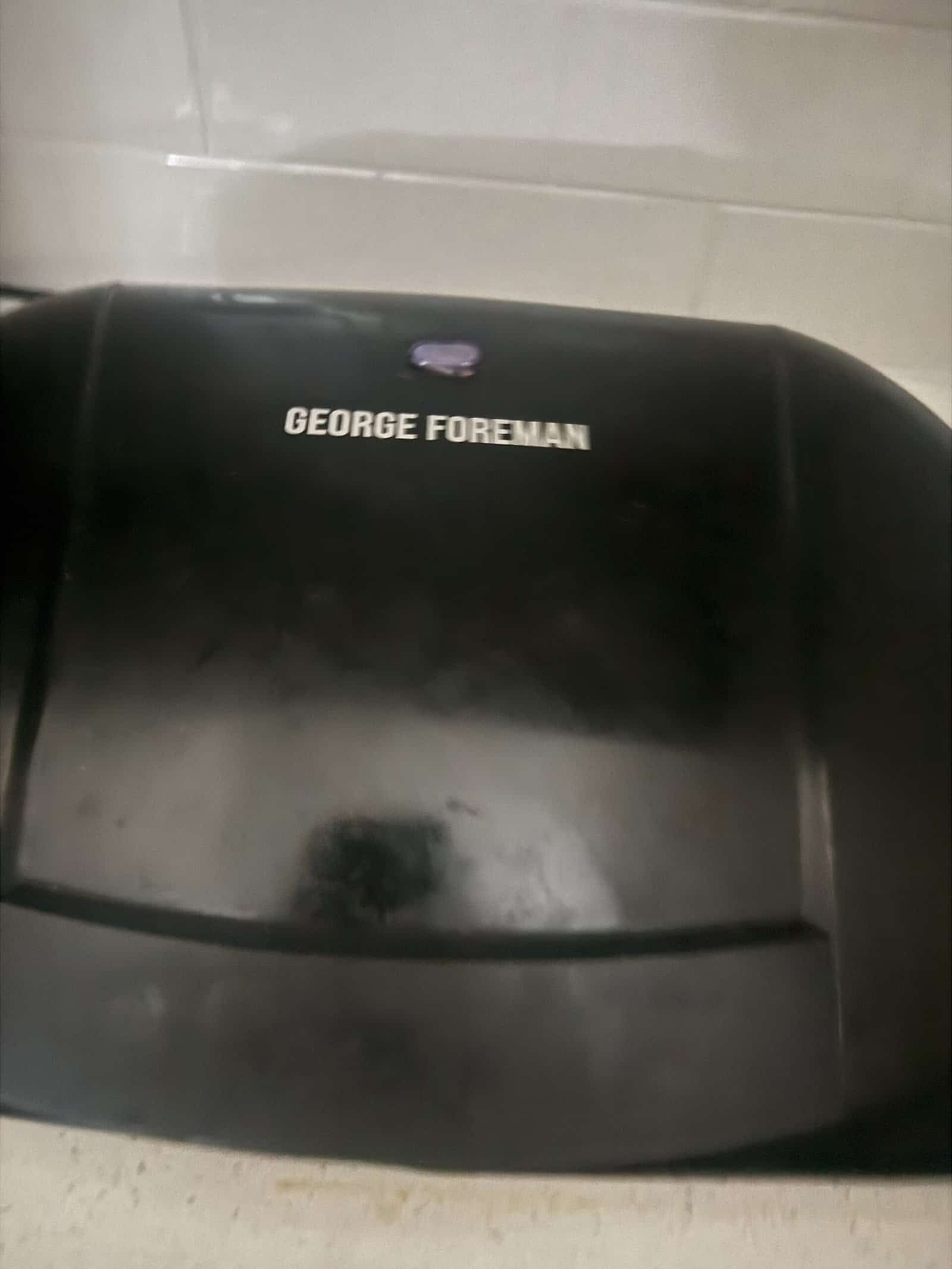
I own a George Foreman contact grill and have used it for multiple years. It has stayed durable and easy to clean, and the plates have not really scratched. The plates come off, and they are dishwasher-safe.
It lives permanently in a corner of the counter, next to my air fryer. I cook burgers, chicken, and steak on it. I also have an outdoor grill, so I have a direct comparison between them.
Worth Knowing
The grease tray is pretty annoying to use. Angled plates drain fat toward a small catch tray that tends to sit awkwardly and slide. It works, but it is the weakest part of the design.
Sear quality sits below cast iron. I alternate between cast iron and the indoor grill for steak depending on how much effort I am in the mood for, and our notes on how indoor grills handle steak explain the gap.
Release coatings are consumable. They last years with soft tools and gentle washing, but metal utensils shorten that life quickly. Check whether replacement plates are sold separately.
This suits anyone cooking two to four portions on weeknights who wants cleanup done in minutes. I have pressed sandwiches on it only a few times, since usually it is just meat. Skip it if you own good cast iron and only ever cook steak.
2. The Fixed-Plate Contact Grill
Why It Stands Out
Fixed-plate models cost less and often heat faster. The plates bond directly to the elements, which improves heat transfer and recovery between batches.
Build quality tends to be simpler, with no clips to wear out and no plates to misalign. Fewer moving parts is a genuine durability advantage.
Price is the other draw. These sit at the bottom of the category, which makes them a low-risk way to find out whether you will really use an indoor grill.
Worth Knowing
Cleaning is the whole trade. You wipe the plates while they are still warm, using a damp cloth or a plastic scraper. Wait until they cool and cooked-on fat becomes a chore.
Never submerge the unit, because the housing and the plates are one piece. That rules out the dishwasher permanently.
Sticking gets worse over time. Fixed plates cannot be replaced, so a worn coating means replacing the whole grill. Budget for a shorter lifespan.
Choose this if you cook occasionally and want the lowest entry price. It also fits a second kitchen or a rental. Skip it if you cook several times a week, because cleanup fatigue will win.
3. The Adjustable-Hinge Panini Press
Why It Stands Out
An adjustable hinge keeps the top plate parallel to the bottom regardless of thickness. That means even pressure across a stacked sandwich instead of a crushed front and a cold back.
Most presses in this style include a height lock. You set the gap, and the plate holds there instead of compressing the food, so delicate fillings survive.
Ridges on a press run deeper than on a general contact grill. Deeper ridges create the wide dark stripes people associate with a cafe panini.
Worth Knowing
These are specialists. They handle chicken and vegetables fine, but they are built around bread and cheese. If sandwiches are occasional, a general grill covers you.
Cheese escapes. Melted cheese runs down the ridges into the drip channel and hardens quickly. Wipe the plates before that happens or plan on soaking.
Hinge mechanisms add failure points. The adjustment arm and lock take real force during use, so check that the hinge feels solid rather than springy.
This fits anyone making pressed sandwiches weekly or working with thick artisan bread. Skip it if meat is your main use, since a flatter press offers no advantage there.
4. The Grill and Griddle Combo
Why It Stands Out
Combo units ship with two plate sets, ridged and smooth. Ridged plates handle burgers and chicken, and smooth plates handle eggs, pancakes, and grilled cheese.
Many combos also open completely flat. That doubles the surface and lets you run bacon on one side and eggs on the other.
Plate swapping is quick on good units, with release levers dropping plates out in seconds. Our list of foods worth cooking on an indoor grill leans on this flexibility.
Worth Knowing
Storage is the catch. Four plates plus the base take real cabinet space, and the plates are heavy. Many people leave the unit assembled on the counter.
Griddle plates need a shallow lip. Without one, batter and egg run off the edge, so check the plate profile in product photos.
Temperature control matters more here. Eggs and pancakes want lower, steadier heat than burgers, so dual thermostats are worth paying for.
This works for households that cook breakfast regularly and want one appliance instead of two. Skip it if you only cook meat, since you would pay for plates you never install.
5. The Open-Flat Two-Surface Grill
Why It Stands Out
These open 180 degrees into one wide cooking surface. Instead of pressing food between plates, you cook on top of both.
The extra surface changes what you can cook. Vegetables, skewers, and delicate fish work far better without a lid pressing down.
You still keep the closed mode. Most open-flat units hinge back to contact position for sandwiches and quick chicken, and that dual mode is the selling point.
Worth Knowing
Open mode doubles cook time. With only one side heating, you flip the way you would in a pan. Speed is not the reason to buy this shape.
Smoke goes up. Open cooking releases more into the room, especially with fatty cuts, and our notes on why indoor grills smoke cover ventilation.
Footprint nearly doubles when open. Measure counter depth against the opened dimensions, not the closed ones.
Pick this if you cook vegetables and fish as often as meat and want flexibility over speed. Skip it in a tight kitchen where the open footprint will not fit.
6. The Compact Single-Serving Grill
Why It Stands Out
Small contact grills handle one or two portions and store upright in a narrow gap. They heat in a couple of minutes and finish a sandwich quickly.
Price sits at the very bottom of the category. That makes them easy to buy for a dorm, an office kitchen, or a first apartment.
They also draw less power than full-size units. Shared circuits in older buildings handle them without tripping.
Worth Knowing
Recovery is slow. Small plates lose heat fast when cold food lands, and there is little thermal mass to buffer that. Cooking a second portion means waiting.
Plates are almost always fixed. Cleanup is the warm-wipe routine, and coatings wear faster under concentrated use.
Capacity limits are strict. Two chicken breasts will not fit on most of these, and a large sandwich hangs over the edge.
This suits students, single-person households, and office setups. Skip it if you cook for two or more people regularly, because batching will frustrate you.
Contact Grills at a Glance
| Category | Best For | Cleanup | Main Trade-Off |
|---|---|---|---|
| Removable-Plate Contact Grill | Everyday weeknight cooking | Dishwasher-safe plates | Grease tray is fiddly |
| Fixed-Plate Contact Grill | Occasional use on a budget | Warm wipe only | Plates cannot be replaced |
| Adjustable-Hinge Panini Press | Pressed sandwiches | Wipe before cheese hardens | Specialist, not a generalist |
| Grill and Griddle Combo | Breakfast plus dinner | Swap plates, wash separately | Four plates need storage |
| Open-Flat Two-Surface Grill | Vegetables, fish, bigger batches | Wider surface to clean | Open mode doubles cook time |
| Compact Single-Serving Grill | Dorms, offices, one person | Warm wipe only | Slow heat recovery |
What to Look For in a Contact Grill
Do the Plates Come Out?
This is the first question to ask. Removable plates go in the dishwasher, which keeps the appliance in rotation, while fixed plates force a routine people abandon.
Removable plates also mean replaceability. When a coating finally wears through, you buy plates instead of a new grill.
Does the Hinge Float?
A floating hinge keeps the top plate parallel as thickness changes. Without it, the front of a thick sandwich gets crushed while the back stays cold.
Look for a lid that rises smoothly under light pressure. Our guide to choosing an indoor grill walks through what to check in person.
How Big Is the Cooking Surface?
Measure by portions, not square inches. A surface that fits two chicken breasts covers most households, and four is generous.
Ridged surfaces also hold less than they look, because food needs gaps for fat to drain. Plan for about eighty percent of the stated area.
Is the Drip System Usable?
Grease trays vary far more than specs suggest. A good one slides out easily and holds a full meal, while a bad one tips or hides under the base.
Look for a tray with a handle and a clear capacity. This detail affects daily use more than wattage does.
Contact Grill vs Grill Pan
Where the Contact Grill Wins
Speed and cleanup are the advantages. Cooking from both sides halves the time and removes the flipping, and removable plates handle the rest.
It is also self-regulating. Set the temperature and the thermostat holds it, with no burner management to think about.
Where the Grill Pan Wins
Cast iron sears harder. It holds far more heat and reaches temperatures a contact grill cannot, which builds a real crust on steak.
Pans cost less and have no capacity ceiling. The trade is effort, and our comparison of stovetop grill pans covers when that work pays off.
What Trips People Up
Pressing Down on the Lid
Pushing the lid squeezes juice out of burgers and flattens sandwiches. The weight of the lid is enough on its own.
Waiting Until the Plates Cool
Cooked-on fat wipes off easily while plates are warm. Once cool, it hardens into a film that needs scrubbing. Unplug, wait five minutes, then wipe.
Using Metal Tools
Metal spatulas scratch nonstick coatings, and scratches spread. Silicone or nylon tools solve this, and our answer on washing grill plates safely covers coating care.
Expecting Outdoor Grill Flavor
Contact grills make no smoke flavor, because nothing drips onto a flame. They deliver browning and grill marks instead. Set expectations there and the results are good.
Recommended Reading
- whether an indoor grill earns its counter space
- how indoor grills compare with air fryers
- the tools that make steak easier at home
- affordable electric grills worth considering
- a faster cleaning routine for grill plates
Frequently Asked Questions
Are contact grills worth buying?
Yes, if you cook meat or sandwiches on weeknights and want speed, because cooking from both sides cuts the time roughly in half. A removable-plate model then cleans up in a couple of minutes. Most regret traces back to choosing a fixed-plate unit and quietly avoiding the cleanup afterward.
Can you cook steak on a contact grill?
You can, and it works well for thinner cuts and weeknight cooking. The sear stays lighter than cast iron, because the plates never reach the same temperature or hold as much heat. Expect clear grill marks and good browning rather than a hard crust, and finish thick steaks in a pan.
How do you clean a contact grill?
Unplug it, wait about five minutes, then wipe the warm plates with a damp cloth, since warm fat lifts easily while cooled fat hardens. If the plates are removable and dishwasher-safe, pull them out and load them instead. Empty the grease tray after every use so it never overflows.
What is the difference between a contact grill and a panini press?
A panini press uses an adjustable hinge that keeps the top plate parallel to the bottom, which spreads pressure evenly across a thick sandwich. A plain contact grill often uses a simpler hinge tuned for meat, so it crushes the front edge of a tall stack. Many current units blend both approaches.
Do contact grills make a lot of smoke?
Closed cooking makes very little smoke, because the lid contains most of it. Fatty cuts and high temperature settings increase it noticeably, and open-flat mode releases the most. Run the range hood when cooking that way, and drain the grease tray between batches to keep it down.
How many watts should a contact grill have?
Most full-size units land between 1,200 and 1,800 watts, and anywhere in that band is fine. Plate mass and thermostat quality matter more than the number, because heavier plates recover faster between batches. A high-wattage unit with thin plates still stalls, so judge by plate thickness and recovery.
Can you put contact grill plates in the dishwasher?
Only when the manufacturer states that the plates are removable and dishwasher-safe. Fixed plates are wired into the housing and must never be submerged in water. Even with dishwasher-safe plates, the top rack and a gentle cycle extend coating life, and hand washing is always the safer option.
