
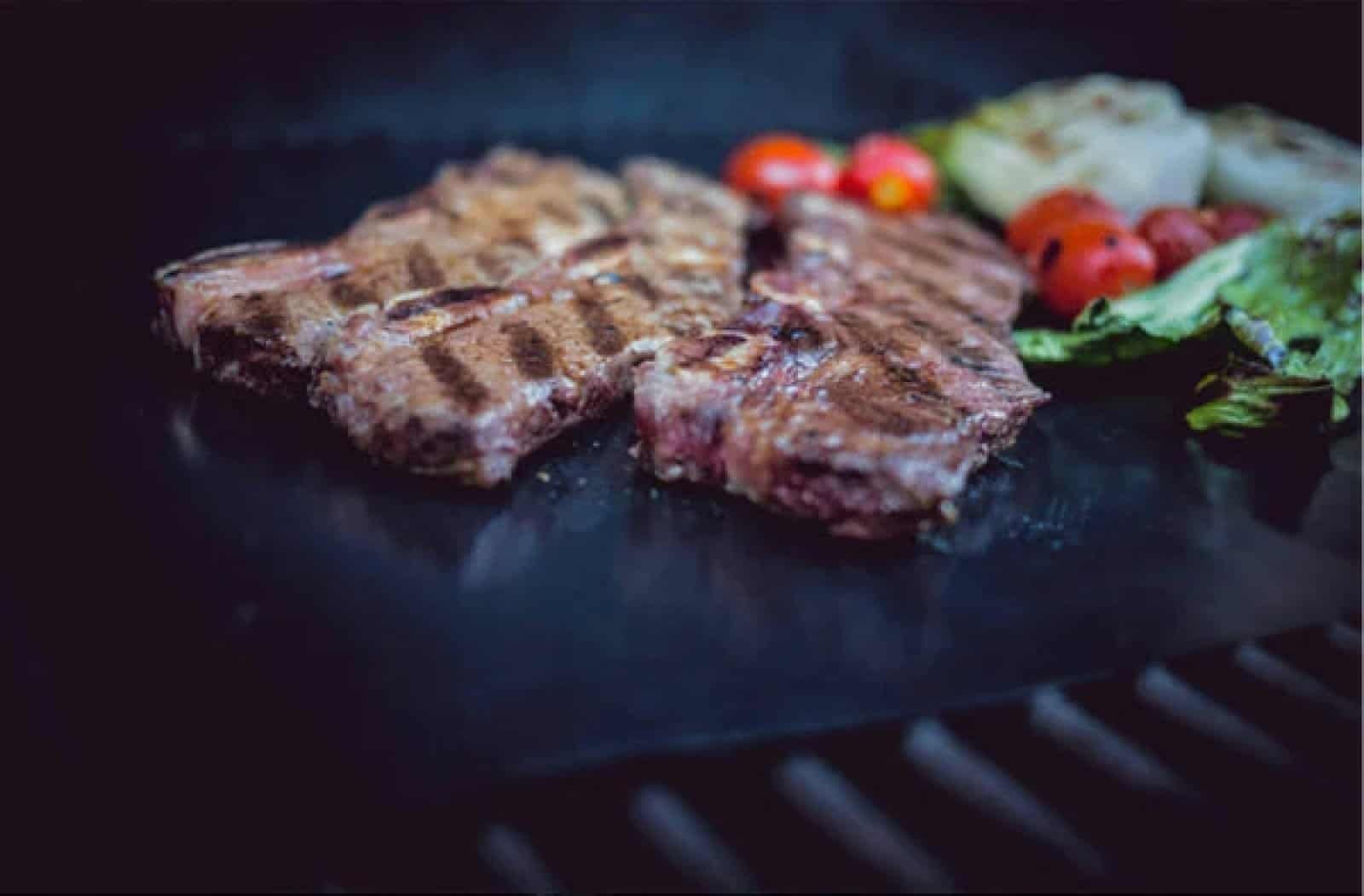
Grill mats are thin non-stick sheets laid over the grates so small or delicate food cooks without dropping into the fire. Grill mats trade a little char for a lot of control, which is why they suit fish, vegetables and anything that flakes, and why purists dislike them for steak. Our roundup of indoor grills covers the appliance many of these end up on.
The category is simpler than it looks. Nearly all of them are woven glass fiber with a non-stick coating, and the real differences are thickness, temperature rating and whether the surface is solid or perforated.
Buying badly usually means grabbing an unrated mat and finding it degrades the first time the grill runs hot.
Quick Verdict
Pick a mat rated well above your usual grilling temperature, and choose perforated if you want grate marks and smoke contact. Solid mats suit small vegetables, eggs and anything saucy. Thicker mats last longer and sit flatter. Whatever you buy, keep it off direct flame and away from the searing zone.
Key Takeaways
- Temperature rating is the specification that matters most.
- Perforated mats let smoke through and give marks; solid ones contain everything.
- Thicker mats stay flat instead of curling at the edges.
- Mats belong over grates, never over open flame or a lit burner.
- They reduce char, so they suit delicate food more than steak.
How We Picked
This is a research-based roundup rather than a hands-on cook test. Selections rest on published specifications, stated temperature ratings, manufacturer guidance and consistent user-reported feedback rather than on our own measurement.
The criteria that mattered were a clearly stated maximum temperature, coating durability under repeated heating, thickness, and whether the manufacturer names the coating rather than describing it vaguely.
Vague ratings were treated as a filter. A mat that does not state a temperature limit was excluded, because that number is the entire safety case for the product.
Grills vary a great deal in how hot they run, so check your own grill’s working temperature against any mat before first use.
Solid Non-Stick Grill Mat
Why It Stands Out
The plain solid sheet is the version most people mean by a grill mat. Nothing falls through, nothing sticks, and cleanup is wiping rather than scrubbing grates.
It also opens up food a grill cannot normally handle. Eggs, sliced onions, small shrimp and anything with a glaze all become straightforward.
Worth Knowing
You lose grate marks and most direct smoke contact, because the food never touches the metal. That is the honest trade, and it is why these divide opinion.
Fat pools on a solid mat rather than dripping away, so tipping the mat slightly or blotting mid-cook keeps things from stewing.
This suits small and delicate food. Skip it for steak, where the whole point is contact with hot metal.
Perforated Grill Mat for Marks and Smoke
Why It Stands Out
Perforated mats punch a grid of holes through the sheet, so heat and smoke reach the food while the holes stay small enough to hold vegetables and shrimp.
That is the compromise most grillers actually want. You keep some char and smoke flavor without losing dinner between the bars.
Worth Knowing
Anything genuinely small still escapes. Chopped garlic and sesame seeds will find the holes, so a solid mat is better for those.
The holes also let fat drip, which means flare-ups are still possible. That is a feature for flavor and a nuisance for delicate fish.
This suits vegetables, shrimp and kebab fillings. Skip it for very fine ingredients or anything with a loose marinade.
Heavy-Duty Thick Grill Mat
Why It Stands Out
Thicker mats hold their shape. Thin ones curl at the corners as they heat, which lifts food away from the surface and makes them awkward to load.
Thickness also buys life. The coating has more material under it, so it tolerates spatula contact and repeated heat cycles better.
Worth Knowing
Heat transfer slows slightly with thickness, so food takes a little longer than on bare grates. That is rarely a problem and occasionally an advantage on delicate items.
Storage matters more here. Thick mats crease if folded, so roll them instead, which our note on cleaning an indoor grill touches on for the accessories that live alongside it.
This suits regular grillers. Skip it if you grill twice a summer, where a thin mat is enough.
High-Temperature Rated Mat
Why It Stands Out
Some mats state a noticeably higher maximum temperature than the budget norm. If your grill runs hot, or you have no easy way to measure it, that headroom is worth paying for.
A mat used below its rating lasts a long time. A mat used above it degrades quickly and visibly.
Worth Knowing
A higher rating does not mean the mat belongs on the searing zone. Direct flame contact is a different failure mode from ambient heat, and no mat is rated for it.
Check that the number is stated by the manufacturer rather than only by a seller listing, since those sometimes differ.
This suits charcoal and anyone who runs the lid closed. Skip it if you cook low and slow, where a standard rating is ample.
Grill Mat Bag for Smoking and Steaming
Why It Stands Out
The bag version seals food inside a pouch of the same material. It steams in its own moisture, which suits fish, vegetables and anything you want to keep from drying out.
It also keeps strong flavors contained, so garlic and chilli do not transfer to whatever is cooking beside them.
Worth Knowing
You get no browning at all inside a bag. This is a moist cooking method that happens to run on a grill, and expecting char will disappoint.
Overfilling stops the heat reaching the middle, so leave room rather than packing it.
This suits fish and vegetable parcels. Skip it if you want any kind of crust.
Reusable Baking and Grill Mat Set
Why It Stands Out
Multipacks give you several mats to cut down to size, which is how most people use them. One full sheet for the grill, smaller pieces for a pan or an air fryer basket.
Cutting is expected rather than a warranty problem, so a set is genuinely more flexible than a single mat.
Worth Knowing
Cut edges fray slightly on the woven fiber. A clean cut with sharp scissors, not a knife, keeps that to a minimum.
Check the rating still applies to the pieces you cut, and do not assume an oven-rated mat is grill-rated. Our roundup of silicone baking mats covers the oven-side equivalent, which is a different material entirely.
This suits people using mats in several appliances. Skip it if you only ever grill, where one good mat is tidier.
Grill Mats at a Glance
| Type | Best for | Trade |
|---|---|---|
| Solid | Eggs, small veg, sauces | No marks, fat pools |
| Perforated | Shrimp, veg, some char | Fine items still fall |
| Heavy duty | Frequent grilling | Slightly slower heat |
| High temperature | Charcoal, lid closed | Costs more |
| Bag | Fish, steamed parcels | No browning at all |
| Cuttable set | Several appliances | Edges fray when cut |
How to Choose Grill Mats
Start with the temperature rating
Find your grill’s normal working temperature and buy a mat rated comfortably above it. This is the one specification worth being fussy about, and unrated mats should be avoided outright.
Decide whether you want grate marks
Perforated if marks and smoke matter, solid if containment matters. Owning one of each costs little and covers both, which is what most regular grillers end up doing.
Check thickness against your patience
Thin mats curl and wear faster but cost less. If you grill often, thicker pays for itself in not replacing it every season.
Measure your grate
A mat should sit inside the cooking area with clearance, not drape over the edges toward the burners. Buy for your grill rather than assuming a standard size.
Grill Mat or Grill Basket
When the mat wins
Flat food and anything you want to keep in one layer. Mats give an even surface, they are easy to clean, and they store flat. For fish fillets, halloumi, sliced vegetables and eggs, a mat is the simpler tool and it does not tumble delicate items around.
When a basket wins
Small loose food you want to toss. A basket lets you shake and turn everything at once and gives far more direct heat contact, so chopped vegetables brown properly instead of steaming. Baskets also handle round items that would roll off a mat. If most of your grilling is chopped vegetables, the basket is the better first purchase, and our comparison of indoor grills against air fryers is worth reading if browning small food is the actual goal.
Common Mistakes to Avoid
Putting a mat over open flame
Mats go on the grates, with the grates between them and the fire. Direct flame contact exceeds every rating on the market and ruins the coating immediately.
Cutting on the mat
A knife slices the coating and the fiber underneath, and once the weave is exposed the mat is finished. Move food to a board before cutting it.
Using metal tools carelessly
Sharp metal edges scrape the coating off over time. Silicone or wood tools extend a mat’s life considerably, and our roundup of metal spatulas and turners is the thing to leave in the drawer here.
Scrubbing with an abrasive pad
Most mats wipe clean with soapy water, and the ones that go in a dishwasher say so. A wire brush destroys the surface, which is the opposite of the point, so keep our wire brushes for the grates themselves.
Recommended Reading
See our roundup of electric grills under 100, our guide to choosing an indoor grill, our note on whether indoor grills sear steak, and our comparison of grill pans against griddles.
Grill Mats FAQ
Are grill mats safe to use at high heat?
They are safe within their stated temperature rating, which is why that number matters more than any other specification. Used above it, the coating breaks down. Never place one over open flame or a lit burner, only over grates.
Do grill mats stop you getting grill marks?
Solid mats do, because the food never touches metal. Perforated mats give partial marks and let smoke through, which is the usual compromise for people who want both containment and some char.
Can you cut a grill mat to size?
Most are designed to be cut, and multipacks are sold on that basis. Use sharp scissors for a clean edge, since a rough cut frays the woven fiber underneath the coating.
How do you clean a grill mat?
Warm soapy water and a soft cloth handles nearly everything, because the surface is non-stick. Some are dishwasher safe and will say so. Avoid wire brushes and abrasive pads, which strip the coating.
How long does a grill mat last?
It depends far more on how you treat it than on the calendar. Kept below its rating, used with soft tools and washed gently, a decent mat lasts a long time. Replace it once the coating flakes or the weave shows through.
Do grill mats work on charcoal?
Yes, with more care, because charcoal runs hotter and less evenly than gas. Keep the mat away from the hottest zone directly over the coals, and choose a higher temperature rating.
Will food still taste grilled on a mat?
Less so on a solid mat, since smoke contact is reduced and there is no direct sear. Perforated mats keep more of it. If smoke flavor is the reason you grill, use the mat only for the items that need it.
Can you use a grill mat in an oven or air fryer?
Often yes, but check the rating rather than assuming. Grill mats and oven liners are made from similar material at different thicknesses, and a mat rated for grill temperatures is usually comfortable in an oven. In an air fryer, make sure it cannot lift into the element.
