
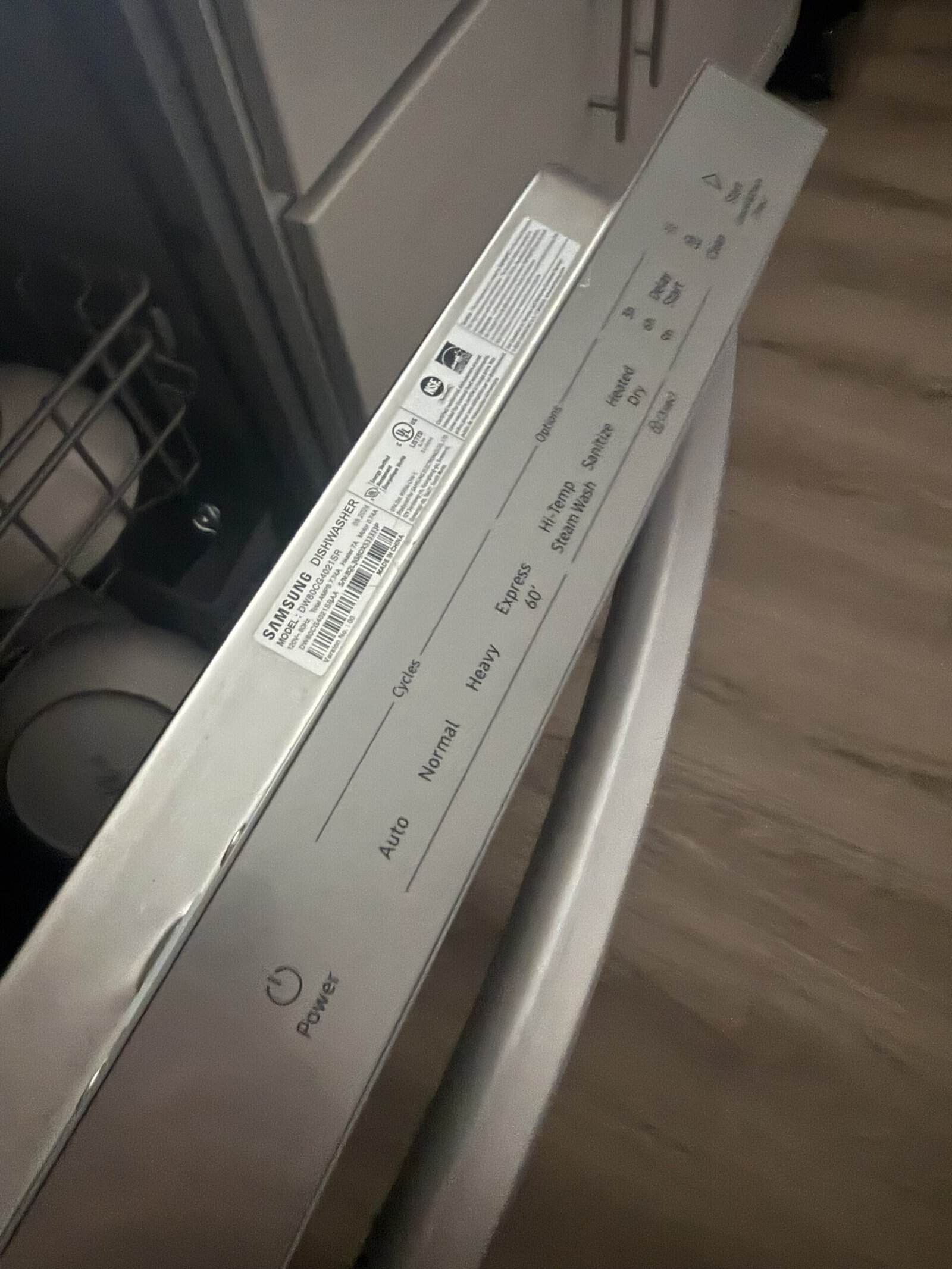
Around a decade of ordinary household use, with the drain pump, the door latch and the heating element failing long before the machine as a whole does. How long dishwashers last depends more on water hardness and cycles run than on the badge, and the decision to replace is almost always economic rather than terminal.
The table below sorts the usual failures by whether they are worth fixing.
| Part | What you notice | Worth fixing? |
|---|---|---|
| Door latch or switch | Will not start, or starts and stops | Yes, cheap and common |
| Drain pump | Standing water at the end | Usually yes |
| Heating element | Cold water, no drying on older models | Usually yes |
| Spray arm bearing | Arm no longer spins freely | Yes, inexpensive part |
| Racks rusting | Rust marks on dishes | Yes, repair kits exist |
| Door gasket | Leaking at the door | Yes |
| Circulation pump or motor | Loud, or dishes not cleaning | Borderline on an older machine |
| Control board | Random behavior, dead panel | Often where repair stops paying |
| Tub cracked or rusted through | Leaking from the base | No |
Quick Answer
Expect roughly a decade from ordinary use. Latches, pumps, elements, gaskets and racks are all replaceable and usually worth it. A control board or a cracked tub is where replacement wins. Hard water, heavy cycle use and skipping filter cleaning all shorten the run considerably.
Cycles Matter More Than Years
A dishwasher ages by cycles, not by calendar. A household running it twice daily is putting through several times what a single person running it twice a week does.
Pumps, motors, latches and seals all wear per cycle. Nothing degrades meaningfully while the machine sits idle.
That is why published lifespan figures are ranges rather than numbers, and why two machines bought together can be in completely different condition.
The useful question is how many loads it has run. Our guide to how long electric kettles last covers the same logic on a much cheaper appliance.
Water Hardness Is the Other Clock
What scale does
Minerals deposit on the heating element, the spray arms and the interior. The element is the part where buildup does real damage, because scale insulates it and makes it run hotter.
Where it shows first
Chalky white film on the tub and on glassware. That is deposit, not dirt, and scrubbing is not the answer.
What it costs you
A shorter element life, reduced spray coverage as holes narrow, and worse cleaning results long before anything fails outright.
What to do about it
Run a citric-acid cleaner periodically, and keep the softener salt topped up on machines that have a softener. Our guide to why your dishwasher leaves spots covers the visible side of hard water.
The Failures Worth Repairing
Door latches and their switches are the most common single failure, and they present as a machine that will not start at all. The part is inexpensive.
Drain pumps fail and are a standard replacement. Heating elements fail and are usually accessible.
Spray arm bearings, door gaskets and rack repair kits all cost little and restore normal function.
Rusting racks are worth fixing rather than tolerating, since rust marks transfer to dishes. Our guide to whether to rinse dishes before loading covers the habit that keeps the most debris away from the pump.
Where Repair Stops Paying
Control boards are the usual dividing line. The part can cost a substantial fraction of a new machine, and on an older unit that arithmetic rarely works.
A cracked or rusted-through tub is terminal. There is no repair for the shell.
A circulation motor on a machine already past its expected run is borderline, because you are investing in a unit whose other parts are the same age.
Parts availability is the quiet constraint on older machines, and it decides some repairs before price does. Our guide to when to replace a coffee maker covers the same repair-or-replace judgment.
One factor pushes the math toward repair more than people expect. A built-in dishwasher is plumbed and wired into a cabinet opening, so replacing it means disconnecting a water supply, a drain and a circuit.
That turns a purchase into an installation, and it is why a repair that looks marginal on price alone often still wins. A countertop or portable unit has none of that, so replacement there is genuinely just buying a box.
What Shortens the Run
- Never cleaning the filter. A blocked filter makes the pump work against resistance every cycle.
- Running heavy cycles by default. Hotter and longer means more wear per load.
- Overloading. Items jamming spray arms put load on the bearing and the motor.
- Ignoring hard water. Scale on the element is cumulative and does not reverse.
- Slamming the door. The latch is the most common failure point already.
- Leaving it unused for long stretches. Seals dry and gaskets stiffen.
Our guide to whether knives can go in the dishwasher covers what does not belong in there at all, and our guide to deep cleaning a kitchen covers folding the filter into a routine you actually keep.
Signs It Is Near the End
Dishes coming out dirty after the filter and spray arms have both been cleared suggests the circulation pump is losing pressure.
Rust in the tub itself, rather than on the racks, means the coating has failed and water is reaching the shell.
Leaking from the base rather than the door is a different and more serious category than a worn gasket.
Repeated unrelated faults in a short span point at general age rather than bad luck. Our guide to how long a rice cooker lasts covers reading that pattern on a small appliance, and our guide to when to replace baking sheets covers the opposite case, where wear is cosmetic rather than functional.
Getting More Years Out of It
Clean the filter. It is the single highest-value habit and it takes two minutes at the sink.
Use the normal cycle rather than the heaviest one by default, and reserve the intensive setting for loads that need it.
Run a citric-acid cleaner periodically in hard water, keep softener salt topped up where applicable, and close the door rather than swinging it.
Load so both spray arms turn freely, which protects the bearing and the motor as much as it improves cleaning. For reference on what the machine should be handling in the first place, our roundup of dishwasher safe cookware covers pieces that survive repeated cycles, and our guide to how often to replace air purifier filters covers the same filter-neglect pattern on another appliance. Our guide to how long a vegetable peeler should last covers the far end of the price spectrum, where replacement is always the answer.
Frequently Asked Questions
How long do dishwashers last?
Around a decade of ordinary household use, though cycles run matter far more than calendar years. A household running two loads a day is putting through several times the wear of a single person running two loads a week.
What fails first on a dishwasher?
The door latch and its switch, which present as a machine that will not start at all and cost very little to replace. Drain pumps, heating elements, spray arm bearings, door gaskets and rack coatings follow, and all are repairable.
Is a dishwasher worth repairing?
Usually, for latches, pumps, elements, gaskets, spray arms and racks. The line is the control board, where the part can cost a substantial fraction of a new machine. A cracked or rusted-through tub is terminal.
Does hard water shorten a dishwasher’s life?
Yes. Scale deposits on the heating element insulate it and make it run hotter, which shortens its life, and it narrows spray arm holes so cleaning degrades first. A citric-acid cleaner run periodically is the countermeasure.
Does cleaning the filter really extend its life?
It is the highest-value habit available. A blocked filter means the pump works against resistance on every cycle, and it also causes food to redeposit on dishes. Two minutes at the sink prevents both.
What are the signs it is near the end?
Dishes still coming out dirty after the filter and spray arms have been cleared, rust in the tub itself rather than on the racks, leaking from the base rather than the door, and several unrelated faults in a short span.
Do expensive dishwashers last longer?
Not reliably. Price often buys quieter operation, better drying and more cycle options rather than a longer mechanical life. Water hardness, cycle count and whether the filter gets cleaned matter more than the purchase price.
Can you still get parts for an older machine?
Sometimes not, and availability decides some repairs before price does. That is worth checking before committing to a diagnosis fee on a machine already past its expected run.
