
A basic rice cooker typically lasts somewhere between five and ten years, and the inner pot usually wears out long before the machine does. That distinction matters, because a worn pot is a cheap replacement and a failed heating element usually is not.
Quick Answer
Simple switch models tend to outlive complex ones because there is less to fail. Expect the nonstick inner pot to degrade within a few years of regular use, and the cooker itself to keep working long after. Replacing the pot is often all that is needed.
Key Points
- The inner pot wears before the machine does
- Replacement pots cost a fraction of a new cooker
- Switch models have fewer parts to fail than fuzzy logic ones
- Nonstick coating is the most common wear point
- How you clean it affects lifespan more than how often you use it
- Flaking coating is the point to stop using a pot
What Fails and When
| Part | Typical life | Replaceable |
|---|---|---|
| Nonstick inner pot | 2 to 5 years | Yes, sold separately |
| Lid gasket or seal | 3 to 6 years | Usually |
| Switch mechanism | 5 to 10 years | Rarely worth it |
| Heating element | 8 to 15 years | No, replace cooker |
| Control board (fuzzy logic) | 4 to 8 years | Rarely worth it |
| Steamer tray | Indefinite | Yes |
Why Simple Models Often Last Longer
A basic switch cooker has a heating plate, a thermostat, and a mechanical switch. There is very little in it that can break.
Fuzzy logic and induction models add sensors, a control board, and a display. Each is a genuine improvement in cooking and another component with a failure point.
When a control board fails, repair is rarely economic. When a mechanical switch fails, the same is often true, and switches fail far less often.
That is not an argument against buying a better cooker. It is a reason a cheap one from a decade ago may still be running while a more capable model needed replacing, and the tradeoffs sit in choosing a rice cooker.
Where Mine Is After a Year
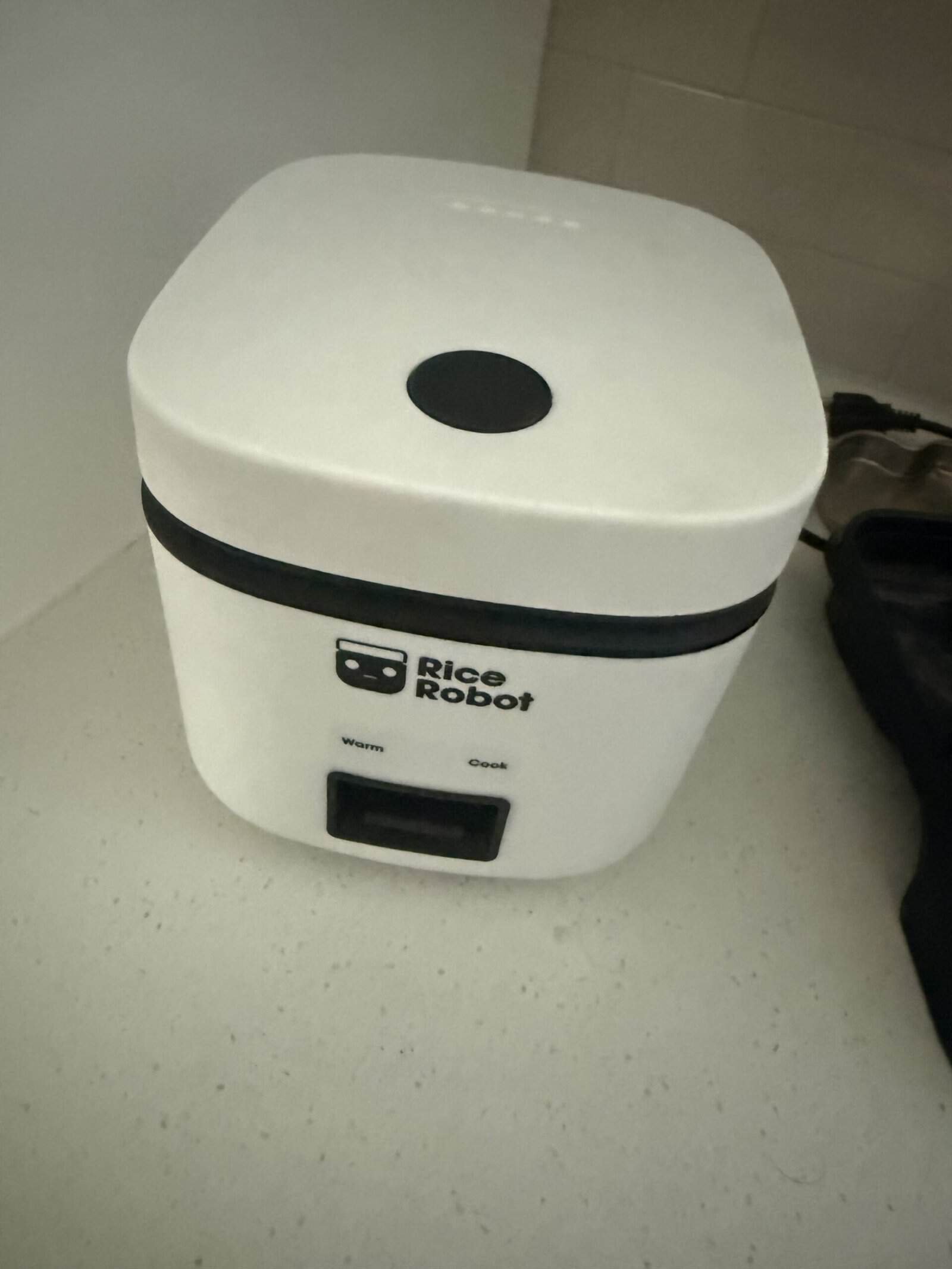
I have had my rice cooker a little over a year. It is a basic switch model with a steamer tray, and it is the first one I have owned.
The only wear anywhere on it is on the nonstick inner pot, which has gone slightly patchy. Everything else is exactly as it was.
The switch still trips at the right point, the lid still sits properly, and the steamer tray is unmarked. Nothing has developed a rattle or a smell.
The pot wear is not surprising given what I do to it. Rice sticks to the bottom most times I cook, and I scrape it out with a spoon, which is exactly the habit that shortens a coating’s life.
A year is not long enough to say anything about the machine’s lifespan. What it does suggest is the pattern others describe, which is that the pot degrades on its own timeline while the cooker carries on.
If the coating gets worse I will replace the pot rather than the cooker, since there is nothing wrong with the rest of it.
What Shortens the Life of the Pot
Metal utensils
Spoons and forks scratch nonstick, and scraping a stuck layer with metal does it faster than anything else. Silicone or wood is the better habit.
Abrasive cleaning
Scouring pads and powders take the coating off along with the residue. Soaking in warm water lifts almost everything without any of that.
Letting it dry before cleaning
A dried-on layer needs scrubbing where a soaked one wipes away. The difference in effort translates directly into coating wear.
Dishwashers
Detergent and heat degrade nonstick faster than hand washing, and many inner pots are not rated for it. Checking the manual matters here, and technique sits in cleaning a rice cooker.
When to Replace the Pot Rather Than the Cooker
Visible flaking is the point to stop using a nonstick pot. Coating coming away means it is going somewhere, and that somewhere is your food.
Deep scratches, patches where rice sticks badly, and discoloration that will not clean off all indicate a pot near the end.
Many manufacturers sell replacement inner pots, typically for a fraction of a new cooker. Checking availability before buying is worth doing, since not every brand offers them.
If a replacement is not available and the cooker otherwise works, a generic pot of the right diameter sometimes fits, though the fit affects how the thermostat reads temperature.
Signs the Cooker Itself Is Failing
It stops switching off
The mechanism that trips from cook to warm is the most common electrical failure on a switch model. Rice that burns rather than finishing points at this.
It switches off too early
Undercooked rice with water remaining suggests the thermostat is reading wrong, often because something is trapped between the pot and the plate.
The heating plate is uneven
Food cooked in one area and raw in another means poor contact, sometimes from debris on the plate and sometimes from a warped pot.
Electrical warning signs
A burning smell, visible damage to the cord, sparking, or a unit that trips a breaker all mean stop using it. Those are not maintenance issues.
Repair, Replace, or Live With It
Three failures cover most of what goes wrong, and the right answer differs for each.
A worn pot is the easy case. Order a replacement, keep the cooker, and you are back to normal for a small fraction of a new unit. This is by far the most common thing that happens.
A hardened lid seal is usually replaceable too, and the symptom is subtle enough that people live with it for years. Steam escaping means longer cooking times and a wetter counter, and a gasket costs very little.
A failed switch or control board is where it stops being worth it. Parts are rarely sold, service costs approach a new cooker, and opening a mains appliance is not a casual repair.
The awkward middle case is a cooker that works but has become unreliable, finishing early some days and not others. That is usually the thermostat or debris on the plate, and cleaning the plate properly is worth trying before giving up on it.
Anything electrical, including a damaged cord, a burning smell, or a unit that trips a breaker, goes straight to replacement rather than repair.
Getting More Years Out of It
Wipe the heating plate whenever anything spills onto it. Debris between the plate and the pot causes uneven heating and thermostat problems.
Check the lid seal occasionally. A gasket that has hardened lets steam escape, which changes cooking times gradually enough that people adjust without noticing.
Store it with the lid open or off. A sealed cooker holds residual moisture, which is how smells develop inside.
Use the steamer tray. It sees almost no wear, and it turns a single-purpose appliance into something that also handles vegetables and eggs, covered in rice cookers with steamers.
Related Reading
- cleaning a rice cooker
- choosing a rice cooker
- why rice sticks to the bottom
- using a rice cooker
- models with steamers
- stainless steel inner pots
- fuzzy logic models
Frequently Asked Questions
How long should a rice cooker last?
Five to ten years is typical for a basic model, and the heating element often outlives that. The inner pot usually needs replacing well before the machine does.
How long does the nonstick pot last?
Two to five years with regular use, and less if you scrape it with metal utensils or scrub it. Replacement pots are sold separately by many manufacturers.
Do cheap rice cookers last as long?
Often longer than complex ones, because a switch model has almost nothing that can fail. Fuzzy logic and induction models add capability and more failure points.
When should I stop using a nonstick pot?
When the coating flakes. Scratches and dull patches mean it is wearing, and flaking means material is coming away into your food.
Can I replace just the inner pot?
Usually. Many manufacturers sell them for a fraction of a new cooker, though availability varies by brand and by how old the model is.
What makes a rice cooker fail?
On switch models, the mechanism that trips from cook to warm. On fuzzy logic models, the control board. Heating elements themselves last a long time.
Does using it daily wear it out faster?
Less than how you clean it. Metal utensils, abrasive scrubbing, and letting residue dry on all shorten pot life more than frequency of use does.
Our guide to how long microwaves last covers the same repair-or-replace calculation on a larger appliance.
