
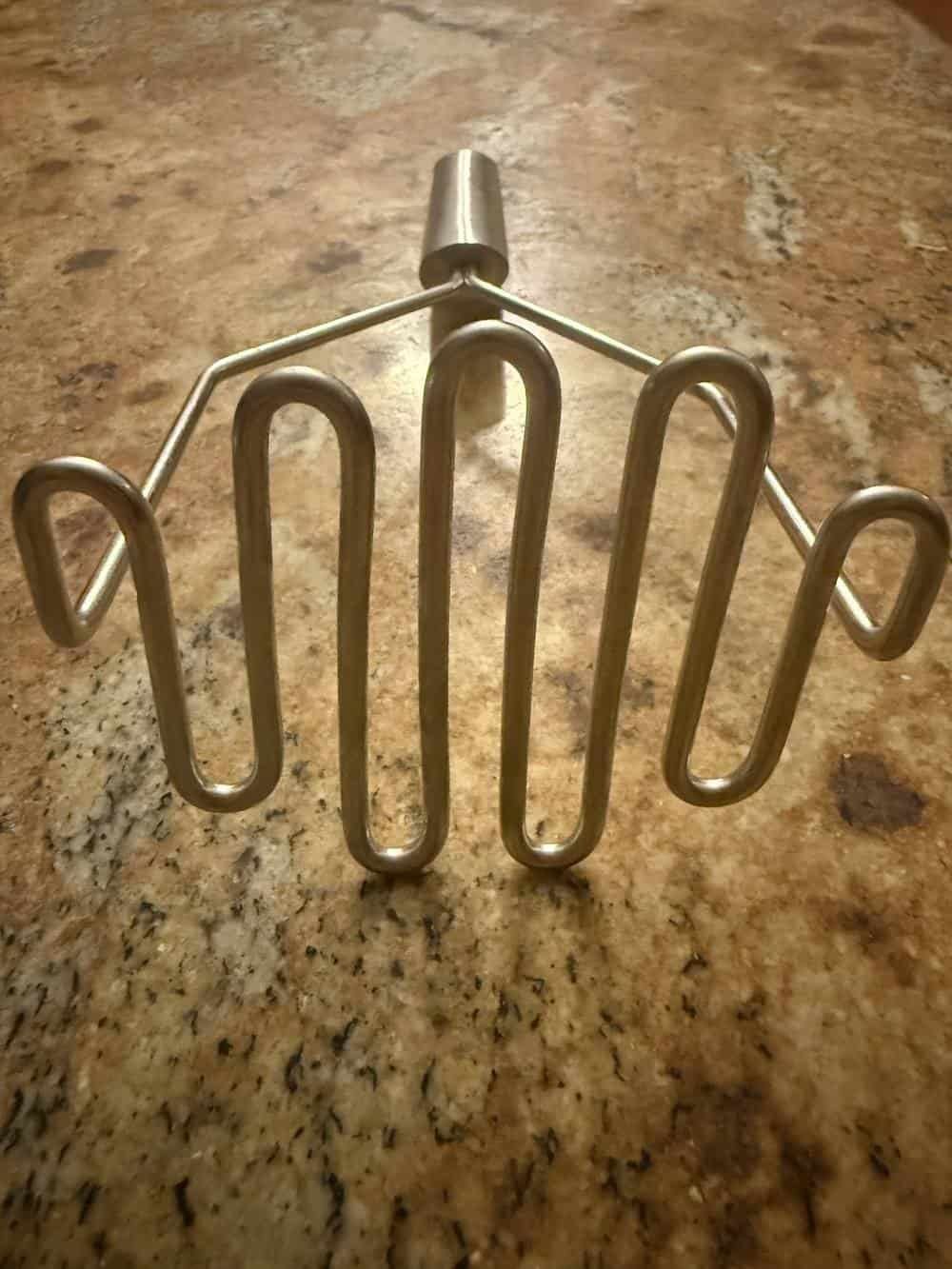
The best potato masher is sturdy enough to push through dense potatoes, comfortable to grip, and simple to clean. Choosing one comes down to the mashing style, the build quality, and how easy it is to wash. The masher I actually use is a heavy-duty stainless steel wire masher, and it has held up to plenty of use without bending while staying easy to rinse clean. Below are six potato mashers worth buying, from wire mashers to ricers and plate styles. For the rest of your prep kit, see our mixing bowl sets guide.
Quick Verdict
For most kitchens, a heavy-duty stainless steel wire masher is the one I would point to, and it is what I use myself: durable, easy to clean, and up to everyday mashing. If you want ultra-smooth mash a ricer is better, dense mixed vegetables suit a plate-style masher, nonstick pots call for a silicone-coated masher, and keen cooks may like a masher-and-ricer set.
Why Trust This Guide
Independent picks, reader-supported through affiliate links at no cost to you. One pick reflects genuine personal use; the rest draw on product research and manufacturer specs.
Key Takeaways
- A sturdy masher pushes through potatoes easily and should be simple to clean.
- Heavy-duty stainless wire mashers are durable everyday all-rounders and rinse clean easily.
- Ricers give the smoothest, lump-free mash but have more parts to clean.
- Plate-style mashers handle dense vegetables that can bend thin wire.
- Silicone-coated mashers protect nonstick cookware from scratches.
How I Picked These Potato Mashers
These picks cover the main masher styles by mashing method, build quality, and cleaning, with one, a heavy-duty stainless wire masher, being the one I use myself, and the rest chosen from product research. The goal was a short list spanning durable wire mashers to ricers and plate styles rather than six near-identical tools.
1. Stainless Steel Wire Masher, My Everyday Masher
The masher I actually use is a heavy-duty stainless steel wire masher, and it is the one I reach for every time. It is sturdy, well made, and has held up to plenty of use without bending or wearing out.
Why It Stands Out
What I like about it is that it feels genuinely heavy-duty and durable, the kind of tool made to last rather than something you replace every year. The stainless wire pushes through potatoes easily, and just as importantly it is easy to clean, since the open wire design rinses off without mash getting trapped. For me it hits the sweet spot of high quality and low fuss.
What I Observe
My heavy-duty stainless wire masher has taken plenty of use without the wire bending, and the open design rinses clean without mash getting stuck in it.
Worth Knowing
A wire masher leaves a slightly more rustic texture than a ricer, so if you want ultra-smooth mash a ricer does that better. Stainless is dishwasher-safe, though a quick rinse right after use keeps it easiest to clean. Look for solid, thick wire like mine rather than thin wire that can flex.
I mash straight in a sturdy pot or a mixing bowl that can take the pressure.
Best For: Best for most people wanting a durable, easy-to-clean everyday masher. Skip only if you want restaurant-smooth mash, where a ricer wins.
2. Potato Ricer, Best for Smooth Mash
A potato ricer presses cooked potatoes through small holes for the smoothest, lightest, most lump-free mash, the tool for people who want a refined texture.
Why It Stands Out
The ricer forces cooked potato through a grid of fine holes, breaking it into fine strands so the result is exceptionally smooth and fluffy, with no lumps and minimal effort once the hopper is loaded. The same tool handles other soft vegetables and even makes gnocchi dough easier. Chefs favor ricers precisely because that light, airy texture is hard to match with any other masher, at the cost of an extra tool to store and clean.
Worth Knowing
Ricers have more parts to clean and take up more space than a simple masher. They are a specialized tool rather than an all-rounder.
For loading and serving, a mixing bowl nearby keeps things tidy.
Best For: Best for people who want the smoothest possible mash. Skip if you prefer a rustic texture or minimal cleanup.
3. Plate-Style Masher, Best for Dense Vegetables
A plate-style masher has a flat, perforated disc instead of wire, giving more surface area to crush dense vegetables like carrots, squash, and swede alongside potatoes.
Why It Stands Out
The solid perforated plate pushes through firmer vegetables like carrots, parsnips, and squash that can bend or slip past flimsy wire, making it versatile for a mixed root-vegetable mash. The broad flat face covers more area per push, so you mash a full pot faster. It suits cooks who mash more than just potatoes and want one tool that copes with the dense stuff.
Worth Knowing
Mash can stick in the plate holes and need a bit more cleaning than open wire. Choose a sturdy plate that will not flex under dense vegetables.
Best For: Best for dense and mixed vegetable mashes. Skip if you only mash soft potatoes and want the easiest cleanup.
4. Silicone-Coated Masher, Best for Nonstick Pots
A masher with a silicone coating lets you mash directly in nonstick pots and pans without scratching the surface, protecting your cookware.
Why It Stands Out
The silicone coating is gentle on nonstick surfaces, so you can mash in the same pot you boiled in without leaving marks, combining the mashing function with cookware protection. It is ideal for people who mash in their good nonstick pans.
Worth Knowing
Silicone coatings can wear over time and are less heat-tolerant than bare stainless. Check that the coating is well bonded and heat-safe for your use.
See our utensil sets guide for more nonstick-safe tools.
Best For: Best for mashing in nonstick cookware. Skip if you mash in stainless or ceramic pots where scratching is not a concern.
5. Budget Masher, Best Value
An inexpensive masher covers the basics for a low price, an easy way to get the job done or to keep a spare without spending much.
Why It Stands Out
Even a budget masher mashes soft potatoes perfectly well for little money, which makes it accessible for a first kitchen or handy as a backup in a drawer. Basic stainless or sturdy plastic designs handle everyday mash fine, and the low cost means you are not out much if your needs change. It is a sensible starting point before deciding whether you want a premium tool.
Worth Knowing
Cheaper mashers may use thinner wire or flimsier handles that flex or wear faster, so check the build. Treat one as a practical basic rather than a lifetime tool.
Best For: Best for occasional use or a spare on a budget. Skip if you want a heavy-duty, long-lasting masher.
6. Masher and Ricer Combo Set, Best for Variety
A set that pairs a masher with a ricer, or includes interchangeable discs, covers both rustic and smooth mash in one purchase for people who want options.
Why It Stands Out
Having both a masher and a ricer, or a masher with swappable plates, lets you choose a rustic or silky texture depending on the meal without buying tools separately over time. It is a flexible option for keen cooks who make mash often and care about matching the texture to the dish. One purchase covers more mashing styles, which can work out cheaper than buying each tool on its own.
Worth Knowing
Sets cost more and take up more drawer space than a single tool. Make sure each piece is good quality, not just bundled to pad the count.
Store the pieces with your other tools from our utensil sets guide.
Best For: Best for cooks who want both rustic and smooth mash options. Skip if one style is all you need.
Potato Masher Styles at a Glance
| Style | Best For | Texture | Cleanup |
|---|---|---|---|
| Stainless wire | Everyday mash | Rustic to smooth | Easy |
| Ricer | Smoothest mash | Very smooth | More parts |
| Plate-style | Dense vegetables | Rustic | Moderate |
| Silicone-coated | Nonstick pots | Rustic | Easy |
How to Choose a Potato Masher
Decide on the texture you want
A wire or plate masher gives a rustic, slightly textured mash, while a ricer produces the smoothest, fluffiest result. Start by deciding whether you like rustic or silky mash, since that points to the style.
Prioritize a sturdy, durable build
Thin wire or a flimsy handle flexes and wears out, so look for heavy-duty stainless with solid wire or a sturdy plate. A well-made masher pushes through potatoes more easily and lasts for years, which is exactly why a heavy-duty one is worth it.
Consider cleaning and your cookware
Open wire mashers rinse clean easily, ricers and plates trap more mash, and silicone-coated mashers protect nonstick pots. Match the masher to how you cook and how much cleanup you want to do.
Common Potato Masher Mistakes to Avoid
Buying a flimsy masher
Thin wire or a weak handle bends under dense potatoes and wears out fast. A heavy-duty stainless masher pushes through more easily and lasts far longer, making it worth choosing sturdy from the start.
Over-mashing potatoes
Working potatoes too hard, especially with a ricer then more mashing, can make them gluey. Mash just until smooth, and avoid a food processor, which turns potatoes pasty.
Mashing in a nonstick pot with bare metal
A bare stainless masher can scratch nonstick pots. Use a silicone-coated masher in nonstick cookware, or mash stainless in a sturdy pot or bowl that can take it.
Wire Masher vs Ricer: Which for Your Mash
Wire masher for durable everyday mash
A heavy-duty wire masher is sturdy, rinses clean easily, and handles daily mashing, which is why I use one. It leaves a slightly rustic texture rather than ultra-smooth, and lasts for years.
Ricer for the smoothest result
A ricer presses potatoes through fine holes for silky, lump-free mash, the choice for a refined texture. It has more parts to clean and is more of a specialized tool than an all-rounder.
Recommended Reading
- Best Mixing Bowl Sets
- Best Kitchen Utensil Sets
- Best Vegetable Peelers
- Best Chef Knives
- choosing the right cookware
Frequently Asked Questions About Potato Mashers
What is the best type of potato masher?
A heavy-duty stainless steel wire masher is the best all-around choice for most people, being durable, easy to clean, and good for everyday mash, which is why it is the one I use. Those wanting the smoothest mash may prefer a ricer.
Is a ricer better than a masher?
A ricer produces smoother, fluffier, more lump-free mash than a masher, but it has more parts to clean and is more specialized. A wire masher is more versatile and easier to clean for everyday use, while a ricer excels at silky texture.
How do I clean a potato masher?
Open wire mashers rinse clean easily and are usually dishwasher-safe, while ricers and plate-style mashers trap more mash and need more attention. Rinsing right after use, before mash dries on, keeps any masher easiest to clean.
What should I look for in a durable masher?
Look for heavy-duty stainless steel with solid, thick wire or a sturdy plate and a firm handle, since thin wire and flimsy handles flex and wear out. A well-made, heavy-duty masher pushes through potatoes more easily and lasts for years.
Can I use a metal masher in a nonstick pot?
A bare metal masher can scratch nonstick surfaces, so use a silicone-coated masher in nonstick cookware, or mash in a sturdy stainless pot or bowl. Protecting nonstick pans extends their life.
Why is my mashed potato gluey?
Gluey mash usually comes from over-working the potatoes, which releases too much starch, especially with a food processor. Mash just until smooth with a masher or ricer and avoid overprocessing for fluffy results.
Are stainless steel mashers dishwasher-safe?
Most stainless steel mashers are dishwasher-safe, though a quick hand rinse right after use is the easiest way to keep them clean. Check the manufacturer’s guidance for coated or combination tools.
Small tools compete for the same drawer. organising a kitchen covers storage.
