
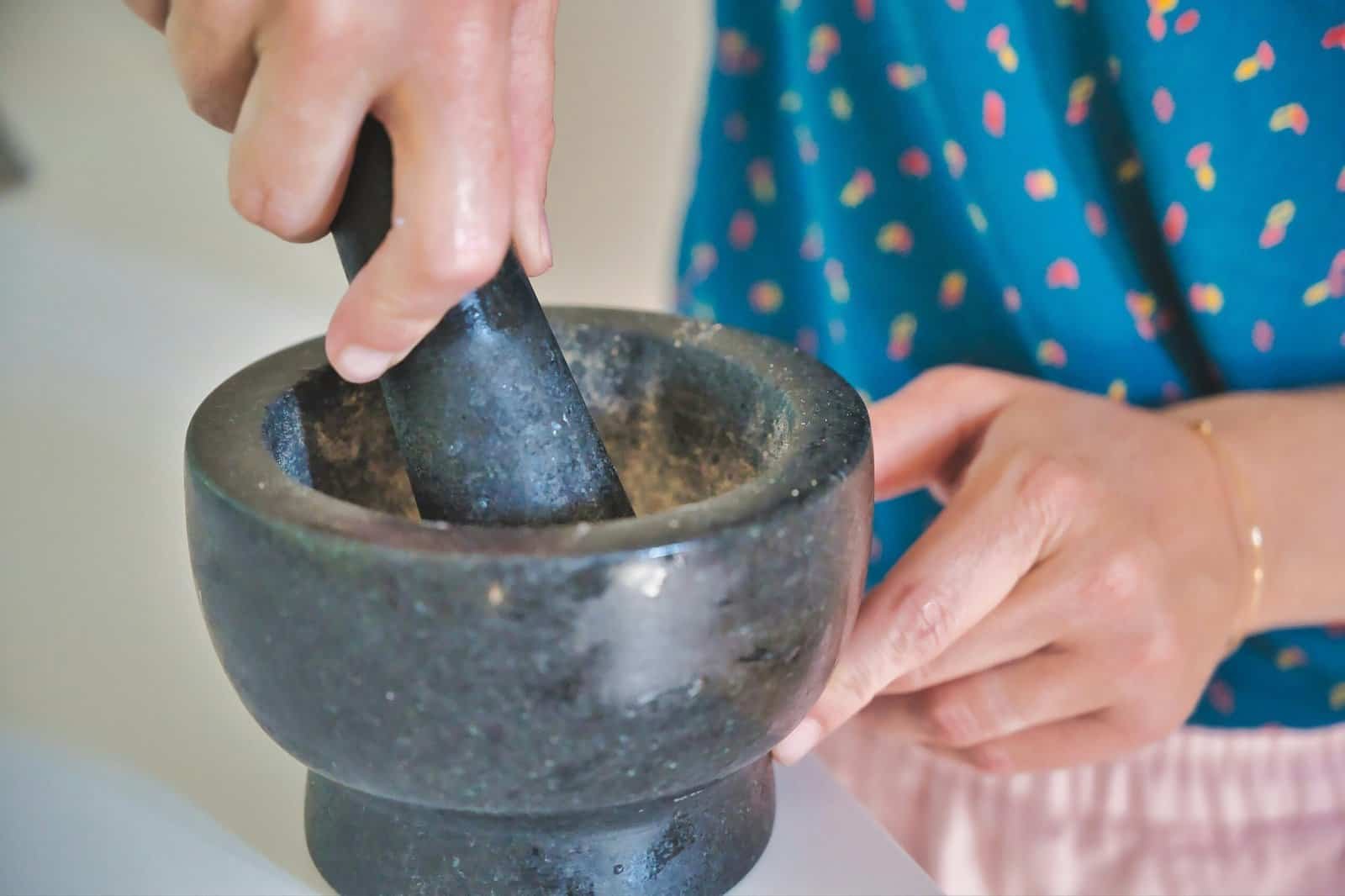
Choose a mortar and pestle for control, texture, and wet pastes, and an electric spice grinder for speed and uniform dry grinding in volume. That is the short answer to the mortar and pestle vs spice grinder question, and many cooks keep both for different jobs. A mortar crushes and releases oils by hand, while a grinder powders spices in seconds. This guide compares them on flavor, speed, versatility, and cleanup, so you can pick the right tool, or know when to reach for each.
Quick Verdict
Pick a mortar and pestle for control, coarse textures, small batches, and wet pastes like garlic, pesto, and guacamole, where crushing releases the most flavor. Pick an electric spice grinder for speed and a fine, uniform powder when grinding larger amounts of dry whole spices. Cooks who value texture and pastes lean mortar; those grinding volume lean grinder. Many keep both.
Key Takeaways
- A mortar and pestle gives control, coarse-to-fine texture, and handles wet pastes.
- An electric spice grinder is fast and produces a fine, uniform powder in volume.
- Crushing by hand releases spice oils gradually; a grinder heats and pulverizes quickly.
- The mortar wins on versatility and flavor control; the grinder wins on speed and volume.
How We Compared Them
We weighed the factors that shape everyday cooking: flavor and control, speed and effort, versatility across wet and dry ingredients, texture consistency, cleanup, and cost. We also considered noise and how each handles small versus large batches. The goal is a practical choice for your kitchen, so each section names which tool wins for that factor and where either does the job well.
Mortar and Pestle vs Spice Grinder at a Glance
| Factor | Mortar and Pestle | Electric Spice Grinder |
|---|---|---|
| Speed | Slower, by hand | Fast, seconds |
| Texture control | Coarse to fine, your call | Fine and uniform |
| Wet pastes | Handles garlic, pesto, guac | Dry spices only |
| Batch size | Small to medium | Larger dry batches |
| Cleanup | Rinse or wipe | Wipe out the chamber |
| Noise and power | Silent, no power | Loud, needs power |
Mortar and Pestle: Pros and Cons
A mortar and pestle crushes ingredients by hand against a heavy bowl, letting you control the texture and release oils gradually as you grind.
Pros
- Full control over texture, from coarse crush to fine powder.
- Handles wet pastes like garlic, pesto, and guacamole.
- Releases spice oils gently without heat.
- Silent, needs no power, and doubles as a serving bowl.
Cons
- Slower and takes physical effort.
- Less practical for large dry batches.
- Heavy to lift and store.
Choose it for control, texture, and wet pastes. Skip it if you frequently grind large amounts of dry spice quickly.
Electric Spice Grinder: Pros and Cons
An electric spice grinder uses spinning blades to pulverize dry spices into a fine, uniform powder in seconds with the press of a button.
Pros
- Fast, powering through spices in seconds.
- Produces a fine, uniform powder.
- Handles larger dry batches with little effort.
- Simple one-button operation.
Cons
- Dry spices only; cannot make wet pastes.
- Less control over coarseness.
- Loud, needs power, and can heat spices slightly.
Choose it for speed and volume with dry spices. Skip it if you want texture control or grind wet pastes.
Head-to-Head, Factor by Factor
Flavor and Control
The mortar wins for flavor control. Crushing by hand releases spice oils gradually and lets you stop at any texture, from a coarse crack to a fine powder, which many cooks feel gives a richer, more nuanced result. A grinder’s fast blades pulverize uniformly and can heat spices slightly, offering less say over texture. For hands-on flavor and coarse finishes, the mortar leads. Winner for control: mortar and pestle.
Speed and Effort
The grinder wins on speed. It powders spices in seconds with a button press and no arm work, which is a clear advantage when you grind often or in quantity. A mortar takes time and physical effort, especially for hard whole spices. For fast, low-effort grinding, the electric grinder is the practical choice. Winner for speed: electric spice grinder.
Versatility
The mortar wins on versatility. Beyond dry spices, it mashes garlic, muddles herbs, and makes wet pastes like pesto, curry paste, and guacamole, tasks a blade grinder cannot do. A spice grinder is limited to dry ingredients. For a tool that spans wet and dry, the mortar covers far more ground. Winner for versatility: mortar and pestle.
Cleanup and Convenience
This one is closer. A grinder’s chamber wipes out quickly but can retain spice residue and odors between strong ingredients, and it needs power and makes noise. A mortar rinses or wipes clean and is silent, though heavy to handle and, if porous stone, soap-free to clean. For quick dry cleanup the grinder edges ahead, while the mortar wins on simplicity and no power. Winner for convenience: a tie, by preference.
Which Fits Your Situation
| If this is you | Better choice |
|---|---|
| You make wet pastes, pesto, or guacamole | Mortar and pestle |
| You grind large amounts of dry spice | Spice grinder |
| You want control over coarseness | Mortar and pestle |
| You want speed and minimal effort | Spice grinder |
| You value a quiet, no-power tool | Mortar and pestle |
| You grind spices in bulk regularly | Spice grinder |
How to Choose Between Them
Start with what you grind. If you make pastes, muddle herbs, and want control over texture, a mortar and pestle is the versatile pick that also releases flavor beautifully. If you grind whole dry spices often and want a fine, uniform powder fast, an electric grinder saves time and effort. Think about batch size, noise, and whether you cook wet pastes at all. A chef knife and herb scissors handle prep neither tool covers, and an organized pantry keeps everything to hand. Either way, keep whole spices fresh in sealed storage containers and organized on a spice rack, and pair with salt and pepper grinders for the table.
The Verdict
There is no single winner, because the two tools excel at different jobs. The mortar and pestle wins for control, texture, and versatility, handling everything from coarse spice cracks to wet pastes, making it the pick for hands-on cooks and anyone who makes pesto or guacamole. The electric spice grinder wins for speed and volume, turning dry whole spices into fine powder in seconds, ideal for frequent or bulk grinding. Many kitchens keep both, using the mortar for pastes and small batches and the grinder for quick, high-volume dry spice. Match the tool to your cooking, or own both and reach for the right one each time.
Recommended Reading
Common Mistakes and Misconceptions
Grinding Wet Ingredients in a Blade Grinder
Electric spice grinders are built for dry spices, and wet ingredients like garlic or herbs gum up the blades and chamber. For pastes and wet mixes, use a mortar and pestle instead. Keeping the grinder to dry spices protects it and gives the clean powder it does best.
Expecting Fine Powder From a Mortar Instantly
A mortar can produce a fine powder, but it takes time and effort, working in small batches. If you need fine spice powder in volume fast, a grinder is better suited. Use the mortar’s strength, which is control and texture, rather than expecting grinder speed from it.
Not Cleaning the Grinder Between Spices
Strong spices leave residue and odor in a grinder that can carry into the next batch. Wipe the chamber out, and grind a little rice or bread to absorb oils and clear flavors between very different spices. Skipping this blends flavors you meant to keep separate.
Overlooking the Mortar’s Wet Skills
Some cooks buy a mortar only for spices and miss its best trick: wet pastes. Garlic, ginger, herb pastes, pesto, and guacamole all come out beautifully because crushing releases oils and juices. Using the mortar for pastes, not just dry spices, unlocks its full value in the kitchen.
Mortar and Pestle vs Spice Grinder FAQ
Which gives better flavor, a mortar or a grinder?
Many cooks feel a mortar and pestle gives better flavor, since crushing by hand releases spice oils gradually and lets you control texture, without the slight heat a grinder’s blades can add. A grinder produces a fine, uniform powder fast. For hands-on flavor and coarse finishes, the mortar leads.
Can a spice grinder make pastes like a mortar?
No, electric spice grinders are designed for dry spices and cannot make wet pastes like garlic, pesto, or guacamole, which gum up the blades. A mortar and pestle handles both dry spices and wet pastes, which is a key reason many cooks keep one even alongside a grinder.
Is a mortar and pestle worth it if I have a grinder?
Often yes, because the two do different jobs. A grinder is faster for dry spice volume, while a mortar offers control, coarse textures, and wet pastes. If you make pesto, guacamole, or want to crush spices by hand for flavor, a mortar adds capability a grinder cannot match.
Which is faster for grinding spices?
An electric spice grinder is much faster, powdering spices in seconds with a button press and no effort. A mortar and pestle takes time and arm work, especially for hard whole spices. If speed and volume matter most, the grinder wins; if control matters more, the mortar is worth the effort.
Can I use a coffee grinder as a spice grinder?
A blade grinder can grind spices, but flavors transfer strongly, so many people keep a separate grinder for spices and coffee. If you use one for both, clean it thoroughly and grind rice between uses. A dedicated spice grinder or a mortar avoids the coffee-and-spice crossover entirely.
Do I need both a mortar and a spice grinder?
Not necessarily, but many cooks find both useful. The mortar covers control, texture, and wet pastes, while the grinder handles fast, high-volume dry spice. If you cook varied dishes, owning both lets you pick the right tool each time. If you must choose one, the mortar is more versatile.
Which is easier to clean?
A grinder’s chamber wipes out quickly for dry spices, though it can hold odor between strong ingredients. A mortar rinses or wipes clean and needs no power, but is heavier to handle, and porous stone should be cleaned without soap. Both are manageable; the easier one depends on your preference.
Does grinding spices fresh really matter?
Yes, freshly ground spices are noticeably more aromatic and flavorful than pre-ground, since whole spices keep their oils until crushed. Whether you use a mortar or a grinder, grinding just before cooking makes a real difference, so store whole spices sealed in mason jars and grind them fresh as needed, the same reason cooks salt pasta water for flavor at the source.
Part of our full guide: the comprehensive kitchen organization methodology.
