
For the foundational guidance behind these picks, see our complete guide to bare and enameled cast iron.
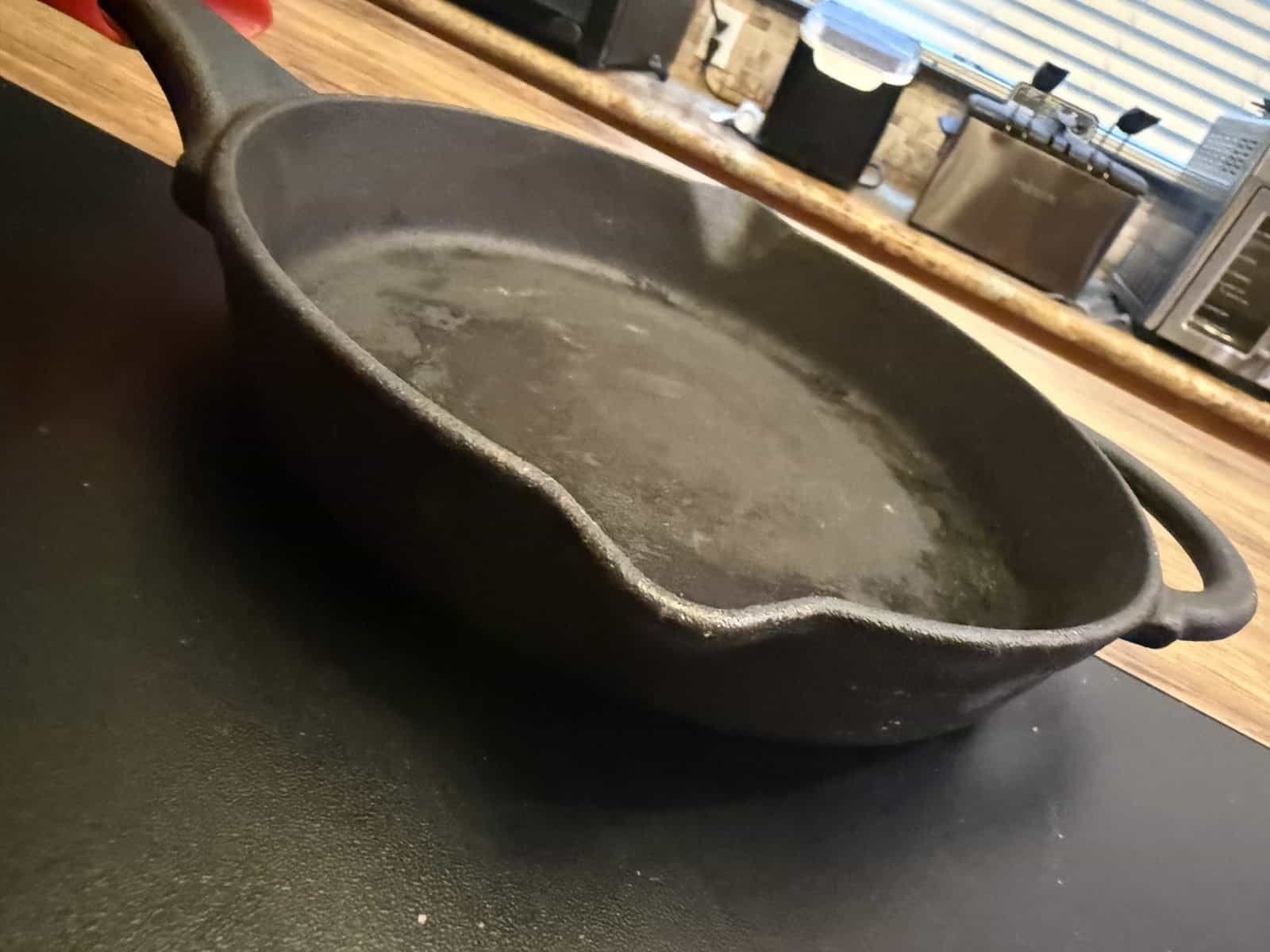
To restore a rusty cast iron skillet, scrub off all the rust with steel wool or coarse salt and a little dish soap, dry the pan completely, then rebuild the surface with thin baked coats of oil, because rust is only surface damage and the iron underneath is almost always fine. Restoring a rusty cast iron skillet sounds daunting, but it is a predictable job that brings even a neglected pan back to life. If your pan is only lightly dull rather than rusty, start with how to clean a cast iron skillet instead.
Quick Verdict
Rust on cast iron is surface-level and reversible. Scrub it off with steel wool or coarse salt, wash the pan, dry it fully, then re-season with several thin baked coats of oil. Light rust takes minutes; heavy rust takes more scrubbing. As long as the pan has no crack or hole, it can be restored.
Why Trust This Guide
I keep several cast iron pieces, bare and enameled, some for many years. I have dealt with a bit of surface rust here and there and cleared it with the usual steps, so it has never become a major problem. That firsthand maintenance is the basis for the straightforward process below.
Key Takeaways
- Rust is surface damage, not the end of the pan.
- Scrub it off with steel wool or coarse salt.
- Dry the pan completely to stop new rust forming.
- Rebuild with several thin, baked coats of oil.
- Only a crack or hole makes a pan unrecoverable.
How to Restore a Rusty Cast Iron Skillet Step by Step
This process works for anything from light spotting to a heavily rusted find.
- Scrub off the rust. Use steel wool, a stiff brush, or coarse salt with a little water and dish soap, working until the bare gray metal shows.
- Wash thoroughly. Soap is fine here since you are removing everything; rinse away all the loosened rust and grit.
- Dry completely. Towel the pan dry, then set it on low heat for a minute so no moisture remains, since damp metal rusts fast.
- Apply a paper-thin oil coat. Rub on a high smoke point oil and wipe it back until the pan looks almost dry.
- Bake past the smoke point. Heat the pan upside down in the oven above the oil’s smoke point, then repeat for two or three thin coats.
Why Does Cast Iron Rust?
Cast iron rusts when bare iron meets moisture and air. The seasoning layer normally shields the metal, so rust appears wherever that barrier is missing or broken, such as after a pan is left wet, soaked, air-dried, or stored damp. It is not a sign of a bad pan or a permanent flaw; it is simply exposed iron oxidizing. That is why restoration is so reliable: you remove the oxidized surface layer and reestablish the protective seasoning, and the pan is as good as before. Understanding this also makes prevention obvious, which is to keep the pan dry and seasoned.
How to Remove Rust From Cast Iron
Mechanical scrubbing is the core of rust removal, matched to how heavy the rust is. For light surface rust, coarse salt with a splash of water and a cloth lifts it quickly. For heavier rust, steel wool or a stiff wire brush cuts through, and a little dish soap helps here since you are stripping the pan back anyway. Work until you see uniform bare gray metal with no orange or brown patches left. For a badly rusted thrift find, a longer soak-free scrubbing session, or repeated passes, gets there. The goal is simply clean, bare iron ready to be dried and re-seasoned.
How to Re-Season After Removing Rust
Re-seasoning is what turns bare, de-rusted metal back into a working pan. Once the pan is scrubbed clean and bone dry, rub on the thinnest possible coat of a high smoke point oil, then wipe it back until it looks nearly dry, because a thick coat will only turn sticky. Bake the pan upside down above the oil’s smoke point so the layer hardens, let it cool, and repeat for two or three coats. Each thin baked layer builds toward a smooth, dark, protective surface. Skipping this step is the one real mistake, since bare de-rusted iron will simply rust again.
How to Prevent Cast Iron From Rusting Again
Prevention comes down to keeping the pan dry and seasoned. Dry it thoroughly right after washing, and a quick minute on low heat drives off any hidden moisture. Store it in a dry spot, and if you stack pans, slip a paper towel between them to absorb humidity and prevent trapped dampness. Maintain the seasoning with occasional thin oil coats, especially if the surface starts looking dull or dry. Avoid long soaks and letting the pan air-dry, which are the most common causes of rust. Keep those habits and rust rarely returns.
How Bad Can the Rust Get and Still Be Fixable?
Almost any amount of rust is fixable, and it helps to know where a pan falls on the scale. Light surface rust, the faint orange spotting from a pan left damp, wipes away in minutes with salt or a quick scrub. Moderate rust, a rougher coat over larger areas, needs steel wool and more elbow grease but comes off just the same. Even heavy rust, the kind on a neglected thrift-store find that looks hopeless, is usually surface-deep and restores fully with patient scrubbing and re-seasoning. The only thing rust cannot be forgiven for is eating all the way through the metal into a hole, which is structural and beyond repair. Short of that, the depth of the rust changes how long the job takes, not whether it can be done, which is exactly why cast iron is so hard to truly kill.
Recommended Reading
- seasoning a cast iron skillet, the re-season step in depth.
- storing cast iron, to prevent future rust.
- when a pan is beyond repair, if it is more than rust.
- fixing sticky seasoning, a related reset.
- the best cast iron skillets, for a replacement.
- why rust starts in the first place
Common Mistakes to Avoid
Leaving the pan wet
Damp iron rusts within hours. Dry the pan fully and warm it on the stove to drive off hidden moisture before storing.
Stopping before re-seasoning
Bare de-rusted metal rusts again fast. Always follow rust removal with several thin baked coats of oil.
Using too much oil to re-season
A thick coat turns sticky instead of hardening. Wipe the pan almost dry before baking each thin layer.
Giving up on a rusty pan
Rust looks worse than it is. Unless the pan is cracked or holed, it will restore completely with scrubbing and seasoning.
Restoring Rusty Cast Iron FAQ
Is a rusty cast iron skillet still usable?
Yes, once restored. Rust is surface damage, so scrubbing it off and re-seasoning brings the pan back to full use. As long as there is no crack or hole in the metal, even a heavily rusted skillet is recoverable.
How do you get rust off cast iron?
Scrub it off mechanically. Coarse salt and water handle light rust, while steel wool or a wire brush with a little dish soap tackles heavy rust. Work until you see clean, bare gray metal, then dry and re-season immediately.
Can you use soap to clean a rusty cast iron pan?
Yes, during a full restoration soap is fine, because you are stripping the pan back to bare metal anyway. The usual advice to limit soap applies to everyday cleaning of a seasoned pan, not to a rust rescue where you re-season afterward.
Do you have to re-season after removing rust?
Always. De-rusting leaves bare iron exposed, which will rust again quickly without protection. Re-season with several thin baked coats of oil to rebuild the surface and seal the metal against moisture.
How long does it take to restore a rusty skillet?
Light rust removal takes just minutes of scrubbing, while re-seasoning adds an hour or two of mostly hands-off oven time across a few coats. A heavily rusted pan needs more scrubbing up front but follows the same process.
When is a rusty cast iron pan not worth saving?
Only when it has structural damage, such as a crack, a hole, or severe warping. Rust alone, no matter how heavy, is fixable. If the iron itself is intact, the pan is worth restoring.
See the complete guide: the full guide to choosing the right cookware for your kitchen.
