
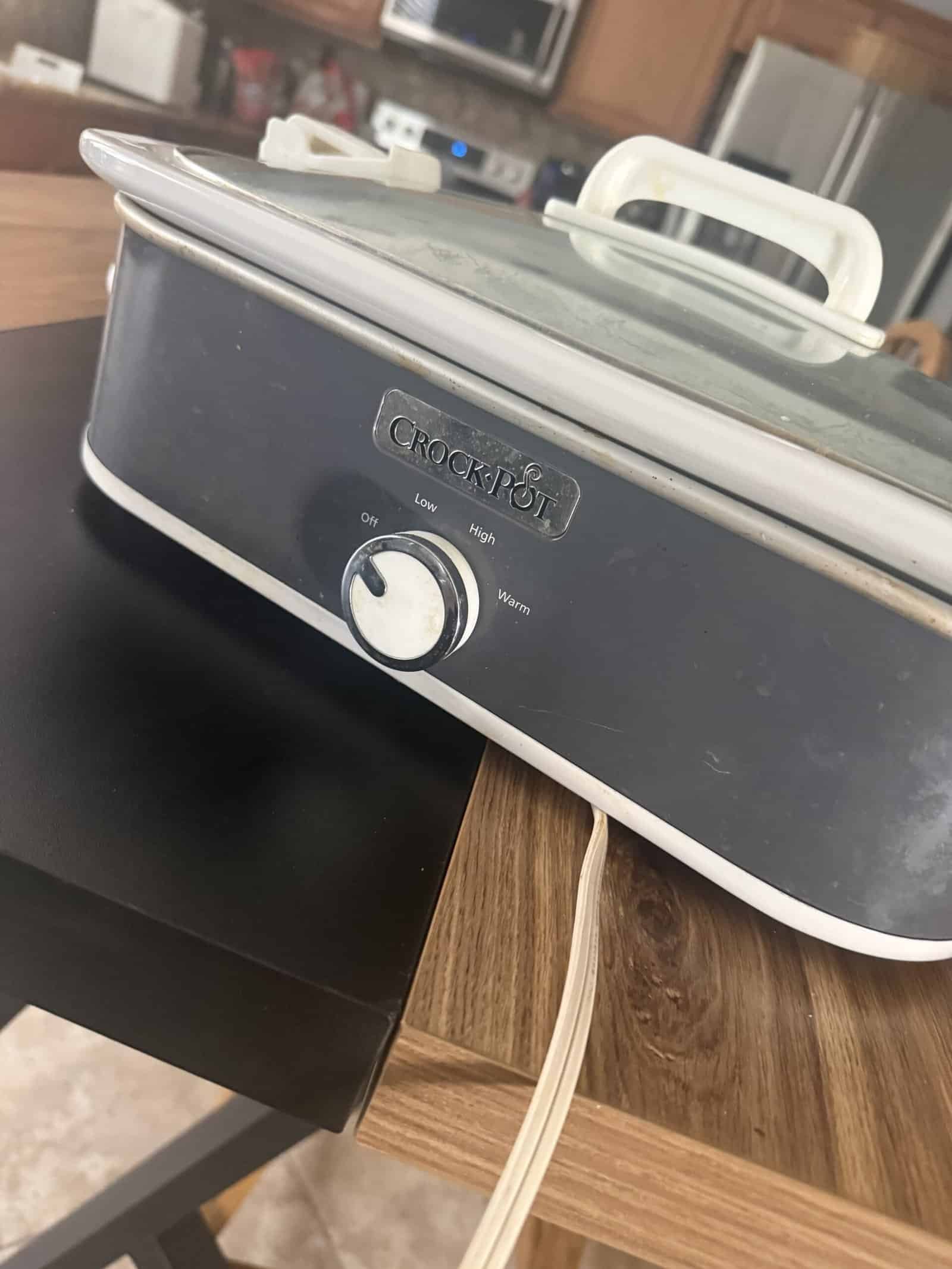
A slow cooker and a Dutch oven cook the same dishes and answer completely different questions. One asks whether you want to be present. The other asks whether you want control. I own both, they do not compete in my kitchen, and the division between them turned out to be simpler than I expected: the Dutch oven is for when I care, and the slow cooker is for when I want dinner to happen without me. Not sure what size you need? You can our cookware size calculator to get a quick starting point.
Quick Verdict
Slow cooker for unattended eight-hour cooking on days you are not going to babysit anything. Dutch oven for when you want to sear, control, adjust, and be involved. If you can only own one and you cook regularly, the Dutch oven is more versatile. If your problem is time rather than technique, the slow cooker solves it better.
Key Takeaways
- The slow cooker’s advantage is absence. Nothing else it does is unique.
- The Dutch oven browns, which the slow cooker physically cannot.
- Dutch oven means the oven is on. That matters in a hot kitchen.
- One pot versus two: the Dutch oven sears and braises in the same vessel.
- Most kitchens that cook a lot end up with both, and that is not redundancy.
The Split, Honestly
| Slow cooker | Dutch oven | |
|---|---|---|
| Unattended for 8 hours | Yes, this is the point | Not really |
| Browning and searing | No. Physically cannot. | Yes, same pot |
| Adjusting mid-cook | Works against it | Easy |
| Energy and kitchen heat | Very low, no heat | Oven on for hours |
| Bread, high heat, stovetop | No | Yes |
| Pots to wash | One, if you skip searing | One, including searing |
How I Actually Split Them
My rule turned out to be about occasion rather than about food.
If I am just doing something for myself sometimes, or if it is a special thing, I use the Dutch oven. That is the honest division. The Dutch oven is what I reach for when the cooking is part of the point, when I want to be in the kitchen doing it.
The Crock-Pot is what happens when I want a long cook without a long day at the stove. It goes on maybe once every couple of weeks, which is pretty often for a crockpot, and what goes in it is chicken tortilla soup, riblets, other soups, au jus. It runs for hours and I do other things.
Notice that both lists could be cooked in either vessel. Chicken tortilla soup would be fine in the Dutch oven. Riblets would be fine. The choice is not about the dish, it is about whether I want to be there. That is what nobody tells you about this comparison: they overlap almost entirely on food and not at all on lifestyle.
What the Slow Cooker Actually Wins
One thing, and it is enough.
You can leave. Eight hours on low with nobody home is the entire proposition, and the Dutch oven cannot make that offer. It needs an oven running unattended for eight hours, which is a different risk calculation and a much bigger electricity bill.
The secondary wins follow from that. It draws a fraction of the power. It does not heat the kitchen, which is not a small thing in a hot climate where turning the oven on in July is a decision with consequences. And it is genuinely hard to ruin food in one, because low and wet and sealed is a forgiving combination.
I have run mine about eight hours during the day. I do not run it overnight, which is a personal line rather than a technical one, and the all-day question gets into where that line sits and why.
What the Dutch Oven Wins
Nearly everything else, if you are standing there.
It sears. That is the big one, because browning needs dry heat above what a slow cooker will ever reach, and browning is where a great deal of flavor comes from. In a Dutch oven you sear and then braise in the same pot, which means the fond stays with the dish instead of being left behind in a skillet.
It lets you interfere. Taste it, adjust it, reduce it at the end, thicken it. A slow cooker punishes lid-lifting because it has no power to recover the heat, so the whole appliance quietly asks you to commit at the start and find out at the end.
And it does things the slow cooker simply cannot: bread, high-heat work, stovetop to oven. Mine is a non-stick coated pot in that shape rather than cast iron, and I run an enameled cast iron braiser alongside it, which is the same idea with a wider flatter footprint. Coated pots and enameled cast iron both handle the acidic tomato-heavy things that would strip seasoning off a bare pan, which is exactly the category most braises fall into. The difference is heat tolerance, since a coated pot does not want the very high preheating that cast iron shrugs off.
The One-Pot Argument
This is the thing that tips it for a lot of people once they notice it.
If you want browned meat in a slow cooker, you sear it in a skillet first and then transfer it. That is two pans, and one of them is a skillet with all the good stuck bits still in it. You can deglaze and pour that in, and now you are doing dishes for a dish you chose specifically to avoid work.
The Dutch oven does both jobs in one vessel. Sear, add liquid, lid on, into the oven. One pot, and nothing gets left behind.
So the honest version of the comparison: a slow cooker used properly is one pot, and a slow cooker used well is two. A Dutch oven is one either way. What suits a slow cooker is partly a question of how much you care about that first step.
Cleanup Goes the Other Way
The Dutch oven wins on cooking and loses on the aftermath.
My slow cooker insert is dishwasher safe, nothing sticks or stains in it, and I usually use liners anyway, so cleanup is close to nothing. Cleaning it is one of the easier jobs in my kitchen.
A coated pot is gentler to clean than cast iron, and a braise that reduced too far will still leave you something to soak. It is not difficult, it is just not free. Cast iron generally asks more of you than any electric appliance does, and the payoff is that it does more.
Which to Buy First
If you cook regularly and want one vessel, the Dutch oven, comfortably. It is more versatile, it does things nothing else in the kitchen does, and it will outlive you. The slow cooker is a specialist.
If your actual problem is that you are not home and dinner needs to make itself, that is not a versatility problem and the Dutch oven does not solve it. Buy the slow cooker, and buy a cheap one, because the inexpensive ones do the same job as the expensive ones. There is not much to a heating element and a ceramic pot. The one upgrade worth the money is a timer that shifts to warm, and only if your schedule needs it.
And if you are weighing a slow cooker against a multi-function device instead, the Instant Pot comparison is a more relevant fight than this one, since that is a genuine overlap rather than two tools that happen to make stew.
Recommended Reading
See what to cook in a slow cooker and running it all day. For picks, see programmable slow cookers. For the other side, see choosing cast iron and Dutch oven versus skillet, and choosing a Dutch oven size, and what to cook in a Dutch oven, and choosing the right cookware.
Slow Cooker vs Dutch Oven FAQ
Is a Dutch oven better than a slow cooker?
At cooking, yes. At being absent, no, and that is the whole comparison. A Dutch oven sears, adjusts, reduces, bakes bread, and goes stovetop to oven. A slow cooker does one thing nothing else does: it runs for eight hours while you are elsewhere. They overlap almost completely on food and not at all on lifestyle.
Can a Dutch oven replace a slow cooker?
Only if you are willing to leave your oven running for eight hours unattended, which most people are not, and which costs considerably more in electricity. It also heats your kitchen, which matters in summer. If your reason for wanting a slow cooker is that you are not home, the Dutch oven does not answer that.
Which one should I buy first?
The Dutch oven, if you cook regularly and want versatility. It does things nothing else in the kitchen does and it lasts forever. The slow cooker is a specialist that solves a scheduling problem. Buy it if that is your actual problem, and buy an inexpensive one, since there is not much to a heating element and a ceramic pot.
When do you use a slow cooker instead of a Dutch oven?
When you want dinner to happen without you. My own split is about occasion rather than food: if I am doing something for myself or something special, I use the Dutch oven, because the cooking is part of the point. The Crock-Pot is for a long cook without a long day at the stove.
Does a slow cooker really use less energy?
Considerably. It draws a fraction of what an oven does, and eight hours of slow cooker costs less than a couple of hours of oven. It also does not heat the kitchen, which is worth real money in a hot climate where turning the oven on in July is a decision rather than a reflex.
Can you brown meat in a slow cooker?
No. Browning needs dry heat well above what a slow cooker reaches, and the environment is sealed and wet by design. You can sear in a skillet first and transfer, which works and means two pans. The Dutch oven does both steps in one vessel, and that is its strongest practical argument.
Which is easier to clean?
The slow cooker, easily. My insert is dishwasher safe, nothing sticks or stains, and I usually use liners on top of that. A coated pot needs a softer touch and no abrasives, and a hard reduction will leave you something to soak. Not difficult, but not free either.
Do I need both?
Not need, but most kitchens that cook a lot end up with both and it is not redundancy. They answer different questions. Mine coexist without competing: the Dutch oven for when I care about the cooking, the Crock-Pot for when I care about the outcome and not the process.
See the complete guide: the comprehensive choosing a stand mixer guide.
