
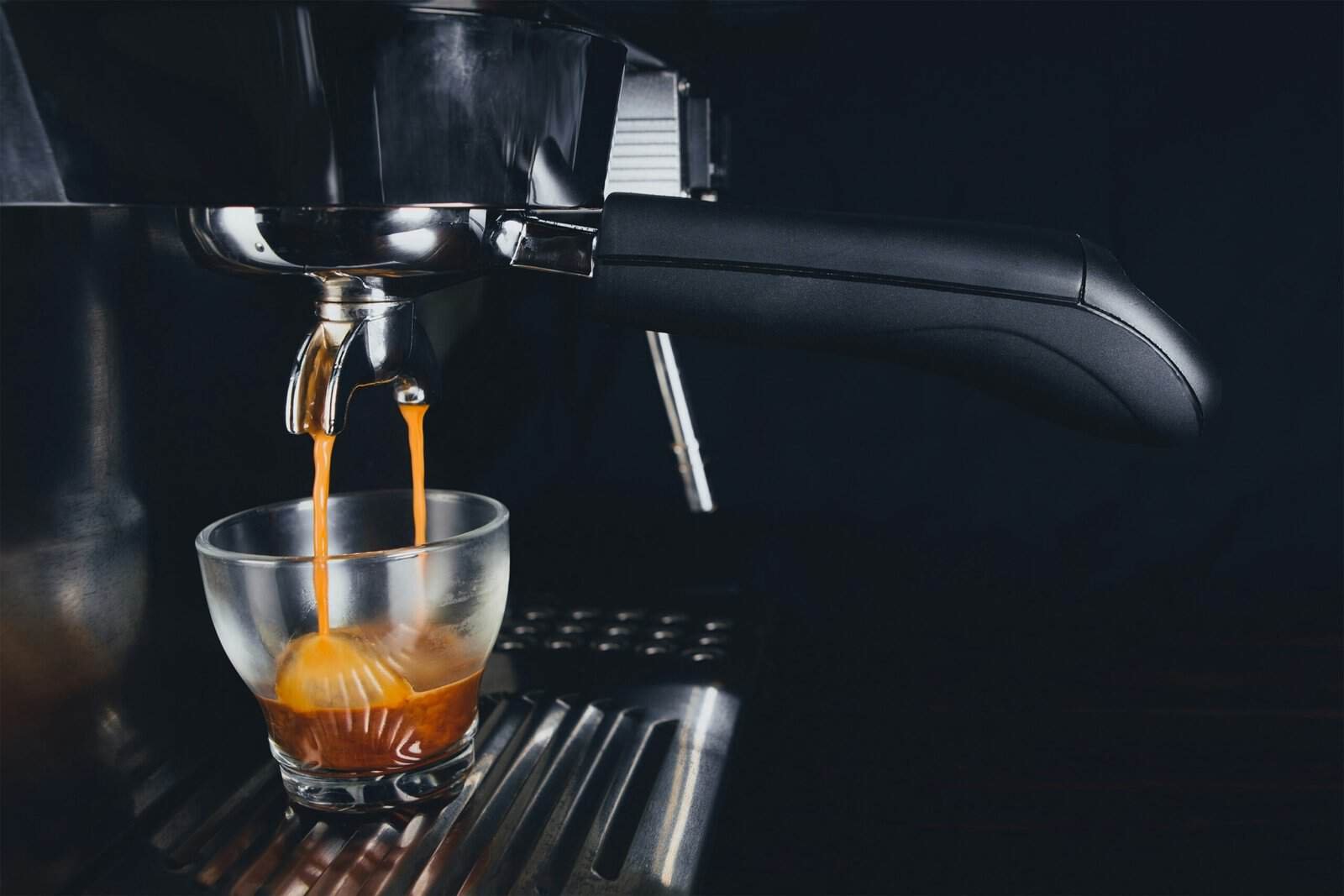
You pull a shot and it gushes out in twelve seconds, pale and thin, tasting of water and sour fruit. A fast shot means water found an easy path through the puck instead of being forced through it evenly. The fix is grind size in most cases, and when grind is right the cause is dose, distribution, or a tamp that left a gap for water to exploit.
Espresso works by resistance. Fine grounds, packed into a level puck, pushes back against nine bars of pressure, and that struggle is what extracts sugars and oils rather than just rinsing the grounds. Remove the resistance and you get a fast shot that never extracted anything worth drinking.
What a Fast Shot Actually Tells You
A standard double shot pulls in about 25 to 30 seconds from the moment the pump starts, yielding about double the weight of the dry coffee. Twelve seconds for the same yield means water met almost no resistance.
The taste confirms it. Under-extracted espresso is sour, thin, and salty rather than sweet, with a pale crema that collapses within seconds. If your shot runs fast and tastes sharp, you are looking at the same problem from two directions.
Speed on its own is not the diagnostic. A shot that runs fast but weighs far more than expected is a different situation from one that runs fast and yields correctly. Weigh the dose in and the liquid out before changing anything, and a scale that reads to a tenth of a gram is what makes this measurable.
Your Grind Is Too Coarse
This causes about four fast shots in five. Coarser particles leave larger channels between them, water flows through with little resistance, and the shot runs before extraction has happened.
Grind finer and pull again. On most grinders that means one or two steps, and espresso grinders are deliberately built with fine adjustment near the espresso range because the difference between correct and fast is small. If your grinder jumps from fast shots to choked shots with nothing in between, the grinder lacks the resolution espresso needs, which is the practical difference covered in espresso grinder selection.
Change one variable at a time. Adjusting grind and dose together leaves you unable to tell which one moved the shot, and espresso rewards patience more than it rewards intuition.
Your Dose Is Too Low
Less coffee in the basket means a shallower puck, more empty space above it, and less material for water to work through. A basket designed for 18 grams filled with 15 leaves headroom that water rushes into.
Check what your basket is rated for. Most double baskets sit between 18 and 20 grams, and the number is often stamped on the basket or printed in the manual. Weigh the dose rather than eyeballing it, because scoops vary with bean density and roast level.
Puck height matters as much as weight. After tamping there should be a small gap between the puck and the shower screen, no more than a few millimetres. Too much space and the puck lifts and channels when pressure arrives.
Water Is Channelling Through the Puck
Channelling is water finding one weak point and pouring through it while the rest of the puck stays dry. The shot runs fast, the taste is both sour and bitter at once, and the spent puck shows a hole or a crater.
Uneven distribution before tamping causes most of it. Ground coffee falls into the basket in clumps and mounds, and tamping a mound compresses the middle harder than the edges. Distributing the grounds level before tamping, with a distribution tool or by tapping and stirring, addresses it directly.
A tamp that goes in crooked does the same thing. Pressing at an angle leaves one side denser than the other, and water takes the loose side every time. Level matters more than force.
Your Tamp Is Too Light or Uneven
Under-tamping leaves the puck loose enough that pressure compacts it unevenly during the shot, opening channels partway through. Most people tamp with fairly consistent pressure and get inconsistent results because the tamper does not match the basket.
A tamper that is undersized for the basket leaves a ring of loose coffee around the edge, and that ring becomes the channel. Measuring the basket and matching the tamper diameter is a one-time fix, covered in tamper sizing.
Consistency beats force. A firm level tamp repeated the same way every time gives you a baseline to adjust grind against. Varying tamp pressure shot to shot makes every other variable impossible to read.
Stale Beans and Old Grounds
Fresh coffee releases carbon dioxide during the shot, and that gas creates back pressure that slows flow. Beans that have sat for months have lost most of it, so shots run faster on old coffee even at an unchanged grind setting.
Very fresh coffee has the opposite problem. Beans roasted within a few days off-gas so much that shots sputter and run unevenly, which is why most people rest beans for a week or two after roasting.
Pre-ground coffee sold for espresso is a common cause of fast shots, since it stales quickly and is often ground coarser than a real espresso setting. Storage practices that slow this down are covered in coffee storage.
Water Temperature and Pressure
Most machines run hot enough that temperature rarely causes a fast shot on its own, and it interacts with everything else. Water that is too cool extracts sluggishly, which tastes sour in the same way an under-extracted fast shot does, and people chasing grind adjustments sometimes have a temperature problem instead.
Let the machine heat properly. A group head that has been on for five minutes is not at the same temperature as one that has been on for twenty, and the first shot of the morning is often the odd one out. Pulling a blank shot through the group before the real one helps stabilise it.
Pump pressure drifts over years on entry-level machines. If nothing in the technique explains a persistently fast shot, and the grinder resolves properly at other settings, the pump may be delivering less pressure than it did. That is a service question rather than a dial-in question.
Basket Condition and Cleanliness
A basket with blocked holes creates uneven flow that looks like channelling. Coffee oils build up in the mesh over months, and the pattern of blockage decides where water goes. Soaking baskets in a cleaning solution restores even flow, and it is worth doing more often than most people do.
Damaged baskets cause the same problem permanently. A basket dropped on a hard floor deforms at the rim, which stops the tamp sitting level and leaves a gap at one edge. Holding the basket up to a light shows both blocked holes and distortion in a few seconds.
The shower screen matters too. A screen caked with old coffee distributes water unevenly onto the puck before extraction begins, so the puck is already wetting unevenly before pressure arrives. It unscrews on most machines and cleans in minutes.
Fast Shots by Machine Type
Semi-automatic machines
You control grind, dose, tamp, and shot length, so all four are candidates. Work through grind first, then dose, then distribution. The machine itself is rarely the problem unless the pump pressure has drifted.
Super-automatic machines
The grinder is built in, and the adjustment range is narrower than a standalone grinder offers. Most have a grind setting you can move a step at a time, and many require the grinder to be running while you adjust it. Check the manual, since adjusting a stationary burr can damage it.
Pressurised baskets
Entry-level machines often ship with pressurised or dual-wall baskets that create artificial back pressure through a small hole rather than through the coffee. These mask grind problems and produce fake crema. If your shots run fast even at a very fine grind, check whether the basket has a single fine mesh or a solid back with one hole.
How to Fix a Fast Shot
Work in this order and change one thing at a time.
Weigh the dose and confirm it matches the basket rating. Grind one or two steps finer and pull again, weighing the yield. If the shot is still fast, go finer again. When the timing lands but the taste is uneven, the problem has moved to distribution rather than grind, so level the grounds and tamp flat.
If fine grind chokes the machine without ever passing through a correct range, the grinder cannot resolve espresso settings. That is a hardware limit rather than a technique problem.
Does Roast Level Change Shot Speed?
Yes, and it catches people out when they switch beans. Darker roasts are more brittle and grind finer at the same setting, so a dark roast often runs slower than a light one at identical settings. Light roasts are denser and need a finer grind to hit the same time.
Every bean change is a recalibration. Coming from a dark roast to a light one and keeping the grind unchanged produces exactly the fast sour shot this article describes.
A Quick Troubleshooting Order
Grind finer. Confirm the dose against the basket. Level the grounds before tamping. Tamp flat and firm. Check the beans are neither stale nor freshly roasted. Confirm the basket is not pressurised. Recalibrate whenever you change beans.
Most fast shots resolve at step one. The rest resolve by step four, and anything still running fast after all seven usually points at the equipment rather than the technique.
Fast Versus Slow: Telling Them Apart
A fast shot tastes sour, thin, and salty, with pale crema that disappears. A slow or choked shot tastes bitter, heavy, and ashy, with dark crema that lingers. They are opposite ends of the same adjustment, and knowing which direction you are off tells you which way to move the grinder.
If a shot manages to taste both sour and bitter at once, that is channelling rather than a grind problem. Part of the puck over-extracted while water rushed past the rest, and no grind adjustment fixes uneven distribution.
Related Reading
- how grind size drives extraction
- sour coffee across other brew methods
- machines with proper unpressurised baskets
- choosing a machine that suits your technique
- handling spent pucks
- how machine types differ in control
Frequently Asked Questions
How long should an espresso shot take?
About 25 to 30 seconds from when the pump starts, yielding about double the weight of the dry dose. Timing alone is not the target though, since a shot can hit 27 seconds and still taste wrong if the yield is off.
Should I grind finer or increase the dose?
Grind finer first, since it is the variable with the largest effect and the easiest to reverse. Adjust dose only after confirming it sits within what your basket is rated for.
Why does my shot run fast even at the finest grind?
A pressurised basket, most often, which creates artificial back pressure and hides grind entirely, or a grinder without enough resolution in the espresso range. Both are equipment limits rather than technique issues.
Does tamping harder slow the shot?
Slightly, and consistency matters far more than force. Beyond a firm level press, extra pressure adds little and introduces variation between shots that makes other adjustments hard to read.
Can old beans cause fast shots?
Yes. Stale beans have released most of their carbon dioxide, and that gas contributes back pressure during extraction. The same grind setting runs faster on months-old beans than on fresh ones.
Do I need to change grind when I switch coffee?
Almost always. Roast level and bean density both change how coffee grinds and how it resists water, so a new bag usually needs a fresh dial-in even from the same roaster.
Grind consistency is the usual culprit. picking a grinder that holds its setting covers what to look for.
