
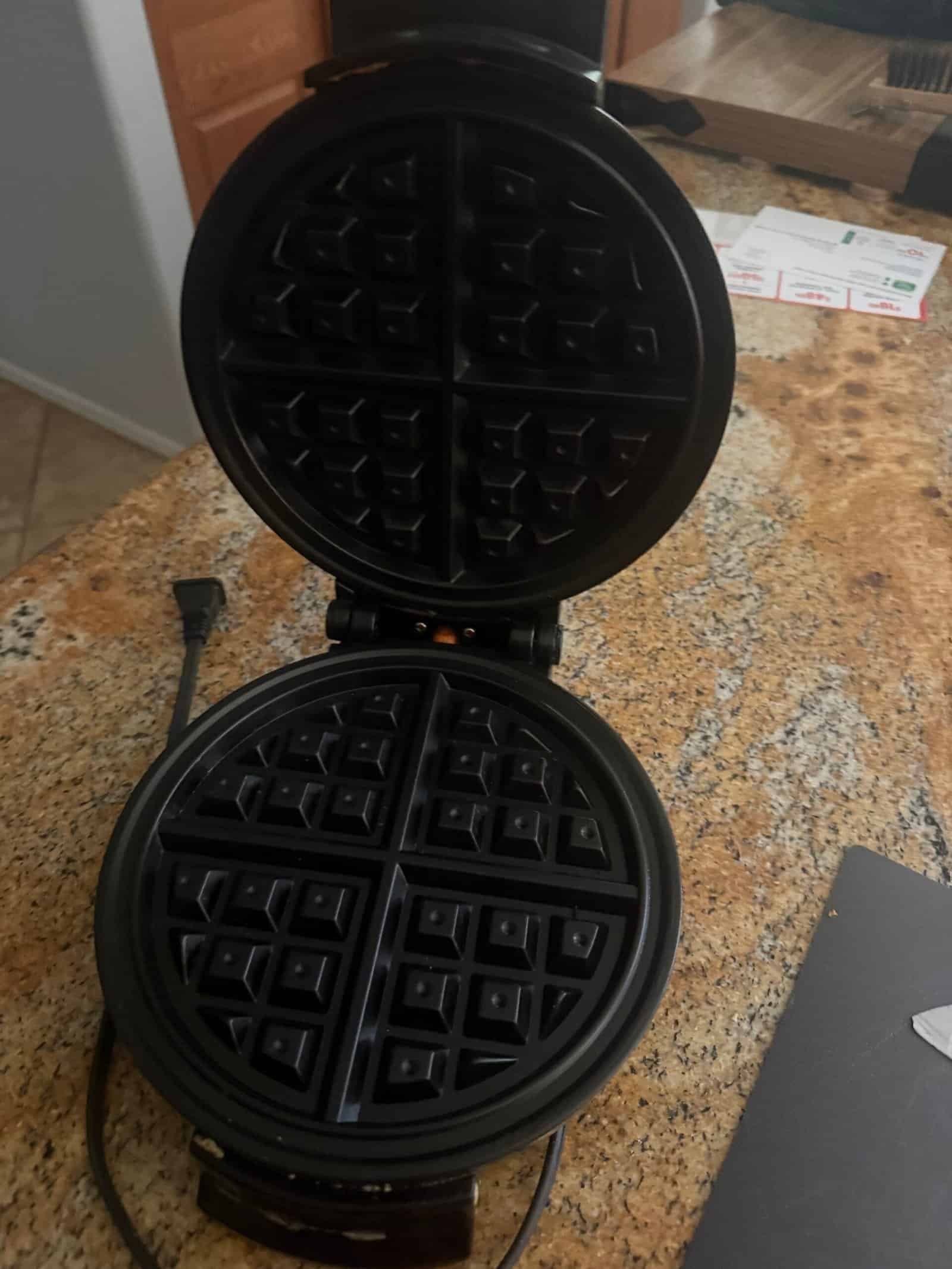
Wipe the plates while the machine is still warm and most of the job is done. Batter that has cooled and hardened takes real effort to remove, and batter wiped off warm comes away with a paper towel.
The awkward part is the grid. Deep pockets and fixed plates mean there is no easy access to the corners, and no cleaning method fully solves that on a machine where the plates do not come out.
Quick Answer
Unplug it, let it cool slightly so it is warm rather than hot, and wipe the plates with a damp paper towel. For stuck batter, lay a damp cloth across the closed plates for a few minutes to soften it. Never submerge a machine with fixed plates. Residue left on the plates is the usual reason for smoke on the next cook.
Key Points
- Warm plates release residue far more easily than cold ones
- Fixed-plate machines can never be submerged
- Steam from a damp cloth softens hardened batter
- Anything abrasive removes the nonstick coating permanently
- Oil buildup in the grid needs occasional attention
- Removable plates make the whole job substantially easier
The Routine
| Step | What to do |
|---|---|
| 1 | Unplug and let it cool to warm rather than hot |
| 2 | Lift out loose crumbs with a soft brush or a dry paper towel |
| 3 | Wipe the plates with a damp paper towel or soft cloth |
| 4 | For stuck residue, lay a damp cloth over closed plates for a few minutes |
| 5 | Wipe again once the residue has softened |
| 6 | Dry fully and leave open until completely cool |
Timing Matters More Than Method
Batter residue is soft while the plates are warm and hardens as they cool. Wiping within a few minutes of the last waffle turns a scrubbing job into a single pass with a towel.
Warm rather than hot is the target. Hot plates are a burn risk and they also flash-dry a damp cloth before it can lift anything.
Left overnight, hardened batter bonds to the surface and needs softening before it will move, which is where most of the effort in cleaning a waffle maker comes from.
What Mine Is Actually Like
I wipe mine and that is the whole method. My Oster has fixed plates, so there is nothing to remove and nothing that goes in the sink.
It is a pain to clean in general. That is the honest assessment and it is not specific to this machine, it is what a fixed grid with deep pockets means. There is no angle that reaches everything and no tool that fits the corners properly.
I do not have a clever technique for it. I wipe it, it comes out mostly clean, and the parts that do not come clean stay that way until next time.
Which is worth saying because the tips in this article help and none of them make it easy. Anyone buying a waffle maker who cares about cleaning should look at removable plates before anything else.
My experience covers one fixed-plate Oster in ordinary home use. It does not cover machines with removable plates, which are genuinely easier, or cast iron irons, which are cleaned entirely differently.
Softening Stuck Batter
Fold a damp cloth or a few damp paper towels and lay them across the plates, then close the lid. The residual heat generates steam and the steam softens hardened batter within a few minutes.
This is the technique that separates a difficult clean from a manageable one, and it needs the machine warm rather than cold to work properly.
For badly stuck residue, brushing a little oil onto it and leaving it for a few minutes achieves something similar. The oil penetrates and loosens the bond, and it wipes away afterwards.
What Never to Use
Metal utensils
Knives, forks, and metal skewers scratch the coating permanently. Every scratch is a place batter grips next time, which makes the problem worse rather than better.
Abrasive pads and scouring powder
These strip nonstick immediately. Soft cloths, paper towels, and soft-bristled brushes are the only appropriate tools.
Submerging a fixed-plate machine
Water in the electrical housing is a genuine hazard and it ruins machines. Only appliances with fully removable plates have parts that go in the sink.
Running it hot to burn residue off
This carbonises batter onto the plates rather than removing it, and carbonised residue is far harder to shift than soft batter.
Oil Buildup in the Grid
Over months, oil works into the corners of the grid and polymerises into a sticky brown film. It is not dirt in the ordinary sense and it does not wipe away.
Aerosol cooking sprays accelerate this considerably, since the lecithin they contain bakes onto the surface. Switching to brushed oil slows the buildup, covered in why waffles stick.
A soft toothbrush with a little dish soap and warm water reaches the corners better than a cloth, and it needs patience rather than pressure. Pressure damages the coating and the buildup is not going anywhere in one session.
Deep Pockets Are the Real Difficulty
Belgian machines have deeper grids than classic irons, which is what produces the thick waffle and what makes cleaning harder. Depth means corners a cloth cannot reach flat.
A folded paper towel pushed into each pocket with a fingertip reaches further than wiping across the surface does. It is slow and it gets more out than any single pass.
Silicone-tipped tools designed for grill grates fit some grids and are soft enough not to damage the coating. A wooden skewer wrapped in a corner of cloth works for anything narrower.
None of this makes a deep grid easy. It is a design tradeoff, and anyone who prioritizes cleaning over waffle thickness should look at classic thin irons rather than Belgian ones.
Removable Plates Change Everything
Machines with plates that lift out can be washed properly, and many are dishwasher safe. That single feature removes almost every difficulty described above.
It also means the grid corners get genuinely clean rather than mostly clean, which matters over years of use as buildup accumulates.
The tradeoff is that removable plates add a mechanism that can loosen, and machines with them cost more. For anyone who makes waffles regularly it is the feature worth paying for, and options sit in waffle makers worth buying.
Between Uses
Leave the machine open until it is completely cool. Closing a warm waffle maker traps moisture inside the grid, which encourages the sticky film to develop.
Store it clean rather than intending to clean it before next use. Residue left for weeks hardens further and becomes a bigger job than it needed to be.
Wrap the cord loosely rather than tightly around the machine, since tight wrapping stresses the cord where it enters the housing. Storage considerations sit in storing a waffle maker.
Clean Enough Against Actually Clean
Clean enough looks like plates wiped free of loose batter with some discolouration in the grid corners. That is where most fixed-plate machines live and it does not affect the waffles.
Worth addressing is a sticky film across the plates, visible flaking of the coating, or a smell when the machine heats up. The first responds to a soft brush and patience, and the other two mean the machine is finished. Replacement guidance sits in getting better results generally.
Related Reading
- machines with removable plates
- sticking and coating wear
- where it lives between uses
- protecting nonstick surfaces
- texture problems
- the same principles in cookware
Frequently Asked Questions
How do you clean a waffle maker with fixed plates?
Unplug it, let it cool to warm rather than hot, and wipe the plates with a damp paper towel. For stuck batter, lay a damp cloth over the closed plates for a few minutes so the steam softens it.
Can you put a waffle maker in the sink?
Only if the plates are fully removable. Submerging a machine with fixed plates puts water into the electrical housing, which is both a hazard and a way to ruin the appliance.
How do I get hardened batter off?
Steam it loose. A damp cloth laid across warm closed plates softens hardened residue within a few minutes, and brushing a little oil onto stubborn spots achieves something similar.
Should I clean it while it is still hot?
Warm rather than hot. Hot plates are a burn risk and dry a damp cloth before it can lift anything. Cold plates let the batter harden, which makes the job considerably harder.
What is the sticky brown film in the grid?
Polymerised oil, built up over months and accelerated by aerosol cooking sprays. A soft toothbrush with dish soap and warm water reaches it, and it takes patience rather than pressure.
Can I use a metal utensil to scrape it?
No. Metal scratches the nonstick coating permanently, and every scratch becomes a place batter grips next time. Soft cloths and soft-bristled brushes only.
Are removable plates worth it?
For anyone making waffles regularly, yes. They can be washed properly and often go in the dishwasher, which removes almost every difficulty involved in cleaning a fixed-plate machine.
Appliance storage and cleaning go together. kitchen organisation covers both.
