
Ceramic kamados frequently last fifteen years or more, and insulated steel versions typically run eight to twelve. In both cases the consumable parts wear out long before the cooker does, and the difference between a long life and a short one is mostly moisture.
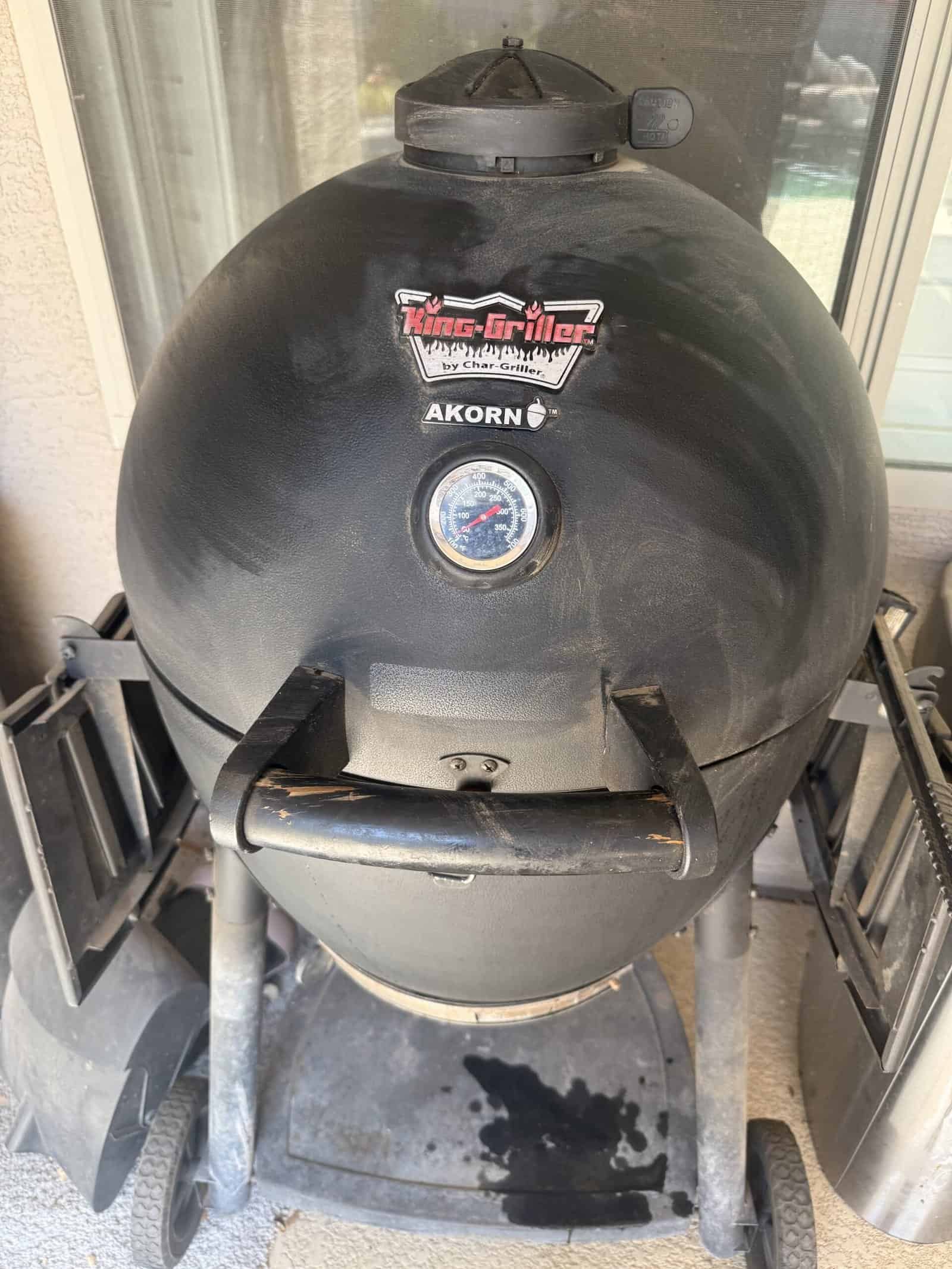
Mine is a Char-Griller Akorn I have had for over three years. There are definite signs of wear, and the clearest one is that the grates and everything else have become harder to open than they were.
Quick Answer
Expect gaskets, grates, and hardware to need attention within a few years, and the body to outlast them considerably. Keeping ash out and water off does more for lifespan than anything else you can do.
What Wears Out and When
| Part | Typical life | Replaceable |
|---|---|---|
| Gasket or felt seal | 2 to 5 years | Yes, commonly |
| Cooking grates | 3 to 7 years | Yes |
| Charcoal grate or basket | 3 to 6 years | Yes |
| Hinges and hardware | Stiffens from year 2 | Sometimes |
| Insulated steel body | 8 to 12 years | No |
| Ceramic body | 15 years or more | No |
The pattern is the same as most appliances built around one durable component. The shell survives, and everything that touches heat, ash, or moisture directly is on a much shorter clock.
What Actually Kills Them
Moisture is the main one on steel cookers. Rain reaching vents, ash left damp against metal, and water used for interior cleaning all start corrosion from places you cannot see.
Ash is the accomplice in that. It holds moisture against metal surfaces for days at a time, which is why a cooker emptied after each cook lasts considerably longer than one that is not.
Thermal shock is the ceramic equivalent. Rapid temperature swings, or heating a cooker with water absorbed into the ceramic, can crack the body outright.
Neglected hardware is the slow one. Hinges, latches, and vent mechanisms seize gradually rather than suddenly, and by the time you notice it has usually been happening for a year or more, covered in cleaning a kamado grill.
Three Years In
Everything on it still works. The cooker holds temperature, the body is sound, and nothing has failed outright in three years of regular use.
What has changed is the feel of it. The grates and moving parts take more effort to open than they did, which is heat cycling plus residue building in the hardware.
That is not a complaint about the cooker so much as an observation about what three years of regular use does. It happened gradually enough that I only notice it by comparison.
It does affect how I use it, since anything harder to open is something you handle less willingly, and that feeds into cleanup being the part I like least, covered in whether a kamado grill is worth it.
If I were doing it again I would treat the hardware as a maintenance item from the first year rather than waiting for it to stiffen.
The Gasket Is the First Real Failure
Most kamados have a felt or fiberglass seal between lid and base, and it is the part that gives up first.
A worn gasket leaks air, which means you lose the airtight seal that makes precise temperature control possible. The symptom is a cooker that will not settle where you want it.
People often diagnose that as losing their touch rather than as a component failing, and it is worth checking before assuming technique has slipped.
Replacements are inexpensive and widely available for most models, and fitting a new one is a straightforward job, covered in controlling temperature on a charcoal smoker.
Steel Against Ceramic Lifespan
Ceramic
Effectively permanent if it does not crack. Manufacturers often warrant the body for decades, and the failure modes are impact damage and thermal shock rather than wear.
Insulated steel
Shorter, since rust is a real endpoint rather than a cosmetic issue. Perforation at seams and around the bottom vent is what eventually retires one.
Hardware on both
Similar. Hinges, bands, and vent mechanisms wear at comparable rates regardless of what the body is made from.
Cost per year
Closer than the purchase prices suggest, since ceramic costs substantially more upfront and lasts proportionally longer.
Weight and moving
Ceramic is effectively permanent once positioned, and steel can be moved, which matters if you rent or expect to relocate it.
Warranties Are Less Useful Than They Look
Kamado warranties are often headline-grabbing, and reading what they cover changes how much weight to put on them.
Lifetime coverage on ceramic bodies is common and it typically applies to manufacturing defects rather than to damage, and cracks from thermal shock or from dropping the lid are usually excluded.
The parts that actually fail carry much shorter terms. Gaskets, grates, and hardware are frequently covered for a year or two, or treated as consumables and excluded entirely.
Registration requirements catch people out, since coverage often depends on registering within a set window after purchase and few people do.
Proof of purchase matters years later, which means keeping a receipt for something you might claim on in a decade.
The more useful question when buying is whether replacement parts are available and affordable, rather than what the warranty promises. A cooker with cheap gaskets and grates on general sale outlasts one with a longer warranty and no spares.
Extending It
Keep it covered. A cover is the cheapest single thing that meaningfully extends the life of a steel cooker, since rain getting into the vents is the main entry point for water.
Empty ash after every cook rather than letting it sit. This is the habit that does the most and it takes two minutes.
Never clean the interior with water, and run the cooker hot briefly after any wet exterior cleaning to drive off moisture.
Maintain the hardware. Occasional attention to hinges and vent mechanisms with a heat-appropriate lubricant prevents the stiffening that otherwise creeps up on you.
Store it somewhere sheltered if you can, since a cooker under a roof or against a wall takes far less weather than one standing in the open through a winter.
When to Replace Rather Than Repair
Rust perforation through the body on a steel cooker, since patching a hole in a pressure-sensitive airflow system does not work well.
A cracked ceramic body, which is usually terminal even when the crack looks minor, since it will propagate with heat cycling.
Hardware that has seized beyond freeing, where the lid no longer seals or the vents no longer move, if replacements are unavailable.
Everything else is generally worth repairing, since gaskets, grates, and baskets are all inexpensive relative to a new cooker, and cooking specifics sit in how long it takes to smoke chicken.
Related Reading
- is a kamado grill worth it
- cleaning a kamado grill
- temperature control
- smoking chicken
- meat thermometers
- indoor grills
Frequently Asked Questions
How long does a kamado grill last?
Ceramic often fifteen years or more, insulated steel eight to twelve. Gaskets, grates, and hardware wear out considerably sooner and are usually replaceable.
What fails first?
The gasket between lid and base, typically within two to five years. A leaking seal means you lose the airtight control that makes precise temperatures possible.
Does ceramic really last longer than steel?
Yes, provided it does not crack. Ceramic fails from impact and thermal shock rather than wear, while steel eventually rusts through at seams and vents.
What shortens lifespan most?
Moisture. Rain in the vents, damp ash left against metal, and water used for interior cleaning all start corrosion in places you cannot inspect.
Why does everything get stiffer over time?
Heat cycling combined with residue building up in the hardware. Occasional attention to hinges and vent mechanisms prevents most of it.
Is a cover worth buying?
On a steel cooker it is the cheapest thing that meaningfully extends life, since rain reaching vents and ash is the main way water gets in.
Are the warranties worth much?
Less than the headline suggests. Lifetime body coverage usually excludes cracks from thermal shock or impact, and the parts that actually fail carry much shorter terms or are treated as consumables.
When should I replace rather than repair?
Rust perforation through a steel body, a cracked ceramic body, or seized hardware with no replacements available. Gaskets, grates, and baskets are cheap enough to be worth repairing.
