
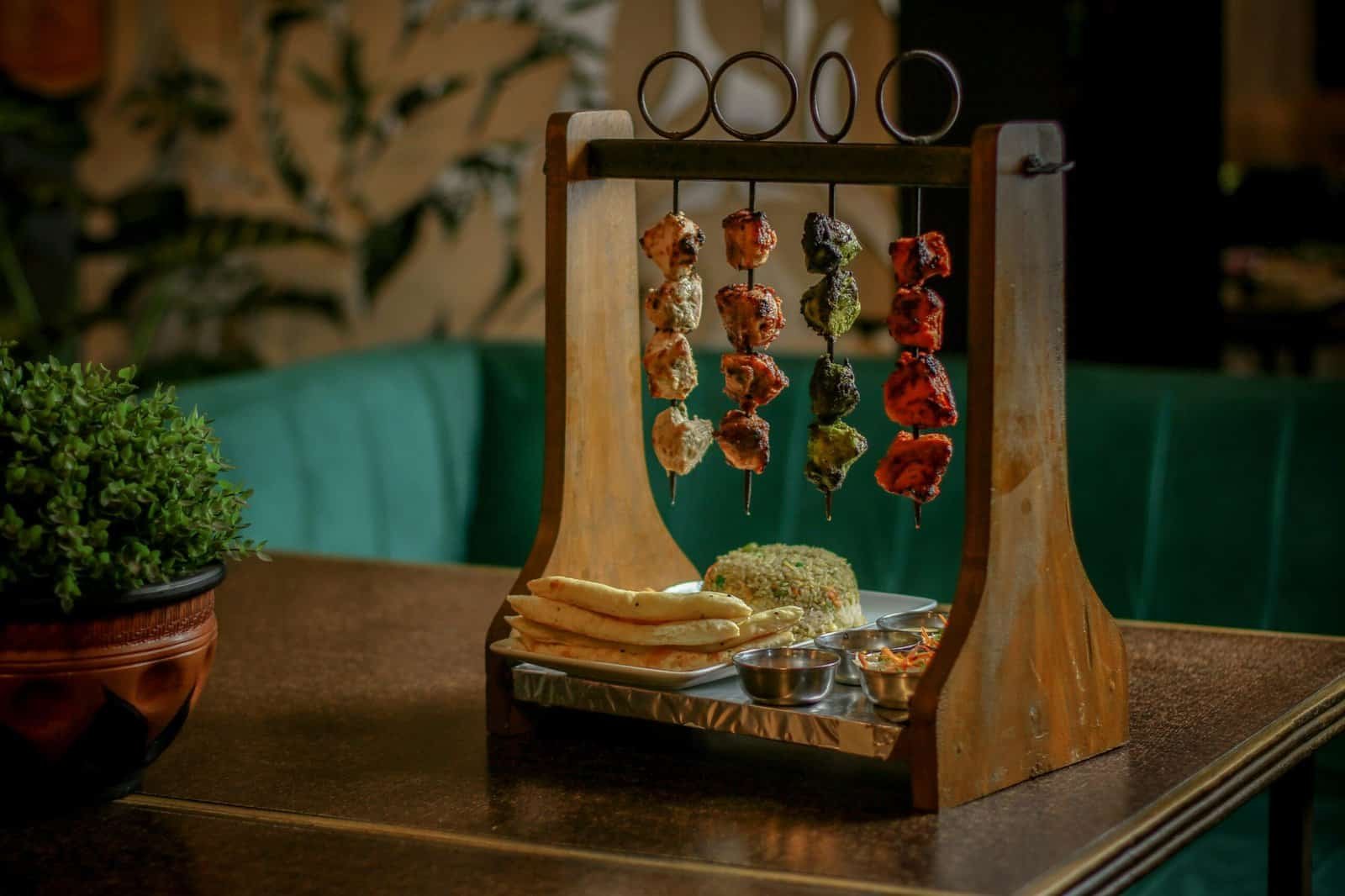
Flat stainless steel skewers are the ones to buy, because a flat blade stops food rotating on the grate. The best skewers and kebab racks all answer that same problem somehow: double prongs grip soft food, racks lift a whole set clear of the bars, and rotating baskets do the turning for you. Bamboo and short appetizer skewers cover the occasional jobs.
Round skewers are the culprit behind most ruined kebabs. Food pivots freely around them, so the same face keeps settling down against the grate. That side chars while the top stays pale and underdone.
Heat layout then decides how much work the hardware has to do. Steady indirect airflow on a pellet cooker forgives thicker cubes and slower turning. Over a hot charcoal bed, whatever holds the food still matters a great deal more.
Quick Verdict
Flat stainless steel skewers solve the spinning problem for the least money and last for years. Double-prong skewers do the same job with a firmer grip on soft food. Kebab racks lift everything off the grate, which cuts flare-ups and lets one hand turn a whole set at once.
Key Takeaways
- Round skewers let food rotate freely, so a flat blade or a second prong is the single biggest upgrade.
- Soaking bamboo skewers helps a little, but exposed ends still char, and foil is the usual fix.
- A kebab rack holds food above the grate, so drips miss the flame and flare-ups drop sharply.
- Mixing dense vegetables with quick-cooking shrimp on one skewer guarantees that something cooks badly.
- Measure the grill before buying, because long skewers overhang small grates and will not fit a drawer.
How We Picked These Skewers and Racks
These picks rest on three plain questions. Does the food stay put when the skewer turns? Does heat reach every face evenly? Can a full set be turned without rebuilding it?
No hands-on cooking sits behind these recommendations. Instead, the selection compares the shapes, materials, and construction choices that decide how each type behaves over a fire. Those physical traits are consistent across brands, which is why the guide covers types rather than labels.
Handle design carried weight here, since steel conducts heat straight up the shaft. Length mattered too, because an overhanging skewer puts the handle over open flame. Finally, cleanup and storage got attention, as both decide whether a set stays in rotation.
1. Flat Stainless Steel Skewers, Best Overall
Why It Stands Out
A flat blade is the cheapest fix for the oldest kebab problem. Round skewers act like an axle, so a heavy cube of meat swings back to the bottom every time. A flat profile gives the food two broad faces to sit against, so it holds whatever angle it gets.
Stainless steel also handles direct heat without warping or absorbing smells. Food releases cleanly once the surface has seared. The same set covers beef, chicken, lamb, peppers, and onions for years.
Worth Knowing
Metal gets hot, and the handle is attached to the hot part. Wooden or silicone grips help, though a long session will still warm them, so tongs or a towel belong within reach.
Blade width varies more than buyers expect. Very wide blades tear delicate food such as mushrooms, while very narrow ones barely stop rotation at all. A moderate width suits the widest range of ingredients.
This pick suits anyone who grills kebabs more than a couple of times a year and wants one set to cover everything. Cooks who only skewer food once a summer may not want the storage commitment. Best for: regular grillers who want the spinning problem solved permanently for very little money.
2. Double-Prong Skewers, Best for Holding Food Still
Why It Stands Out
Double-prong skewers attack the same rotation problem from a different angle. Two parallel points pass through each piece, which creates a fixed axis instead of a single pivot. Food cannot swivel, because it would have to bend around both prongs at once.
That grip matters most with awkward ingredients. Shrimp hold their curl rather than flopping, tomatoes stay whole instead of spinning off center, and layered onion stays stacked. Soft marinated chicken also keeps its shape, since the load spreads across two contact points rather than one.
Worth Knowing
Loading takes longer. Each piece has to line up with both prongs, so building a full set is slower than threading a single blade. In exchange, nothing needs rescuing halfway through the cook.
The prongs also make storage bulkier, and some designs resist tight packing in a drawer. Washing takes a moment longer too, because food can wedge in the gap between the points.
These suit cooks who grill a lot of seafood, cherry tomatoes, or soft marinated cubes that slide on ordinary skewers. Anyone who mainly grills firm beef can skip them, since a flat blade already holds that food well. Pairing them with a tenderizing tool for tougher cuts gives cubes that both hold together and chew easily. Best for: delicate or slippery ingredients that refuse to stay oriented on one shaft.
3. Bamboo Skewers, Best Disposable Choice
Why It Stands Out
Bamboo wins on volume and on cleanup. A party platter can swallow dozens of skewers, and nobody wants to scrub dozens of steel shafts afterward. Bamboo goes straight into the trash or compost, which is the whole appeal.
Bamboo also works for appetizers that never see a grill at all. Caprese bites, fruit, and cold tortellini skewers all hold fine on a thin wooden point. For indoor cooking, short bamboo skewers also fit the narrow cooking surface of a countertop electric grill better than long steel ones.
Worth Knowing
Soaking helps less than the internet suggests. Water sits mainly in the outer layer, so it only delays the moment the exposed ends blacken. Longer soaking does not make bamboo fireproof, since thin tips cannot hide from direct heat.
The practical fix is foil. Folding a strip over the handle ends shields whatever hangs past the food. Bamboo is round as well, so food still spins unless pieces sit tightly together.
Bamboo suits parties, potlucks, and anything served cold on a platter. Cooks grilling heavy beef cubes over high heat should choose metal instead, since bamboo can snap under weight. Best for: high-volume entertaining where cleanup speed beats durability.
4. Kebab Racks With Skewer Sets, Best Elevated Cooking
Why It Stands Out
A kebab rack changes the geometry of the whole cook. The frame suspends each skewer above the grate, so food never touches hot bars. Heat circulates around every face, which is why racked kebabs brown more evenly than kebabs lying flat.
Lifting the food also moves the drip zone. Fat falls through open space instead of onto a bar, so fewer flare-ups lick up at the meat. Cooks managing a hot charcoal bed from a chimney starter full of fresh coals notice that difference immediately.
Worth Knowing
The best part is turning. A rack holds the whole set in register, so rotating six skewers becomes one motion rather than six separate grabs. Nothing shifts position, and nothing gets forgotten in the back corner.
The tradeoff is footprint. A rack occupies a fixed rectangle of grate whether it is full or half empty, which crowds out burgers and corn. Racks also need storage space, and the skewers that ship with them are usually sized to that frame rather than interchangeable.
This pick suits cooks who make kebabs as the main event and want the whole batch to finish together. Anyone grilling two skewers alongside other food will find the frame wasteful. Best for: full kebab dinners where even cooking and one-motion turning matter most.
5. Rotating Skewer Baskets, Best Hands-Off Option
Why It Stands Out
A rotating basket removes the turning decision entirely. The cage spins on its axis, so every face passes the heat on a steady cycle. Nothing sits against one hot spot long enough to scorch.
That motion also keeps marinade moving across the surface rather than dripping off one side. Mixed loads of vegetables and small cubes tumble gently instead of needing individual attention. Meanwhile the cook is free to handle sides, sauces, or guests.
Worth Knowing
Rotation needs either a rotisserie motor or regular hand cranking, and that requirement rules out some grills. Check the mounting hardware against the specific grill before buying, since fitment is the usual disappointment.
Tumbling is also gentler with firm food than with soft food. Delicate fish and very ripe vegetables can break apart as the basket turns, so these baskets reward sturdier ingredients. Because the food keeps moving, doneness is harder to judge by eye, and an instant-read probe settles the question faster than guesswork.
Baskets suit cooks with rotisserie-capable grills who want large batches handled with minimal babysitting. Anyone with a small kettle and no motor should pick a rack instead. Best for: hands-off cooking of firm, chunky loads on a grill that already supports rotation.
6. Short Appetizer Skewers, Best for Small Items
Why It Stands Out
Short skewers exist because small food does not need long hardware. Scallops, shrimp, halloumi cubes, and single mushroom caps all cook quickly, so a long shaft only adds dead length. A short skewer keeps the load compact and easy to position.
Compact length also opens up cooler zones of the grill. Several short skewers can tuck into whatever gaps remain between larger items. They move to a serving platter cleanly too, since nothing hangs off the edge.
Worth Knowing
Short skewers put fingers closer to the fire. Handles sit only a few inches from the food, so tongs do the lifting rather than bare hands. Heat-resistant grips help, though they do not eliminate the issue.
Small pieces also drop through wide grates easily, and losing a scallop to the coals stings. A perforated grill mat under the load catches strays while still letting heat and smoke through.
These suit appetizer spreads, seafood nights, and anyone who grills small portions rather than dinner-sized skewers. Cooks building hearty meat kebabs will want full-length skewers instead. Best for: quick-cooking small bites and appetizer platters off the grill.
Skewers and Kebab Racks at a Glance
| Type | Material | Stops Spinning | Suits |
|---|---|---|---|
| Flat stainless steel skewers | Stainless steel, wood or silicone grip | Yes, flat blade blocks rotation | Everyday mixed kebabs |
| Double-prong skewers | Stainless steel | Yes, two points fix the axis | Shrimp, tomatoes, soft cubes |
| Bamboo skewers | Bamboo, disposable | No, round shaft lets food turn | Parties and cold platters |
| Kebab racks with skewer sets | Steel frame plus skewers | Yes, frame holds the set in place | Full kebab dinners |
| Rotating skewer baskets | Steel cage, rotisserie fitting | Not needed, basket turns the food | Hands-off large batches |
| Short appetizer skewers | Stainless steel or bamboo | Partly, depends on blade shape | Small bites and appetizers |
How to Choose Skewers
What Length of Skewer Fits a Standard Grill?
Pick a skewer a few inches shorter than the cooking surface is wide. Overhang leaves the handle sitting over flame, which heats the grip and makes turning unpleasant. Measure the grate first, then check the drawer where the set will live. Storage defeats more long skewers than grills do.
Are Flat or Round Skewers Better?
Flat skewers are better for almost everything cooked over heat. The broad faces stop food from rotating, which is the difference between even browning and one burnt side. Round skewers still earn a place for cold platters and appetizers, where nothing needs turning and appearance matters more than grip.
Which Handle Material Holds Up to Heat?
Look for wood or silicone rather than bare metal. Steel carries heat straight up the shaft, so an all-metal handle becomes uncomfortable fast. Wood insulates well but can scorch if it sits over flame, while silicone resists heat and cleans easily. Either way, keep tongs nearby for the first turn.
Can Skewers Go in the Dishwasher?
Most solid stainless skewers wash fine in a dishwasher. Sets with wooden handles do better with a quick hand wash, because repeated heat loosens glue. Bamboo never goes in the dishwasher, since it is disposable. Rinse any skewer soon after cooking, as dried marinade clings stubbornly.
Metal Skewers or Bamboo Skewers
When Metal Skewers Make More Sense
Metal wins whenever heat is high, cooking takes a while, or the load is heavy. Steel will not burn through, bend, or splinter. A metal shaft also carries heat into the center of the food, which helps dense cubes cook through. Metal handles indoor cooking too, so one set covers the grill and a ridged stovetop pan alike.
When Bamboo Skewers Make More Sense
Bamboo wins on quantity, cost, and cleanup. Serving twenty people is far easier when the skewers get thrown away afterward. Bamboo also suits cold food, short cooking times, and anything handed around on a platter, since a wooden handle stays cool. The catch is durability, so heavy cubes and long cooks belong on steel.
What Trips People Up With Kebabs
Mixing Ingredients That Cook at Different Speeds
Dense potato next to shrimp on one skewer cannot finish together. By the time the potato softens, the shrimp has gone rubbery. Group ingredients by cooking speed instead, keeping firm vegetables and quick proteins apart.
Packing the Skewer Too Tightly
Crowded pieces shield each other from heat. Where two cubes press together, the surfaces steam instead of searing, and those faces stay pale and wet. Leaving a small gap between pieces lets heat reach the sides, which is what builds browning all the way around. Loading order helps too, so put the thickest pieces toward the middle.
Turning Too Often and Too Early
Constant flipping prevents a crust from forming. Food also sticks when it moves before the surface has set, which is how half a chicken cube ends up on the grate. Give each face time, then turn once with confidence. Afterward, let finished kebabs settle briefly before serving, because the juices redistribute as they rest.
Recommended Reading
- Why resting meat changes the texture of every bite
- Flat-top griddles for searing indoors
- Carving sets for slicing larger cuts cleanly
Skewer and Kebab Rack FAQ
What Are the Best Skewers and Kebab Racks for Home Grilling?
For most home cooks, the best skewers and kebab racks are a flat stainless steel set plus one kebab rack. The flat blades stop food spinning, and the rack lifts everything off the grate so heat reaches all sides. Add bamboo skewers for parties, since cleanup after a crowd gets tedious with metal.
Does Soaking Bamboo Skewers Really Help?
Soaking helps a little, though it is not the whole answer. Water sits mostly in the outer layer, so it delays charring rather than preventing it. The exposed ends past the food still blacken over direct heat. Wrapping those ends in foil and keeping them off the hottest zone works better than a long soak.
Why Does Food Spin on Skewers?
Round skewers give food a single pivot point, so gravity pulls the heaviest side back to the bottom. Every turn undoes itself within seconds. A flat blade gives each piece two broad faces to brace against, while double prongs fix the food between two points. Either shape ends the problem.
What Does a Kebab Rack Actually Do?
A kebab rack suspends skewers above the grate inside a frame. Food never touches hot bars, so heat circulates around every face and browning evens out. Drips fall through open space instead of onto metal, which reduces flare-ups. The frame also holds the whole set together, so turning six skewers takes one motion.
Are Metal Skewers Dishwasher Safe?
Solid stainless skewers generally handle the dishwasher without trouble. Sets with wooden handles last longer with a hand wash, because heat and moisture dry the wood out. Either way, rinse skewers soon after cooking. Sugary marinades harden into a film that resists even a hot cycle.
How Much Space Goes Between Pieces on a Skewer?
Leave a small gap, roughly the thickness of a fingernail, between pieces. Touching surfaces trap steam and stay pale, while a gap lets heat reach the sides of each cube. Do not spread pieces so far apart that the skewer bends under them. Snug but not crushed is the target.
Do Skewers Work Indoors?
Yes, skewers work indoors on a grill pan, a griddle, or under a broiler. Shorter skewers fit indoor surfaces better, since full-length ones hang over the edge. A ridged pan gives the closest result to outdoor grilling, because the raised ribs keep food above its own juices. Ventilation helps, as marinade smokes quickly.
