
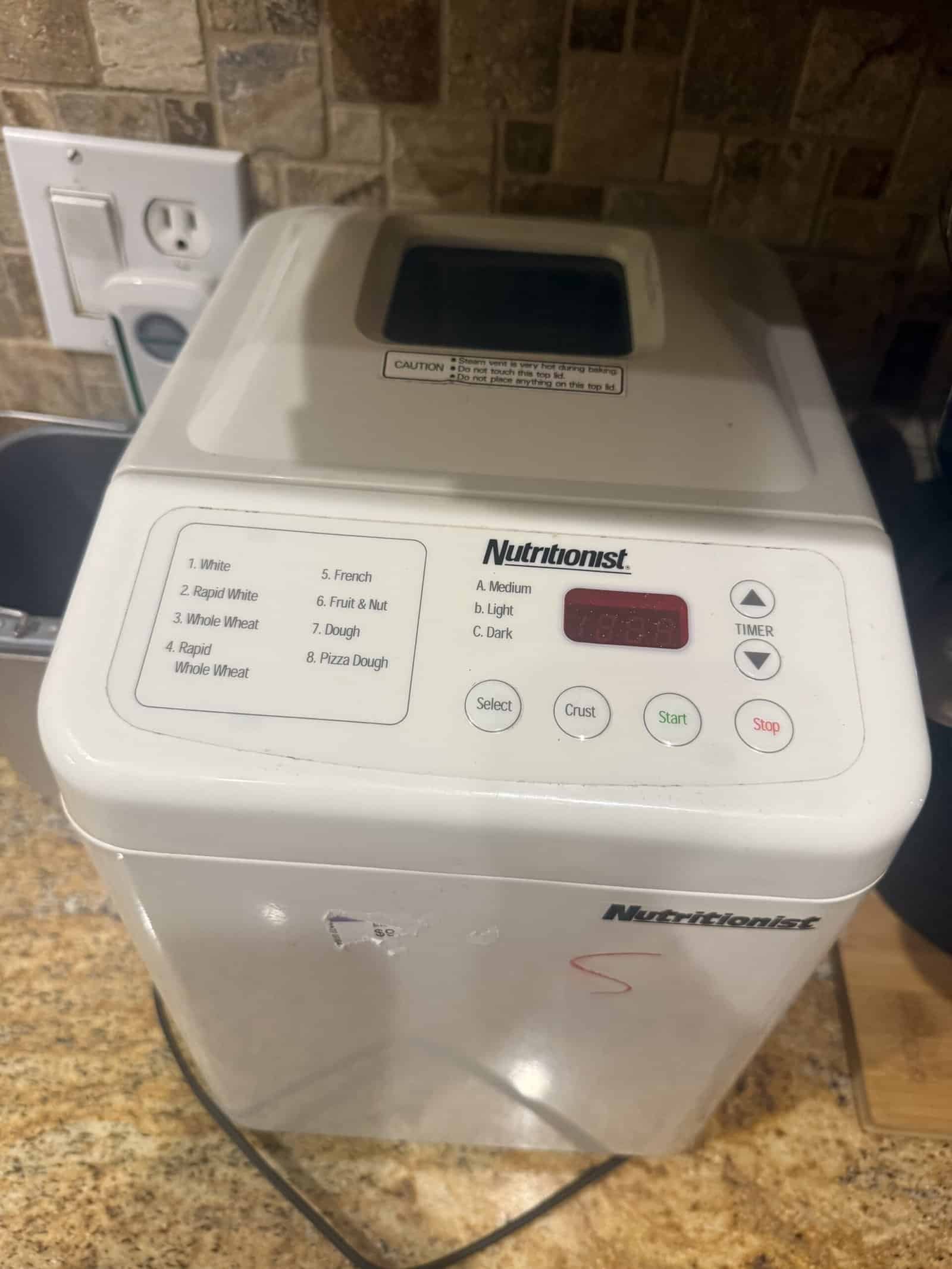
The best basic bread machines without extra features are the ones with a handful of programs, a straightforward pan, and nothing else to go wrong. Most of what gets added to premium machines is capability the average owner never touches, and every extra function is another thing that can fail or confuse.
Mine is a basic machine and the loaf I make on it runs on the plain white setting with no special loaf size. That result did not require anything beyond the simplest cycle the machine offers, which is the whole argument here.
Quick Verdict
Basic, white, and whole wheat cycles cover the great majority of home baking. Buy for pan quality, motor reliability, and parts availability instead of program count. A simple machine costs less, occupies less counter, and has fewer failure points.
Key Takeaways
- Three or four cycles cover most real-world baking
- Fewer electronics means fewer failure points over years
- Pan and paddle quality outranks any program
- Simple control panels are readable without the manual
- Dough cycle is the one extra genuinely worth having
- Premium features frequently go unused after the first month
How We Picked
Cycle count came first, on the basis that basic, white, whole wheat, and dough cover almost everything a home baker makes repeatedly.
Build quality was weighted heavily, since a simple machine’s value proposition collapses if the motor or pan fails early.
Parts availability mattered next, because a basic machine kept for a decade needs a replaceable pan and paddle more than a complex one kept for three years does.
Control clarity was assessed on whether the panel can be operated without consulting a manual months after the last bake.
1. Three or Four Cycle Machine
Why It Stands Out
Basic, whole wheat, and dough is genuinely enough for most households. A machine limited to those has a smaller panel, simpler internals, and nothing to scroll past when you want plain bread.
Worth Knowing
No gluten-free or specialty cycles, which matters if dietary requirements are part of why you are buying.
Suits anyone making mostly standard loaves. Skip it if you know you need gluten-free capability.
Program guidance sits in how to choose a bread machine.
2. Mechanical Dial Machine
Why It Stands Out
Machines with a physical dial or switch rather than a digital panel have less to fail electronically and stay usable when a display would have gone dim or dead.
Worth Knowing
No delay timer and no digital countdown, so you are working from the manual’s stated cycle times rather than a display.
Suits anyone wanting the fewest possible failure points. Skip it if you rely on knowing exactly how long is left.
Longevity context sits in whether bread machines are worth it.
3. Machine With a Dough Cycle
Why It Stands Out
Dough is the one extra cycle genuinely worth having on a basic machine, because it turns the unit into a kneader for pizza, rolls, and oven-baked loaves without adding complexity.
Worth Knowing
Using the dough cycle means shaping and baking yourself, which is more work than a full bake cycle and produces a better crust.
Suits anyone who wants flexibility without a complicated machine. Skip it only if you will never bake in the oven.
The approach is covered in using the dough cycle then oven baking.
4. Machine With a Well-Made Nonstick Pan
Why It Stands Out
The pan is the part that decides whether a machine lasts. A thick, well-coated pan releases loaves cleanly for years where a thin one starts sticking within months, and no program compensates for that.
Worth Knowing
Pan coatings all wear eventually, and hand washing rather than dishwashing extends them substantially.
Suits everyone. This is the specification most worth paying for on a basic machine.
Care guidance sits in how to use a bread machine.
5. A Used Basic Machine
Why It Stands Out
Older machines were frequently simpler by design, and the secondhand market is full of them at low prices. Buying used is also the cheapest way to test whether a bread machine earns its space.
Worth Knowing
Check the pan and paddle are present and the nonstick is intact, since those are what end an older machine.
Suits anyone unsure they will keep using one. Skip it if you want a warranty.
Buying checks sit in whether a used bread machine is worth buying.
6. A Kitchen Scale
Why It Stands Out
Not a machine, and the accessory that improves basic-machine results most. Bread is sensitive to flour quantity, and cup measurements vary enough to produce dense loaves where weighing does not.
Worth Knowing
Weighing means converting recipes written in cups, which is a small one-time effort per recipe.
Suits anyone whose loaves come out inconsistently. Skip it if your results are already reliable.
Options sit in kitchen scales.
Basic Machines at a Glance
| Feature | Worth having | Why |
|---|---|---|
| Basic and whole wheat cycles | Yes | Cover most home baking |
| Dough cycle | Yes | Adds flexibility, no complexity |
| Good nonstick pan | Yes | Decides machine lifespan |
| Crust control | Useful | Affects slicing |
| Delay timer | Sometimes | Only if you bake overnight |
| Gluten-free cycle | Only if needed | Unused by most owners |
| Automatic dispenser | Rarely | Extra part to clean and fail |
What a Basic Machine Actually Produces
The white bread I make runs on the plain white setting with no special loaf size, and it comes out good enough for sandwiches and toast both.
That is the practical case against paying for programs. The loaf I am happy with required the simplest cycle available and nothing else.
The one thing my machine does have is a beep during the knead, which is when add-ins go in. I have used it that way for jalapeno cheese bread, and I generally prefer adding things by timing instead, covered in whether you need the mix-in beep.
The first loaf I made came out dense because I under-measured the flour, which is a recipe problem rather than a machine problem and would have happened on any unit.
That is worth saying because people blame machines for outcomes that come from measurement.
Features Most Owners Do Not Use
Gluten-free cycles
Essential for those who need them and completely unused by everyone else, which is most buyers.
Automatic fruit and nut dispensers
Genuinely convenient for add-in loaves, and an additional part to clean and an additional mechanism to fail.
Jam and cake settings
Novelty programs that get tried once. A saucepan makes better jam and an oven makes better cake.
Multiple loaf size settings
Useful in theory and most people settle on one size and stay there, covered in bread machines for beginners.
What Actually Fails on a Bread Machine
Choosing simplicity only makes sense if you know what breaks, and the failure list is short and consistent across brands.
The pan coating goes first on most machines. Loaves start sticking, then tearing, and eventually the pan needs replacing or the machine becomes unusable.
The paddle shaft seal is next. A worn seal lets moisture into the bearing beneath, which eventually seizes the shaft or leaks, and it is the failure that most often ends an older machine.
Belt and motor problems appear on heavily used units, usually announced by a change in the sound during kneading rather than by sudden failure.
Heating elements fail occasionally and less often than people expect. A machine that kneads but does not brown is usually an element or a thermostat.
Control boards are where complexity costs you. A machine with a large digital panel has more electronics exposed to heat and steam, and a dead board frequently means a dead machine since replacements are rarely available.
That last point is the strongest practical argument for simplicity. Mechanical controls do not develop the faults that electronic ones do, and none of the common failures involve the programs at all.
Where Simplicity Costs You
No delay timer means no waking to fresh bread, which is a genuine loss for people who wanted exactly that.
No gluten-free cycle rules the machine out entirely for anyone with coeliac disease or gluten intolerance in the household.
Fewer crust options can matter, since crust setting affects how cleanly a loaf slices.
And limited programs constrain you if your baking expands later, which is worth weighing against how likely that actually is.
The Verdict
Buy for the pan, the motor, and parts availability rather than the program list, because those three decide whether a machine lasts and the programs decide very little.
A dough cycle is the one addition worth insisting on, since it adds real flexibility without adding complexity or another mechanism.
And spend what you saved on a kitchen scale, which improves results on a basic machine more than any premium feature would have.
Recommended Reading
- choosing a machine
- are they worth it
- buying used
- dough cycle then oven
- using a bread machine
- dense loaves
- the mix-in beep
- machines for small counters
Common Mistakes to Avoid
Buying programs for a future self
Specialty cycles bought in anticipation of expanded baking mostly go untouched, and they cost money and panel space in the meantime.
Judging a machine by feature count
Pan quality and motor reliability decide how long a machine lasts. Neither appears prominently in marketing.
Blaming the machine for measurement
Dense loaves are usually a flour quantity problem rather than a machine fault, and they happen on expensive units too.
Skipping the dough cycle
The one genuinely useful addition, and the one people cut when trying to buy as basic as possible.
Basic Bread Machine FAQ
How many cycles do I actually need?
Basic, whole wheat, and dough covers the great majority of home baking. Everything beyond that is used by a minority of owners.
Are basic machines worse at baking?
No. Program count affects convenience rather than loaf quality, and pan and motor quality matter far more than the control panel does.
Which feature is worth paying for?
A dough cycle, and a well-made nonstick pan. The pan is the specification that decides how many years the machine lasts.
Is a delay timer necessary?
Only if you specifically want bread ready on waking. It matters far less when you are deciding to bake on a given day anyway.
Do I need a gluten-free cycle?
Only if someone in the household requires gluten-free bread. It is otherwise among the least used programs on any machine.
Why did my loaf come out dense on a basic machine?
Almost always flour quantity rather than the machine. Under-measuring flour produces a slack dough that spreads instead of rising.
Should I buy used to get simple?
It works well, since older machines were frequently simpler by design and secondhand prices are low. Check the pan and paddle first.
What improves results most on a basic machine?
A kitchen scale. Weighing flour rather than measuring by cup removes the most common cause of inconsistent loaves.
For the wider picture, see our guide to best bread machine.
