
Six quarts is the number most people land on, and for a lot of households it is larger than anything they actually make. Size decisions in this category tend to be driven by the fear of buying too small, which produces pots that are heavy to lift, awkward to store, and run half empty. The useful question is what you cook rather than how many people live there. Our roundup of Dutch ovens covers the options.
Quick Answer
Three to four quarts suits one or two people and most everyday browning. Five to six quarts is the general-purpose size and handles a whole chicken. Seven and up is for batch cooking and large cuts, and it is heavy enough that lifting it full is a genuine consideration.
Key Points
- Weight when full matters as much as capacity.
- A pot running half empty cooks differently.
- Diameter decides whether meat browns in a single layer.
- Cast iron adds substantial weight over coated pots at the same size.
- Storage is the constraint people discover after buying.
Sizes and What They Hold
Three to four quarts
One or two people, everyday browning, a small braise, a pot of chili that lasts a couple of days. Light enough to move easily even in cast iron, which matters more than it sounds when the pot is full and hot.
Five to six quarts
The common recommendation, and genuinely versatile. Takes a whole chicken, a decent joint, or a large batch of stew. Full and in cast iron, it is heavy.
Seven to nine quarts
Batch cooking, large cuts, feeding a group. Also the point at which a full cast iron pot becomes a two-handed lift you plan rather than perform casually, particularly moving it in and out of a hot oven.
Above nine quarts
Specialist. Stock in volume, very large roasts, or cooking for a crowd regularly. Storage and weight both become real problems, and a pot this size in cast iron is genuinely difficult to handle when loaded.
Why Bigger Is Not Safer
An oversized pot cooks differently rather than simply having room to spare. Liquid spread thin over a wide base reduces faster, and a braise that should stay submerged can end up drying out.
Browning suffers too. Meat needs a single layer with space between pieces, and a large pot encourages loading more in at once, which steams rather than sears.
Then there is weight. A cast iron pot is heavy empty and considerably heavier full, and moving one from stovetop to oven at that point is where accidents happen. Coated pots are lighter at the same capacity, which changes the calculation.
Diameter Matters More Than Volume
Two pots of the same capacity can have quite different bases, and the base is what decides how much meat browns at once. A tall narrow pot holds the same volume and gives you less usable searing area.
Wide and shallow suits browning and reducing, since more surface area means faster evaporation. Tall and narrow suits stock and anything you want to stay submerged. Neither is better in general, and product listings rarely make the difference obvious.
This is also where a braiser earns its place, being deliberately wide and shallow for exactly the browning stage. Our comparison of Dutch ovens and cast iron skillets covers a similar trade.
What Mine Is
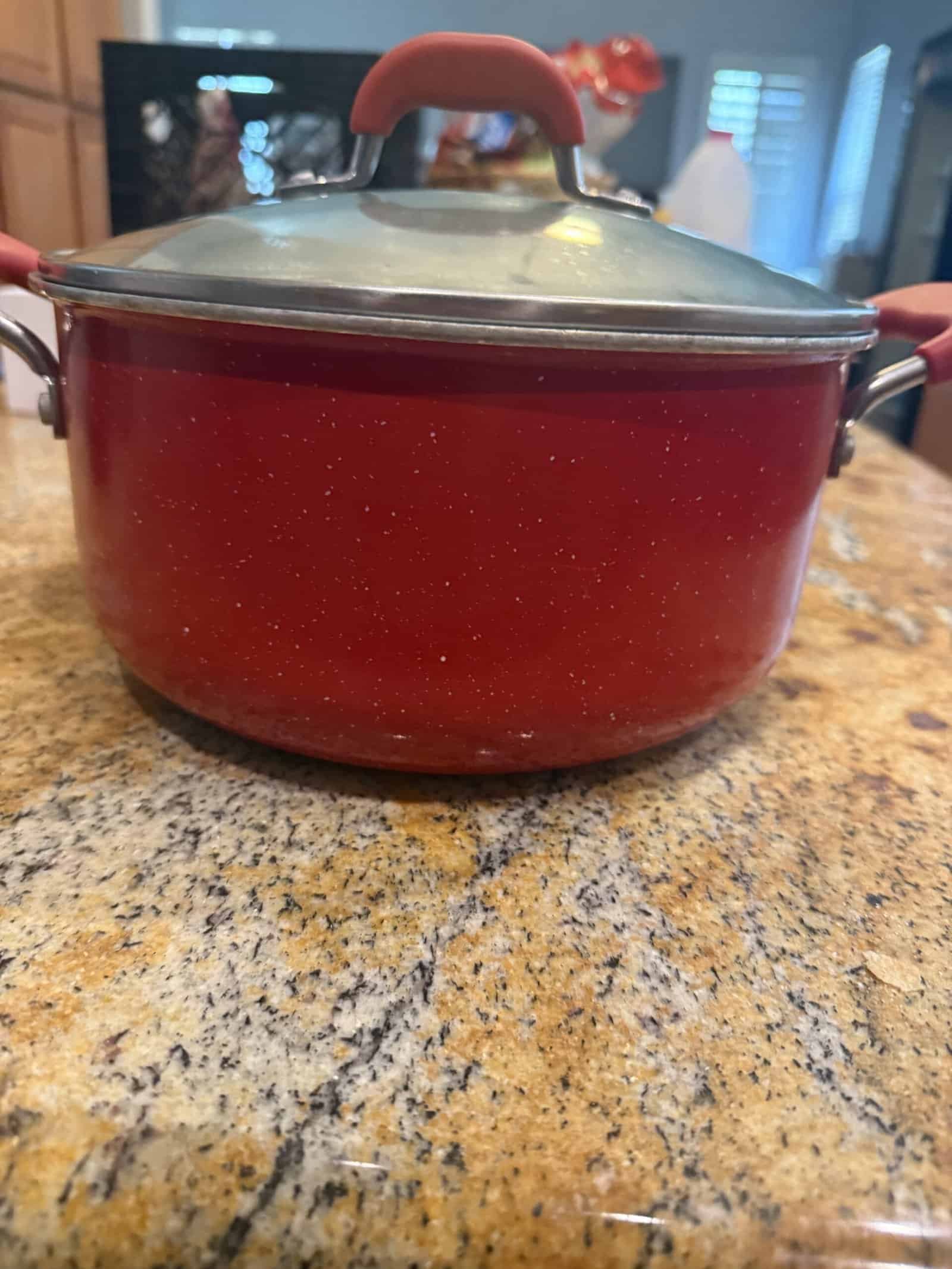
Mine is on the smaller side, though I have never measured it and may be underestimating. It is a coated pot rather than cast iron, which makes it noticeably lighter than an equivalent cast iron one would be.
What it handles is taco meat, sausage, that kind of browning, and it is comfortably big enough for that. I have not tried to fit a whole chicken in it and would not assume it goes.
The weight thing is worth mentioning because it is easy to overlook when you own the lighter version. Moving mine full is unremarkable. The same capacity in cast iron would be a different experience, and that difference does not show up in a quart figure on a product page.
What I cannot tell you is how a six or eight quart pot behaves for the things I make. One pot, one size, and the cooking I do has never pushed against its limits.
How to Decide
What is the biggest thing you would cook?
Size to that rather than to average use. A whole chicken is the usual test, and it generally wants five quarts or more.
How much do you cook at once?
One meal versus a week of leftovers is the real question. A pot sized for batch cooking runs half empty on a Tuesday.
Can you lift it full?
Cast iron at seven quarts, full and hot, is a serious lift. Be honest about this before it matters at the oven door.
Where will it live?
These do not stack and they are awkward. Cupboard space is the constraint people discover after ordering rather than before.
One Pot or Two?
One general-purpose pot
Five to six quarts covers most of what a household cooks, and one pot means one thing to store. For most people this is the sensible answer.
A small one alongside
Three quarts for everyday browning and weeknight cooking, with the larger one reserved for batches. Two pots is more storage and it stops the big pot being hauled out for a pound of mince. Our comparison of slow cookers and Dutch ovens covers another way to split the work.
Common Sizing Mistakes
Buying for a hypothetical dinner party
The pot you use weekly matters more than the one that would suit an occasional crowd. Oversized pots get used less because they are heavy.
Ignoring the weight of cast iron
Quart figures say nothing about lifting. The same capacity in coated aluminum is a fraction of the weight.
Comparing volume without diameter
Base width decides browning capacity. Two six-quart pots can differ substantially in usable searing area.
Forgetting the oven
A large pot with the lid on needs headroom, and a tall one may not clear a shelf. Measure before buying. Our note on storing kitchen equipment covers another thing size affects.
Related reading: our roundup of Dutch ovens under fifty dollars, our comparison of Dutch ovens and stockpots, our guide to what to cook in a slow cooker, and a roundup of braisers.
Dutch Oven Size FAQ
What size Dutch oven is most versatile?
Five to six quarts, which takes a whole chicken and handles most household batches. It is also heavy when full in cast iron, so the versatility comes with a lifting cost worth considering.
Is a 6-quart Dutch oven too big for two people?
Often, yes, for everyday cooking. It works and runs half empty most of the time, which affects how liquid reduces and how meat browns. Three to four quarts suits two people better for routine use.
What size do I need for a whole chicken?
Generally five quarts or more, and diameter matters as much as volume since the bird needs to sit flat with the lid closing properly. Measuring your oven shelf height is worth doing at the same time.
Does a bigger pot cook differently?
Yes. Liquid spread over a wider base reduces faster, so a braise can dry out in a pot that is too large. Browning also suffers, because a big pot invites loading in more meat than will sear at once.
How heavy is too heavy?
That depends on you, and cast iron at seven quarts full is a two-handed lift that people underestimate until they are holding it near a hot oven. Coated pots weigh substantially less at the same capacity.
Should I buy two sizes?
If you both batch cook and cook for one or two regularly, a small pot alongside a large one means the heavy one comes out only when it is needed. The cost is storage, which for cookware this shape is significant.
Does diameter matter more than quarts?
For browning, yes. Base width decides how much meat fits in a single layer, and two pots of identical capacity can differ considerably. Tall narrow pots suit stock; wide shallow ones suit searing.
Will it fit in my oven?
Check before buying, particularly with the lid on and the handles included. Larger pots need real headroom, and shelf spacing is not adjustable in every oven.
Recommended Reading
See our note on choosing the right cookware.
