
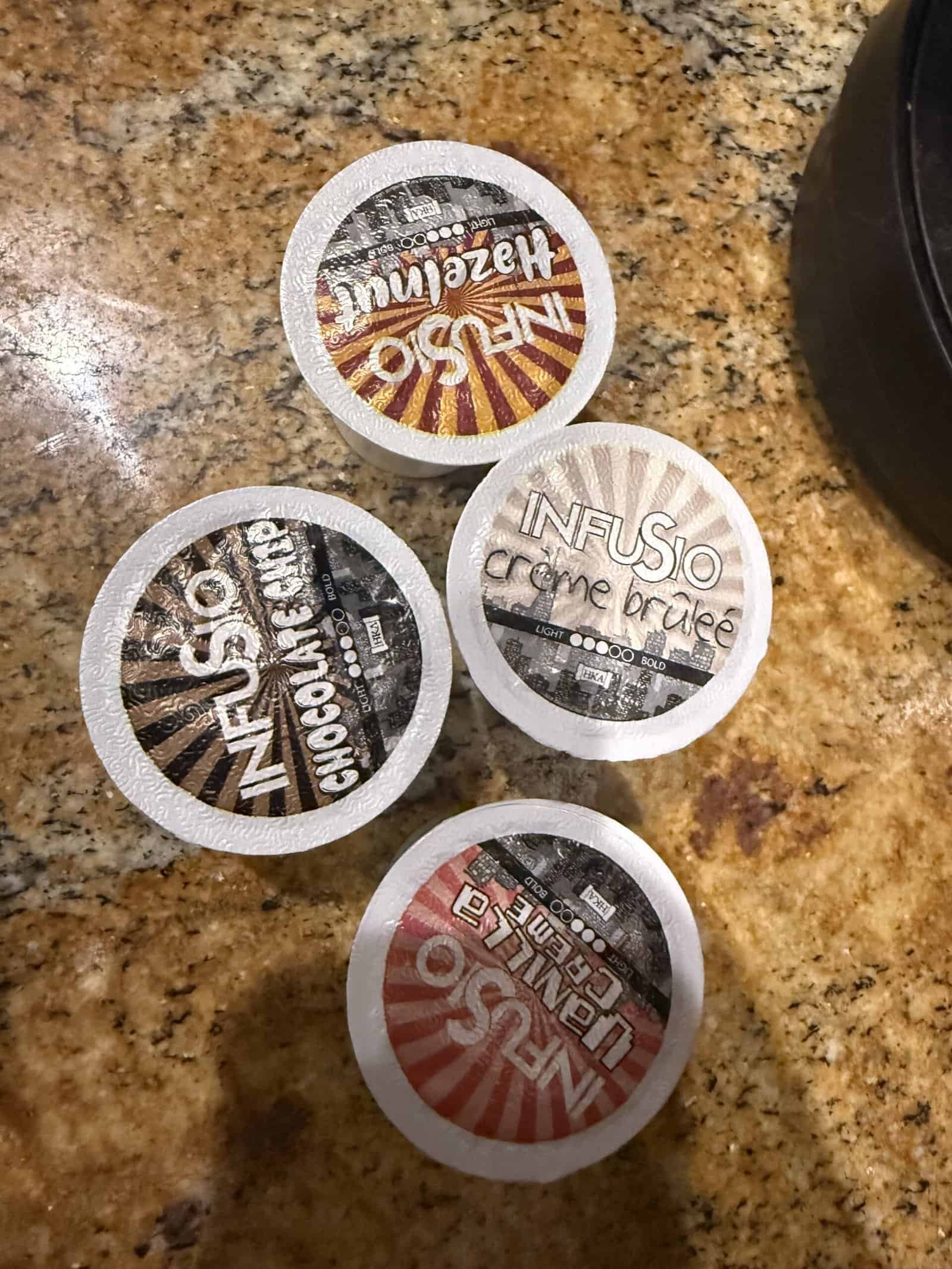
The case for reusable pods is straightforward: cheaper per cup, less waste, and any coffee you want rather than what the machine’s ecosystem sells. On paper it wins comfortably.
In practice a lot of people try one and return to disposables within a few months, and the reasons are consistent enough to be worth knowing before you buy. Our roundup of single-serve coffee makers covers the machines.
Quick Verdict
Reusable pods cost far less per cup and save meaningful waste, at the cost of grinding, filling, and cleaning every time. Whether that trade works depends entirely on whether convenience was why you bought a pod machine.
The Cost Case
Disposable pods work out considerably more expensive per cup than ground coffee, often several times the cost of the same coffee bought as beans or grounds. Once the reusable route makes sense, the refillable pods worth buying narrows the field.
A reusable filter costs a few dollars once, and after that you are simply paying grocery-store prices for whatever coffee you buy. Over a year of daily drinking the saving is real money rather than a rounding error.
That arithmetic is why reusable pods keep getting recommended everywhere, and it is entirely correct as far as it goes. Our roundup of coffee storage canisters covers keeping bulk coffee fresh once you switch. Our note on storing coffee beans covers keeping the coffee you buy instead.
What the Cost Case Leaves Out
The routine changes
A disposable pod is drop in, close lid, press button. A reusable one is measure grounds, fill, level, close, brew, then knock out wet grounds and rinse. That is a different morning.
Grind size matters
Reusable filters generally need a medium grind. Too fine and water struggles through, producing a slow weak cup; too coarse and it runs through fast and tastes thin.
The result is often weaker
Reusable baskets hold less coffee than a factory pod packs in, and the water path differs, so many people find the cup lighter than what they were getting before.
Cleaning is constant
Wet grounds cling to a mesh filter and need rinsing every use, and the mesh clogs with oils over time and needs a proper clean periodically.
At a Glance
| Reusable | Disposable | |
|---|---|---|
| Cost per cup | Much lower | Much higher |
| Effort per cup | Fill, brew, clean | Drop in, brew, discard |
| Coffee choice | Anything | What is sold in pods |
| Strength | Often lighter | Consistent |
| Waste | Grounds only | Pod per cup |
| Best for | Cost and control | Speed |
What I Did
I tried a reusable pod and went back to disposables. That is the whole account, and it is worth stating plainly because most writing on this subject is by people advocating one side rather than people who tried and switched back.
My machine is a Keurig, and I have been through three of them over the years, so this is not a case of somebody who barely uses the thing. The reusable filter got a fair run and it is not what I reach for now.
I would not present that as evidence against reusable pods generally. Plenty of people use them happily, and the cost argument does not stop being true because I did not stick with it. What I can say is that going back is a common enough outcome that it is worth knowing before you assume the cheaper option is obviously better.
The honest framing is that a pod machine is bought for convenience, and a reusable filter gives back some of that convenience in exchange for money. Whether that is a good deal depends on which of the two you were short of.
Who Each Suits
Reusable pods suit you if
You already grind or buy ground coffee, you care about the cost per cup, and the extra minute each morning does not bother you. Anyone particular about which coffee they drink also benefits, since the pod ecosystem limits choice.
Disposables suit you if
Speed is why you own the machine, you brew at odd hours or in a hurry, or several people use it with different preferences. Guests are also easier with a carousel of options.
Both make sense if
You use disposables on weekdays and a reusable filter at the weekend, which is a common pattern and costs nothing to try since the filter is cheap.
Neither, if
You want better coffee rather than cheaper coffee, in which case a different brewing method will do more than either option. Our comparison of coffee makers and espresso machines covers that.
Making a Reusable Pod Work
Use a medium grind rather than the fine grind sold for espresso, since the filter mesh needs water to pass at a reasonable rate.
Fill to the line rather than packing it down. Tamping a reusable pod restricts flow and produces a slow weak cup, which is the opposite of what people expect.
Rinse immediately after use, because wet grounds dry onto mesh and become considerably harder to remove. A periodic soak clears the oils that build up in the mesh over months.
Our note on descaling a coffee maker covers the machine side of maintenance, and our guide to choosing a coffee grinder covers getting the grind right.
What to Look for in a Reusable Filter
Machine compatibility
Filters are made for specific brewer families, and one built for a different machine may sit badly or leak around the rim. Check the model list before buying.
Mesh quality
Stainless mesh lasts and cleans better than plastic mesh, which stains and clogs faster. This is most of the difference between a cheap filter and a good one.
Basket capacity
Larger baskets hold more coffee and produce a stronger cup, which addresses the most common complaint about reusable pods directly.
How it comes apart
Filters that separate into two pieces are far easier to clean than sealed ones, since grounds collect at the base of the mesh. Our roundup of coffee scales covers measuring consistently.
The Waste Question
Disposable pods generate a container per cup, and while many are now labeled recyclable, that usually requires separating the lid, grounds, and cup, which most people do not do.
A reusable filter eliminates that entirely, leaving only wet grounds, which compost. Our note on countertop compost bins covers where they go.
If waste is your main reason for switching, the effort cost is easier to accept, since you are not trading convenience for money but for something you value directly. Our roundup of coffee filters and reusable baskets covers the drip equivalent.
Reusable vs Disposable Pod FAQ
Are reusable K-cups cheaper?
Considerably, since you pay grocery-store prices for coffee instead of pod prices. A reusable filter costs a few dollars once, and over a year of daily drinking the saving is substantial rather than marginal.
Does coffee taste different from a reusable pod?
Often lighter, because the basket holds less coffee than a factory pod packs in and the water path differs. Using a slightly coarser grind and filling to the line rather than tamping helps, and some people never quite match the strength.
Why do people go back to disposables?
Convenience, mostly. Filling, brewing, and cleaning is a different routine from dropping a pod in, and a pod machine is usually bought precisely because that routine was the appeal.
What grind should I use?
Medium, similar to drip. Espresso-fine grind restricts flow through the mesh and produces a slow weak cup, and very coarse grind lets water pass too quickly and tastes thin.
Do reusable pods damage the machine?
Not when used correctly, and grounds escaping a badly closed filter can end up where they should not be. Filling to the line and closing the lid properly avoids that.
How do I clean one?
Rinse immediately after each use, since dried grounds are much harder to get out of mesh. Every few weeks a soak in warm soapy water or a descaling solution clears the coffee oils that clog the mesh over time.
Can I use both?
Yes, and plenty of people do, using disposables when they are in a hurry and a reusable filter when they are not. The filter is cheap enough that trying this costs almost nothing.
Are disposable pods recyclable?
Many are labeled as such, and it typically requires peeling the lid, emptying the grounds, and rinsing the cup, which is more work than most people do. A reusable filter avoids the question entirely.
Recommended Reading
See our note on K-cup organizers and storage.
