
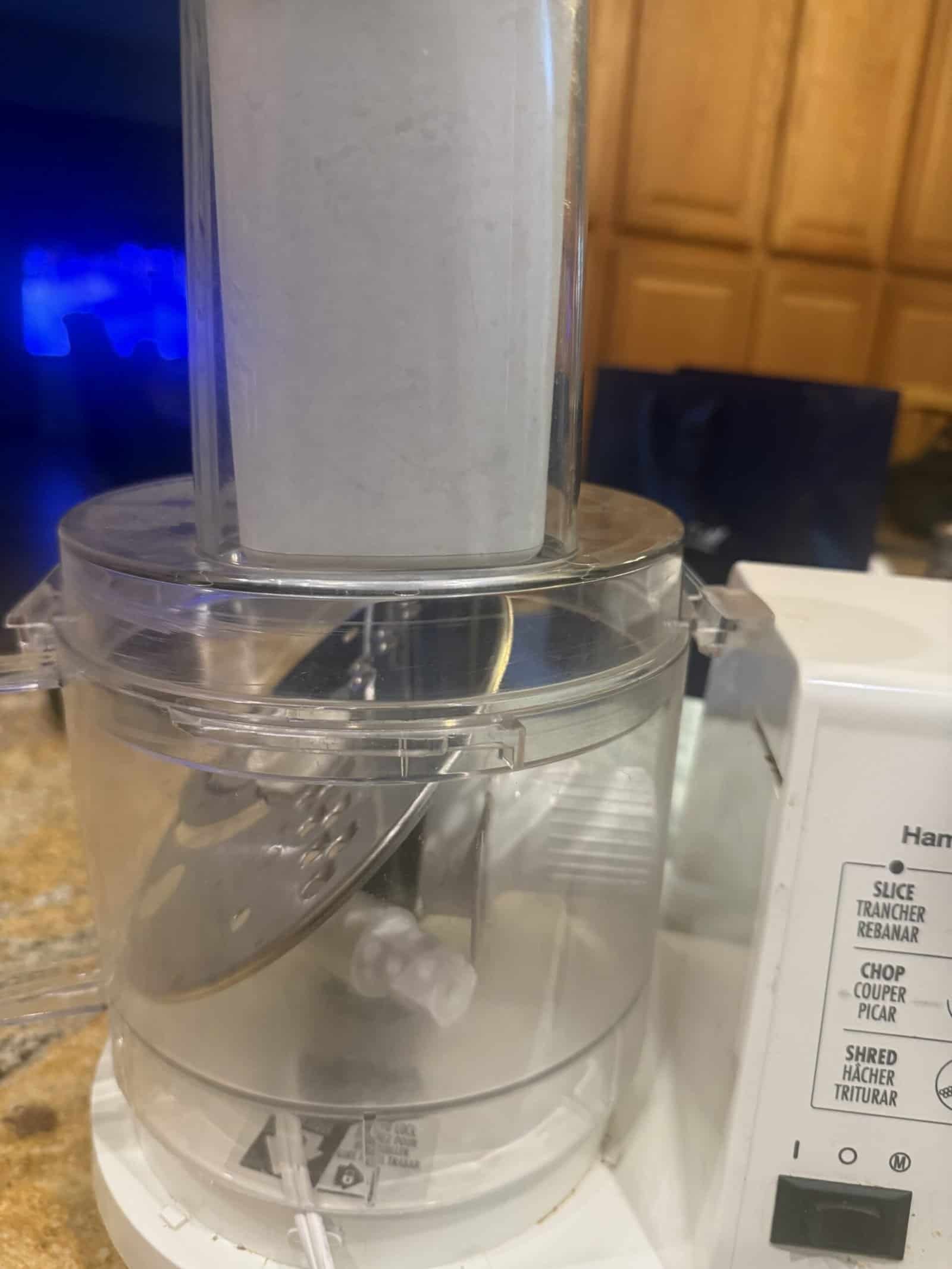
Cleaning is what decides whether a food processor stays in use, and most of it comes down to one thing: the parts come apart, and they go in the dishwasher.
Mine does exactly that. The pieces separate and go straight in, and the only complaint is that they fit awkwardly and take up more rack space than their size suggests. Our note on kitchen scales covers why cleaning matters so much.
A Safety Note
The blade and discs are genuinely sharp and stay sharp. Handle them by the plastic hub rather than the cutting edge, and never reach into a bowl to retrieve one from under food. Unplug the base before cleaning it, and never immerse the motor unit in water.
Quick Answer
Take it apart immediately after use, put the bowl, lid, blade, and discs in the dishwasher, and wipe the motor base rather than immersing it. If the machine will not start at all after reassembly, our guide on what stops a food processor turning on covers the lid interlock and the other usual causes.
What Goes Where
| Part | Method | Note |
|---|---|---|
| Bowl | Dishwasher, top rack | Bulky, awkward fit |
| Lid and feed tube | Dishwasher | Check the tube channel |
| S-blade | Dishwasher or careful hand wash | Handle by the hub |
| Discs | Dishwasher | Lay flat, do not stack |
| Motor base | Damp cloth only | Never immerse |
| Drive shaft | Wipe, check for residue | Food collects at the base |
Do It Immediately
This is the single thing that makes the difference. Cheese, starch, and anything containing dairy set hard once dried and take considerably more effort to remove.
Shredded cheese in particular gets forced into the gaps around the disc and into the join between bowl and shaft, and it dries into a solid rather than washing away.
Rinsing the parts under a tap before they go in the dishwasher takes seconds and removes most of what would otherwise bake on.
A machine that is unpleasant to clean stops being a machine you use, which is how these end up in cupboards. Our roundup of dish drying racks covers what comes next.
The Awkward Dishwasher Fit
Everything on mine is dishwasher safe, and getting it all in is the fiddly part rather than the washing.
The bowl is tall and wide, so it takes a disproportionate share of the top rack and frequently blocks the spray arm for anything above it.
Discs do not stack, since they need water on both faces, so each one occupies its own space lying flat.
The practical result is that a processor load leaves less room for everything else, which is worth knowing before assuming dishwasher-safe means effortless. Our roundup of dishwasher-safe cookware covers the same trade elsewhere.
The Quick Rinse Method
There is a shortcut worth knowing for when you are using the machine several times in one session rather than finishing with it.
Reassemble the bowl with the blade in place, add warm water and a drop of dish soap, and run the machine briefly. The blade spinning in soapy water clears most of what is stuck to the bowl and to itself.
Rinse afterward and it is ready for the next job, which saves fully dismantling between two tasks in the same cooking session.
This is not a substitute for a proper clean at the end. Residue still collects under the blade and around the drive shaft, and those need the machine apart.
It also does nothing for discs, which have to come out and be washed individually regardless. Our roundup of dish soap dispensers covers the supplies.
The Blade and Discs
Handle by the hub
Both the S-blade and the discs have a plastic center designed to be held. Reaching for the edge is how people get cut.
Never leave them in the bowl
A blade sitting under soapy water in a sink is invisible and dangerous. Take it out first and put it somewhere visible.
Check the underside
Food packs beneath the S-blade where it meets the bowl, and it is out of sight until you look for it.
Dry properly
Blades and discs are frequently plain steel rather than stainless throughout, and left damp they can spot. Our roundup of knife sharpeners covers keeping edges generally.
Getting into the habit of checking those spots while unloading costs nothing and prevents the slow buildup that makes a machine unpleasant to use.
The Motor Base
A damp cloth is the whole method, and it never goes near a sink.
The area around the drive shaft is where residue collects, since anything that gets past the bowl seal ends up there and it is not obvious from above.
Control panels and buttons collect greasy fingerprints, and a slightly damp cloth handles it without water finding its way into anything electrical.
Feet and the underside gather dust and grease over years, which matters mostly for how the machine sits on a counter rather than for hygiene.
The Parts People Miss
Three places collect residue without being obvious, and all three are visible only if you look for them.
The underside of the S-blade, where it seats against the bowl, packs with food that never sees water unless the blade is lifted out and turned over.
The lid’s feed tube channel, particularly where the pusher sits, holds residue in a narrow gap that a dishwasher spray arm does not reach well.
The bowl’s locking tabs and the handle join are the third, since food gets pushed into those recesses during use and they are easy to overlook.
A quick check of those three when unloading takes a few seconds and prevents the slow accumulation that eventually produces a smell nobody can locate.
Things That Stain and Smell
Tomato, turmeric, and carrot stain plastic bowls, and once the color is in it generally stays. It is cosmetic rather than a problem.
Garlic, onion, and chilli leave smells that survive a dishwasher cycle, and jalapeños are worth rinsing promptly for exactly that reason.
A paste of baking soda and water left on a stained area helps somewhat, and it will not undo months of accumulated staining.
Sunlight is the traditional remedy for tomato staining on plastic and works better than most things you would buy for the purpose.
None of this takes long once it is routine, and the alternative is an appliance that becomes gradually less pleasant to use until it stops coming out.
What Not to Do
Never immerse the base
Water in the motor housing ends the machine, and it is not a repairable fault.
No abrasive scourers on the bowl
Scratched plastic clouds, holds stains more readily, and cannot be undone.
Do not leave parts soaking overnight
Prolonged soaking is hard on plastics and seals, and a blade hidden in a full sink is a genuine hazard.
Do not run it with residue inside
Dried food under the blade affects how it seats and puts uneven load on the drive shaft. Our note on measuring cups and spoons covers the machine itself.
Cleaning a Food Processor FAQ
Are food processor parts dishwasher safe?
Usually the bowl, lid, blade, and discs are, and the motor base never is. Mine all goes in the dishwasher, and the fit is awkward rather than the washing being difficult.
Why is it awkward in the dishwasher?
The bowl is tall and wide and takes a disproportionate share of the top rack, and discs cannot be stacked because both faces need water.
Should I rinse before loading?
Yes, and it is the most useful habit here. Cheese and starch set hard once dried, and a few seconds under a tap removes most of what would otherwise bake on.
How do I handle the blade safely?
By the plastic hub in the center rather than the edge. Never leave it sitting in a sink of water where it is invisible.
Can I wash the motor base?
Only with a damp cloth. Water in the motor housing ends the machine, and it is not repairable.
How do I get rid of the smell?
Garlic, onion, and chilli smells survive a dishwasher cycle. Rinsing promptly helps most, and a baking soda paste helps somewhat afterward.
Will the bowl stain?
Tomato, turmeric, and carrot stain plastic and it is generally permanent. It is cosmetic, and sunlight fades tomato staining better than most cleaning products.
What is the most common mistake?
Leaving it until later. Dried-on food is the reason people stop using a food processor, and cleaning immediately is what prevents that.
Recommended Reading
See our note on what size food processor you need.
For the wider picture, see our guide to how to clean a nonstick pan.
