
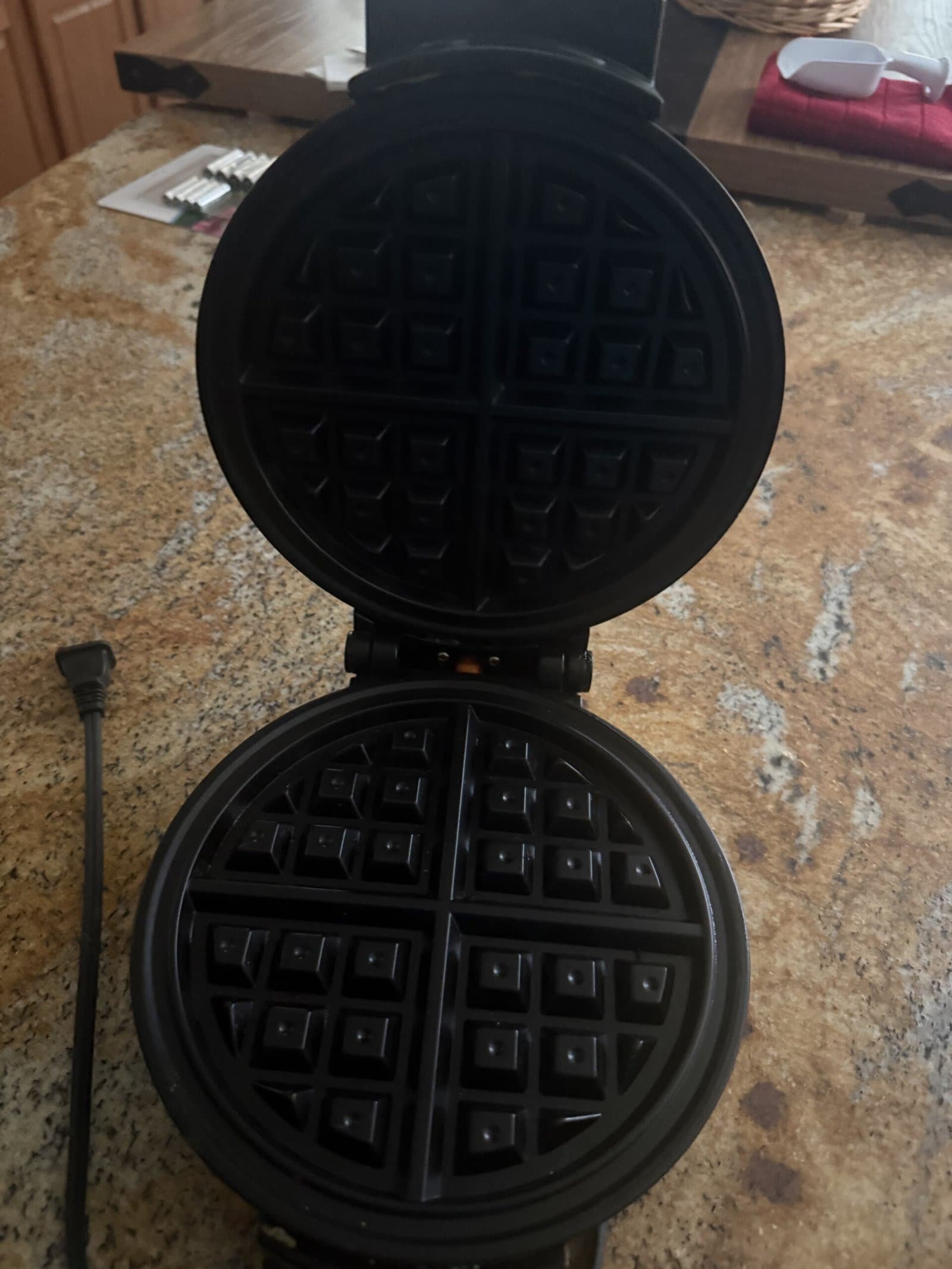
Smoke from a waffle maker comes from something burning on the plates. That is either manufacturing residue on a brand new unit, or batter and oil built up on one that has been used.
Mine has never smoked, and I do not oil the plates before cooking. The nonstick coating handles it on its own, which is worth saying because plenty of advice recommends oiling and that is frequently what causes the smoke. Our roundup of waffle makers covers the machines.
Quick Answer
First use on a new machine smokes from factory residue and stops. Smoke on an established machine means residue buildup or oil past its smoke point, and both are fixable.
Causes by Situation
| When it smokes | Usual cause |
|---|---|
| Brand new, first heat | Manufacturing oils burning off |
| After several months of use | Batter and grease baked onto the plates |
| Every time, from the start | Oil or spray with a low smoke point |
| Only with certain recipes | Sugar or butter content burning |
| With a burning plastic smell | Electrical, stop using it |
| From the hinge or sides | Overflow that ran out and cooked on |
First Use Is Supposed To
A brand new waffle maker arrives carrying residual oils from the manufacturing process, both on the plates themselves and inside the housing, and the very first heat cycle burns all of that off.
Manufacturers generally mention this in the manual and recommend running the machine empty once before making anything.
That smoke smells industrial rather than like burnt food, and it stops after the first cycle or two.
Skipping the burn-off entirely means your first batch of waffles ends up cooking in that residue, which is a taste problem more than it is a safety one. Our note on cleaning a waffle maker covers upkeep.
Buildup Is the Common Cause
Batter runs into the edges
Overflow cooks onto surfaces that never get cleaned.
Sugar caramelizes then burns
Sweet batters leave residue that darkens over successive uses.
Oil polymerizes on the plates
Repeated heating turns residual oil into a hard varnish.
It accumulates invisibly
Plates can look clean while the hinge and edges are not.
Oil Is Frequently the Problem Rather Than the Fix
Most of the advice written about waffle makers recommends brushing the plates with oil beforehand, and on a machine with working nonstick that step is generally unnecessary.
Mine has never once smoked, and I rely entirely on the nonstick coating rather than oiling the plates first, which removes the single most common smoke source from the equation.
Where oil genuinely is being used, the smoke point matters a great deal. Butter and olive oil both smoke well below waffle iron temperatures, while refined oils tolerate considerably more heat.
Cooking sprays are far and away the worst offender here, since the propellants and additives in them leave behind a sticky residue that builds up considerably faster than plain oil ever would. Our note on why waffles stick covers the nonstick surface.
When It Is Electrical
Smoke that smells like burning plastic, or that carries a sharp chemical edge to it, is something quite different from food smoke and it means stopping immediately.
Unplug the unit rather than switching it off, and do not use it again until the cause is identified.
Frayed cords, damaged plugs, and heating elements that have started to fail all present themselves this way, and not one of them is a cleaning problem you can solve.
An appliance producing electrical smoke is at the end of its life rather than in need of maintenance.
Cleaning Plates Without Damaging Them
Nonstick plates cannot tolerate abrasives at all, so scouring pads and metal tools end up removing the coating right along with whatever residue you were trying to shift.
The standard approach is letting the machine cool, then wiping with a damp cloth while the plates are still slightly warm since residue releases more easily then.
Baked-on deposits respond to a paste of baking soda and water left to sit, applied with a soft cloth rather than scrubbed.
The grooves themselves are where residue hides best, and a soft brush or a cloth wrapped around a chopstick reaches down into them without scratching anything. Our roundup of cleaning brushes covers the tools.
Temperature and What Burns at It
Waffle irons run hotter than most people assume, and that temperature is what decides which fats survive the process and which ones smoke.
Butter contains milk solids that brown and then burn well below waffle iron heat, which is why a buttered plate smokes almost immediately.
Unrefined oils like extra virgin olive oil behave similarly, since the compounds that give them flavor are the same ones that break down under heat.
Refined oils with higher smoke points tolerate the temperature far better, which is why they turn up in advice about greasing plates when greasing is genuinely needed.
None of that applies if the nonstick surface is working, since the plates need nothing added to them at all and adding something is what creates the problem. Our note on cleaning nonstick covers the coating.
Overflow Is Worth Preventing
Batter that runs out the sides during cooking bakes onto the hinge, onto the exterior housing, and onto the surfaces underneath the plates where nobody ever thinks to clean.
That is the residue most likely to smoke later, precisely because it is out of sight and never gets wiped.
Underfilling slightly and then letting the batter spread on its own is the fix for that, and it costs you one slightly smaller waffle while you work out the right amount.
Thicker batter spreads less and therefore overflows less, which is one of the reasons waffle recipes are not simply pancake batter with a different name. Our note on using pancake batter in a waffle maker covers the difference.
What Not to Worry About
Steam
White vapor from the seam is water leaving the batter, and it is supposed to happen.
A faint smell on first heat
Normal on a new machine and it passes.
Occasional wisps with sweet batter
Sugar burns readily, and a little residue on the plates shows up as smoke.
Smoke that stops after cleaning
That confirms buildup was the cause rather than a fault.
Common Mistakes to Avoid
Oiling nonstick plates unnecessarily
On a working nonstick surface it adds a smoke source without adding release.
Using cooking spray
Propellants and additives leave a sticky residue that builds faster than plain oil.
Scrubbing plates with abrasives
That removes the coating, and a damaged nonstick surface then genuinely does need oil.
Ignoring a burning plastic smell
Electrical smoke is not a cleaning problem and the machine should be unplugged.
Recommended Reading
See our note on why waffles are not crispy, our note on storing a waffle maker, our roundup of mixing bowl sets, and a note on set up a home baking station.
Waffle Maker Smoking FAQ
Why does my waffle maker smoke?
Something on the plates is burning. On a new machine that is factory residue. On an established one it is batter buildup or oil past its smoke point.
Is smoke on the first use normal?
Yes. Manufacturing oils burn off during the first heat cycle, which is why manuals recommend running the machine empty once before cooking.
Does yours smoke?
No. Mine has never smoked, and I do not oil the plates. The nonstick handles release on its own.
Should I oil the plates?
On a working nonstick surface, generally not. Oiling adds a smoke source without adding release, and cooking spray is worse than plain oil.
Why does it only smoke with certain recipes?
Sugar and butter both burn at waffle iron temperatures. Sweeter batters leave residue that shows up as smoke on the next batch.
What if it smells like burning plastic?
Stop and unplug it. That is electrical rather than food, and it means a failed element or damaged cord rather than a cleaning problem.
How do I clean the plates?
Wipe with a damp cloth while slightly warm, since residue releases more easily then. Baking soda paste for baked-on deposits. No abrasives.
How do I stop overflow?
Underfill slightly and let the batter spread. Overflow cooks onto the hinge and the underside, which is the residue most likely to smoke later.
