
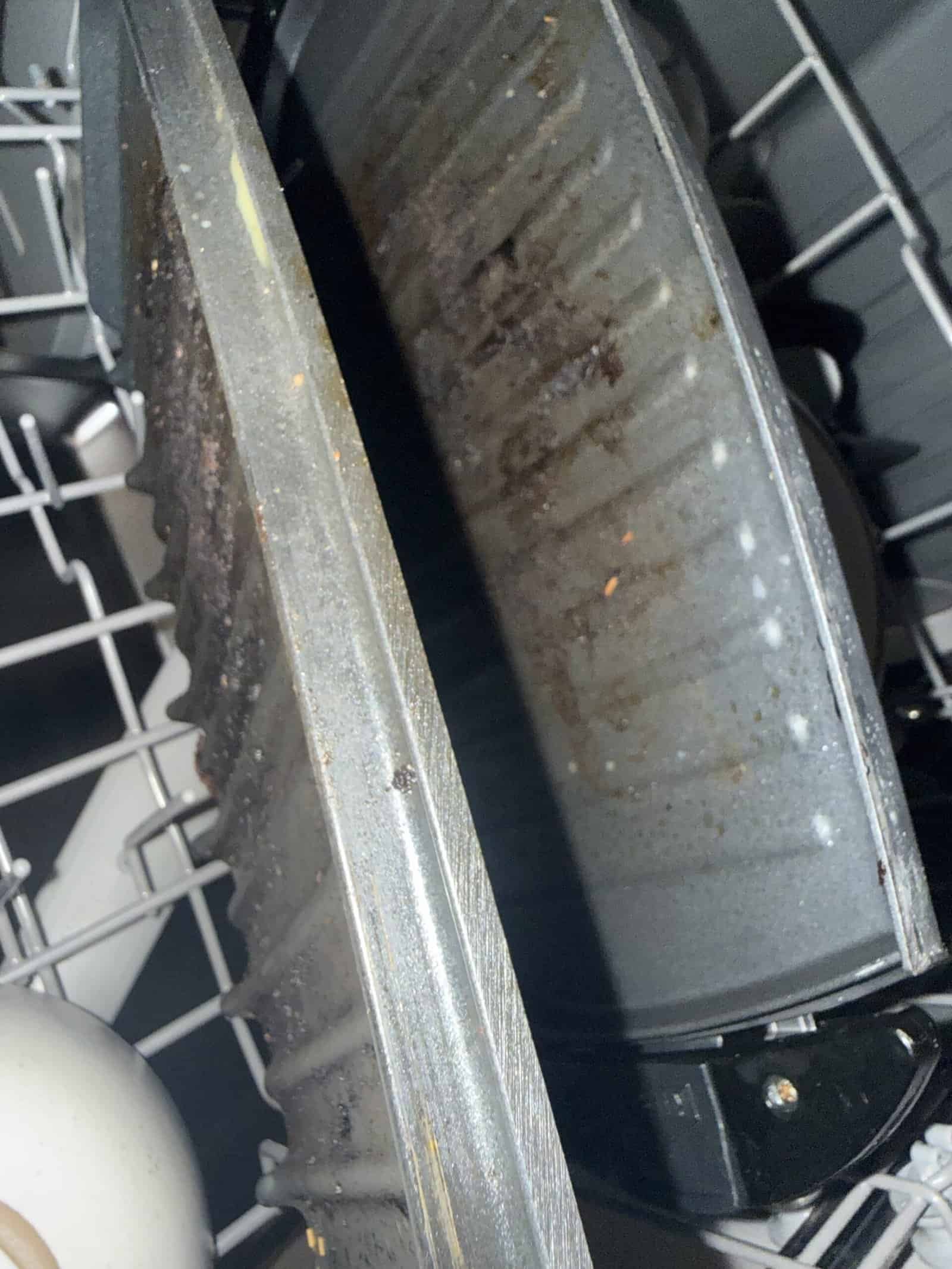
Removable plates usually can. Fixed plates never can, because the heating element and wiring are attached to them and the whole appliance would be going in.
Mine are removable and they go in the dishwasher, which is most of why cleaning the grill is not something I think about. Our roundup of indoor grills covers both designs.
Quick Answer
Check whether the plates detach. If they do, the manual will say whether they are dishwasher safe, and most modern removable plates are. Fixed plates get wiped by hand.
By Design
| Design | Dishwasher | Why |
|---|---|---|
| Removable nonstick plates | Usually yes | Detach fully from the element |
| Fixed plates | Never | Element and wiring are attached |
| Removable cast iron plates | No | Strips seasoning, causes rust |
| Ceramic-coated plates | Check the manual | Varies considerably by maker |
| Drip trays | Usually yes | Plastic ones need the top rack |
| The housing | Never | Contains the electrical components |
Removable Is the Whole Question
Plates that lift out with a release catch separate completely from the heating element underneath, which makes them ordinary cookware as far as cleaning is concerned.
Fixed plates are bonded directly to the element with the wiring running into them, which means submerging one is the same thing as submerging the entire appliance.
That distinction is well worth checking before buying rather than discovering afterward, since it determines whether cleaning up is a two-minute job or a fifteen-minute one every single time.
Mine come out and go straight into the dishwasher, and that convenience turns out to be a bigger factor in whether a grill actually gets used than most of the specifications printed on the box.
A grill that is annoying to clean simply gets used less over time, and that is precisely how appliances end up shoved to the back of a cupboard. Our note on whether indoor grills are worth it covers that pattern.
What the Dishwasher Does to Nonstick
Detergent is abrasive and alkaline
Both work against a nonstick coating over many cycles.
Manufacturers still rate them safe
Because the coating is formulated for it, within reason.
Lifespan shortens somewhat
Hand washing extends coating life on any nonstick surface.
Convenience usually wins
Which is a legitimate trade rather than a mistake.
Cast Iron Plates Are Different
Some grills ship with cast iron plates rather than coated aluminum, and those should never see a dishwasher.
Detergent strips seasoning, which is the polymerized oil layer that makes cast iron nonstick in the first place.
The prolonged wet cycle then leaves bare iron sitting damp, which produces rust rather quickly.
Those plates get the same treatment as a skillet, meaning hot water, a brush, dried immediately, and a thin coat of oil.
Checking which material you have takes a second and prevents ruining a plate that costs a meaningful fraction of the grill. Our note on cleaning cast iron covers the method.
Loading Them Properly
Grill plates are large flat items, and laid flat on a rack they block spray from reaching everything above them.
Standing them on edge along the side of the bottom rack keeps the spray path open through the machine and cleans both faces of the plate at once.
Ridged surfaces need the spray reaching down into the grooves, which is exactly where residue collects and exactly where a flat-laid plate gets missed entirely.
Two plates leaning against each other shield the contacting faces entirely, so they want separating rather than stacking.
Heavier plates on the bottom rack also risk the upper rack if the machine is loaded awkwardly, which is worth a glance before closing the door. Our note on what else goes in the dishwasher covers loading generally.
When Hand Washing Is Faster Anyway
Plates cleaned while still warm release residue far more easily than plates that have cooled and set.
A paper towel drawn across a still-warm plate removes most of the fat before anything else is needed at all, which frequently leaves very little for a wash cycle to actually do.
For a single quick cook, wiping while warm takes less time than loading, running, and unloading a machine.
The dishwasher earns its place after something genuinely messy, or when it is running anyway with a full load.
Neither approach is wrong, and the warm wipe is the one that keeps residue from accumulating between deeper cleans. Our note on cleaning an indoor grill covers the full routine.
Why Plates Warp and What Prevents It
Warped plates are the failure people blame on the dishwasher, and the cause is usually thermal shock rather than the wash cycle itself.
Running cold water over a plate that just came off the heat contracts the metal unevenly, and aluminum plates are thin enough that the distortion is permanent.
A warped plate no longer sits flat against the heating element, which creates hot spots and uneven cooking that gets blamed on the grill.
Letting plates cool to roughly room temperature before they go anywhere near water avoids that entirely, and it costs nothing but a few minutes of patience.
That also applies to the dishwasher, since loading a hot plate into a machine and starting a cold fill produces the same shock as running the tap over it. Our note on why bakeware warps covers the same principle.
The Parts That Never Go In
The housing contains the heating element, thermostat, and wiring, and none of that tolerates water.
Wiping the exterior with a damp cloth is the whole permitted cleaning method for the body of the appliance.
The hinge area on a contact grill collects fat and is awkward to reach, and it still gets a cloth rather than anything wetter.
Power cords and any detachable temperature probe stay dry as an absolute rule, and probes in particular get mistaken for dishwasher-safe parts because they detach like the plates do.
If a component has an electrical contact on it anywhere, it is a hand wash item regardless of what it looks like.
What to Check
Whether the plates detach
The single question that decides everything else.
The manual, just once
Manufacturers state this directly and it takes a minute.
Plate material
Coated aluminum and cast iron want opposite treatment.
Whether there is a probe
Detachable probes look washable and are not.
Common Mistakes to Avoid
Submerging a fixed-plate grill
The element and wiring are attached to the plate. That is not a cleaning shortcut.
Putting cast iron plates in
Detergent strips seasoning and the wet cycle leaves bare iron to rust.
Laying plates flat on a rack
They block spray from everything above and the grooves get missed.
Letting residue set
A wipe while warm removes most of it and takes seconds.
Recommended Reading
See our roundup of dishwasher safe cookware, our note on why an indoor grill smokes, our note on choosing an indoor grill, and a note on putting knives in the dishwasher.
Indoor Grill Plate FAQ
Can indoor grill plates go in the dishwasher?
Removable ones usually can, and the manual will confirm. Fixed plates never can, because the heating element and wiring are attached to them.
Do yours go in?
Yes. Mine are removable and they go in the dishwasher, which is most of the reason cleaning the grill is not something I think about.
Does it damage the nonstick?
Detergent is alkaline and abrasive, so hand washing extends coating life. Manufacturers still rate removable plates as dishwasher safe, so it is a trade rather than a mistake.
What about cast iron plates?
Never. Detergent strips the seasoning and the wet cycle leaves bare iron sitting damp, which rusts quickly. Treat them like a skillet.
How should I load them?
On edge along the side of the bottom rack rather than flat. Laid flat they block spray from everything above and the grooves get missed.
Can I wash the whole grill?
No. The housing contains the element, thermostat, and wiring. A damp cloth on the exterior is the full permitted method.
What about the drip tray?
Usually yes, and plastic ones want the top rack since the bottom runs hotter and can warp them.
Is hand washing better?
Faster for a single quick cook, especially while the plates are still warm. The dishwasher earns its place after something messy or when a load is running anyway.
