
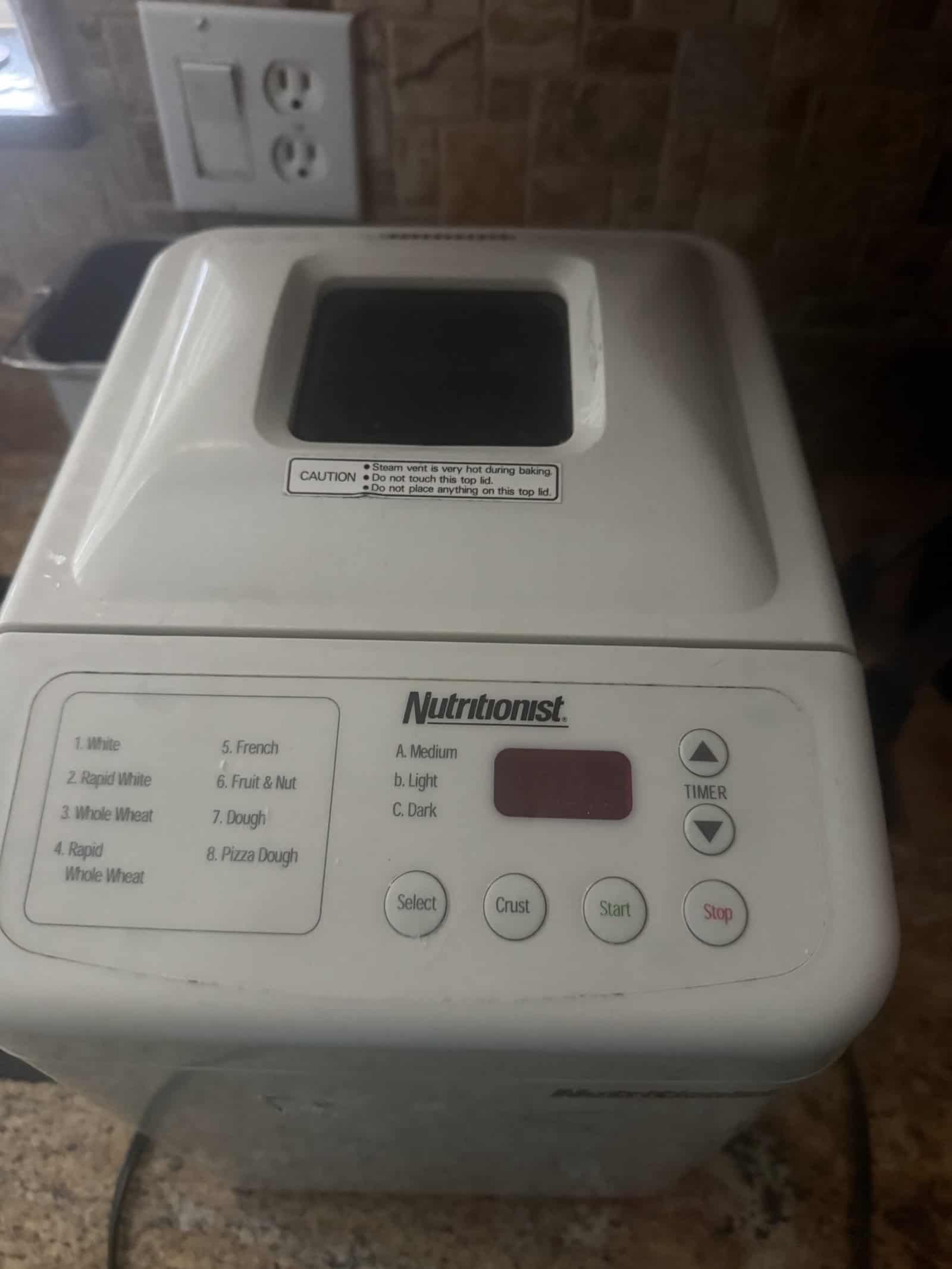
Most bread machines offer eight or more programs and most people use two or three. The cycles differ in how long they knead, how many rises they allow, and how hot and long they bake, which is why the wrong one produces a poor loaf from a good recipe.
Mine has eight programs. I use White, Whole Wheat, and Pizza Dough, on light crust. Everything else on the panel has sat unused, which is worth knowing before paying extra for a machine with more of them. Our roundup of bread machines covers the hardware.
Quick Answer
Basic or White is the default for most loaves. Whole Wheat adds time for heavier flour. Dough stops before baking. The rest are variations you may never touch.
Common Cycles and What Changes
| Cycle | What it does differently |
|---|---|
| White or Basic | Standard knead, rise, and bake for white flour |
| Whole Wheat | Longer knead and rise for heavier flour |
| Rapid versions | Shortened rise, denser result |
| French | Longer rise, crustier and chewier |
| Fruit and Nut | Adds or signals a mix-in stage |
| Dough and Pizza Dough | Knead and rise only, no bake |
Why the Cycles Differ At All
Every program is a sequence of timed stages, and the machine is simply running a different recipe of stages rather than doing anything mechanically different.
Kneading develops gluten, rising lets yeast produce gas, and baking sets the structure. Changing the length of any of those changes the loaf.
Heavier flours need more kneading to develop gluten and more time to rise, which is the entire difference between the White and Whole Wheat programs.
That is also why using White for a whole wheat loaf produces something dense. The recipe was fine and the program did not give it enough time.
Matching the cycle to the flour matters more than most single ingredients. Our note on why a loaf comes out dense covers that failure.
The Three You Will Actually Use
White or Basic
The default for most loaves, and the one I use most.
Whole Wheat
Longer knead and rise, which heavier flour needs.
Dough or Pizza Dough
Stops before baking so you shape and bake yourself.
Everything else
Variations you may never touch. Our note on how to use a bread machine covers the basics.
Rapid Cycles Trade Time for Texture
A rapid program shortens the rise, which means the yeast has less time to produce gas and develop flavor.
The loaf comes out denser and blander than the standard version of the same recipe, and that is the trade rather than a fault.
Rapid cycles frequently want more yeast or a rapid-rise yeast to compensate, and using standard instant yeast in a rapid program is a common cause of a disappointing loaf.
They exist for the situation where you need bread in two hours rather than four, which is a real situation and not the normal one.
I have never used the rapid programs on mine, and for planned baking there is no reason to. Our roundup of yeast for bread machines covers the yeast question.
Dough Cycles Are the Underrated Ones
A dough cycle kneads and rises and then stops, leaving you to shape and bake in an oven.
That combination is genuinely useful, because the machine handles the tedious part while the oven produces a better crust than a bread machine pan can.
Pizza Dough is the same idea with a shorter rise suited to pizza rather than bread, and it is one of the three programs I actually use.
It also opens up shapes a bread pan cannot make, which is most of what people bake by hand.
Anyone who thinks their machine only makes rectangular loaves is not using the dough cycle. Our note on dough cycle then oven baking covers that route.
What the Crust Setting Changes
Crust settings adjust the baking stage, generally by changing how long or how hot the final bake runs.
Light produces a paler, softer crust. Dark runs longer or hotter for a deeper, firmer one. Medium sits between them as the default.
I run light on mine, which suits a sandwich loaf where a soft crust is easier to cut and eat.
Loaves with sugar, milk, or egg brown faster because those ingredients accelerate browning, so a recipe that comes out too dark on medium may want light rather than a different recipe.
The setting only affects the crust rather than whether the inside is cooked, which is worth knowing before blaming it for an underbaked loaf.
The Timer and When It Helps
It delays the start
The machine waits, then runs the full cycle to finish when you want.
Perishables rule it out
Milk, egg, and cheese should not sit at room temperature for hours.
Yeast placement matters more
Yeast sitting in liquid activates early and exhausts itself.
Not everyone needs it
I use it occasionally, and sometimes just start it when I want. Our note on using delay start covers the setup.
Cycles You Probably Will Not Use
French produces a crustier chewier loaf through a longer rise, and it suits a specific style rather than everyday bread.
Fruit and Nut either adds a mix-in stage or signals one, depending on the machine, and plenty of machines sound a mix-in beep during the standard cycles anyway.
Gluten-free programs adjust mixing and timing for doughs with no gluten to develop, which matters only if you bake that way.
Jam, cake, and bake-only settings appear on some machines and are genuinely niche.
None of that means the cycles are useless. It means the number of programs is a poor way to compare machines. Our note on choosing a bread machine covers what matters instead.
Matching Cycle to Recipe
Recipes written for bread machines specify a cycle, and following that is more reliable than guessing.
Where a recipe does not say, the flour is the guide. Mostly white flour goes on White, and anything with a substantial proportion of whole wheat or rye goes on the longer program.
Loaf size matters too, since machines with size settings adjust timing as well as quantity.
Running the wrong size setting for the amount of dough produces either an underbaked center or an overbaked crust.
Checking the manual once for what each program actually does is worth the ten minutes, since the panel labels tell you very little. Our roundup of machines for whole wheat covers heavier loaves.
Common Mistakes to Avoid
Using White for whole wheat flour
Heavier flour needs the longer knead and rise, and a short cycle produces a dense loaf.
Buying a machine for its program count
Mine has eight and I use three. The extras rarely get touched.
Running rapid cycles with standard yeast
Shortened rises frequently want more yeast or a rapid-rise type.
Using the timer with perishables
Milk, egg, and cheese should not sit at room temperature for hours.
Recommended Reading
See our roundup of mix-ins for bread machines, our note on making white bread, our roundup of machines for beginners, and a note on whether bread machines are worth it.
Bread Machine Cycles FAQ
What do the cycles actually do?
Each is a different sequence of timed stages. They change how long the machine kneads, how many rises it allows, and how long it bakes.
Which ones do you use?
White, Whole Wheat, and Pizza Dough, on light crust. Mine has eight programs and the other five have sat unused.
Why does whole wheat need its own cycle?
Heavier flour needs more kneading to develop gluten and more time to rise. Running it on White produces a dense loaf from a perfectly good recipe.
Are rapid cycles worth using?
Only when you need bread quickly. Shortening the rise costs you texture and flavor, and rapid programs frequently want more yeast to compensate.
What does the dough cycle do?
Kneads and rises, then stops before baking. You shape and bake in an oven, which gives a better crust and lets you make shapes a bread pan cannot.
What does the crust setting change?
How long or hot the final bake runs. Light gives a paler softer crust, dark a deeper firmer one. It does not affect whether the inside is cooked.
Should I buy a machine with more programs?
Program count is a poor comparison. Mine has eight and I use three, which is fairly typical.
When should I use the timer?
When you want bread ready at a specific time and the recipe has no perishables in it. Milk, egg, and cheese rule it out.
