
Plan on roughly ten to fifteen minutes for a low smoking temperature and twenty to forty minutes for high heat, measured from lighting the charcoal. How long it takes a kamado grill to heat up depends far more on the thermal mass of the body and whether a deflector is inside than on the charcoal itself.
The number people quote is usually the fire catching, not the cooker being ready. Our guide to controlling temperature on a charcoal smoker covers the vent work that runs alongside the climb.
| Target | Rough time from lighting | What slows it |
|---|---|---|
| Low smoking heat | 10 to 15 minutes | Almost nothing, it is a small fire |
| Roasting heat | 15 to 25 minutes | Deflector absorbing heat |
| Grilling heat | 20 to 30 minutes | Body mass, cold weather |
| Searing heat | 25 to 40 minutes | Everything, plus ash blockage |
| Ceramic vs steel | Ceramic slower | More mass to saturate |
| With a deflector in | Add 10 to 20 minutes | The plate saturates before it radiates |
Quick Answer
A kamado reaches a low smoking temperature quickly because the fire is small and the target is close to ambient. High heat takes considerably longer because the body itself has to saturate with heat, and a ceramic cooker or an inserted deflector plate both extend that. Coming down from an overshoot takes longer than the climb.
Why the Range Is So Wide
A kamado is not really preheating the air inside. It is heating a thick shell, and the shell is most of what takes time.
That shell is also why the cooker holds temperature so steadily once it gets there. The same mass that makes the climb slow is what makes the plateau flat.
Air temperature inside rises long before the walls do. This is the gap that catches people out, because the dome gauge reads air.
Food put in during that gap cooks against cool walls, and the temperature sags as soon as the lid closes on a cold body.
What Actually Changes the Time
How many spots you lit
Fire size is set at ignition. One small ignition point will climb toward a low target and stall well below a searing one.
Body material and thickness
Ceramic has more mass to saturate than insulated steel, so it is slower up and slower down. Thicker walls in either material push the same direction.
Whether a deflector is in
A cold plate absorbs heat before it returns any, which is why an indirect setup stabilizes later than the gauge suggests. Ceramic plates take longer to saturate than steel ones.
Ash under the grate
Blocked airflow from the bottom vent is the single most common reason a kamado will not climb at all. It looks like a fuel problem and it is not.
Three Years and Still Not Clocking It
Mine is a Char-Griller Akorn I have had for over three years, and it burns charcoal. Asked how long it takes to come up to temperature, what I would say is a little while.
The ranges in the table above come from published figures for the two body types rather than from timing mine.
Temperature control is still something I am adjusting after three years, which is the more useful thing three years has taught me about the warm-up.
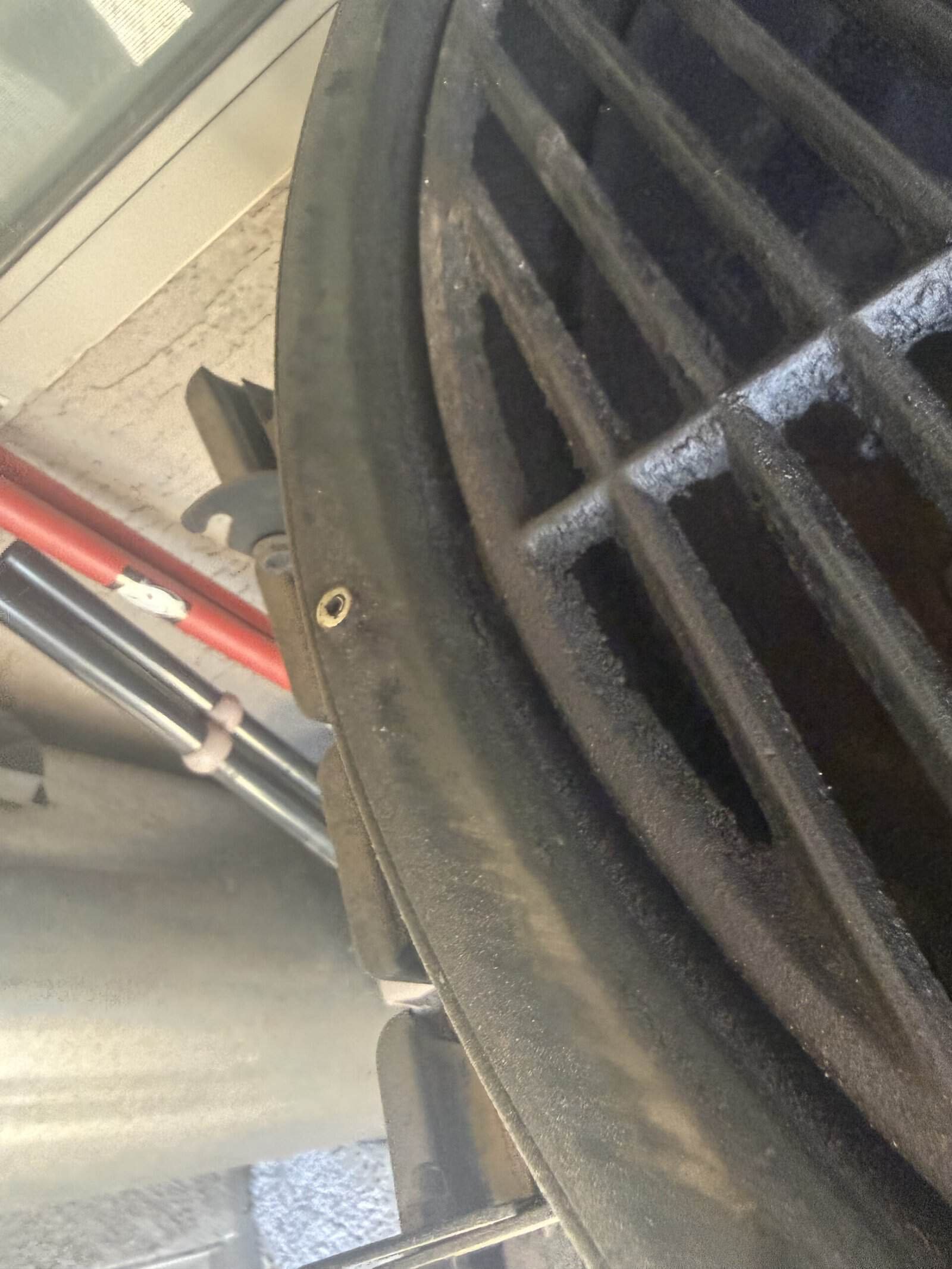
What has changed is the hardware rather than the timing. The grates and everything else have become noticeably harder to open, gradually enough that I only notice it by comparison, and the vents are part of that.
The Gauge Is Ahead of the Cooker
A dome thermometer sits in the airspace at the top of the lid. It responds to hot air quickly, which means it reaches your target before the body has.
The practical consequence is a temperature that drops after you load the food. The walls pull heat out of the air until they are saturated.
Waiting past the number is the fix. Letting the cooker sit at target for a while before loading gives the mass time to catch up.
Our roundup of meat thermometers covers reading at the grate and in the food, which is where the useful numbers are.
Weather and the Things You Cannot Control
Cold air lengthens every stage, since the body starts further from target and loses heat faster while it climbs.
Wind matters less than on an open grill because the cooker is sealed, though it still affects the draw through the vents.
Damp charcoal is slower to establish and harder to get to high heat. Fuel stored outdoors picks up moisture whether or not it looks wet.
A worn lid gasket also costs time, because air leaking around the lid is air that is not being drawn through the charcoal. Our guide to how long a kamado grill lasts covers the gasket as the first part to degrade.
Why You Should Not Rush the Climb
- Overshooting costs far more time than waiting. Bringing a sealed cooker down means waiting for mass to give up heat.
- Do not open vents wide to catch up. It works, and then it keeps working past your target.
- Do not add charcoal to speed it up. Fresh fuel on a small fire cools things briefly before anything rises.
- Close down before target, not at it. Reducing air at the number guarantees an overshoot.
- Let the body catch up before loading. The gauge reaching temperature is not the cooker reaching it.
- Change one thing and wait. Vent adjustments show up minutes later.
Our roundup of wire cleaning brushes covers the grate work that happens while the cooker is still hot, and our guide to why meat needs to rest covers the minutes after the cook that people cut short for the same reason they cut the warm-up short.
How It Compares
A gas grill is ready in around ten minutes and a pellet grill runs a startup cycle of a similar length, so both beat a kamado to a moderate temperature.
The comparison flips on stability and on high heat. A kamado holds its number with very little attention and reaches temperatures most gas grills cannot.
Fuel use flips too, since a sealed cooker wastes very little charcoal across a long cook.
Our roundup of pellet grills covers the fast-start alternative, and our guide to whether a kamado grill is worth it weighs the whole tradeoff.
Recommended Reading
Frequently Asked Questions
How long does it take a kamado grill to heat up?
Roughly ten to fifteen minutes to a low smoking temperature and twenty to forty minutes to searing heat, measured from lighting. A ceramic body takes longer than insulated steel, and inserting a cold deflector plate adds ten to twenty minutes on top.
Why does the temperature drop when I put food in?
Because the dome gauge reached your target before the body did. The walls are still absorbing heat, and they pull it out of the air as soon as the lid closes on cold food. Letting the cooker sit at target longer before loading fixes it.
Is ceramic slower than steel?
Yes. Ceramic has more mass to saturate, so it climbs more slowly and cools more slowly. Insulated steel gets to temperature faster and responds quicker to vent changes, which cuts both ways depending on the cook.
Does a heat deflector slow it down?
Noticeably. A cold plate absorbs heat before it begins returning any, so the cooker stabilizes later than the gauge suggests. Ceramic plates take longer to saturate than steel ones, which is the main practical difference between them.
Why will my kamado not reach high heat?
Most often ash blocking the air path from the bottom vent, which looks exactly like a fuel fault. After that, check whether you lit enough spots, whether the charcoal is packed too tightly to breathe, and whether the lid gasket is still sealing.
Can you speed up the warm-up?
Light more spots at the start rather than opening vents wider later, since fire size set at ignition is what raises the ceiling. Clear ash beforehand and leave air gaps in the charcoal. Anything done mid-climb tends to cause an overshoot.
Does cold weather make much difference?
It lengthens every stage, because the body starts further from target and sheds heat faster on the way up. Wind matters less than on an open grill since the cooker is sealed, though it still affects the draw through the vents.
Should you preheat with the lid open or closed?
Open for the first few minutes so the fire establishes, then closed for the rest of the climb. A kamado cannot build temperature with the lid up, and leaving it open too long grows the fire bigger than the cook needs.
