
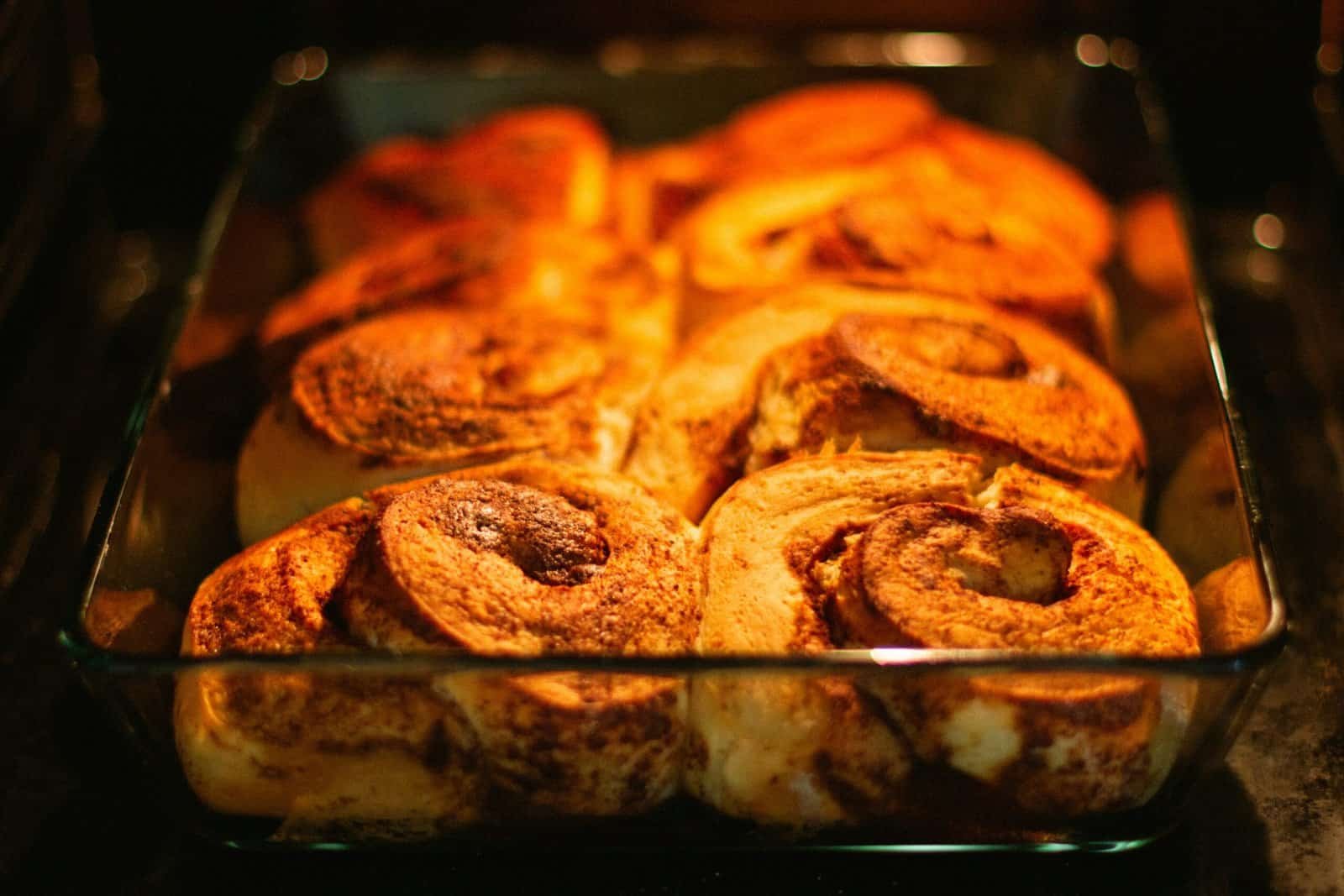
Metal heats fast and browns edges hard, while glass warms slowly and holds heat long after you shut the oven. The glass vs metal baking pan choice changes how your food bakes, from the crust on a brownie to the bottom of a casserole. The pan is not a detail; it shapes the result. Comparing options? See our best silicone baking mats roundup.
A metal pan conducts heat quickly for crisp, even browning, while a glass pan heats gently and retains warmth for steady, slow bakes. The dish you are making decides which pan belongs in the oven.
Quick verdict: Choose a metal pan for cookies, cakes, breads, and anything that needs crisp edges and quick, even browning. Choose a glass pan for casseroles, bars, and dishes you want to bake gently, watch through the side, and serve from. Crisp browning leans metal; slow, steady bakes lean glass.
| Factor | Glass | Metal |
|---|---|---|
| Heats up | Slowly | Quickly |
| Browning | Gentle | Crisp, even |
| Heat retention | High | Lower |
| Best for | Casseroles, bars | Cookies, cakes, bread |
| See-through | Yes | No |
| Weight | Heavier | Lighter |
Disclosure: SmartLifeItems is reader-supported. As an Amazon Associate, we earn from qualifying purchases made through links on this page, at no extra cost to you.
How We Compared Glass vs Metal Baking Pan
We baked with the differences that show up in the oven: how fast each pan heats, how it browns, how it holds heat, what dishes suit it, and how each one handles care. Both pans belong in a baker’s kitchen, so the comparison is about reaching for the right one rather than picking a single winner. To round out your kit, see our bakeware set picks.
Glass Baking Pan: Strengths and Trade-offs
A glass pan heats slowly and then holds that heat, which gives a gentle, even bake. You can watch the edges and bottom brown through the side, and the same dish goes from oven to table. It favors slow, steady cooking.
Where the Glass Pan Wins
You get steady, gentle heat that suits casseroles, egg bakes, and bars, plus a clear side to check browning. It also serves at the table and pairs well with the dishes in our cake pan guide for slower recipes.
Where the Glass Pan Struggles
It heats unevenly at first and can overbake edges by the time the center sets, since it holds heat after you pull it out. It is heavier and can crack from sudden temperature swings, so it needs careful handling.
Metal Baking Pan: Strengths and Trade-offs
A metal pan conducts heat fast and releases it just as quickly, which browns edges crisply and bakes evenly. It is light, durable, and the standard for cookies, cakes, and breads. The trade is that it hides the bake and can react with acidic foods.
Where the Metal Pan Wins
You get quick, even heating and crisp browning that cookies, cakes, and breads love. It is light and tough, the everyday choice behind our baking sheet picks and loaf pans.
Where the Metal Pan Struggles
You cannot see the bake through it, so you check edges by eye and time. Uncoated metal can react with acidic foods like tomato or citrus, which calls for a lined or coated pan in those recipes.
Heat and Browning Compared
How each pan moves heat shapes every bake.
Heating and Evenness
The metal pan heats quickly and bakes evenly, which helps delicate batters and cookies set right. The glass pan starts slow and can leave edges ahead of the center until the whole dish catches up.
Browning and Crust
The metal pan delivers crisp edges and golden crusts, the look you want on cookies and bread. The glass pan browns gently, which suits softer bakes but rarely gives the same crisp edge.
Durability and Care Compared
Handling and upkeep separate the two.
Durability and Temperature Changes
The metal pan shrugs off knocks and quick temperature shifts without trouble. The glass pan can crack if it goes from cold to hot fast, so you let it come to room temperature and avoid sudden swings.
Care and Serving
The glass pan cleans easily and doubles as a serving dish straight from the oven. The metal pan wipes clean and stacks light, though lining it helps with sticky bakes, a step our parchment lining guide walks through.
Glass vs Metal Baking Pan: Which Should You Choose
Match the pan to the dish you are baking.
Choose a Glass Pan If
Go with glass for casseroles, egg bakes, bars, and anything you want to bake gently, watch through the side, and serve from. It is the pick for steady, slow dishes that move from oven to table.
Choose a Metal Pan If
Go with metal for cookies, cakes, breads, and anything that needs crisp edges and quick, even heat. It is the baker’s default for most recipes, which is why most sets lean on metal pans.
How to Decide Fast
Baking cookies, cake, or bread? Grab metal. Making a casserole or bars you want to serve from the dish? Grab glass. When a recipe names a pan, follow it, since the writer tested for that heat.
Common Mistakes to Avoid
The right pan still fails with the wrong move. Skip these.
Ignoring the Temperature Adjustment
Glass holds heat, so recipes written for metal can overbake in glass at the same setting. Lower the oven by a small amount or check a few minutes early when you swap metal for glass to avoid dry, dark edges.
Shocking a Glass Pan With Heat
Moving glass straight from the fridge to a hot oven, or hot glass onto a cold counter, can crack or shatter it. Let glass warm up first and rest it on a towel or rack, never a cold, wet surface.
Baking Acidic Foods in Bare Metal
Tomato, citrus, and other acidic foods react with uncoated metal and can pick up a metallic taste. Use a coated or lined metal pan for acidic dishes, or reach for glass, which does not react.
Frequently Asked Questions
Is a glass or metal baking pan better?
It depends on the dish. Metal browns crisply and bakes evenly, which suits cookies, cakes, and bread, while glass heats gently and holds warmth, which suits casseroles and bars. Both earn a place in the kitchen.
Do I need to lower the temperature for glass?
Often yes, since glass holds heat and can overbake at the same setting written for metal. Many bakers drop the oven by a small amount or check early when using glass to keep edges from drying out.
Which pan is better for cookies?
Metal is better for cookies, since it heats fast and browns the edges crisply. A light metal sheet gives even results, while glass bakes too gently and unevenly for most cookie recipes.
Can glass pans go from fridge to oven?
It is risky, since a sudden temperature change can crack glass. Let a glass pan come closer to room temperature before baking, and avoid placing hot glass on a cold or wet surface afterward.
Why did my casserole brown better in glass?
Glass holds heat and bakes the bottom and edges steadily, which suits casseroles. You can also see the browning through the side, so it is easier to pull the dish at the right moment.
Are metal pans safe for acidic foods?
Bare metal can react with acidic foods and add a metallic taste, so use a coated or lined pan for tomato or citrus dishes. Glass does not react, which makes it a safe choice for those recipes.
Which pan lasts longer?
Metal generally handles knocks and temperature changes better over time, while glass can crack from sudden swings. With careful handling, both last for years, so care matters more than the material here.
Recommended Reading
See also our guides to springform pan vs cake pan. See also our guides to cocktail shakers bar tools, door security bars, drink pitchers, and insulated tumblers.
Related Reading
Explore more: how to clean a nonstick pan, springform pan vs cake pan, grill pan vs griddle, silicone baking mats, how to set up a home baking station, and baking soda vs baking powder. Also explore: insulated tumblers, and drinking glasses.
