
Nothing an air fryer makes quite matches food pulled from real hot oil: the shattering crust on a fry, the blistered shell of an egg roll, the crisp edge on a wonton. A good deep fryer delivers that at home, and the difference between one you love and one you shelve comes down to steady heat, sane oil handling, and easy cleanup. The picks below are sorted on exactly those traits, and one of them is the dual-basket fryer I have cooked on for years.
Quick Verdict
The T-fal FR8000 is the best all-around fryer thanks to its oil filtration, and the Cuisinart CDF-200 wins on capacity for big batches. The dual-basket Presto ProFry I use is the versatile, easy-to-clean pick for frying two things at once.
Why Trust This Guide
I have run a dual-basket Presto deep fryer in my own kitchen for years, frying everything from french fries to egg rolls, so I know what daily-driver frying actually asks of a machine: steady heat, easy cleanup, and durability. I can speak firsthand to the one I use; the other five picks are research-based, chosen for temperature control, oil handling, and washability, with sources cited. I keep my own experience and the researched picks clearly separate.
Key Takeaways
- Steady heat and fast temperature recovery are what keep fried food crisp, not greasy.
- Oil filtration and removable containers make the messiest part of frying manageable.
- Match capacity to how many people you fry for; bigger means more oil to buy and store.
- Easy cleanup decides whether a fryer stays in rotation or gets shelved.
- Never leave hot oil unattended, and pat food dry before it goes in.
Disclosure: SmartLifeItems is reader-supported. As an Amazon Associate, we earn from qualifying purchases made through links on this page, at no extra cost to you.
How We Picked the Best Deep Fryers
We weighed capacity, temperature control, oil handling, and how simple each unit is to clean. A deep fryer works with hot oil, so steady heat and safe, easy cleanup matter most. We covered compact budget fryers, large-capacity units, premium models with fine control, and multi-basket designs, since each suits a different frying habit. We also weighed temperature recovery, because cold oil is the enemy of a crisp crust, and we favored fryers that make oil changes manageable. A fryer that runs cold or is a chore to drain gets used once and shelved. For the lower-oil route, our air fryers guide covers that path.
1. T-fal FR8000 Deep Fryer: Best Overall
The T-fal FR8000 includes an oil filtration system that drains and stores oil for reuse, which cleans up the messiest part of frying. For easy oil handling, it leads the field.
Why It Stands Out
The built-in filtration drains and stores oil so you can reuse it cleanly, which lowers running cost over a year of regular frying. It heats well and suits households that fry often. For hands-off oil handling, it is the pick.
Worth Knowing
It has a larger footprint than a compact fryer, the filtration adds parts to clean, and it sits at a mid-range price. Let the oil cool fully before using the drain system.
Get the T-fal if you fry regularly and want to reuse oil cleanly. Skip it if you fry rarely or want the smallest unit.
2. Cuisinart CDF-200 Deep Fryer: Best for Big Batches
The Cuisinart CDF-200 offers a large oil capacity for bigger batches and parties. It heats a generous amount of oil and recovers temperature well, so it is the standout for volume frying.
Why It Stands Out
The large capacity handles big batches for a family or a crowd, and the strong temperature recovery keeps results crisp even as food goes in. For volume, it is the pick.
Worth Knowing
A larger fryer uses more oil to fill and takes more counter and storage space, and the capacity is overkill for one or two people. Fill between the min and max lines for safe, even frying.
Choose the Cuisinart for large-batch frying and gatherings. Skip it if you cook for one or two and want to save oil.
3. Presto ProFry Dual Basket: What I Use, Best for Versatility
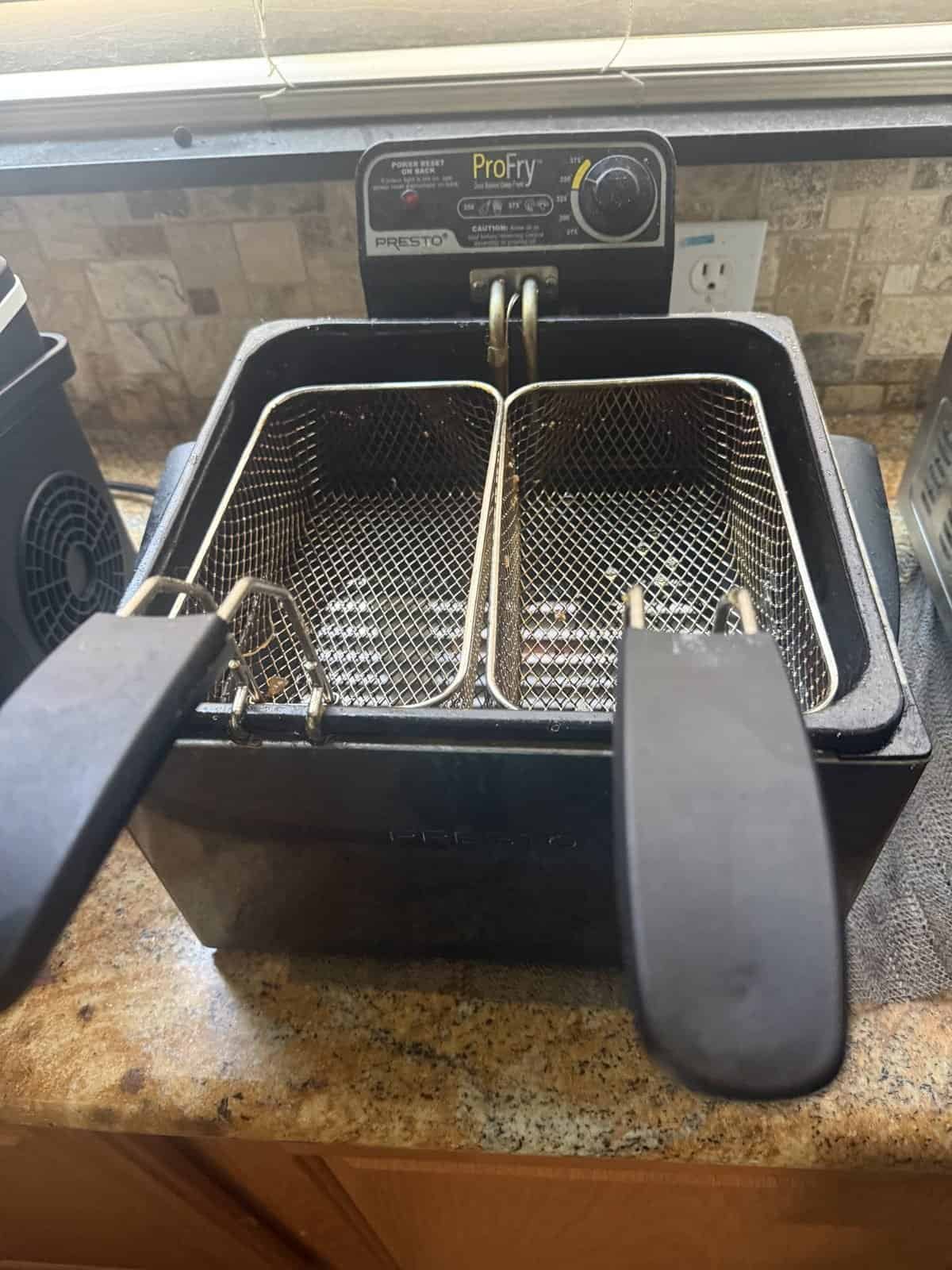
This is the deep fryer I actually cook on, a dual-basket Presto ProFry, and it has earned its spot over years of frequent use. The two baskets let you fry two things at once or run a single big batch, and an adjustable temperature dial handles everything from fries to more delicate items.
Why It Is My Pick
We use it often and for a real range, from regular french fries all the way to wontons and egg rolls, and it has lasted years of that. Best of all, it is genuinely easy to use and easy to clean, which is what keeps a fryer in rotation rather than in a cabinet. The dual baskets are the everyday advantage, letting me keep one food separate from another in the same oil.
Worth Knowing
The one hiccup I have had is the power cord, which has needed replacing a couple of times. In my case I trace that to the outlet and fuse it runs on rather than the fryer itself, since the unit has otherwise held up; if your outlet is solid, it may never come up. Presto also makes the much smaller FryDaddy for tiny single batches if counter space is your main constraint. This is the fryer I use, so my read on it is firsthand; the other five picks are research-based.
Get the Presto ProFry for versatile, easy-to-clean dual-basket frying. Skip it if you want built-in oil filtration or the largest possible capacity.
4. Breville Smart Deep Fryer: Best for Control
The Breville Smart Fryer brings precise temperature control and a refined build. It holds heat steadily and offers fine adjustment for different foods, so it is the premium pick for control.
Why It Stands Out
The precise, stable temperature control suits cooks who fry a range of foods, from tempura to fries, and the refined build feels a step above. For dialed-in results, it leads.
Worth Knowing
It carries the highest price here, and the features reward varied frying more than the occasional batch of fries. Match the temperature to the food for the crispest results.
Choose the Breville if you fry varied foods and want fine control. Skip it if you want a simple, cheap fryer.
5. Hamilton Beach Professional-Style Deep Fryer: Best Mid-Range
This Hamilton Beach fryer aims for a professional feel at a mid-range price. It offers a removable oil container and a usable basket, making it a solid middle option with real features.
Why It Stands Out
The removable oil container and usable basket deliver more than a basic fryer without a premium price, which suits a small family stepping up. For value with real features, it fits.
Worth Knowing
The build is good for the price rather than premium, the capacity suits small families, and cleanup is manageable but not as slick as filtration models. Remove the oil container to clean it thoroughly after cooling.
Get the Hamilton Beach for more than a basic fryer without paying premium. Skip it if you want oil filtration or top-tier build.
6. Secura Triple-Basket Deep Fryer: Best Multi-Basket
The Secura uses three baskets so you can fry different foods at once. The large and two small baskets add real flexibility, making it the standout for frying several items together.
Why It Stands Out
The three-basket layout lets you fry multiple foods at once and keep strong flavors apart, like fish away from fries. For varied, simultaneous frying, it stands out.
Worth Knowing
Three baskets and a big tank mean a larger footprint and a good amount of oil to fill. Keep strong-flavored foods to their own basket to avoid mingling tastes.
Choose the Secura if you fry several foods at once. Skip it if you only ever make one thing or want compact storage.
Deep Fryers at a Glance
The details below reflect each maker’s stated design.
| Fryer | Standout | Best for |
|---|---|---|
| T-fal FR8000 | Oil filtration | Best overall |
| Cuisinart CDF-200 | Large capacity | Big batches |
| Presto ProFry Dual Basket | Two baskets, easy clean | Versatility, what I use |
| Breville Smart | Precise control | Varied foods |
| Hamilton Beach | Removable oil container | Mid-range value |
| Secura Triple-Basket | Three baskets | Frying several foods |
How to Choose a Deep Fryer
Capacity
Match the oil and food capacity to how many people you fry for. A small fryer suits one or two, while large units handle batches, and bigger capacity means more oil to buy and store. Size it to your real frying habit.
Temperature Control
Adjustable, stable heat gives crispier, less greasy results, while fixed-temperature units are simpler but less flexible. Good temperature recovery keeps food from going soggy when it hits the oil. Favor steady heat for crisp results.
Oil Handling
Filtration and removable oil containers make the messiest part of frying easier, and reusing filtered oil saves money over time. Decide how much cleanup convenience you want. A good thermometer also helps you confirm oil temperature.
Cleaning
Look for removable, dishwasher-safe parts where possible, since baked-on oil is the worst part of owning a fryer. Easy cleaning is what kept mine in steady use for years. Clean promptly after the oil cools.
Deep Fryer vs Air Fryer
Deep Fryer
A deep fryer submerges food in hot oil for true fried texture and flavor, excelling at classic fries, wings, and battered foods. The trade-offs are oil cost, cleanup, and richer results. For genuine crunch, nothing else matches it.
Air Fryer
An air fryer crisps with circulating hot air and little or no oil, suiting lighter cooking and easier cleanup, though the texture is close but not identical. Many kitchens keep both, and our instant pot vs air fryer and air fryer vs oven guides compare the low-oil options. The fryer handles treat nights; the air fryer covers weeknights.
Common Deep Fryer Mistakes to Avoid
Overfilling the Oil
Too much oil can overflow when food goes in, which is dangerous. Fill between the marked lines and add food gently. The fill lines exist for safety, not decoration.
Frying Too Much at Once
Crowding the basket drops the oil temperature and makes food greasy. Fry in sensible batches so the oil stays hot. Patience here is what keeps food crisp.
Leaving It Unattended
Hot oil left alone is a serious fire risk. Stay with the fryer while it heats and cooks, every time. Never walk away from active oil.
Adding Wet Food to Hot Oil
Water in oil causes violent splattering, so pat food dry before it goes in, and never add ice or wet items. A dry surface also crisps better.
Related Kitchen Guides
- air fryers
- air fryers under 100
- electric grills under 100
- meat thermometers
- toasters
- how to choose the right cookware
- Instant Pot vs Air Fryer
- Air Fryer vs Oven
- indoor grills
Frequently Asked Questions
What is the best deep fryer?
For easy oil handling and even results, the T-fal FR8000 leads, while the Cuisinart CDF-200 wins on capacity. The dual-basket Presto ProFry I use is the versatile, easy-to-clean choice for frying two things at once. The best one depends on how often you fry and how much you cook at a time.
Deep fryer or air fryer?
A deep fryer gives true fried texture in hot oil, while an air fryer crisps with hot air and little oil. Choose a deep fryer for classic fried food and an air fryer for lighter, easier cooking. Many kitchens keep both for different jobs.
Can I reuse the oil in a deep fryer?
Yes, you can filter and reuse oil several times if it stays clean and below its smoke point, and models with filtration make this easier. Discard oil once it darkens or smells off. Reusing clean oil lowers the running cost of frying at home.
How much oil does a deep fryer use?
It depends on the size, with compact units using a modest amount and large-capacity fryers needing much more to reach the fill line. Match the capacity to your batch size so you are not filling a big tank for small portions. Check the min and max lines before heating.
How do I clean a deep fryer easily?
Let the oil cool fully, drain or filter it, then wash the removable parts, which are dishwasher-safe on many models. Easy cleaning is what kept mine in steady use, so prioritize removable parts when buying. Wipe down the housing once everything has cooled.
What foods can I make in a deep fryer?
Classic fries and wings, plus battered foods, wontons, egg rolls, and more, all of which I cook on mine regularly. A dual-basket fryer lets you run two foods at once. Match the oil temperature to the food for the crispest result.
Is deep frying at home safe?
It is when you follow basic precautions: do not overfill the oil, never leave hot oil unattended, and keep water away from it to prevent splatter. Keep a lid or fire blanket nearby and never use water on an oil fire. Treat hot oil with respect every time.
Are dual-basket deep fryers worth it?
If you fry more than one food at a time, yes, since separate baskets let you keep flavors apart and fry two things at once, which is what I value most in mine. A single-basket fryer is fine for one food at a time. Choose dual or triple baskets for variety.
Related Reading
Explore more: how to clean a deep fryer, deep fryers under 100, and how to deep clean a kitchen. Also explore: cocktail shakers bar tools, and Super-Automatic Espresso Machines for Café Drinks at Home in.
Recommended Reading
See also our guides to deep fryers.
- If you are weighing the counter cost, how a fryer justifies its footprint.
- how to choose the right stand mixer
- air fryer versus toaster oven
- air fryer accessories
Fried food leaves a trace on the room. why kitchens smell of fried food covers ventilation and film.
