
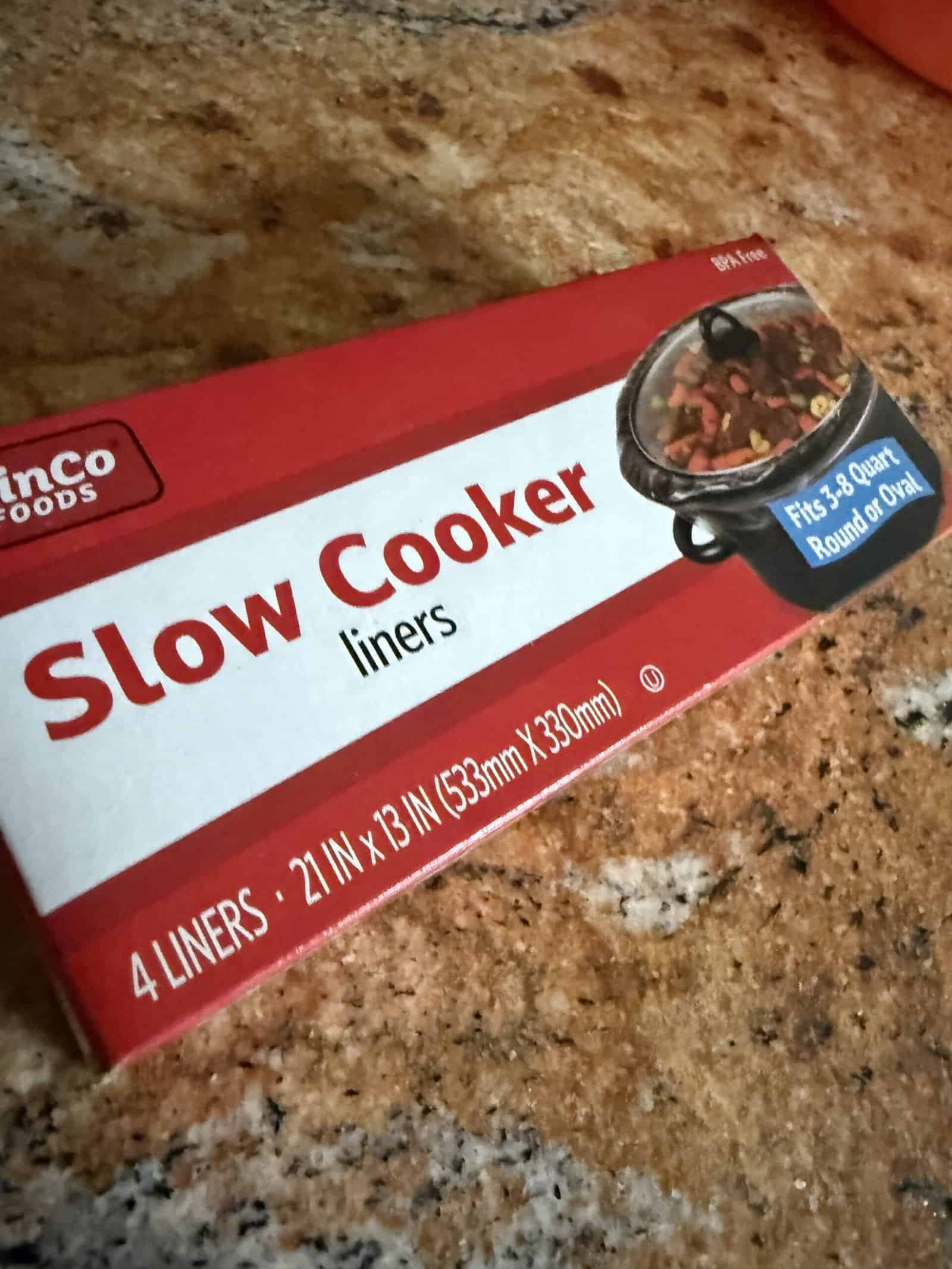
They are worth it if scrubbing a stoneware insert is the thing that stops you using the slow cooker, and not worth it if you were going to wash it anyway. Slow cooker liners buy you a clean insert at the price of a disposable bag per meal, which is a fair trade for some households and a pointless one for others.
Mine get used mostly every time. That has been the pattern across five or more years with a basic manual slow cooker, used a couple of times a month.
Nothing about that setup annoys me. Our roundup of slow cooker liners and accessories covers the products themselves.
What a Liner Actually Changes
Quick Answer
A liner turns cleanup from soaking and scrubbing into lifting a bag out. It saves the worst job a slow cooker creates and adds a per-meal cost and a piece of waste. If you already wash the insert without resenting it, you are paying for nothing.
Key Takeaways
- The saving is the scrub, not the rinse.
- Cost is a few cents to a couple of dollars per meal.
- Sugary and tomato-based dishes are where liners earn most.
- They can trap steam and slightly change how food cooks at the edges.
- Reusable silicone versions exist and still need washing.
- If cleanup is why the machine stays in a cupboard, a liner is cheap.
| Situation | Liner Worth It? | Why |
|---|---|---|
| Sticky or sugary dishes | Yes | Caramelized sugar is the hardest to remove |
| Tomato-heavy sauces | Yes | Staining and baked-on rings |
| Soups and stocks | No | The insert rinses clean anyway |
| Cooking for a crowd, back to back | Yes | Reset between batches without washing |
| You have a dishwasher-safe insert | Less so | The machine does the work |
| Waste bothers you | No, or silicone | One bag per meal adds up |
Five Years of Using Them Mostly Every Time
The slow cooker is a basic manual one with a dial, and it has been in use for five or more years. It comes out a couple of times a month.
Liners go in mostly every time. Not religiously, and close enough that the insert rarely needs real work.
The number worth handing you is the one on the other side of that: nothing about this setup annoys me. Five years, a couple of uses a month, and there is no recurring irritation to report, which for a kitchen appliance is the whole review.
I have never wanted a timer on it either. A dial and a liner is the entire operation, and it has stayed that way across the whole stretch.
What I cannot compare is the reusable silicone route, since I have not run those. That section is how they work rather than something I have washed and reused, and our guide to cleaning a slow cooker covers the version of this job without a liner.
Where the Case for Liners Is Strongest
Anything with sugar in it
Barbecue sauce, glazes, and sweet braises caramelize onto stoneware and take real effort to remove. This is the single best argument for a liner.
Tomato-based dishes
Long cooking leaves a baked-on ring at the fill line and can stain the glaze over time. A liner keeps both off.
Back-to-back batches
Cooking two things in sequence means either washing between them or lifting one liner out and dropping another in.
Transport and potlucks
A liner makes it possible to serve, lift the remains out, and travel home with a clean insert.
Where They Are a Waste
Soups, stocks, and anything mostly liquid rinse out without scrubbing. Buying a bag to avoid a rinse is not a saving.
Dishwasher-safe inserts change the calculation too, since the machine is doing the scrubbing rather than you. Check the manual, because some inserts are and some are not.
And if you are the sort of person who fills the insert with hot soapy water while you eat, the job is already mostly done by the time you get to it. Our guide to how full a slow cooker should be covers the other side of that, since an overfilled cooker is what creates the mess at the rim.
The Downsides Nobody Lists
Cost is the obvious one and it is small per meal and real over a year. Twice a month is a couple of dozen bags; five times a week is a different number entirely.
Waste is the second. One plastic bag per meal is a trade some households will not make, and reusable silicone liners exist specifically for that objection.
Fit is the third. A liner sized for a six-quart oval in a four-quart round bunches at the sides, and bunched plastic traps steam where you did not want it.
The last one is subtle. A liner sits between food and stoneware, which very slightly changes how heat reaches the edges. Most recipes will not notice, and a dish that relies on browning at the sides might.
Using Them Without the Annoyances
- Match the liner to the insert size. Oval and round are different, and so is quart capacity.
- Fit it before adding food. Smooth it against the walls rather than pushing it down afterward.
- Keep it clear of the lid seal. Excess plastic over the rim interferes with the seal and can touch the heating element.
- Do not lift a full liner out. Ladle the food out first, then remove the bag.
- Still wipe the insert. Liners can leak at a seam, and a quick check costs nothing.
- Do not reuse a disposable one. It is not built for a second heat cycle.
Our guide to what to cook in a slow cooker covers the dishes where a liner pays off most, and whether you can leave a slow cooker on all day covers the long-cook cases that bake food onto the walls.
Reusable Silicone as the Middle Ground
Silicone liners answer the waste objection and keep most of the convenience. They lift out the same way and go in the dishwasher afterward.
What you give up is the main appeal, because you are back to washing something. The saving becomes washing a flexible liner instead of scrubbing stoneware, which is easier but not effortless.
They also cost more upfront and pay back over months rather than immediately. Worth it for frequent users, marginal for a couple of meals a month.
Does the Machine Itself Matter?
Less than people expect for this question. A basic dial model and a programmable one create the same cleanup, so liners are equally useful on both.
What does matter is insert material and whether it is dishwasher safe. Our guide to whether you need a programmable slow cooker covers the feature question, and our roundup of slow cookers under fifty dollars covers the basic end where a dial is the whole interface.
Recommended Reading
Frequently Asked Questions
Are slow cooker liners worth it?
Yes if scrubbing the insert is what puts you off using the machine, especially for sugary or tomato-based dishes. No if you mostly cook soups and stocks that rinse out, or if your insert goes in the dishwasher. The saving is the scrub rather than the rinse.
Are slow cooker liners safe?
Liners sold for the purpose are made from heat-resistant nylon or polyester rated for cooking temperatures. Use ones labeled for slow cookers rather than freezer or oven bags, and keep excess plastic away from the heating element and the lid seal.
How much do liners cost per meal?
A few cents to around a dollar depending on brand and pack size. At a couple of meals a month that is negligible, and at daily use it becomes a line item worth thinking about.
Can you reuse a slow cooker liner?
Disposable ones are not designed for a second heat cycle and can weaken or leak. If reuse matters to you, buy silicone liners made for repeated use instead.
Do liners change how food cooks?
Slightly, since the liner sits between food and stoneware and alters how heat reaches the edges. Most recipes will not show it. A dish depending on browning at the sides might.
Do you still need to clean the insert?
Wipe it out, yes. Liners occasionally leak at a seam, and a quick check takes seconds. The point is avoiding a scrub rather than avoiding all contact with the insert.
What size liner do you need?
Match the liner to your insert’s shape and capacity, since oval and round differ and quart size matters. An oversized liner bunches and traps steam where you did not intend it.
Are silicone liners better than disposable ones?
Better on waste and cost over time, worse on convenience, because you are washing something again. They suit frequent users. For occasional cooking the disposable version is the simpler answer.
