
Buy a thick wood board as your daily surface, then keep thin plastic boards beside it for raw meat. The wood vs plastic cutting board question sounds like a debate with one winner. Most kitchens settle it by owning both.
Wood wins on knife feel, grip and long service. Plastic wins the job that matters on a busy night, the dishwasher. Your choice of knife matters too.
Quick Verdict
Cooks who prep a lot at once should make a thick wood board the main surface, since it stays put and treats edges gently. Cooks who handle raw meat often should add thin plastic boards for that job alone. Room for both beats choosing.
Key Takeaways
- Wood is kinder to edges and less likely to slide.
- Plastic wins raw meat cleanup, since it is dishwasher safe.
- Thin plastic warps with heat. Wood warps if it dries unevenly.
- Grooves in plastic hold stains. Wood sands flat again.
How We Compared
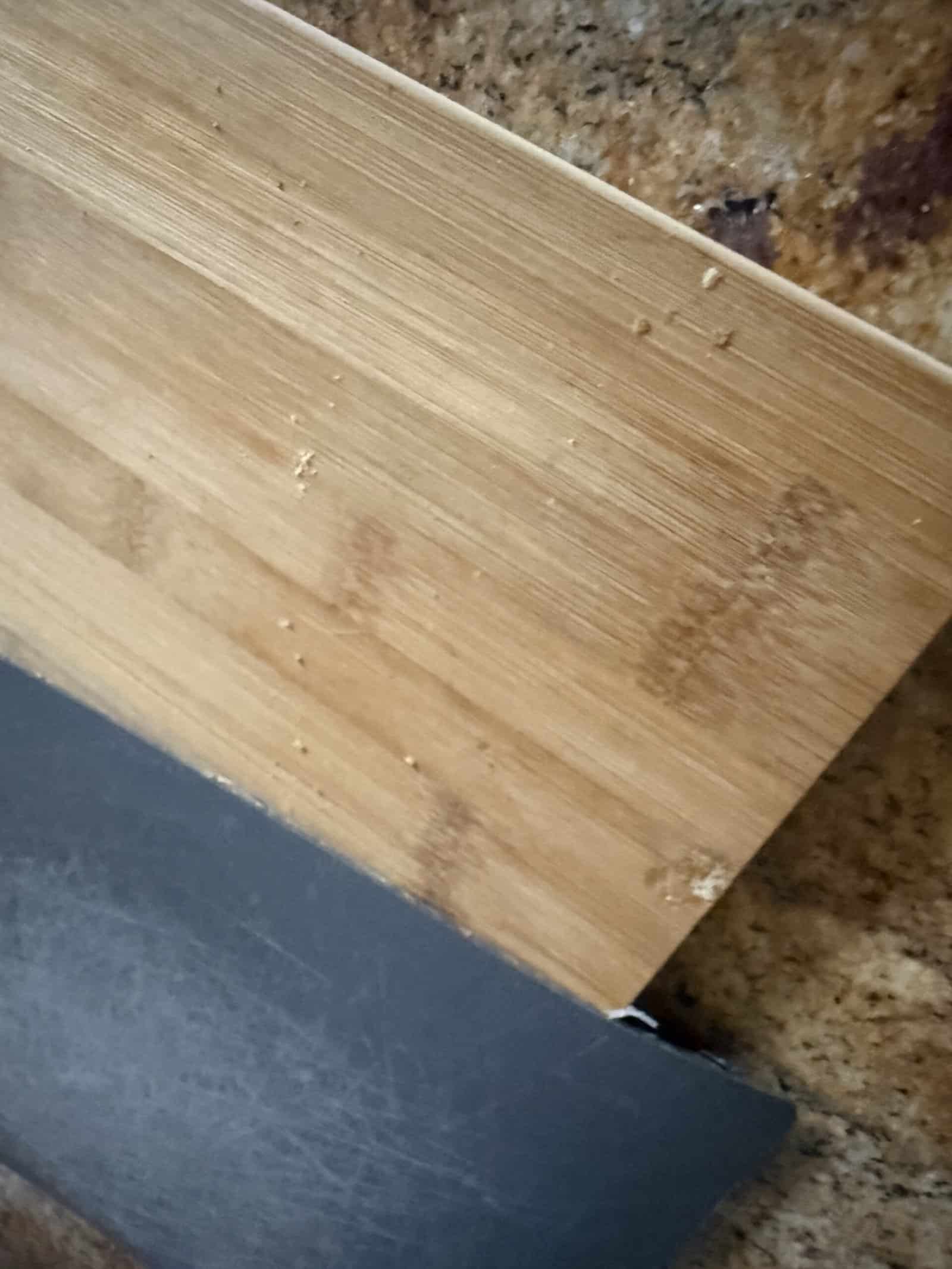
This comparison comes from one kitchen that uses both materials. The wood board is a big, thick, unbranded hardwood slab. The plastic boards are a few thin ones.
The criteria are knife feel, raw meat cleanup, grip, aging, warping and convenience. Habits count too, including how a board gets scraped clear.
Wood vs Plastic Cutting Boards at a Glance
| Criterion | Wood | Plastic |
|---|---|---|
| Knife friendliness | Very forgiving | Harsher with age |
| Raw meat cleanup | Hand wash only | Dishwasher safe |
| Counter grip | Heavy, sits still | Thin ones travel |
| Care needed | Dry on edge, oil sometimes | None |
| Warping trigger | Uneven drying | Heat |
| Aging surface | Sands flat again | Grooves stain |
Wood Cutting Boards, Pros and Cons
- Pros: gentle on edges, heavy, stable, repairable when scratched, and big enough for a whole prep session.
- Cons: never dishwasher safe, wants drying on edge, and needs oil sometimes.
Best for: cooks who prep everything in one sitting. Skip it if you want the machine to clean it.
Plastic Cutting Boards, Pros and Cons
- Pros: dishwasher safe, light, cheap enough to own several, and easy to assign one messy job.
- Cons: thin ones slide and warp, grooves collect stains, and the surface stops feeling nice.
Best for: raw meat and fish. Skip it if this will be your only board.
Which Is Kinder to Knife Edges?
Wood wins clearly. Wood fibers part under the edge and close back around it, so the blade sinks slightly instead of stopping dead. Plastic starts out reasonable, then feels harsher as the surface hardens and roughens.
Mine is kind to knives without question. The gap shows most on long prep, when hundreds of cuts land in the same spot.
It matters more with thin, hard edges, which is part of the German and Japanese knife split. Softer edges shrug off a harsh board. Harder ones notice it.
Which Is Easier to Sanitize After Raw Meat?
Plastic wins, and it is not close. A plastic board goes in the dishwasher, so heat and detergent do the work for you. Wood cannot take that treatment at all.
Wood asks for hot soapy water and a proper dry instead. That routine works fine. It just asks more of you when you want to stop thinking about raw chicken.
Timing matters more than material here. Whichever board you own, wash it hard right away rather than later. This guide to cleaning a cutting board covers both materials.
Which Stays Put While You Work?
Wood wins on weight alone. A thick slab has the mass to ignore the sideways push of chopping.
My wood board has never slid. It has not moved even when I use the edge to scrape chopped food off, which puts real sideways force into it. I have never needed to do anything to keep it in place.
The cheaper thin plastic boards I own are a different story. A light board simply travels under the same sideways push. More fixes live in this guide to stopping a board from sliding.
Which Holds Up Longer?
Wood wins, with one honest caveat about care. A hardwood board can be repaired, so sanding out scratches makes the surface new again. Plastic cannot be renewed once grooves get deep.
I have had mine at least two years, and it has held up through heavy everyday use without complaints. I oil it very rarely and I do not stay on top of it the way you are supposed to, though I have done it.
Plastic asks for nothing and gives nothing back. It simply gets replaced, the same math behind replacing kitchen knives on schedule.
Which Is Easier to Live With Day to Day?
This one splits, and forcing a single winner would be dishonest. Plastic wins the fast job. It is light, it travels from counter to sink to dishwasher, and you can grab a fresh one without thinking.
Wood wins the long job. Working through vegetables, meat and potatoes in one session, a big board holds everything in tidy piles and never shifts.
So the task decides, not the material. Thickness pushes it too, since a thin board flexes under a real load. Owning one of each ends the argument.
Which Handles a Scratched and Grooved Surface Better?
Wood wins, because the damage is reversible. Every board scars eventually, but wood takes sandpaper and comes back flat. Plastic keeps every groove it earns.
The plastic ones I own scratch and groove with use, and those grooves can hold onto stains and food. I also do not like scraping with a knife on the thin plastic boards.
A grooved surface can look clean and still hold color. Sharp knives slow the damage on both materials, so a pass on one of the better knife sharpeners protects the board too.
How Both Boards Get Used in One Kitchen
My main board is a big, thick, unbranded wooden one, and I have had it at least two years of heavy everyday use. What I value most is the size. It gives me space to cut vegetables, meat and potatoes and keep everything organized instead of crowding a small surface.
The few thin plastic boards sit alongside it on purpose, not as a fallback. I keep them partly so I can grab a dedicated one for raw meat and wash it well, rather than using the same surface straight through.
I call them the finnicky ones. They are not bad, and I do not mind using them, but they could be better.
This is what works with my boards and my habits. Someone who cooks differently, or who oils more diligently than I do, might have a different experience.
Which Fits Your Situation
| If this is you | Better choice |
|---|---|
| You prep whole meals before cooking | Thick wood board |
| You break down raw chicken weekly | Plastic |
| You want zero maintenance | Plastic |
| Your knives are hard and expensive | Wood |
| Your board slides while you chop | Wood, or a towel |
| You cook constantly with space | Both, split by task |
How to Choose Between Them
Start with thickness, since it changes a board more than material does. Thick sits still and resists warping. Thin flexes and travels.
Thin plastic buckles near heat, so keep it off the dishwasher’s heating element. Wood warps if it soaks or dries on one face, so dry it on edge.
End grain shows the fiber tips, so the edge slips between them. Edge grain still works well. This roundup of cutting boards for home cooks includes both.
Then decide about a dedicated raw meat board. That argument is about routine, not material.
The Verdict
Wood wins knife feel, grip, work space and repairability. Plastic wins raw meat cleanup, and that win justifies owning one.
Buy the wood board first if you want one surface for everything. Buy plastic first if raw protein dominates your week.
Most serious kitchens end up with both, a legitimate answer rather than indecision.
Recommended Reading
For a board that goes to the table, see these picks for serving boards. For counter tools, try these bread knives worth owning and kitchen shears.
Common Misconceptions
Plastic Is Automatically the Safer Choice
Plastic is easier to sanitize, which is a real advantage. Safety still comes from habit more than material. A well washed wood board beats a grooved plastic one.
Wood Boards Need Constant Fussing
Wood needs a routine, not a ritual. Scrape, wash, dry on edge, and oil when it looks pale.
Any Plastic Board Works the Same
Thickness separates them. A thick plastic board stays flat, while a thin one warps and travels.
Wood vs Plastic Cutting Board FAQ
Wood vs Plastic Cutting Board: Which Should I Buy First?
Buy the thick wood board first if you want one main surface. It treats knives gently, stays put while you chop, and gives room for a whole prep session. Add plastic second, for raw meat and anything you want in the dishwasher right away.
Can Plastic Cutting Boards Go in the Dishwasher?
Yes, and that is the strongest reason to own one. Keep thin boards well away from the heating element, since concentrated heat is exactly what warps them. A thick plastic board handles the cycle much better and stays flat far longer.
How Often Should I Oil a Wood Cutting Board?
Oil it when the wood looks dry or pale after a wash. There is no universal schedule, and a board in constant use drinks more than one that mostly sits. Food safe mineral oil is the simple choice, wiped back after it soaks in.
Why Does My Thin Plastic Board Warp?
Heat is almost always the cause. Thin plastic softens, then cools in whatever shape it was resting in, so it leaves the dishwasher curved. Hot pans do the same thing more slowly, and a warped board rocks on the counter afterward.
Should I Use a Separate Board for Raw Meat?
It helps, but the routine does the real work. A dedicated board only protects you if you wash it hard straight after use. Many cooks find a second board easier to stick with, since it removes the question of whether the main surface got clean.
Is End Grain Better Than Edge Grain?
End grain feels slightly kinder to edges, since the blade slips between fiber ends rather than across them. Knife marks also close up more readily. Edge grain performs well and usually costs less, so treat end grain as a nice upgrade rather than a requirement.
Do Deep Grooves Mean I Need a New Board?
On plastic, yes, because grooves hold stains and food while scrubbing cannot reach the bottom. On wood, grooves are just a sanding job, so flatten the surface and oil it again. Judge a board by groove depth rather than by looks.
