
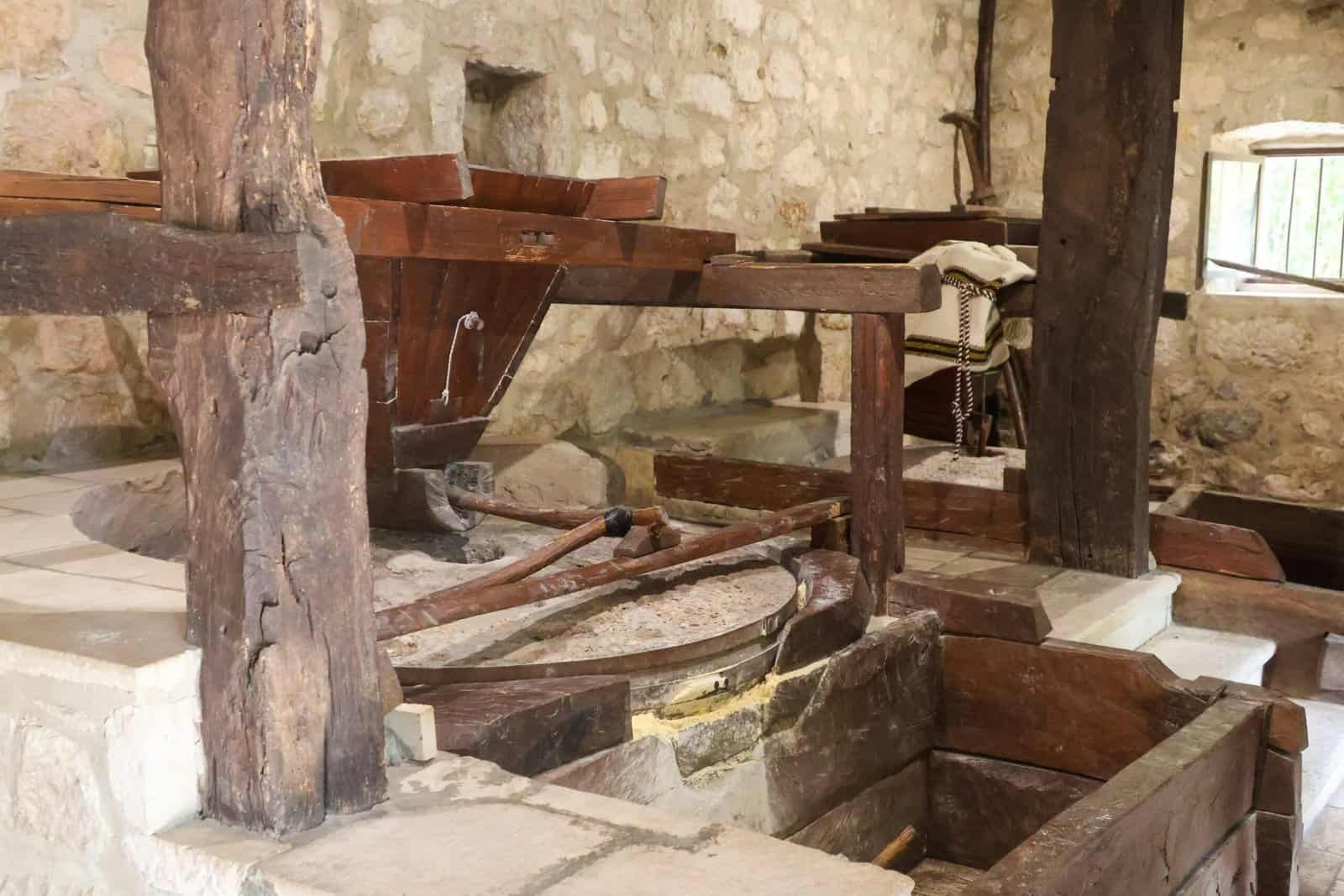
A grain mill turns whole berries into flour minutes before you use it, which is the only way to bake with flour that has not begun to stale. The best grain mills for home flour split into six types, and the deciding factor is how fine you need the flour and how much of it you go through in a week. Stone burrs, steel burrs, and impact chambers each produce a different flour from the same grain.
Freshness is the whole argument for milling at home. Whole-grain flour carries the germ and its oils, and those oils turn within weeks rather than months.
Anyone baking from whole wheat already knows the texture problem that follows. Our guide to bread machines for whole wheat covers the machine side of the same challenge.
The Short Version
Electric steel burr mills are the practical default for most home bakers. Stone burr mills produce the finest flour and run slower, impact mills are the fastest and the loudest, and hand-crank mills cost the least while asking the most of you. Stand mixer attachments suit anyone who already owns the mixer, and flaker mills handle oats rather than flour.
Key Points
- Burr type decides flour texture more than motor power does.
- Steel burrs handle oily grains and seeds that clog stone.
- Stone burrs give the finest pastry-grade flour and heat the flour slightly as they work.
- Impact mills are very fast and very loud, which decides where you can run one.
- Hand mills never fail on power and take real effort for a single loaf’s worth.
- Fresh whole-grain flour goes rancid quickly, so milling small batches beats milling ahead.
How We Picked
We compared mill types rather than individual units, because lineups turn over while the grinding mechanisms stay the same. Each section covers one type and the baking it supports.
We ranked types on four things: how fine the flour comes out, how they handle oily grains, how loud they are in a normal kitchen, and how much flour they produce before needing a rest.
We excluded anything sold on throughput claims alone, and we have not stated output rates or particle sizes, since both depend on the grain, the moisture, and the setting.
1. Electric Steel Burr Mills
Why It Stands Out
Two steel plates grind the grain between them, and the gap sets the coarseness. Steel handles everything from wheat to corn to oily seeds without clogging.
That range is the reason this type suits most kitchens. One mill covers bread flour, cornmeal, and cracked grain for porridge.
Worth Knowing
Steel does not reach the same fineness as stone at the finest setting. For most bread that gap does not matter, and for delicate pastry it does.
Burrs wear and eventually need replacing, so check availability before buying. Flour storage matters just as much, and our guide to storing flour long term covers what fresh flour needs.
Best for: Bread bakers who mill several grains, including oily ones. Skip it if you need pastry-fine flour above all else.
2. Stone Burr Mills
Why It Stands Out
Stone burrs grind rather than cut, and they produce the finest flour available at home. For cakes, pastry, and soft breads, that difference shows in the crumb.
Stone also mills more gently, which some bakers prefer for flavor. The flour comes out slightly warm from the friction.
Worth Knowing
Oily grains are the hard limit. Flax, sunflower, and nuts clog stone burrs and the residue is difficult to clear.
Stones need occasional cleaning by running hard grain through them. Fine flour also behaves differently when measured, which our piece on measuring flour addresses directly.
Best for: Pastry, cake, and soft-crumb bread from dry grains. Skip it if you plan to mill seeds or nuts.
3. Impact and Micronizer Mills
Why It Stands Out
An impact mill spins blades or fins inside a chamber and shatters the grain rather than crushing it. The result is fine flour produced very quickly.
For anyone milling in volume, that speed changes what is practical. Large batches finish while a burr mill is still warming up.
Worth Knowing
Noise is the real cost, and these are the loudest mills in any kitchen. Plan to run one in a utility room or a garage rather than beside a conversation.
Impact mills also handle only dry grain, and they cannot crack or coarsely grind. They produce flour or nothing.
Best for: High-volume bakers who want fine flour fast. Skip it if noise is a problem or you want coarse grinds.
4. Hand-Crank Grain Mills
Why It Stands Out
A clamp-on hand mill needs no power and almost never breaks. For preparedness, for travel, and for anyone who dislikes another motor on the counter, that simplicity wins.
Hand mills also give you total control over coarseness, since you feel the resistance change as you adjust it.
Worth Knowing
Milling enough flour for a loaf by hand is real work, and fine settings take the longest. Most owners mill coarse for porridge and reserve the fine setting for small amounts.
A solid mounting surface matters more than it sounds. The same lesson applies as with keeping a cutting board from sliding, since a mill that shifts wastes the effort.
Best for: Off-grid use, small batches, and backup capability. Skip it if you bake multiple loaves a week.
5. Stand Mixer Grain Mill Attachments
Why It Stands Out
An attachment uses the mixer motor you already own, so it costs less and stores smaller than a standalone mill. For an occasional miller, that is the sensible route.
It also keeps the whole process on one appliance, since the same machine then kneads the dough.
Worth Knowing
Mixer motors are not built for sustained grinding, and long sessions heat them. Work in batches with rests between them.
Fit is attachment-specific, so confirm compatibility with your hub before ordering. Our guide to which stand mixer attachment to use for what covers the wider set.
Best for: Stand mixer owners milling occasionally. Skip it if you mill in volume or your mixer is already working hard.
6. Flaker Mills and Roller Mills
Why It Stands Out
A flaker presses whole oats and other grains flat between rollers instead of grinding them. That produces rolled oats, not flour, and fresh ones taste markedly different from a box.
Some units combine a flaker head with a burr mill, which covers both jobs from one base.
Worth Knowing
This is not a flour mill and cannot replace one. Buy it for breakfast grains, muesli, and granola rather than for baking.
Rollers need drier grain than you might expect, since damp oats gum them up. Steaming is a separate step some recipes still want.
Best for: Fresh rolled oats and granola from whole grain. Skip it if flour is the reason you are buying a mill.
Grain Mills at a Glance
| Type | Flour fineness | Handles oily grain | Noise | Best situation |
|---|---|---|---|---|
| Electric steel burr | Fine to coarse | Yes | Moderate | General bread baking |
| Stone burr | Finest | No | Moderate | Pastry and soft crumb |
| Impact mill | Very fine only | No | Loudest | High volume |
| Hand crank | Coarse to fine with effort | Depends on burr | Quiet | Off grid, small batches |
| Mixer attachment | Fine to coarse | Usually not | Moderate | Occasional milling |
| Flaker mill | Not flour | Not applicable | Quiet | Oats and granola |
What to Look For in a Grain Mill
How fine does your baking need the flour?
Bread tolerates a slightly coarser grind, and cake does not. Match the burr type to the finer end of what you bake rather than the average.
A mill that adjusts across a wide range gives you both, provided the fine end is genuinely fine. Check that range before the motor rating.
Which grains will go through it?
Wheat, rye, and corn suit almost any mill. Flax, sunflower, and nuts rule out stone entirely and shorten the life of some steel burrs.
Legumes are worth checking too, since dried beans are hard on burrs. A mill rated for them lasts longer if you grind them often.
How much do you mill at once?
Hoppers and duty cycles both limit a session. A mill that needs to cool between batches turns a big bake into a long afternoon.
Small frequent batches also suit the flour better, since fresh whole-grain flour does not keep. Milling ahead defeats the purpose.
Where will it live and run?
Mills are heavy, and flour dust settles on everything nearby. A dedicated corner beats hauling one out of a cupboard each time.
Noise decides the room more than size does. Our guide to storing small kitchen appliances covers the space question honestly.
Where will the grain itself live?
Milling at home means storing whole berries rather than bags of flour. Whole grain keeps far longer than flour, which is the other half of the freshness argument.
Berries want a cool dry container with a tight seal. Buckets with gasket lids are the common answer, and pantry jars work for smaller amounts.
Plan the storage before the mill arrives. A mill with no grain supply behind it turns into a counter ornament quickly.
Does it sift or just mill?
Most home mills produce whole flour only, with no separation of bran and germ. Anyone wanting a lighter loaf sifts afterward through fine mesh.
Sifting discards part of the yield, so factor that into how much you mill. A high-extraction flour sits between whole and white.
Separate sifters cost little and do the job better than a mill attachment. Keep the bran, because it goes back into porridge and crackers.
Stone vs Steel Burrs
Where stone wins
Stone reaches a finer flour than steel and grinds more gently. For pastry and cake, that fineness produces a lighter crumb.
Stone also holds its grind consistency well over years of dry grain. The surfaces resurface each other as they work.
Where steel wins
Steel handles oily grains, seeds, and nuts that would ruin stone. It also cracks grain coarsely for porridge, which stone does poorly.
Cleaning is easier as well, since steel burrs wipe down rather than needing a purge run. Anyone baking mostly bread gets more use from steel, and our guide to setting up a home baking station covers where it fits.
What Trips People Up
Milling a month of flour at once
Whole-grain flour carries oils from the germ, and those oils turn within weeks. Milling ahead trades away the freshness you bought the mill for.
Expecting whole-grain flour to behave like white
Fresh whole flour absorbs water differently and ferments faster. Recipes usually need more hydration and a shorter proof, which is why how yeast actually works is worth understanding.
Buying on motor wattage
Burr type and burr size decide the flour. Wattage tells you how fast it gets there, not how good the result is.
Ignoring the dust
Fine flour dust travels further than people expect and settles on nearby surfaces. Milling beside an open cupboard is a mistake you make once.
Recommended Reading
- Bread proofing baskets cover the stage right after the dough comes together.
- Why bread does not rise covers the problem fresh whole flour most often causes.
- Loaf pans cover the bake itself once the flour is right.
Frequently Asked Questions
What are the best grain mills for home flour?
Electric steel burr mills suit most home bakers, because they handle a wide grain range including oily seeds and adjust from coarse to fine. Stone burr mills are the better pick for pastry-fine flour, while hand mills make sense for small batches and off-grid use.
Is home-milled flour actually better?
It is fresher, which is a real and noticeable difference in whole-grain baking. The germ and its oils stay in the flour, and those oils begin to turn within weeks of milling, so shop whole-wheat flour is almost never as fresh.
Can you make white flour at home?
Not really, though you can get close by sifting. Milling produces whole flour by definition, and separating out the bran and germ requires sifting through fine mesh and discarding part of the yield.
How long does fresh-milled flour keep?
Less time than shop flour, because the germ oils are still in it. Most bakers mill what they need and keep any surplus cold, since refrigeration slows the oils from turning.
Do grain mills work for gluten-free grains?
Yes, and rice, buckwheat, sorghum, and oats all mill well in steel burr units. Cross-contamination is the thing to plan for, since a mill that has ground wheat retains traces of it.
Are hand grain mills worth it?
For small batches, backup capability, and off-grid kitchens, yes. For anyone baking several loaves a week, the effort adds up quickly and an electric mill pays for itself in time saved.
Why does my milled flour feel warm?
Friction heats the flour as it grinds, and stone burrs do this more than steel. Letting it cool before mixing is the usual advice, because warm flour changes how the dough behaves.
Can you use a blender instead of a grain mill?
A high-powered blender with a dry container manages a coarse flour, and it will not reach bread-flour fineness. It works for a first experiment rather than as a substitute.
