
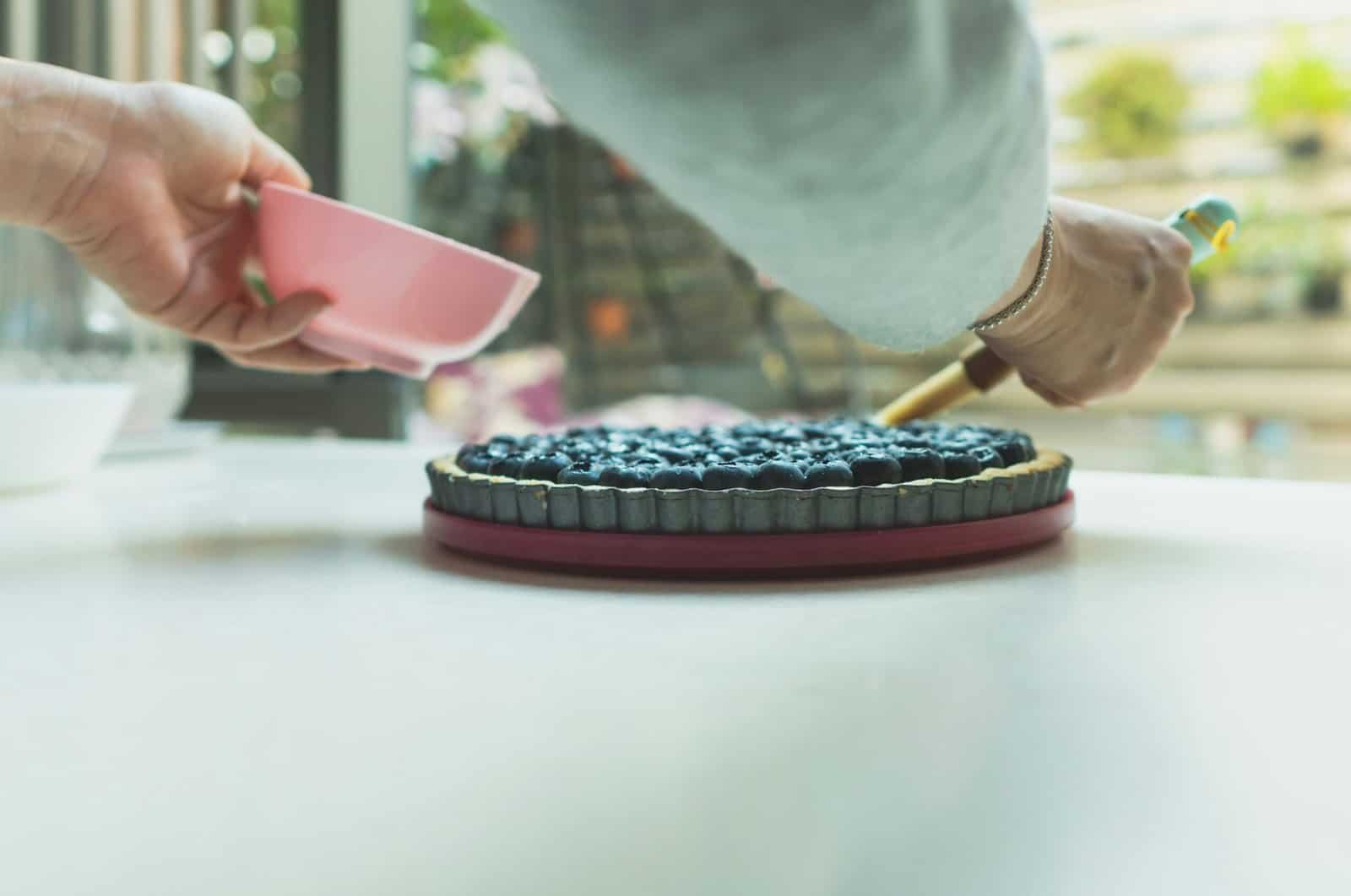
A fluted 9 inch round with a loose base is the tart pan worth owning first, and five other shapes handle what it cannot. Among the best tart pans with removable bottoms, depth and coating separate them far more than the loose base does. Depth decides which fillings are safe, while coating decides whether the crust browns or releases cleanly.
The loose base earns its place at the very end of the bake. A baker rests the pan on a can, pushes the ring down, and the tart never has to turn over. Fluted edges and set custard both survive that, where inverting tends to break them.
Nothing about the design is sealed, though. Butter escapes a raw shell during a blind bake, so a sheet pan underneath is ordinary practice rather than a workaround. Bakers who would rather have a sealed ring should look instead at hinged pans built for cheesecake.
Quick Verdict
Classic fluted rounds in a 9 inch size handle the widest range of recipes, so they earn the overall pick. Mini tartlet pans suit entertaining, rectangular pans photograph beautifully, and deep quiche pans hold custard safely. Nonstick releases easiest, while uncoated tinned steel browns the bottom crust best.
Key Takeaways
- A removable bottom lets a baker lift a tart straight up rather than inverting it, which protects fluted edges and soft fillings.
- Fluted walls add vertical ribs to the pastry, and those ribs act as small buttresses that keep the sides from slumping as butter melts.
- A 9 inch pan fits most standard tart recipes, while an 11 inch pan needs noticeably more dough and filling.
- Dark nonstick coatings absorb more oven heat, so they brown faster and need a closer watch than shiny tinned steel.
- Uncoated tinned steel rusts if it sits wet, so hand washing and immediate drying are the rule rather than the dishwasher.
How We Picked These Tart Pans
These picks come from construction, release behavior, and the kind of baking each shape suits. No hands-on kitchen trial sits behind this list, and nothing here reports a measured result. Instead, each pick reflects what the material and geometry do in a home oven.
We assessed four things for every type. First, how the base seats inside the ring, because a loose fit leaks more. Second, the metal and any coating, since both drive browning speed and release.
Third, depth, which decides whether a pan can carry a liquid custard. Fourth, the care routine, since a pan that rusts in a dishwasher asks more of its owner. Where a type has a real weakness, it appears in the Worth Knowing section rather than getting buried.
Prices move constantly across sizes, so none appear here. Scores do not appear either. A single number would hide the fact that these pans are specialists rather than competitors.
1. Classic Fluted Round Tart Pans, Best Overall
Why It Stands Out
The classic fluted round is the pan most tart recipes assume. A 9 inch version with sides around one inch deep covers fruit tarts, frangipane, chocolate ganache, and plenty of savory fillings. Because recipes are written for it, dough quantities and bake times usually translate without math.
Those flutes do real work. Pressing pastry into the ribs creates a wavy wall instead of a flat one. That corrugation resists slumping as the butter softens, and the ridges give the edge a crisp profile under glaze.
Worth Knowing
The flutes that help the pastry also grab it. Dough needs pressing into every groove without stretching. Stretched dough shrinks back down the wall and leaves a short, thick edge.
Blind baking matters here more than in a plain-walled pan. Line the chilled shell with parchment, add pie weights, and bake until the walls set. Otherwise the ribs collapse inward and the shape is lost.
This pan suits any home baker who follows published tart recipes closely. Anyone who only bakes deep custard quiche should skip it, because one inch of depth fills up fast. Best for: bakers who want one pan that handles the widest range of tart recipes.
2. Mini Tartlet Pans With Removable Bottoms, Best for Individual Servings
Why It Stands Out
Mini tartlet pans turn one tart into six or eight plated desserts. Each pan has its own loose base, so every tartlet pops out individually and nothing gets sliced. For dinner parties that detail saves a nervous moment at the table.
Small shells also bake faster and more evenly than a large one. Because the span is short, the center of the base sets before the edges overbrown. Furthermore, a cracked tartlet costs one serving rather than the whole dessert.
Worth Knowing
Multiplying the pans multiplies the work. Lining eight small pans takes much longer than lining one. Each also needs its own parchment round and weights for a blind bake.
Storage is the other catch. Loose bases separate from rings in a drawer, so they wander off unless the set stays stacked or bagged. Keeping them paired is worth the effort.
These pans suit anyone who entertains, bakes for gifts, or wants portion control built into the dessert. Bakers who want one simple shell for a family dinner should skip them and use a single round. Best for: hosts who plate individual desserts and want each one to release cleanly.
3. Rectangular Tart Pans, Best for Presentation
Why It Stands Out
A rectangular tart slices into neat bars instead of wedges, which changes how a dessert reads on a board. Long fruit arrangements, rows of pear slices, and piped ganache lines all suit the straight format. For a buffet, bars travel better than wedges too.
The narrow width helps baking as well. Because heat reaches the center from two close sides, the base sets quickly and stays crisp. In addition, the removable bottom slides out of the long ring with almost no flex.
Worth Knowing
Corners are the weak point. Pastry pressed into a square corner sits thin on the diagonal, and a thin corner cracks during a blind bake. Building up extra dough in each corner solves it.
Volume is also hard to guess. A rectangular pan rarely matches a round recipe, so bakers end up with leftover filling. A quick check against a pan volume conversion tool removes that guesswork.
This pan suits bakers who care how a dessert looks on the table and who like clean slices. Anyone who only follows round recipes without adjusting quantities should skip it. Best for: bakers who want long, bar-cut tarts with a sharp presentation.
4. Deep Quiche Pans With Removable Bottoms, Best for Custard Fillings
Why It Stands Out
Deep quiche pans run closer to two inches tall, which is what a custard needs. Eggs, cream, cheese, and vegetables add up fast, and a shallow pan overflows early. The extra wall height also supports a thicker crust.
The loose base still earns its place. A set quiche is heavy and wobbly, so inverting it is a bad idea. Instead, the ring lifts away and the quiche stays flat on its base until it is cut.
Worth Knowing
A liquid custard and a loose base are a risky pair. Raw filling creeps into the seam between base and ring, then drips onto the oven floor. For a very wet unbaked filling, a solid pan or a sealed springform is the better tool.
The fix is a fully blind baked shell. Bake the crust, brush the inside with beaten egg, and return it to the oven briefly. That set film blocks the seam and keeps the pastry from going soggy.
This pan suits anyone who makes quiche, deep custard tarts, or layered savory bakes. Bakers who stick to thin fruit tarts should skip it, since a deep shell needs more dough. Best for: cooks who bake custard fillings and need real depth with an easy release.
5. Nonstick Coated Tart Pans, Best Easy Release
Why It Stands Out
A nonstick coating is the most forgiving surface for fluted walls. Sugar in a sweet pastry caramelizes against bare metal and glues the shell in place. A coating gives that sugar nothing to hold, which removes the scariest part of tart baking.
Cleanup follows the same logic. Caramel and cheese wipe off a coated flute instead of needing a brush in every groove. Consequently, a baker is more likely to use the pan again next weekend.
Worth Knowing
Most nonstick finishes are dark, and dark metal absorbs more oven heat. The crust browns faster, so a recipe written for tinned steel can run long on a coated pan. Checking early is the habit to build.
Coatings also wear. Metal forks and scouring pads scratch the surface, and a scratched flute sticks every time afterward. Silicone tools and a soft sponge keep the finish intact, the same care that keeps coated cake pans working.
These pans suit newer bakers, anyone who has fought a stuck tart shell, and cooks who want minimal cleanup. Bakers chasing the deepest bottom crust color should skip them. Best for: bakers who prioritize a clean, worry-free release over maximum browning.
6. Tinned Steel Uncoated Tart Pans, Best Browning
Why It Stands Out
Uncoated tinned steel is the traditional tart pan material. It browns the bottom crust in a way coated pans struggle to match, because thin steel conducts heat fast. The base sets and colors rather than steaming.
Bare metal also grips the pastry slightly during the first minutes of baking. The dough clings to the flutes instead of sliding down. Over time, repeated use builds a seasoned surface that releases better than a new pan.
Worth Knowing
Rust is the real cost of owning one. The tin layer is thin, and a dishwasher cycle strips it. Hand wash in warm water, towel dry at once, and let the pan sit out before storing.
Sticking is more likely too. Buttering the flutes, chilling the shell, and blind baking properly all matter more with bare metal. Anyone who skips those steps pulls out a broken edge.
This pan suits experienced bakers who want the best crust color and accept hand washing. Anyone who loads everything into the dishwasher should skip it. Best for: bakers chasing a deeply browned, crisp bottom crust who do not mind careful drying.
Tart Pans at a Glance
| Type | Typical Size | Base Style | Suits |
|---|---|---|---|
| Classic fluted round | 9 or 11 inch, about 1 inch deep | Flat loose base, fluted ring | Most published tart recipes |
| Mini tartlet | 3 to 4 inch, shallow | Individual loose base per pan | Entertaining and plated portions |
| Rectangular | Roughly 14 by 4 inch | Long loose base, straight ring | Bar slices and presentation |
| Deep quiche | 9 inch, close to 2 inch deep | Loose base, tall fluted ring | Custard and savory fillings |
| Nonstick coated | 9 inch, dark finish | Coated loose base and ring | Easy release and fast cleanup |
| Tinned steel uncoated | 9 or 11 inch, shiny finish | Bare metal loose base | Deep bottom browning |
What to Look For in a Tart Pan
What size tart pan should a home baker buy first?
A 9 inch fluted round is the right first pan, because most tart recipes are written for it. An 11 inch pan looks impressive but needs meaningfully more dough, which means scaling every recipe. Starting at 9 inches keeps the math out of it. A second pan in a different shape beats a second size.
Does the metal thickness of a tart pan matter?
Thickness matters less in tart pans than in cake pans, since the goal is fast heat transfer. Thin tinned steel browns the base well for that reason. However, flimsy metal warps, and a warped ring no longer sits flush on its base. A pan that feels stiff under a gentle squeeze is thick enough.
How deep should a tart pan be?
Depth should match the filling, not the recipe title. About one inch suits fruit tarts, ganache, and frangipane, where the filling is already thick. Two inches is the right call for liquid custard, quiche, and anything creamy. Buying only shallow pans limits what the kitchen can make.
Is a dark or shiny tart pan better?
Shiny tinned steel gives more control, while dark coated metal gives easier release. Dark surfaces absorb more radiant heat, so they brown faster and can overshoot a recipe time. Shiny surfaces reflect some of that heat and track published bake times more closely. The same logic separates glass and metal bakeware generally.
Removable Bottom or Springform Pan
When is a removable bottom the better choice?
A removable bottom wins whenever the crust bakes before the filling sets firm. The ring lifts away cleanly and the fluted edge stays sharp. Tart pans are also shallower, so the pastry gets more direct heat. This side by side look at hinged pans against solid cake pans covers the deeper cases.
When does a springform pan make more sense?
A springform makes more sense for tall, wet, or unbaked fillings. The hinged band clamps against the base and resists seepage far better than a dropped-in disc. That matters for cheesecake batter or a no-bake filling that sits for hours. Height is the giveaway: anything over two inches belongs in a springform.
What Trips People Up
Butter leaking under the loose base
Butter escapes through the seam between base and ring during a blind bake, then smokes on the oven floor. Setting the tart pan on a rimmed sheet catches every drop. Chilling the shaped shell hard also slows the leak, since cold butter takes longer to run.
Stretching the dough up the wall
Stretched pastry always shrinks back. Pulling dough thin to reach the rim feels efficient, then the wall slides down and leaves a stubby edge. Instead, press a thicker piece in and work it into the flutes with a knuckle. Overworked dough has its own causes, covered in these notes on crust that turns out tough.
Pushing the tart out while it is still hot
A hot tart has not set, and pushing the ring down early tears the edge. Let the pan rest until it is just warm. Moving the tart to a wire cooling rack keeps the base from steaming while it waits.
Recommended Reading
- A guide to choosing pie pans for everyday baking
- How to line a pan with parchment before baking
- Muffin pans worth keeping in the cupboard
Tart Pan FAQ
What are the best tart pans with removable bottoms for a first-time tart baker?
A 9 inch fluted round with a nonstick coating is the easiest starting point. The size matches most recipes, so no scaling is needed. The coating also handles the release that worries new bakers most. Add a rimmed sheet underneath to catch butter. Once the technique feels routine, uncoated tinned steel is the natural upgrade for browning.
Do tart pans with removable bottoms leak?
They seep rather than pour. The base drops into the ring without a seal, so melted butter works through the seam during a blind bake. A rimmed sheet under the pan catches it and keeps the oven clean. For liquid fillings, a blind baked shell brushed with egg wash seals the seam first.
How does a baker get a tart out of the pan without breaking it?
Let the tart cool until barely warm, then set the pan on a sturdy can narrower than the base. Press the fluted ring straight down with both hands and it slides off. Finally, slide a thin spatula under the crust to move the tart onto a plate.
Should a tart shell be blind baked first?
Almost always, yes. Fluted walls slump without support, and a wet filling poured into raw pastry gives a soggy base. Line the chilled shell with parchment, add pie weights or dried beans, and bake until the walls hold. Then remove the weights and bake a few minutes more to dry the bottom.
Can tart pans with removable bottoms go in the dishwasher?
Coated pans usually tolerate it, though hand washing extends the finish. Uncoated tinned steel should never see a dishwasher. The cycle strips the thin tin layer, and the steel underneath rusts. Wash bare metal in warm water, towel it dry right away, and leave it out until fully dry before storing.
What size tart pan replaces a 9 inch recipe?
An 11 inch round needs considerably more dough and filling than a 9 inch, because the surface area grows faster than the diameter does. Scaling a recipe up by eye usually leaves the shell short. A 14 by 4 inch rectangle sits a little under a 9 inch round in area, so it often substitutes directly. Checking the numbers before mixing avoids a half-filled shell.
Why do tart pans have fluted sides?
The flutes strengthen the pastry wall. Pressing dough into the ribs creates a corrugated shape, and corrugation resists collapse better than a flat sheet. As the butter melts, those ridges hold the wall upright. They also give the baked edge a decorative profile that holds glaze neatly.
