
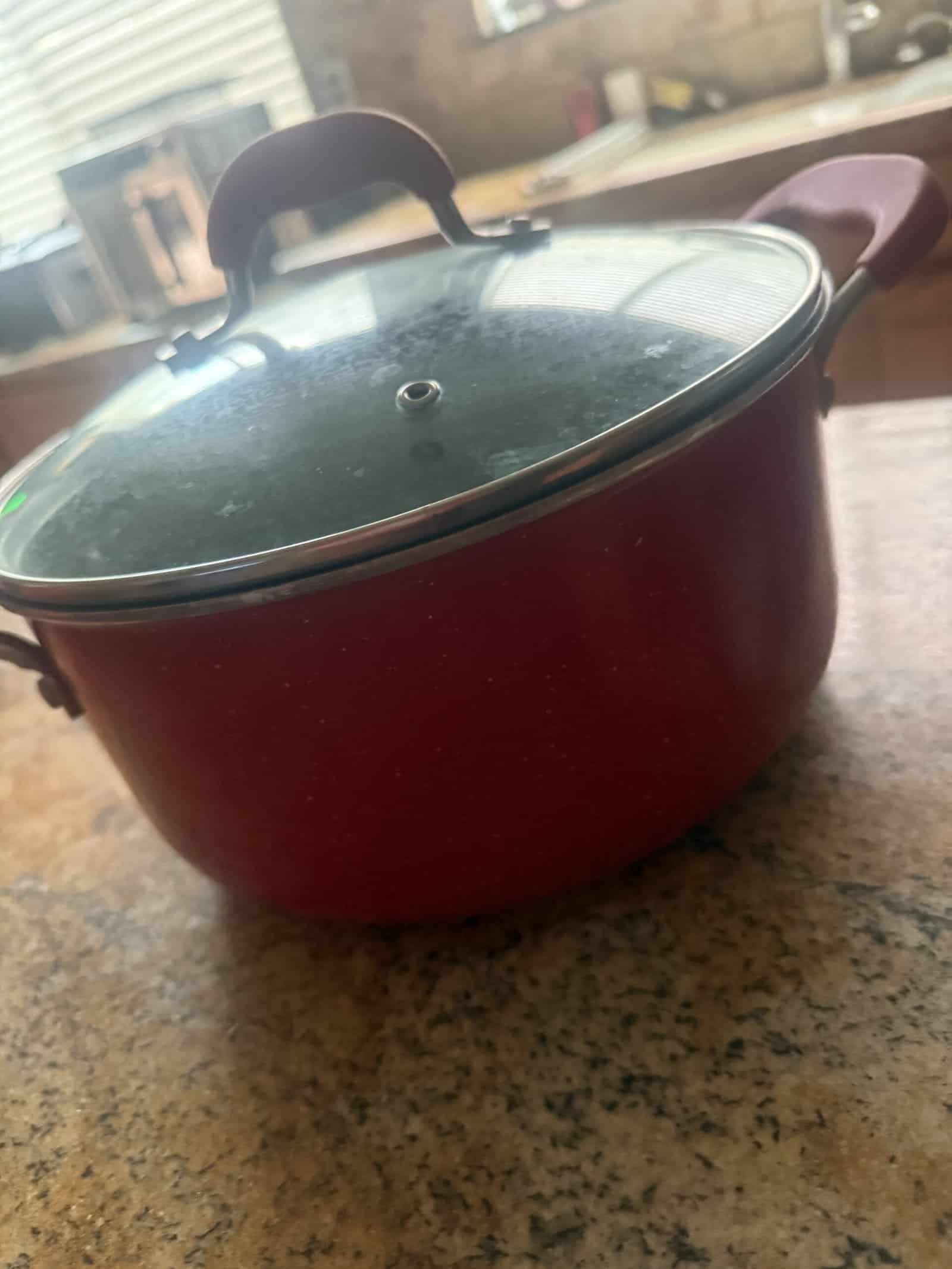
You can, and you probably should not, because no-knead bread recipes call for a long empty preheat at 450 degrees or more and that is exactly the condition nonstick coatings are not built for. Baking bread in a nonstick dutch oven works once or twice and degrades the coating in the process, which trades a pot you use often for a loaf you could bake another way.
The pot shape is genuinely good for bread. It is the surface inside it that does not belong in that oven, and our roundup of dutch ovens covers which constructions suit the job.
Quick Answer
Skip it. Bread recipes preheat an empty covered pot at 450 to 500 degrees, and both nonstick and ceramic coatings are rated below or near that with no food inside to absorb heat. Use enameled or bare cast iron, or bake on a sheet with a steam pan instead.
Key Takeaways
- The empty preheat, not the baking, is what damages the coating.
- Most nonstick coatings are rated well below bread-baking temperatures.
- Coating damage is cumulative and not always visible at first.
- Enameled and bare cast iron handle it without any concern.
- A sheet pan plus steam gets most of the way there with no special pot.
- A bread machine sidesteps the whole question.
| Pot Type | Bread? | Why |
|---|---|---|
| Bare cast iron | Yes | No coating to damage |
| Enameled cast iron | Yes | Vitreous enamel handles the heat |
| Nonstick coated | No | Coating rated too low for empty preheat |
| Ceramic coated | No | Higher than nonstick, still not enough |
| Stainless with clad base | Workable | Heat is fine, browning is worse |
| Stoneware or clay baker | Yes, if rated | Built for oven heat |
What the Empty Preheat Does
The standard method puts a covered pot into a 450 to 500 degree oven for half an hour with nothing in it. That is the whole point, because the dough needs to hit a screaming hot surface to spring.
Food normally absorbs a lot of the heat going into a pan. With nothing inside, the surface reaches close to the oven’s own temperature, and a coating rated for 400 or 450 with food in it is now well past its working range.
What follows is not usually dramatic. The coating loses release performance, may discolor or develop a slightly rough feel, and starts sticking where it used to let go. Our guide to preheating a dutch oven covers the method as it is meant to be done.
Nonstick Versus Ceramic Versus Enamel
Nonstick coatings
These are the lowest-temperature option and the clearest no. Manufacturer maximums are commonly in the 400 to 500 range, and the empty preheat sits at the top of it or above.
Ceramic coatings
Rated higher than traditional nonstick and still not designed for repeated empty high-heat cycles. They also tend to lose release performance gradually with heat exposure, which is the same failure by a slower route.
Enamel
Not a coating in the same sense. Vitreous enamel is fused glass on cast iron, and it is built for oven temperatures, which is why enameled dutch ovens are the standard bread recommendation. Our roundup of enameled cast iron cookware covers that end.
Bare cast iron
Nothing to damage and it takes any heat you can produce. The seasoning layer is oil-based and tolerates far more than a synthetic coating.
Why My Dutch Oven Has Never Seen Bread
Mine is nonstick coated over a lighter metal, oven-safe, and on the smaller side. It gets used for taco meat and sausage, browned with a light oil over medium heat, and it sticks occasionally rather than never.
I have never used it for bread and I would not, given what a long high-heat preheat does to a coating. That is a decision rather than a bad experience, so I cannot tell you what mine would look like afterward.
The bread does get made, just not in that pot. It comes out of a bread machine I bought used a month or two ago, and I am using it a lot right now.
The loaves have been basic white, sourdough, and a cheddar jalapeno, and the crust comes out consistent around the loaf rather than scorched on one side and pale on the other. The machine lives in a cabinet and comes out only when I am baking, because counter space is the thing I do not have to spare.
So the honest boundary is this: I have not baked bread in any kind of dutch oven, coated or enameled. What the coating rating says and what the machine produces are two different kinds of evidence, and only the second one is mine.
What to Use Instead
- Enameled cast iron. The standard answer, and the one recipes are written around.
- Bare cast iron with a lid. A combo cooker or a skillet with an inverted pan over it works.
- A sheet pan with a steam source. A tray of water on a lower rack replicates most of the effect.
- A stoneware or clay baker. Purpose-built and rated for the heat.
- A bread machine. No preheat, no pot, no oven decision at all.
Our guide to what to cook in a dutch oven covers the jobs a coated pot is genuinely good at, and our guide to whether bread machines are worth it covers the appliance route including its real cost.
If You Have Already Done It
One or two bakes is unlikely to have destroyed anything outright. Look at the interior for discoloration, a chalky or rough patch, or any lifting at the edges.
Test release rather than trusting the look. Cook an egg with a little oil over medium heat and see whether it slides. Loss of release is the symptom that matters, and it is the one that shows up first.
Discoloration on its own is mostly cosmetic. A brown or bronzed tint from heat does not necessarily mean the release surface has failed, which is why the egg test beats the eyeball test.
If the coating is visibly flaking, retire the pot from cooking use. Our guide to cleaning a dutch oven covers keeping a coated one in good shape for the work it should be doing.
Recommended Reading
Frequently Asked Questions
Can you bake bread in a nonstick dutch oven?
Physically yes, and it is not recommended. No-knead recipes preheat the empty pot at 450 to 500 degrees, which exceeds what most nonstick coatings are rated for with nothing inside to absorb heat. The damage is cumulative rather than immediate.
What temperature ruins a nonstick coating?
Manufacturer maximums commonly sit in the 400 to 500 range, and exceeding them degrades release performance rather than causing visible destruction. An empty pot in a hot oven reaches close to the oven temperature. Check your own pot’s stated limit.
Is ceramic coating safe for bread baking?
Ceramic tolerates higher temperatures than traditional nonstick and is still not built for repeated empty high-heat preheats. It also loses release performance gradually with heat exposure. Enamel or bare cast iron is the better choice.
Can you skip the preheat and bake from cold?
You can, and several cold-start methods exist. The crust and the oven spring are different, since the dough rises more slowly and sets later. It is a real technique rather than a workaround, so judge it on the loaf.
Do you need a dutch oven for bread at all?
No. The pot traps steam and delivers a hot surface, and a sheet pan with a tray of water on a lower rack covers most of that. A lidded cast iron pan works too. The pot is convenience rather than a requirement.
What is the difference between enameled and nonstick?
Enamel is fused glass on metal and handles oven temperatures by design. Nonstick is a synthetic coating engineered for release at moderate heat. They look similarly smooth and behave nothing alike above 400 degrees.
Will one bake ruin the pot?
Probably not outright. Coating degradation accumulates, so a single bake more likely shortens the pot’s useful life than ends it. Test release with an egg rather than judging by appearance.
Is a bread machine a real substitute?
For sandwich loaves and everyday bread, yes, and it removes the oven question entirely. What you give up is the crust and shape of a hearth-style loaf. The trade most owners report is storage space rather than quality.
