
You plate a good steak, reach for whatever knife is in the drawer, and then saw at it until the crust shreds and the juice runs everywhere. The best steak knives fix that one frustrating moment at the table. A dedicated steak knife glides through seared beef, roasted chicken, and pork chops without tearing, so each slice keeps its texture and stays on the plate instead of skidding across it. A sharp chef’s knife handles the prep on the cutting board, and a proper steak knife finishes the job once the meat hits the plate. This guide covers what actually separates a set worth keeping from a drawer full of dull table knives.
Quick Verdict
For most home cooks, a mid-weight serrated set with a comfortable grip and a dishwasher-safe stainless blade does everything you need night after night. The GoodCook serrated set below is the one I keep reaching for. If you want a refined edge that you are willing to hand-wash and touch up, a full-tang straight-edge set rewards the extra care with a cleaner slice. For more on this, see our guide to dishwasher-safe plastic-handled sets.
Why Trust This Guide
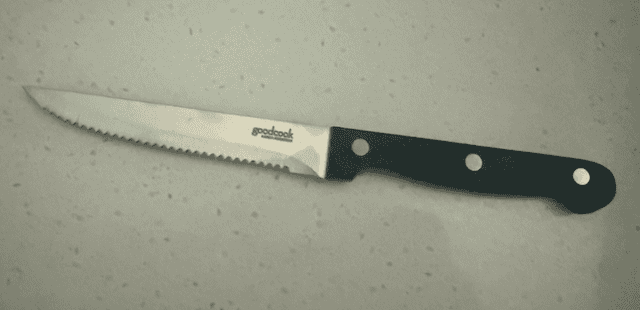
Selections draw on product research, material differences, and the food-safety standards cited in Sources. First-person notes appear only for the GoodCook everyday set I actually use at home, with a photo of the set itself as proof.
Key Takeaways
- Serrated blades keep biting through a crust even as they dull, which makes them the low-maintenance choice for most kitchens.
- Straight, fine edges slice more cleanly and look sharper at the table, but they need hand-washing and occasional sharpening.
- Full-tang construction and a secure handle matter more for daily comfort than the marketing on the box.
- Match the set size to how you actually eat, not to the largest count on the shelf.
Disclosure: SmartLifeItems is reader-supported. As an Amazon Associate, we earn from qualifying purchases made through links on this page, at no extra cost to you.
How We Picked the Best Steak Knives
We weighed blade type, edge retention, handle comfort, balance in the hand, build quality, and care requirements, then sorted picks by who each one suits rather than by price alone. Food-safety guidance from the USDA shaped the care notes, since any knife that touches raw meat needs proper washing and separation from ready-to-eat food to limit cross-contamination. Each pick below names who it fits and who should skip it, so you can match a set to your table instead of guessing from a feature list.
1. GoodCook Everyday Serrated Set (the one I actually use)
I cook meat a few nights a week on my indoor contact grill, and this GoodCook set is the one I grab without thinking about it. The knives are on the smaller side, serrated, with simple black handles, and they cut cleanly through a grilled chicken breast or a seared steak with one easy pull. Some nights I eat the meat straight off the board, and other nights I dice steak or chicken to spoon over rice from my rice cooker. Either way these handle it. They go in the dishwasher, and after plenty of cycles they show no rust and no loose handles.
Why It Stands Out
The serrations keep grabbing the surface of a crust even when the edge is past its prime, so the set stays useful with almost no upkeep. The smaller blade is easy to control on a dinner plate, and the lightweight handle does not fatigue your hand when you are cutting for the whole family.
Worth Knowing
A micro-serrated edge like this is hard to resharpen at home, so you replace the set eventually rather than restoring it. For an inexpensive everyday workhorse, that trade reads as fair.
This set fits anyone who wants a no-fuss option that survives the dishwasher and cuts grilled or pan-seared meat several nights a week. Skip it if you want a polished, hand-finished edge for entertaining or a knife you can sharpen and keep for the long haul.
2. Full-Tang Forged Straight-Edge Set
Why It Stands Out
A forged straight edge slices rather than saws, which gives you a cleaner cut face and a tidier plate. Full-tang construction runs the steel the full length of the handle, so the knife feels solid and balanced when you bear down on a thick ribeye.
Worth Knowing
You hand-wash these and dry them, and you touch up the edge now and then to keep that clean bite. The reward is a knife that cuts like a small kitchen blade instead of a table accessory.
This set suits cooks who host, plate carefully, and do not mind a minute of care after dinner. Skip it if your knives live in the dishwasher and you would rather never think about sharpening.
3. Micro-Serrated Stainless Set (Low-Maintenance)
Why It Stands Out
A stainless micro-serrated blade resists rust and shrugs off acidic marinades, so it keeps its look through years of weeknight dinners. The fine teeth bite through a crust without the aggressive tearing of a bread-style serration.
Worth Knowing
These cut well out of the box and stay serviceable, though the edge geometry means a slightly rougher cut face than a polished straight edge. Most diners never notice on a plate.
This set fits busy households that want dishwasher convenience and zero maintenance. Skip it if a glass-smooth slice for presentation matters more to you than easy cleanup.
4. Steakhouse-Style Pointed-Tip Set
Why It Stands Out
The classic steakhouse profile pairs a fine point with a partial serration, so it pierces and slices with the familiar feel of a restaurant table setting. The look dresses up a dinner party, and the point helps with smaller cuts and bone-in pieces.
Worth Knowing
The sharp tip earns respect around kids, so store these point-down or in a guard. Some versions favor style over heft, so check that the handle feels secure before you commit.
This set suits anyone who entertains and wants their table to feel like a steakhouse. Skip it if you have young children at the table and prefer a rounded, safer profile.
5. Japanese-Style High-Carbon Set
Why It Stands Out
A high-carbon straight edge takes a keener angle and holds it, which gives you the cleanest slice in this guide. For a cook who notices the difference between cutting and crushing, that edge is the whole point.
Worth Knowing
High-carbon steel can stain or spot if you leave it wet, so dry it right after washing. The payoff is an edge you can hone back to razor sharpness whenever you like.
This set fits the home cook who already sharpens their kitchen knives and wants that same precision at the table. Skip it if low maintenance is your priority, since this steel asks for attention.
6. Budget Stamped Set (Starter)
Why It Stands Out
A stamped stainless set covers a full table for very little money, which makes it the obvious starter for a first apartment or a spare set for guests. It cuts grilled and roasted meat well enough for everyday dinners.
Worth Knowing
Lighter stamped blades and molded handles do not have the heft or longevity of forged steel, so treat this as a practical starting point rather than a forever set.
This set suits anyone furnishing a kitchen on a tight budget or stocking a second drawer for company. Skip it if you want a knife with real balance and the durability to last.
Steak Knives at a Glance
| Pick | Edge type | Care | Best for |
|---|---|---|---|
| Everyday serrated set | Micro-serrated | Dishwasher safe | No-fuss weeknight dinners |
| Full-tang straight edge | Straight, forged | Hand wash, sharpen | Hosts who plate carefully |
| Micro-serrated stainless | Fine serration | Dishwasher safe | Busy, low-maintenance homes |
| Steakhouse pointed tip | Partial serration | Hand wash preferred | Entertaining and presentation |
| Japanese high-carbon | Straight, keen | Dry immediately | Cooks who sharpen |
| Budget stamped set | Serrated or straight | Dishwasher safe | Starter and guest sets |
How to Choose Steak Knives
Four decisions cover almost everything that matters once you set price aside.
Serrated or Straight Edge
Serrated blades keep cutting as they dull and forgive a lot, which is why they win in most kitchens. A straight edge slices more cleanly and looks sharper at the table, and it asks for sharpening to stay that way. Pick serrated for convenience, straight for a refined cut.
Handle and Tang
Hold the knife before you judge the blade. A full-tang knife, where the steel runs through the handle, feels balanced and secure when you press into a dense cut. A handle that fills your palm and resists slipping when wet beats any printed spec.
Care and Dishwasher Safety
Decide honestly how you will wash these. Dishwasher-safe stainless serrated sets ask nothing of you. Forged and high-carbon edges last longer and cut better when you hand-wash, dry, and store them well. Either path works, so long as you match the knife to your habits. Pair a clean board with clean knives, since the surface you cut on affects both edge life and food safety.
Set Size and Storage
Buy for your real table. A set of four covers a couple and a guest; a set of eight serves a family that hosts. Plan where the knives will live too, whether that is a block, an in-drawer tray, or edge guards. A quick read on keeping an edge sharp pays off across every blade you own.
Serrated vs Straight-Edge Steak Knives
This is the choice that decides how a set feels for years, so it is worth a closer look.
Where Serrated Wins
Serrated teeth grip and tear through a tough crust even after the edge softens, so the knife stays useful with no upkeep and survives the dishwasher. For a household that wants to grab a knife and go, that resilience is the deciding factor.
Where Straight Wins
A fine straight edge parts the meat in one clean pass and leaves a tidy slice face, which reads sharper on the plate and pleases anyone who cares about presentation. It trades that polish for a little care, since you hand-wash it and hone it now and then.
Common Steak Knife Mistakes to Avoid
A few easy missteps turn a good set into a frustrating one.
Buying the Biggest Count for the Wrong Table
A twelve-piece set looks like value until eight knives sit unused and crowd a drawer. Buy the count that matches how you actually eat, and put the savings toward better steel.
Putting Fine Edges Through the Dishwasher
High heat, detergent, and knives knocking against the rack dull and pit a forged or high-carbon edge fast. Hand-wash the fine-edge sets and reserve the dishwasher for stainless serrated blades built for it.
Cross-Contaminating at the Board
Using the same unwashed knife on raw meat and then on bread or salad spreads bacteria. Wash the knife between tasks and keep raw-meat prep separate from ready-to-eat food, in line with USDA safe-handling guidance.
Letting the Edge Coast Forever
Even a great straight edge fades with use, and a dull knife crushes meat instead of slicing it. Hone or sharpen the fine-edge sets on a schedule so they keep cutting the way you paid for.
Recommended Reading
- A full kitchen knife set under $100
- The knife sharpeners that keep an edge keen
- How to store knives safely at home
- Cutting boards that protect your edges
- getting tougher cuts tender first
- choosing a kitchen knife
Steak Knife FAQ
What is the best steak knife set for most people?
For most home cooks, a mid-weight serrated stainless set wins. It cuts grilled and pan-seared meat cleanly, survives the dishwasher, and asks for no sharpening. The everyday serrated set in this guide is the one I reach for several nights a week.
Are serrated or straight-edge steak knives better?
Serrated knives stay useful longer with no maintenance, which suits busy kitchens. Straight edges slice more cleanly and look sharper on the plate, but they need hand-washing and occasional sharpening. Choose serrated for convenience and straight for a refined cut.
Can steak knives go in the dishwasher?
Stainless serrated sets are usually dishwasher safe and hold up fine. Forged and high-carbon straight edges last longer when you hand-wash and dry them, since heat and detergent dull and pit fine edges over time. Check the maker’s care note.
How many steak knives do I need?
Match the count to your table. A set of four suits a couple plus a guest, while a set of six or eight serves a family that hosts. Buying a larger count than you use wastes money and crowds storage.
Do steak knives need sharpening?
Straight-edge steak knives benefit from honing and occasional sharpening to keep slicing cleanly. Micro-serrated blades are hard to sharpen at home, so you typically replace them once they fade rather than restoring the edge.
What handle material lasts longest?
Full-tang knives with riveted or molded handles in stainless, durable composite, or sealed wood hold up best. The key is a secure, comfortable grip that does not loosen, slip when wet, or trap water inside the handle.
Are expensive steak knives worth it?
Pricier forged and high-carbon sets cut more cleanly and last longer with care, which rewards cooks who host or value a refined slice. For simple weeknight dinners, a good serrated stainless set delivers most of the benefit for far less.
How do I keep steak knives safe around kids?
Store pointed-tip knives in a block, tray, or edge guards rather than loose in a drawer, and consider a rounded profile for a young family. Always wash and put knives away promptly instead of leaving them in a full sink.
Related Reading
Explore more: bread knives, paring knives, and how to cook steak on stove. Also explore: steam mops, and chef knife vs santoku.
Recommended Reading
See also our guides to paring knives. If you are cooking the steak as well as eating it, the tools worth having for cooking steak. A common question: whether these tolerate the dishwasher.
- teapots
- how to choose the right cookware
- carbon steel pans
- cast iron skillets
- boning knives, for breaking down cuts before cooking.
Related guides: our picks for nakiri knives.
