
A good food processor quietly earns its counter space. It turns a cutting board full of vegetables into an even dice in seconds, shreds a block of cheese before you would have finished grating it by hand, and handles the prep that makes cooking at home actually happen on a busy night. The best part is you do not have to spend a fortune for that, which is what this guide is about: the best food processors under seventy-five dollars in 2026. Most of the picks below are research-based, but one is the machine I have used myself for years.
Disclosure: SmartLifeItems is reader-supported. As an Amazon Associate, we earn from qualifying purchases made through links on this page, at no extra cost to you.
Quick Verdict: Budget Food Processors Worth Buying
If you want one capable all-rounder near the top of the budget, the Cuisinart DFP-7BCWNY is the safe choice, with the bowl size and discs to handle most everyday jobs. For straightforward, durable everyday slicing and shredding, a basic Hamilton Beach is hard to beat, and it is the brand I have leaned on for years. The Black+Decker 3-in-1 stretches a small budget across three bowl sizes, the Ninja Fit packs real power into a compact body, and the KitchenAid and Cuisinart mini options cover sauces and small batches. There is a budget processor here for every kitchen.
| Processor | Capacity | Best for |
|---|---|---|
| Cuisinart DFP-7BCWNY | 7 cups | All-around use near the budget ceiling |
| Hamilton Beach (what I use) | Full-size | Everyday slicing, shredding, grating |
| Black+Decker 3-in-1 | 8, 4, and 2 cups | Flexibility on a small budget |
| Ninja QB3001SS Fit | Compact, 700 watts | Power in a small footprint |
| KitchenAid 3.5-Cup Mini | 3.5 cups | Sauces and small batches |
| Cuisinart Mini-Prep Plus | Around 4 cups | Chopping and mini tasks |
1. Cuisinart DFP-7BCWNY 7-Cup: Best Overall Under
The Cuisinart DFP-7BCWNY sits right at the top of this budget and uses the space well. Its bowl is big enough for real meal prep, it comes with the slicing and shredding discs plus the chopping blade most cooks reach for, and it carries the Cuisinart name that has anchored home kitchens for decades. For someone who wants a single do-most-things processor without crossing into premium pricing, this is the natural pick. It chops, slices, shreds, and mixes light doughs with the kind of consistency that makes the budget tier worth shopping at all.
Who it suits: anyone who wants one capable machine for everyday cooking. If you are still deciding between appliance types, our explainer on blender versus food processor is worth a read first.
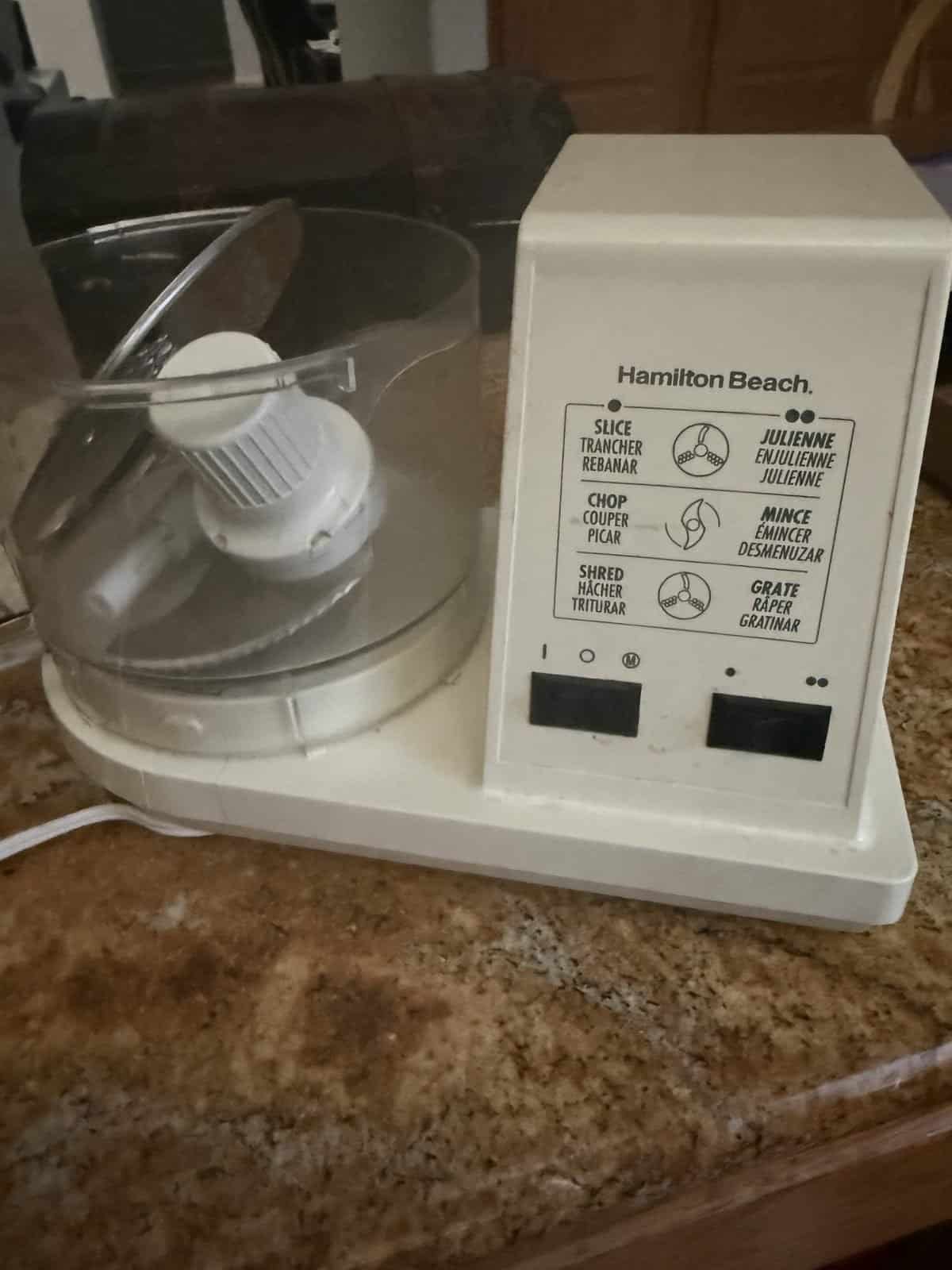
2. What I Use: A Hamilton Beach Food Processor
This is the one I actually own. It is a Hamilton Beach, and it has quietly become one of the appliances I use most. I reach for it a lot specifically for vegetables and cheese, slicing and shredding the prep that would otherwise eat up real time, and it has stayed easy to use the whole way through. The thing that stands out most is longevity: it has lasted multiple years of regular use and still does its job, which is exactly what you want from a budget machine. It is a quality product I turn to all the time whenever I am making something at home.
My unit is an older model, so the way to buy into this today is through Hamilton Beach’s current lineup. The Stack and Snap is the brand’s well-reviewed mid-size option with assembly that does not require lining up and twisting the bowl, and the standard ten-cup model covers the same everyday slicing and shredding ground. If you want a no-drama processor for vegetables and cheese that earns its keep over years, a Hamilton Beach is an easy recommendation, and it is the one I stand behind from experience.
3. Black+Decker 3-in-1 8-Cup: Best Value
The Black+Decker 3-in-1 is the budget overachiever of the group. Instead of a single bowl, it includes an eight-cup, a four-cup, and a two-cup bowl, so you can match the container to the job rather than washing a giant work bowl to chop a clove of garlic. In independent testing it has punched above its price, turning out evenly sliced produce and clean chops. For a first food processor or a second machine for small jobs, the flexibility is genuinely useful.
Who it suits: shoppers who want the most versatility per dollar. To round out a prep kit, see our picks for mandoline slicers and vegetable peelers.
4. Ninja QB3001SS Fit: Best Compact
The Ninja QB3001SS Fit is the answer for small kitchens that still want muscle. It puts a strong motor into a compact, personal-sized body, which makes quick work of chopping, blending small batches, and crushing through tougher ingredients than its footprint suggests. The bowl is modest, so it is not the machine for batch cooking, but for daily small jobs on a tight counter it is a lot of capability for the money.
Who it suits: apartment cooks and anyone short on storage. If compact blending is also on your list, our guide to immersion blenders under fifty dollars covers another space-saving option.
5. KitchenAid-Cup Mini: Best for Sauces
The KitchenAid 3.5-cup mini is built for the small, precise jobs a full-size processor handles awkwardly. Its compact bowl and drizzle basin make it well suited to emulsifying dressings, blitzing pesto, and chopping herbs or nuts in small amounts, all with the simple two-button control most mini choppers use. It will not replace a big processor for meal prep, but as a dedicated small-batch tool it is a clean, reliable performer from a trusted brand.
Who it suits: cooks who make sauces, dips, and small batches often. It pairs naturally with the kind of baking prep covered in our guide to hand mixers.
6. Cuisinart Mini-Prep Plus: Best Mini Chopper
The Cuisinart Mini-Prep Plus is the other strong small-batch option, and one of the most popular mini choppers around. Its reversible blade is designed to both chop and grind, which makes it handy for everything from onions to small amounts of nuts and spices. It is inexpensive, takes up almost no room, and is the kind of grab-it-without-thinking tool that ends up used far more than its size suggests.
Who it suits: anyone who wants an affordable, dedicated chopper for everyday small tasks. For bigger mixing jobs, our roundup of stand mixers under two hundred dollars covers the step up.
What to Look For in a Food Processor Under
Capacity
Bowl size should match how you cook. Mini choppers suit solo cooks and sauces, while an eight to ten cup bowl handles chopping, slicing, and shredding for couples and small families. Remember that the listed capacity is a maximum fill, not the practical working amount, so size up a little if you are unsure.
Power and motor
More wattage helps with dense jobs like firm vegetables, hard cheese, and light dough. Budget machines vary here, so if you mostly chop and shred softer foods you can spend less, but if you want to push into tougher ingredients, lean toward the more powerful options.
Attachments and discs
The chopping blade is standard, but slicing and shredding discs are what make a processor earn its keep for vegetables and cheese. Confirm a model includes the discs you will actually use rather than assuming they come in the box.
Ease of assembly and cleaning
The processors people keep using are the ones that are easy to lock together and easy to clean. Stack-and-snap style assembly and dishwasher-safe parts remove the friction that sends machines to the back of the cabinet.
Getting the Most From a Budget Processor
A few habits make any inexpensive processor perform better. Cut ingredients into roughly even pieces before they go in, since uniform feed gives uniform results. Use short pulses rather than running the motor continuously, which gives you control and keeps you from turning vegetables into mush. For cheese, slightly chilled blocks shred more cleanly than soft, room-temperature ones. And do not overfill the bowl; processing in two smaller batches beats jamming everything in at once. For the cleanup side, hand-washing the blade right after use keeps it sharp and safe, even when parts are dishwasher-safe. Testers across major reviews consistently find that technique matters as much as price in this tier.
Building out the rest of your countertop on a budget? Our roundups of blenders under one hundred dollars and quiet blenders for early mornings follow the same value-first approach.
Frequently Asked Questions
What is the best food processor under $75?
The Cuisinart DFP-7BCWNY is the strongest all-rounder near the top of the budget, while a basic Hamilton Beach is a durable, simpler everyday choice. The best one for you depends on bowl size and how often you process tougher foods.
Can a food processor shred cheese?
Yes, and it is one of the tasks they do best. Use the shredding disc, and chill the cheese block slightly for cleaner results. It is far faster than hand-grating, especially for larger amounts.
Is a food processor good for chopping vegetables?
Very much so. With the chopping blade or slicing disc, a processor turns a pile of vegetables into an even chop or uniform slices in seconds, which is why many people buy one mainly for prep.
Can a food processor replace a blender?
Not entirely. A processor excels at chopping, slicing, and shredding solid foods, while a blender is better for liquids and smoothies. They overlap but serve different jobs, which our blender versus food processor guide explains in detail. If smoothies are your priority, start with our picks for blenders for smoothies and our walkthrough on how to choose the right blender instead.
How many watts do I need in a budget food processor?
For everyday chopping and shredding of softer foods, modest power is fine. If you regularly process firm vegetables, hard cheese, or light dough, choose a higher-wattage model so the motor does not struggle.
What size food processor should I buy?
Match it to your cooking. A mini chopper suits sauces and solo prep, an eight to ten cup bowl fits most households, and only batch cookers really need the larger sizes that cost more and take up space.
How do I avoid over-processing food?
Use short pulses instead of running the motor continuously, and check the texture frequently. Over-processing turns chopped vegetables into puree quickly, so stopping early and pulsing again is the safer approach.
Are budget food processors durable?
Many are. Simpler machines with fewer electronics often last for years of regular use, which is one reason basic models from established brands remain popular long after fancier ones are forgotten.
Related Reading
Explore more: food dehydrators under 100, food dehydrators, and why food browns when cooked. Also explore: why pressure cookers work faster.
Recommended Reading
See also our guides to food dehydrators.
Related guides: how to clean a food dehydrator.
