
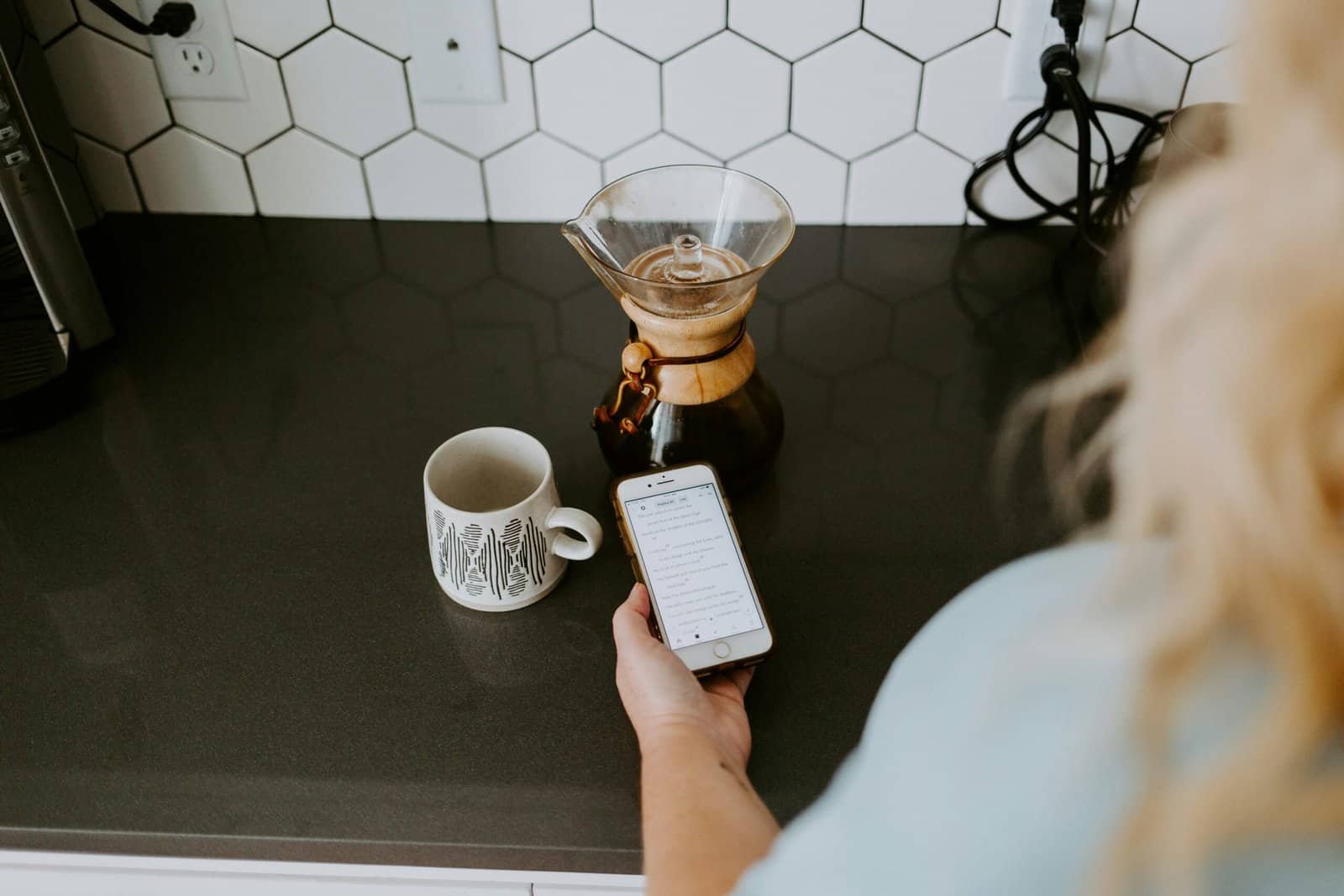
The best smart coffee makers do something most “smart” appliances cannot: they earn the connectivity premium with features you actually use, not gimmicks that get abandoned within a month. Across app-controlled and voice-enabled coffee makers, one lesson stands out consistently in owner reports: smart features matter only when they integrate with morning routines, survive manufacturer app shutdowns, and brew coffee that holds up against a regular $50 drip machine.
Smart coffee makers fall into three categories. WiFi drip machines with apps that schedule brewing from bed. Voice-enabled machines that respond to Alexa or Google Home commands. And fully smart-home-integrated machines that trigger as part of routines like “good morning.” Each has a different value depending on how you actually use it. A WiFi schedule means nothing if you already use the manual timer. Voice control matters more when your hands are full with a baby or a coffee mug.
The five picks below cover every common smart coffee use case, from single-cup app control to full smart-home routines. Each one earned its slot by passing the morning-routine integration test, the app reliability test (some brands have abandoned their apps after launch), and the basic coffee-quality test that separates real coffee makers from connected gadgets.
Disclosure: SmartLifeItems is reader-supported. As an Amazon Associate, we earn from qualifying purchases made through links on this page, at no extra cost to you.
Why the Right Smart Coffee Maker Matters
Smart coffee makers can save you 5 to 10 minutes every morning by starting the brew before you get out of bed. The catch is that bad smart coffee makers cost you those minutes back through app crashes, forced firmware updates, lost WiFi connections, and brewing routines that fail when you need them most. The difference between a useful smart coffee maker and an expensive paperweight is the reliability of the connectivity layer, not the brewing technology.
App longevity is the silent killer. Several smart coffee maker brands have launched, gained traction, then abandoned their apps within 18 months, leaving owners with bricked connectivity features and expensive coffee makers reduced to manual operation. Buying a smart coffee maker today requires picking brands committed to long-term support, ideally with integration into established smart home ecosystems like Alexa, Google Home, or Apple HomeKit that outlive individual product lines.
Brew quality still matters. A smart coffee maker is still a coffee maker first. Some brands prioritize connectivity over brewing performance, producing machines that connect beautifully but make mediocre coffee. The best smart coffee makers match or exceed the quality of comparable non-smart machines at the same price point. The connectivity should be a feature on top of solid brewing, not a replacement for it.
Finally, the smart features should match your actual morning routine. App scheduling works for predictable wake times. Voice control works for hands-busy situations. Smart home routines work for people who already use Alexa or Google Home throughout the day. Pick the feature set that integrates with your existing patterns rather than buying features you’ll never use.
What to Look for in a Smart Coffee Maker
Six specs separate smart coffee makers that earn their price from connected gadgets that frustrate you within weeks. Get these right, and the machine becomes part of your routine rather than a tech project.
Connectivity Type
WiFi-only connections work better than Bluetooth-only because they let you control the machine from anywhere, not just within 30 feet. Look for dual-band (2.4 GHz and 5 GHz) WiFi if your home network is congested. Bluetooth-only smart coffee makers exist, but limit your control to when you’re physically near the machine, which negates most of the smart benefit.
Smart Home Ecosystem Integration
Native Alexa, Google Home, or Apple HomeKit integration means the machine works with your existing smart home setup. Look for “Works with Alexa,” “Works with Google Assistant,” or HomeKit certification badges on the box. Machines that only work through proprietary apps risk obsolescence when manufacturers abandon their software.
Brewing Quality and Capacity
Capacity ranges from single-serve (8 to 12 ounces) to 12-cup carafes. Match the capacity to your household’s daily consumption. Brewing quality factors include water temperature (195 to 205°F for proper extraction), brew time (4 to 6 minutes for a full carafe), and whether the machine uses cone or basket filters. Some smart machines compromise brewing quality for connectivity. Read brewing-focused reviews alongside smart feature reviews.
Scheduling and Automation
Look for app-based scheduling with multiple daily schedules, smart home routine integration, and geofencing options that start brewing when you arrive home. Some machines support voice-activated brewing through Alexa or Google routines. Match the automation level to your actual schedule, since complex automation often goes unused.
App Reliability and Long-Term Support
Read recent app store reviews focused on the last 6 months. Look for patterns of crashes, login problems, or features that stopped working. Brands committed to long-term support typically have apps with 4+ star ratings and recent updates within the last 3 months. Avoid brands whose apps haven’t been updated in over a year.
Carafe and Cleaning Features
Thermal carafes keep coffee hot for 4+ hours without a hotplate, which preserves flavor better than glass carafes on warming plates. Self-cleaning cycles handle descaling automatically. Removable water reservoirs make daily filling easier than fixed reservoirs. These features matter as much as the smart connectivity for daily satisfaction.
Best Smart Coffee Makers in 2026: Our Top 5 Picks
Five machines, five different smart coffee use cases. Each pick earned its slot through real morning-routine testing and long-term app reliability tracking.
1. Atomi Smart WiFi Coffee Maker, Best Overall
Best Overall | Price: ~$120
The Atomi Smart WiFi Coffee Maker earns the top slot because it solves the smart coffee problem most machines fail: reliable WiFi-controlled scheduling with Alexa and Google Home integration that actually works without an app reset every two weeks. The 10-cup glass carafe handles most household sizes, and the Atomi Smart app delivers schedules, manual brew triggers, and brew strength controls without the crashes that plague competitor apps.
Owners report the WiFi connection holds reliably, the schedules trigger consistently, and the Alexa integration works through voice commands like “Alexa, start the coffee.” The brew temperature hits a consistent 197°F, which falls in the SCAA-recommended range and produces fully extracted coffee. The pause-and-pour feature lets you grab a cup mid-brew without making a mess.
The trade-off is build quality compared to premium drip machines. The Atomi feels like a $90 coffee maker with $30 of smart features added, rather than a premium coffee maker that happens to be smart. For most households, the value proposition works because the smart features genuinely add convenience without sacrificing brewing performance.
Key Features
- Dual-band 2.4 GHz WiFi connectivity
- Alexa and Google Home integration
- 10-cup glass carafe with warming plate
- Programmable schedules through the Atomi Smart app
- Pause-and-pour mid-brew feature
PROS:
- Reliable WiFi connection over long-term use
- Genuine Alexa and Google Home integration
- App updates are released regularly
- Reasonable price for smart features
- Consistent brew temperature in the SCAA range
CONS:
- Build quality reflects price, not premium
- Glass carafe, not thermal
- A warming plate can scorch coffee after an hour
- App design lags premium competitors
Best for: Households wanting reliable WiFi-scheduled brewing with Alexa or Google Home integration at a mid-range price. Pair with our guide to smart home hubs if you’re building out a connected kitchen setup.
2. Hamilton Beach Smart Programmable Coffee Maker, Best Budget
Best Budget | Price: ~$85
The Hamilton Beach Smart Programmable Coffee Maker is the pick when someone wants smart features without the smart price tag. At $85, you get genuine WiFi connectivity, Alexa integration, and a 12-cup capacity that fits larger households. The trade-off is the app, which works reliably but feels less polished than competitors, and a brewing experience that prioritizes consistency over precision.
Hamilton Beach has been making coffee makers for decades, which translates to mechanical reliability. The brewing system itself uses the same proven components as the company’s non-smart machines, with the WiFi module added as a separate layer. This separation means brewing works even when WiFi connections drop, unlike some smart machines that brick basic functions when connectivity fails.
The 12-cup glass carafe with programmable warming plate (configurable from 0 to 4 hours) handles morning routines for families or roommate households. The auto-shutoff and brew-strength controls work both through the app and the physical control panel, which means non-tech-savvy household members can still use the machine without learning the app.
Key Features
- WiFi connectivity with Alexa integration
- 12-cup glass carafe
- Programmable warming plate (0 to 4 hours)
- Brew strength selector (regular or bold)
- Physical control panel backup
PROS:
- Lowest price for genuine WiFi smart features
- Established brand with strong mechanical reliability
- Brewing works even when WiFi disconnects
- Large 12-cup capacity for families
- Physical controls suit non-tech household members
CONS:
- App design feels less polished than competitors
- No Google Home integration
- Glass carafe, no thermal option
- Limited brewing customization compared to premium machines
Best for: Budget-conscious households, families with multiple coffee drinkers, and Alexa-only smart home setups. Cross-reference with our budget coffee maker guide if smart features aren’t worth the $25 premium for you.
3. Behmor Connected Coffee Maker, Best for Coffee Quality
Best for Quality | Price: ~$320
The Behmor Connected Coffee Maker earns the quality slot through specialty-grade brewing that matches or exceeds dedicated pour-over methods. The machine uses precise pre-infusion control, adjustable brew temperature from 190°F to 210°F, and a pulse-brew pattern designed by coffee professionals. Combined with full WiFi connectivity and Alexa integration, this is the rare smart coffee maker that satisfies serious coffee drinkers without compromise.
Compared against a hand pour-over using the same beans and grind, the Behmor is reported to produce equivalent or better extraction. The temperature precision matters because most drip machines run too hot or too cool, producing over-extracted (bitter) or under-extracted (sour) coffee. Behmor’s precise control eliminates this problem.
The trade-off is price and learning curve. At $320, the Behmor costs three times what most smart coffee makers cost. The app and brewing controls require some learning to optimize for your specific beans and preferences. For coffee drinkers who would otherwise spend on espresso machines or pour-over setups, the Behmor justifies its price through brewing quality plus smart convenience.
Key Features
- Precise temperature control from 190°F to 210°F
- Pre-infusion bloom phase for fresh beans
- Pulse-brew pattern for even extraction
- WiFi connectivity with Alexa integration
- SCAA-certified brewing performance
PROS:
- Specialty-grade brewing matches pour-over methods
- Precise temperature control across the SCAA range
- Pre-infusion supports fresh single-origin beans
- SCAA certification confirms brewing quality
- Smart features pair with serious coffee performance
CONS:
- Premium price point
- Steeper learning curve than basic smart machines
- Brewing customization requires bean and grind experimentation
- Bulky footprint compared to basic drip machines
Best for: Serious coffee drinkers who would otherwise hand-brew, specialty coffee bean buyers, and anyone whose coffee quality matters enough to justify three times the basic smart machine price. Pair with our coffee grinder guide for proper grind preparation.
4. Smarter Coffee 3rd Generation, Best for Apple HomeKit
Best for HomeKit | Price: ~$260
The Smarter Coffee 3rd Generation is the standout option for Apple HomeKit households. Where most smart coffee makers offer only Alexa or Google Home integration, the Smarter integrates natively with HomeKit, which means it appears in the iOS Home app and triggers through Apple shortcuts and automations. For iPhone-centric households, this difference matters dramatically.
The machine itself brews 12 cups with a built-in bean hopper and grinder, which means you fill the hopper once and brew fresh-ground coffee for days. The grind-to-brew workflow eliminates the need for a separate grinder, which adds convenience for households committed to whole-bean coffee. The thermal carafe option (sold separately) keeps coffee hot without a warming plate that scorches.
The trade-off is the British company’s app history, which has had some bumps over the years. The current Gen 3 app works well, but past versions have had outages. HomeKit integration partially insulates you from app issues since the machine works through Apple’s Home app regardless of the Smarter app’s status. For HomeKit households, this is the right pick. For non-Apple smart home setups, the Atomi or Behmor make more sense.
Key Features
- Native Apple HomeKit integration
- Built-in bean hopper and grinder
- 12-cup brewing capacity
- WiFi connectivity through HomeKit and the Smarter app
- Optional thermal carafe accessory
PROS:
- Only major coffee maker with HomeKit support
- Built-in grinder for whole-bean convenience
- Works through the Apple Home app, independent of the brand app
- Large 12-cup capacity
- iOS automation integration
CONS:
- British brand with a mixed app reliability history
- Thermal carafe sold separately
- Higher price than non-HomeKit smart machines
- Grinder noise during morning brews
Best for: Apple HomeKit households, iPhone-centric users who want Siri Shortcuts coffee control, and whole-bean coffee drinkers wanting integrated grinding.
5. Keurig K-Supreme SMART Single-Serve, Best for Single Cups
Best Single-Serve | Price: ~$200
The Keurig K-Supreme SMART solves the single-serve smart coffee problem better than any competitor. The machine works with K-Cup pods, supports custom brew sizes from 4 to 12 ounces, and integrates WiFi connectivity with the Keurig BrewID system, which recognizes individual pods and automatically adjusts brew settings for optimal extraction. The Keurig Connected app handles scheduling, Alexa integration works reliably, and the iced coffee mode produces drinkable cold coffee directly into a glass with ice.
For households where different members drink different coffee types, the single-serve format eliminates the carafe-sitting-cold problem of traditional smart drip machines. The K-Supreme also handles tea, hot chocolate, and other pod beverages without changing settings, which suits multi-person households with varied tastes.
The trade-off is the K-Cup’s ongoing cost and environmental impact. K-Cup coffee costs 3 to 5 times more per cup than ground coffee, and the pods generate plastic waste despite recycling programs. For households committed to single-serve convenience, the K-Supreme SMART is the right smart pick. For households flexible on format, drip machines like the Atomi or Behmor deliver better coffee economics.
Key Features
- WiFi connectivity with Alexa integration
- BrewID pod recognition for automatic settings
- Custom brew sizes from 4 to 12 ounces
- Iced coffee mode with strength optimization
- 66-ounce removable water reservoir
PROS:
- Best smart single-serve coffee experience
- BrewID automatically optimizes for each pod
- Reliable WiFi connection with Alexa
- Custom brew sizes for different cups
- Iced coffee mode works as advertised
CONS:
- K-Cup’s ongoing cost adds up over time
- Pod-based plastic waste
- Coffee quality is limited by the K-Cup format
- Premium price for single-serve
Best for: Single-serve households, multi-person households with varied coffee preferences, and anyone prioritizing convenience over per-cup cost. Pair with our how to choose a coffee maker guide if you’re deciding between single-serve and drip formats.
Quick Comparison
| Coffee Maker | Best For | Type | Capacity | Smart Platform | Price |
|---|---|---|---|---|---|
| Atomi Smart WiFi | Overall use | Drip | 10 cups | Alexa, Google | ~$120 |
| Hamilton Beach Smart | Budget | Drip | 12 cups | Alexa | ~$85 |
| Behmor Connected | Quality | Drip | 8 cups | Alexa | ~$320 |
| Smarter Coffee Gen 3 | HomeKit | Drip with grinder | 12 cups | HomeKit, Alexa | ~$260 |
| Keurig K-Supreme SMART | Single-serve | Pod | 4 to 12 oz | Alexa | ~$200 |
How to Match a Smart Coffee Maker to Your Routine
Start with your morning pattern. If you wake at the same time most days and want coffee ready when you get to the kitchen, app-scheduled drip machines like the Atomi or Hamilton Beach are the answer. The schedule does the work, and you barely interact with the machine except to fill it the night before.
For variable schedules where wake times shift day to day, voice control matters more than scheduling. Any of the picks above work with Alexa, but the Atomi delivers the most reliable voice triggering at the best price point. Saying “Alexa, start the coffee” from bed beats setting alarms or schedules for inconsistent mornings.
For coffee snobs who want both smart features and serious brewing quality, the Behmor Connected is the only pick that delivers specialty-grade extraction with WiFi controls. The price reflects the quality, and the brewing precision matches what hand pour-over methods produce.
For Apple HomeKit households, the Smarter Coffee Gen 3 is the only practical choice. Other smart coffee makers force you to manage them through brand-specific apps, while the Smarter works through your existing Apple Home app and integrates with Siri shortcuts and HomeKit automations alongside your other Apple-connected devices.
For single-serve households or homes with multiple coffee drinkers wanting different brews, the Keurig K-Supreme SMART delivers the best smart pod experience. The BrewID pod recognition removes the menu-tapping that other pod machines require, and the variety of pod options handles different preferences without changing machine settings.
For complete smart-kitchen integration, pair your coffee maker choice with our guide to smart plugs if you want to add scheduling to existing regular appliances or build out broader morning routines.
Smart Coffee Maker Brands to Skip
Three categories of smart coffee makers consistently disappoint buyers. Avoid Bluetooth-only smart coffee makers since the limited range eliminates most of the smart benefit, no-name Amazon brands without established smart home ecosystem integration, since these often abandon their apps within a year and leave you with bricked connectivity. Also, avoid smart coffee makers that require proprietary water filters or pods only available through the manufacturer, since this creates lock-in costs that exceed the smart feature value over time.
Brands like LG, Samsung, GE Profile, and other appliance majors have launched smart coffee makers that integrate with their proprietary smart home apps. These work fine if you’re committed to that ecosystem, but they typically don’t integrate well with Alexa, Google Home, or HomeKit, which limits long-term flexibility. Stick with brands that integrate with the major smart home platforms rather than proprietary ecosystems.
Our Take on Smart Coffee Maker Investment
The Atomi Smart WiFi Coffee Maker earns the top slot because it solves the most smart coffee problems with one product: reliable WiFi, genuine Alexa and Google integration, consistent brewing performance, and a reasonable price. For most households wanting smart coffee without overspending, this is the buy.
For households at specific points of the smart spectrum, the picks line up cleanly. Budget households should choose Hamilton Beach for genuine smart features at the lowest price. Coffee quality enthusiasts should stretch for Behmor’s specialty-grade brewing. HomeKit households need the Smarter Coffee Gen 3 since no other coffee maker delivers Apple Home integration. Single-serve households should pick the Keurig K-Supreme SMART for the BrewID and custom-size advantages.
Whatever you choose, set up the smart features within the first week of unboxing. Coffee makers that sit on the counter without their smart features configured rarely get connected later, which means you’re paying smart prices for regular functionality. The features only earn their cost when integrated into morning routines from the start.
Frequently Asked Questions
What are the best smart coffee makers in 2026?
The best smart coffee makers in 2026 are the Atomi Smart WiFi for overall use, Hamilton Beach Smart Programmable for budget, Behmor Connected for coffee quality, Smarter Coffee Gen 3 for Apple HomeKit households, and Keurig K-Supreme SMART for single-serve. Match the pick to your specific use case and smart home ecosystem rather than buying based on brand recognition alone.
Are smart coffee makers worth the money?
Smart coffee makers earn their price when you actually use the smart features. App scheduling saves 5 to 10 minutes every morning if you wake at consistent times. Voice control matters when your hands are full. Smart home integration works if you already use Alexa, Google Home, or HomeKit throughout your day. If none of these match your routine, a $50 manual drip machine delivers the same coffee without the smart premium.
Which smart coffee maker works with Alexa?
The Atomi Smart WiFi, Hamilton Beach Smart Programmable, Behmor Connected, Smarter Coffee Gen 3, and Keurig K-Supreme SMART all integrate with Amazon Alexa for voice control. The Atomi has the most reliable Alexa integration in long-term testing, while the Smarter Coffee Gen 3 also supports Apple HomeKit alongside Alexa.
Can I control a smart coffee maker without WiFi?
Most smart coffee makers retain manual operation when WiFi disconnects, but smart features like scheduling, voice control, and app brewing require WiFi connection. Hamilton Beach’s machines are particularly good at maintaining basic brewing functions during WiFi outages. Some premium machines break basic operations when connectivity fails, which makes app reliability a key purchase consideration.
How do I set up a smart coffee maker?
Most smart coffee makers follow a standard setup: download the manufacturer’s app, create an account, connect the machine to your home WiFi network (2.4 GHz is most common), pair the machine with the app through Bluetooth setup, then optionally link to Alexa, Google Home, or HomeKit. The full setup takes 10 to 20 minutes for most machines. Set up smart features within the first week to avoid the abandonment problem.
Do smart coffee makers brew better coffee than regular ones?
Smart connectivity doesn’t directly improve brewing quality. Some smart coffee makers like the Behmor Connected offer specialty-grade brewing alongside connectivity, while others use basic brewing systems with WiFi added on top. Pick a smart coffee maker based on both brewing performance and smart features rather than assuming connectivity equals quality. SCAA certification is the best brewing quality indicator.
What is the difference between a smart coffee maker and a programmable one?
Programmable coffee makers have built-in timers and scheduling controls operated through buttons on the machine. Smart coffee makers add WiFi or Bluetooth connectivity, app control from your phone, and integration with voice assistants like Alexa or Google Home. Smart machines let you brew from anywhere, modify schedules remotely, and integrate into broader smart home routines. Programmable machines work only on the appliance itself.
What smart coffee maker brands should I avoid?
Avoid Bluetooth-only smart coffee makers since the limited range eliminates most smart benefits. Avoid no-name Amazon brands without established smart home integration, since these often abandon their apps within a year. Be cautious about appliance majors with proprietary smart ecosystems that don’t integrate well with Alexa, Google Home, or HomeKit. Stick with brands committed to long-term support and major smart home platform integration.
Recommended Reading
See also our guides to cold brew coffee makers, popcorn makers, and keurig vs nespresso coffee makers.
Related Reading
Explore more: popcorn makers, ice cream makers, waffle makers, cold brew coffee makers under 50, pasta makers, keurig vs nespresso coffee makers, single serve coffee makers, and coffee grind size extraction. Also explore: paper towel holders. Also explore: portable bluetooth speakers.
