
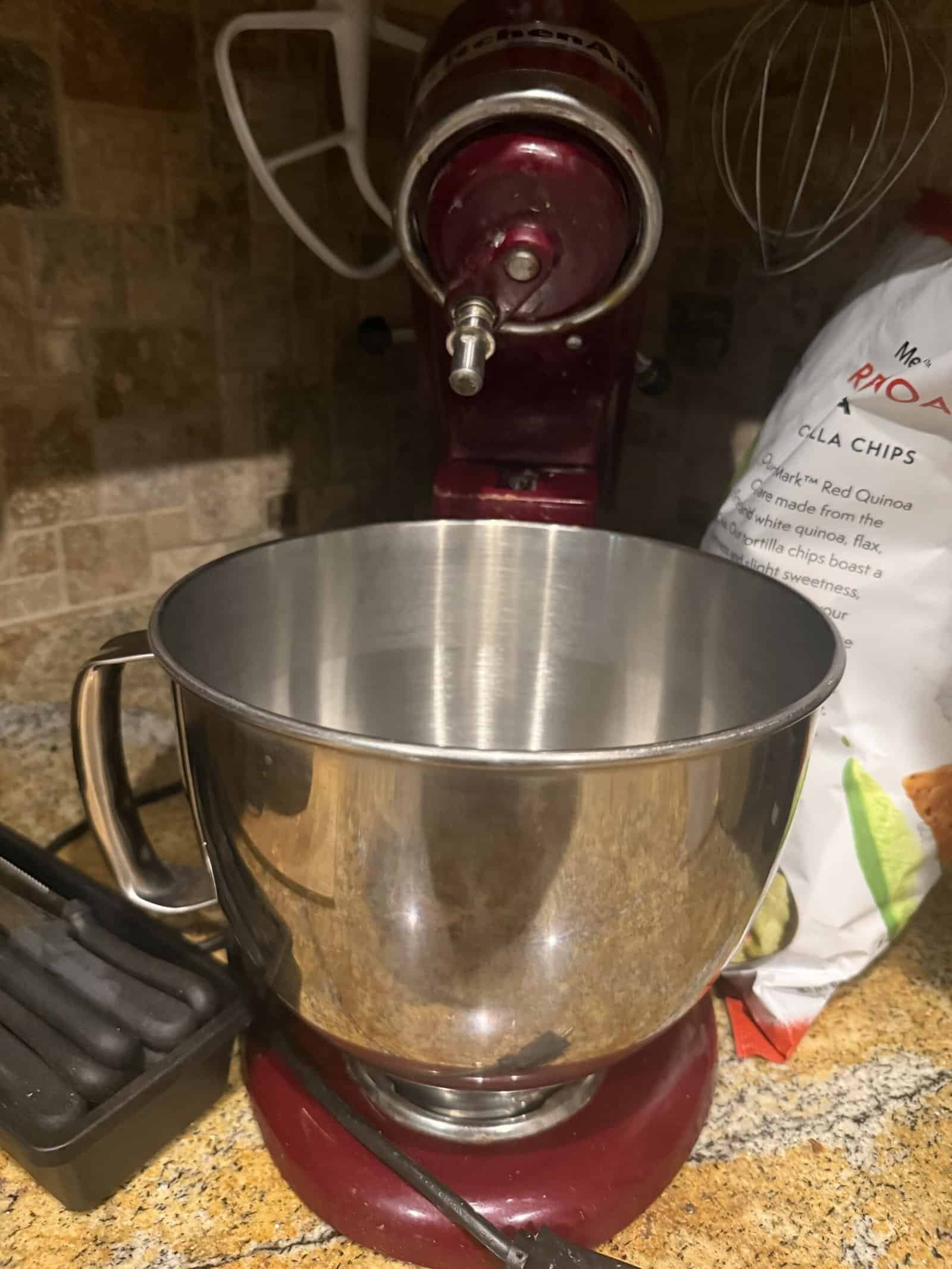
On the counter if you use it weekly, in a low cupboard if you do not. The deciding factor is weight rather than space, because a machine you have to lift in and out is a machine you use less than you meant to.
Mine lives on the counter. It is a heavier model and genuinely hard to maneuver, and moving it in and out of a cupboard is not something I would do casually, so the counter decision made itself.
Quick Answer
Weekly use belongs on the counter. Monthly use suits a low cupboard within easy reach. Occasional use can go higher or further away. Never store a heavy mixer above shoulder height, since lifting weight down from above your head is where injuries happen.
Matching Storage to Use
| How often you use it | Where it belongs |
|---|---|
| Weekly or more | Counter, permanently |
| Every few weeks | Low cupboard, front |
| Monthly | Low cupboard or appliance garage |
| A few times a year | Pantry or utility space |
| Rarely | Consider whether you need it |
The pattern people fall into is buying a heavy mixer, storing it away in a cupboard to protect counter space, and then quietly using it less because retrieving it has become a task.
That is worth naming because it is predictable and it wastes the purchase. Storage location changes behavior more than most people expect.
Retrieval Friction Is the Real Constraint
An appliance you have to bend down for, slide out, lift onto a counter, and reverse afterward has a cost attached to every use.
For light appliances that cost is trivial. For a mixer weighing twenty or thirty pounds it is enough to change what you decide to make.
The honest test is whether you would get it out for a small job. If retrieving it means you only ever use it for things that feel worth the effort, then it is stored in the wrong place.
This is the same principle that decides whether any appliance earns its place, covered in countertop appliances worth the space.
Why Mine Stays Out
It is heavy enough that moving it is a deliberate two-handed operation rather than something I do without thinking.
That weight is useful when the machine is working, since it is what keeps it stable under dough. It is purely a cost when the machine is not working.
Leaving it on the counter means it gets used for smaller jobs than it otherwise would, and it also means giving up a permanent share of the counter to one appliance.
That trade has been worth it for me because I use the machine regularly. Someone baking only occasionally would be making a considerably worse deal, covered in whether a heavier stand mixer is worth it.
The other consequence is that it needs covering or wiping down more often, since anything left out on a counter collects airborne kitchen grease and dust over time.
Counter Storage Done Properly
Check the height under cabinets
A tilt-head model needs clearance above to open. Measure with the head tilted back rather than closed, since that is the number that matters.
Keep it away from the hob
Grease travels further than people expect, and a mixer near a cooking surface accumulates a film that is difficult to remove.
Cover it
A fabric or fitted cover keeps dust and airborne grease off, and it is far easier than cleaning the machine repeatedly.
Give the cord somewhere to go
A cord draped across a counter gets caught. Some models have cord storage, and a simple tie handles the rest.
Cupboard Storage Done Properly
Low cupboards only, for anything heavy. Lifting a mixer down from above shoulder height is the storage decision most likely to hurt someone.
A pull-out shelf or a heavy-duty appliance lift changes this completely, since it brings the machine out to you rather than requiring you to reach into a cupboard and haul it.
Store it at the front rather than behind other things, because anything that requires you to unpack half a cupboard first is effectively in long-term storage.
Keep attachments with the machine rather than in a drawer elsewhere, since hunting for a dough hook adds friction to an already awkward retrieval, covered in storing small kitchen appliances.
Where the Attachments Go
The machine gets all the attention and the attachments cause more daily irritation, because they are small, awkwardly shaped, and there are more of them than you remember buying.
Keeping them with the machine is the principle. A beater in one drawer and a dough hook in another means every use starts with a search.
A shallow basket or bin beside the mixer works on a counter, and it keeps the shapes contained rather than letting them roll around a drawer.
Inside the bowl is the obvious answer for cupboard storage and it has a cost, since the assembly becomes wider and heavier to lift as one piece.
Hooks on the inside of a cabinet door suit whisks and beaters, and they use space nothing else wants. Heavy attachments need a proper fixing rather than adhesive.
Drawer space is the constraint in most kitchens, and attachments are exactly the sort of odd-shaped item that consumes a drawer badly. Somewhere vertical usually beats somewhere flat, covered in kitchen drawer organizers.
Small Kitchen Options
An appliance garage keeps a mixer on the counter behind a door, which combines counter accessibility with a tidier look.
A rolling cart gives the machine a permanent home that is not the main counter, and it can move to where you are working.
A dedicated shelf at counter height in a pantry works well, since sliding a heavy machine sideways onto a worktop is far easier than lifting it up or down.
Where none of that is available, the honest question is whether a hand mixer covers what you actually make, covered in stand mixer against hand mixer.
Practical Cautions
Move it with two hands under the base rather than by the head, since the head pivots on a tilt-head model and taking the weight through it strains the hinge.
Clear the counter and the path before lifting. Most drops happen while adjusting grip mid-carry rather than at the moment of picking it up.
Do not store it with the bowl locked in place if the cupboard is tight, since the assembly is wider and more awkward than the machine alone.
And keep it away from the sink. It cannot get wet, and a machine stored where water splashes is a machine at risk, covered in how to clean a stand mixer.
Related Reading
- storing small appliances
- appliances worth the space
- cleaning a stand mixer
- choosing a stand mixer
- stand against hand mixer
- organizing a small kitchen
Frequently Asked Questions
Where should you store a stand mixer?
On the counter for weekly use, in a low cupboard for occasional use. Weight decides it more than space does, since a machine that is hard to retrieve gets used less.
Should a stand mixer stay on the counter?
If you use it weekly, yes. The counter space is a real cost and it is usually smaller than the cost of not using an appliance you paid for.
Can I store it in a high cupboard?
Not a heavy one. Lifting twenty or thirty pounds down from above shoulder height is where storage injuries happen, and low cupboards avoid it entirely.
How much clearance does it need under cabinets?
Measure with the head tilted fully back rather than closed, since a tilt-head model needs the open height rather than the closed one.
How should I lift it?
Two hands under the base, not by the head. On a tilt-head model the head pivots, and taking the full weight through it strains the hinge.
What works in a small kitchen?
An appliance garage, a rolling cart, or a pantry shelf at counter height so you can slide it rather than lift it.
Where should the attachments live?
With the machine rather than in a drawer elsewhere. A basket beside it on a counter, or hooks inside a cabinet door, beats letting odd shapes take up drawer space.
Should I cover it if it stays out?
Worth doing. A machine left on the counter collects airborne grease and dust, and a cover is far easier than repeated cleaning.
Recommended Reading
See our note on setting up a home baking station.
