
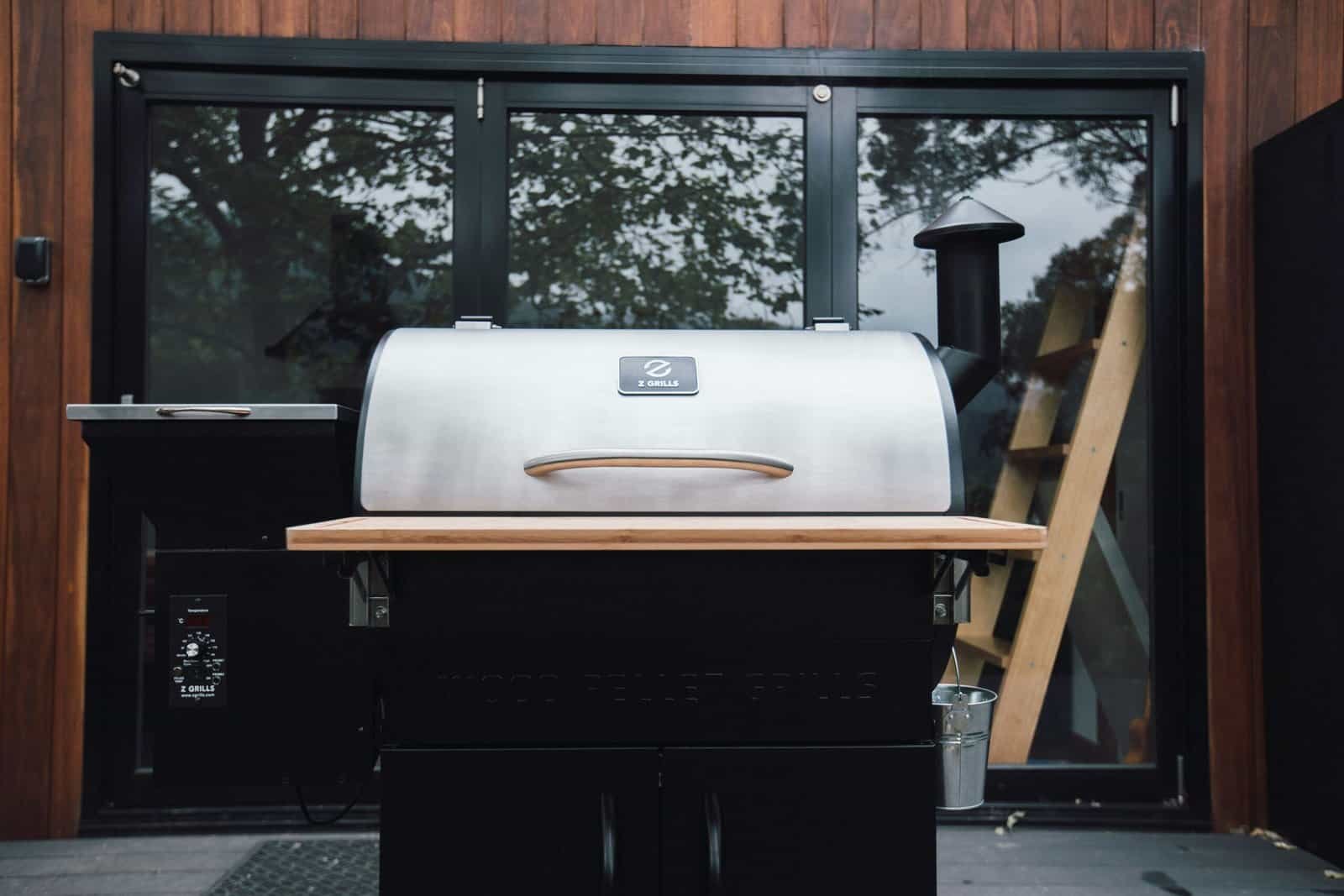
A pellet grill runs an auger and a fan under thermostat control, which is why it holds a set temperature for twelve hours without anyone touching it. Pellet grills differ mainly in how tightly they hold that number, and a swing of twenty five degrees either side is the difference between predictable brisket and a long night of guessing. Anyone weighing this against live fire should read our guide on controlling temperature on a charcoal smoker for the contrast.
This guide covers what the temperature range really means, how hopper size maps to cook length, and where pellet grills fall short.
Quick Verdict
A mid-size grill with a twenty pound hopper and a PID controller suits most households, because it holds temperature closely and runs an overnight cook without a refill. Add direct flame searing if steaks matter. A vertical pellet smoker gives far more rack space for the same footprint.
Key Takeaways
- PID controllers hold within a few degrees; older three-position controllers swing much wider
- A twenty pound hopper covers roughly twenty hours of low smoking, and far less at high heat
- Smoke flavor is lightest at high temperatures, because the fire burns cleaner
- Most pellet grills top out around 500F, which is below a proper steak sear
- Pellets absorb moisture readily, and damp pellets jam augers and stall fires
- Every pellet grill needs mains power, so remote sites need a generator or battery station
How We Picked
Temperature stability came first. The entire argument for a pellet grill is that it holds a number, so controller quality outranked every other feature. PID control ranked above simple on-off cycling everywhere.
Capacity came second, measured in usable rack area rather than advertised square inches. Grills that count a warming rack toward the headline figure ranked lower, because that space cannot take a brisket.
Hopper size and burn rate came third. A hopper that empties overnight turns a long cook into a set alarm, and that is the most common complaint in the category.
Build quality came fourth. Thin steel loses heat in cold weather and cycles the auger harder to compensate, which burns more pellets and swings the temperature further.
1. The Mid-Size Family Pellet Grill
Why It Stands Out
Roughly five hundred to seven hundred square inches of cooking area handles two pork butts or a brisket with room to spare. Hoppers at this size usually hold eighteen to twenty pounds, which covers an overnight cook. For most households this tier is simply the right answer.
Worth Knowing
Advertised area frequently includes an upper warming rack that cannot hold anything tall. Check the main grate dimensions separately. Assembly typically takes two people and an hour, and the legs are the fiddly part.
Right for weekend cooking, holiday birds, and anyone starting out. Skip it if you regularly cook for large groups.
2. The Compact Portable Pellet Grill
Why It Stands Out
Folding legs and a weight under about seventy pounds make these workable for tailgating, camping, and small balconies. They run the same auger and controller design in a smaller body, so temperature control does not disappear with the size. Hoppers around eight pounds still cover several hours.
Worth Knowing
Small chambers lose heat quickly in wind and cold, and the controller compensates by burning more pellets. Cooking area is genuinely limited, usually one rack of ribs rather than two. They still need an outlet, so a portable power station is part of the kit.
Right for travel, small patios, and cooking for two or three. Skip it as the only grill for a family.
3. The Large-Capacity Pellet Grill
Why It Stands Out
Nine hundred square inches and up takes several briskets, a dozen racks of ribs, or a full holiday spread at once. Larger hoppers, often thirty pounds or more, remove overnight refills entirely. Heavier gauge steel also holds temperature better when the lid opens.
Worth Knowing
Big chambers take longer to come up to temperature and burn more pellets at idle. They are heavy enough that moving one across a lawn is a two-person job even with wheels. Storage space and a cover become real considerations.
Right for entertaining, competition practice, and batch cooking. Skip it if most cooks are for two people.
4. The Searing Pellet Grill With Direct Flame
Why It Stands Out
A sliding plate opens the firepot so flame reaches the grate directly, pushing surface temperature far past the usual ceiling. That fixes the single biggest weakness of the format. You get low smoking and a real sear from one machine.
Worth Knowing
The searing zone is small, usually a strip over the firepot rather than the whole grate. Flare-ups happen with fatty cuts, since fat now drips onto open flame. Our roundup of cast iron skillets covers the alternative route to a hard crust.
Right for anyone who wants steaks and smoke without two appliances. Skip it if you already own a dedicated searing surface.
5. The WiFi-Connected Pellet Grill
Why It Stands Out
App control lets you change temperature, watch probe readings, and get an alert when the meat hits target, all without standing at the grill. On a twelve hour cook that is worth more than it sounds. Many models also log the whole cook so you can repeat a good result.
Worth Knowing
Connectivity depends on your network reaching the patio, and a weak signal produces dropouts at the worst moments. App quality varies enormously and cannot be assessed from a product page. Our roundup of outdoor smart outlets covers powering the grill reliably. Our fire pit guide covers the non-cooking half of the same patio.
Right for long cooks and anyone who dislikes hovering. Skip it where the patio has no usable signal.
6. The Vertical Pellet Smoker
Why It Stands Out
A cabinet shape stacks four or five racks into the footprint of a small grill, which multiplies capacity without taking more patio. Vertical airflow also suits hanging sausages and ribs. For pure smoking volume this is the efficient shape.
Worth Knowing
Vertical smokers rarely sear at all, since the heat source sits well below the food. Racks nearest the bottom run hotter, so rotating during a cook matters. Our guide on how long it takes to smoke chicken covers timing across rack positions.
Right for high volume smoking in a small footprint. Skip it if you want one machine for grilling too.
Pellet Grills at a Glance
| Type | Typical cook area | Hopper | Sears? |
|---|---|---|---|
| Mid-size family | 500 to 700 sq in | 18 to 20 lb | Limited |
| Compact portable | 200 to 300 sq in | About 8 lb | No |
| Large capacity | 900 sq in and up | 30 lb or more | Limited |
| Direct flame searing | 500 to 800 sq in | 20 lb | Yes, small zone |
| WiFi connected | Varies by model | Varies | Varies |
| Vertical smoker | 4 to 5 racks | 20 lb or more | No |
What to Look For in a Pellet Grill
What kind of controller does it use?
PID controllers read the chamber constantly and adjust auger speed to hold within a few degrees. Simpler controllers cycle on and off in fixed intervals, which produces swings of twenty five degrees or more. This single specification changes results more than anything else.
How long does the hopper last at your usual temperature?
Pellet burn roughly doubles between low smoking and high heat. A twenty pound hopper covers about twenty hours at 225F and a small fraction of that at 450F. Match hopper size to the cooks you actually do.
What is the real cooking area?
Headline square inches often include a warming rack sitting a few inches under the lid. Ask for main grate dimensions in inches. A brisket needs about eighteen inches of clear length, and plenty of grills advertise capacity they cannot deliver.
How is it built?
Heavier gauge steel and a well-sealed lid hold temperature through wind and cold, which reduces pellet use and controller hunting. Thin bodies cost less and cost more to run. Check for a grease management path that you can actually clean.
Pellet Grill vs Charcoal
Where a pellet grill wins
Unattended consistency. Set a number, and it holds through the night without adjusting vents or adding fuel. That makes overnight cooks realistic on a work night, and it removes most of the skill barrier for beginners.
Where charcoal wins
Heat and flavor intensity. Charcoal reaches searing temperatures a pellet grill cannot, and the smoke profile is heavier. Our guide on whether a kamado grill is worth it covers the ceramic route, and our guide on how long a kamado grill lasts covers the longevity side.
What Trips People Up
Expecting heavy smoke at high heat
Pellet fires burn cleanest when hot, so smoke flavor is lightest above about 300F. Long low cooks are where the flavor develops. Turning the dial up to finish faster costs you the reason you bought the grill.
Storing pellets badly
Pellets swell and crumble when they absorb moisture, then jam the auger or stall the fire. Keep them sealed in a dry container rather than in the hopper between cooks. This is the single most common cause of a grill that will not start.
Skipping the burn-off and ash cleanout
Ash accumulates in the firepot and eventually smothers ignition. A quick vacuum every few cooks prevents most failed starts. Grease also pools in the drip path and becomes a fire risk if ignored, and our roundup of grill mats covers protecting the surface underneath.
Cooking to time instead of temperature
Large cuts finish on internal temperature, and identical briskets can differ by hours. A reliable probe removes the guesswork entirely, and our roundup of meat thermometers covers the options.
Recommended Reading
- indoor grills for weather that rules out the patio
- grill pans for stovetop marks and sear
- tenderizing tools for tougher cuts
- cast iron griddles for flat top cooking
Frequently Asked Questions
Are pellet grills worth it?
For low and slow cooking, yes, because they hold a set temperature for hours without attention. That turns overnight briskets and long pork shoulders into a realistic weeknight plan. For searing steaks they are the weakest option in the category unless the model has a direct flame mode.
How long does a bag of pellets last?
Roughly one to three pounds per hour depending on temperature, weather, and how well the grill is sealed. A twenty pound bag typically covers about twenty hours of smoking at 225F, and far less at high heat. Cold and wind both increase consumption noticeably.
Can a pellet grill sear a steak?
Most cap out near 500F, which browns a steak but falls short of a hard crust. Models with a sliding plate that exposes direct flame do much better in a small zone over the firepot. A cast iron pan on the grate is the usual workaround.
Do pellet grills need electricity?
Yes, always. The auger, fan, and igniter all run on mains power, so a pellet grill will not work at a remote site without a generator or a portable power station. A power cut mid-cook stops the fire entirely.
What temperature swing is acceptable?
A PID controller should hold within roughly five to fifteen degrees of the setpoint once stable. Older on-off controllers commonly swing twenty five degrees or more. For most barbecue that wider swing still works, but it makes repeatable results harder.
Do pellet flavors actually matter?
They make a modest difference, smaller than the difference between low and high temperature cooking. Hickory and mesquite read stronger, fruit woods lighter. Blends are common and perfectly reasonable, and hardwood content matters more than the species on the bag.
How often do pellet grills need cleaning?
Vacuum ash from the firepot every few cooks, and clear the grease path before it pools. A deeper clean of the drip tray and chamber every twenty hours of cooking keeps ignition reliable. Neglected ash is the leading cause of failed starts.
Can you use a pellet grill in winter?
Yes, though pellet consumption rises and the grill takes longer to stabilize. Thicker steel and an insulated blanket both help considerably. Keep the pellets indoors until the moment you load them, since cold air carries moisture into the hopper.
