
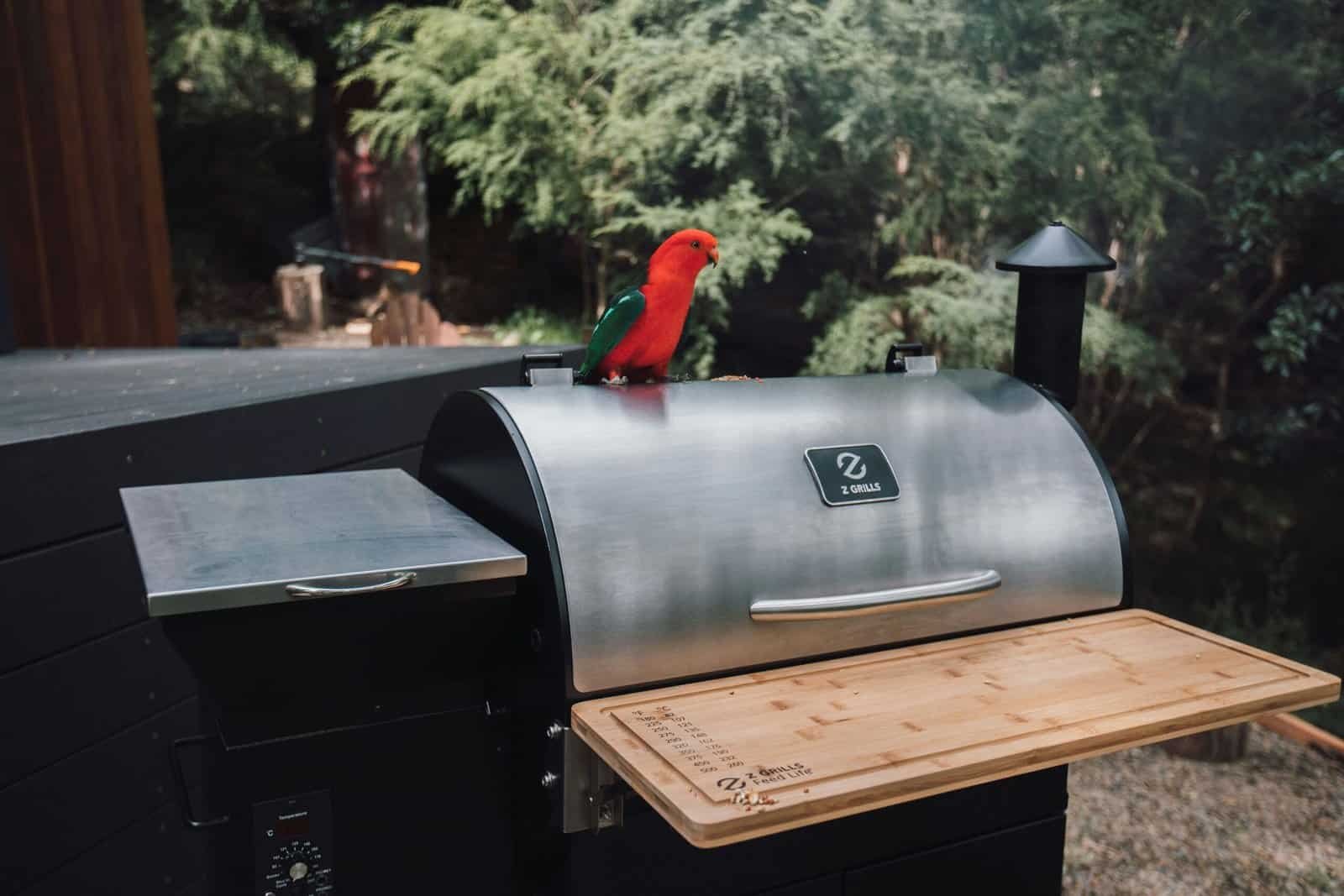
An electric smoker holds a set temperature on its own, which is the entire reason people buy one instead of a charcoal pit. The best electric smokers split into six types, and the choice comes down to how much control you want against how much smoke flavor you are willing to trade away. Electric units run clean and steady, and they produce a milder result than live fire does.
That trade is the honest starting point. Charcoal and wood give you a deeper smoke character, while an element and a thermostat give you a long cook you can walk away from.
Timing questions come up immediately with any smoker. Our guide to how long it takes to smoke chicken covers the planning side, and the same logic applies across cuts.
Quick Verdict
Cabinet-style electric smokers are the default and the easiest to live with. Digital controllers with probes suit anyone who wants to cook by internal temperature rather than by clock. Analog dials cost less and demand more attention, compact units suit small spaces, glass doors help beginners learn, and a smoke tube adds character to any of them.
Key Takeaways
- Electric smokers trade smoke intensity for temperature stability, and that is the central decision.
- Cabinet designs give the most usable rack space for the footprint they occupy.
- A digital controller with a meat probe lets you cook to doneness instead of to a timer.
- Analog dials drift, so they need a separate thermometer to be trustworthy.
- Wood chips burn out and need topping up, which is the one chore electric units do not remove.
- A smoke tube is the cheapest way to add flavor to an electric cook, and it works in grills too.
How We Picked
We compared smoker types rather than individual units, because model lineups turn over while the underlying designs stay stable. Each section covers one type and the cook it suits.
We ranked types on four things: how steadily they hold a set temperature, how much attention they need during a long cook, how much smoke flavor they actually deliver, and how easy they are to clean afterward.
We excluded anything sold on smoke-ring claims alone, and we have not stated cook times or temperature accuracy figures, since both depend on the unit, the weather, and the cut.
1. Cabinet-Style Electric Smokers
Why It Stands Out
A vertical cabinet stacks several racks above a single heating element and a chip tray. That layout gives you real capacity without a wide footprint, which matters on a patio or a balcony.
Heat rises through the racks, so the top shelf runs warmer than the bottom. Experienced users treat that as a feature and place cuts accordingly.
Worth Knowing
Door seals decide how well a cabinet holds heat. A gasket that has gone hard leaks, and the element then runs constantly to compensate.
Grease collects at the bottom and needs emptying after every cook. Skip it and the next session smells wrong, the same way a grill mat stops that problem spreading to the deck.
Best for: Most people, and anyone smoking for more than two. Skip it if you only ever cook one small cut at a time.
2. Digital Controller Smokers with Meat Probes
Why It Stands Out
A digital unit lets you set a chamber temperature and a target internal temperature, then holds both without input. The probe is what turns a smoker into something you can genuinely ignore.
Cooking to internal temperature also produces better results than cooking to a clock. Meat finishes when it finishes, and a clock does not know that.
Worth Knowing
Controllers and probes are the parts that fail. Check whether replacement probes are sold separately before buying, because a dead probe should not retire the smoker.
Resting still matters regardless of how precise the finish was, and our piece on why meat needs to rest covers what happens in those minutes.
Best for: Long overnight cooks and anyone who wants to cook by doneness. Skip it if you would rather not depend on electronics.
3. Analog Dial Electric Smokers
Why It Stands Out
An analog smoker has a dial, an element, and very little else. Fewer parts means fewer failure points, and the price reflects that simplicity.
For anyone who wants to find out whether smoking is a hobby they will keep, this is the cheap way in.
Worth Knowing
The dial marks are a rough guide rather than a reading. Pair one with a separate thermometer, the same principle behind keeping a decent meat thermometer in the drawer.
Ambient temperature moves an analog unit more than a digital one. Cold and wind both push a cook longer than expected.
Best for: First smokers, occasional use, and anyone who dislikes menus. Skip it if you want to start a cook and go to bed.
4. Compact and Portable Electric Smokers
Why It Stands Out
Small electric smokers fit a balcony, a small patio, or the back of a car. Because they run on an outlet rather than fuel, they suit places where open flame is not allowed.
They also heat up faster than a full cabinet, which makes a weekday cook realistic.
Worth Knowing
Capacity is the obvious limit, and a small chamber loses heat quickly every time the door opens. Plan the cook so you open it as little as possible.
Outlet placement becomes the constraint outdoors, which is where an outdoor-rated outlet earns its place.
Best for: Apartments, balconies, and camping trips with power. Skip it if you cook for a crowd.
5. Electric Smokers with Glass Doors
Why It Stands Out
A window lets you watch color develop without opening the door and dumping heat. For someone still learning what bark should look like, that feedback is worth a lot.
Glass also makes it obvious when smoke has stopped, which is the cue to top up the chips.
Worth Knowing
The glass hazes over with grease and needs cleaning, and it will not stay clear on its own. Most people wipe it while the chamber is still warm.
Windows add a heat-loss path as well, so these units can struggle more in cold weather than a solid-door cabinet.
Best for: Beginners, and anyone who likes watching the cook. Skip it if you smoke through winter in a cold climate.
6. Smoke Tubes and Pellet Smoke Generators
Why It Stands Out
A perforated tube filled with pellets smolders for hours and adds smoke to whatever it sits inside. It fixes the main complaint about electric cooking for very little money.
It also works in a gas grill, a pellet grill, or a kettle, so it is not a single-purpose purchase.
Worth Knowing
A tube needs lighting and a few minutes to establish, then the flame gets blown out so it smolders. Getting that right takes a couple of attempts.
It adds smoke, not heat, so it changes flavor rather than cook time. Anyone comparing it against a dedicated wood unit should read our take on whether a kamado grill is worth it.
Best for: Adding smoke character to an electric or gas cook. Skip it if your unit already produces plenty of smoke.
Electric Smokers at a Glance
| Type | Attention needed | Smoke intensity | Best situation |
|---|---|---|---|
| Cabinet-style | Chip top-ups only | Moderate | General use, bigger loads |
| Digital with probe | Lowest | Moderate | Overnight and unattended cooks |
| Analog dial | Highest | Moderate | Low budget, occasional use |
| Compact and portable | Frequent, small chamber | Moderate | Balconies and travel |
| Glass door | Low, plus cleaning | Moderate | Learning the process |
| Smoke tube | One setup per cook | High | Boosting any other unit |
What to Look For in an Electric Smoker
How much rack space do you actually need?
Count the cuts you cook most often rather than the largest cook you can imagine. Racks you never fill still cost money and still take up patio space.
Rack spacing matters as much as rack count. Tall cuts and whole birds need clearance a spec sheet rarely mentions.
Can you reload chips without opening the door?
A side-loading chip drawer is the single feature that most changes how a cook goes. Opening the main door to add chips dumps heat and stretches the cook.
Chip capacity decides how often you visit the smoker. Larger trays mean longer gaps between top-ups.
Where will it live and plug in?
Electric smokers want a covered outdoor spot with a nearby outlet. A long extension cord on a high-draw appliance is not the answer.
Weather protection matters too, since controllers and elements dislike rain. A cover or a sheltered corner extends the life of the unit.
How does it come apart for cleaning?
Removable racks, a slide-out grease pan, and a chip tray you can reach are what make cleanup tolerable. Fixed internals turn every cook into a chore.
Dishwasher-safe racks help considerably, and our guide to putting grill plates in the dishwasher covers what survives that treatment.
What wood will you feed it?
Chips suit most electric smokers, since chunks need more heat than an element delivers to keep smoldering. Pellets work in a tube rather than the tray.
Wood type changes the result more than price does. Fruit woods stay mild, hickory and mesquite go strong, and beginners usually overshoot on the strong ones.
Buy small bags of two or three kinds rather than a sack of one. Chips also absorb moisture in storage, and damp chips steam instead of smoking.
Does it hold low temperatures as well as high?
Cold smoking cheese, nuts, and salt needs a much lower chamber temperature than meat does. Many electric units cannot go low enough on their own.
A smoke generator solves that, since it makes smoke without adding meaningful heat. That combination opens up a whole second set of uses.
Check the bottom of the temperature range before assuming it. Marketing tends to lead on the top end.
Electric vs Charcoal for Long Cooks
Where electric wins
Electric holds a set temperature for hours without tending, which makes overnight briskets and weekday cooks realistic. There is no fire to manage and no ash to clear.
It also runs where charcoal cannot, including balconies and rentals with no-flame rules.
Where charcoal wins
Live fire produces a stronger smoke character and the color people associate with barbecue. Higher peak temperatures also give you searing that an element cannot reach.
Charcoal asks for attention in exchange, which is exactly what an electric buyer is trying to avoid. Anyone weighing a middle path can read our comparison of pellet grills.
Common Electric Smoker Misconceptions
“Electric smokers are set and forget”
Temperature is automatic, and smoke is not. Chips burn out and need replacing several times across a long cook.
“More chips means more smoke”
Overfilling the tray smothers the chips and produces bitter smoke instead of more of it. Small loads, added regularly, work better.
“A smoke ring means it worked”
The ring comes from a chemical reaction that electric elements produce less of, and it has little to do with flavor. Judge the cook by taste and texture instead.
“It only handles meat”
Cheese, nuts, salt, and vegetables all smoke well, and the low steady heat suits them better than a fire does. Cold-smoking cheese is a common first experiment.
Related Reading
- Controlling temperature on a charcoal smoker shows what electric units automate for you.
- How long a kamado grill lasts covers durability across outdoor cookers.
- Insulated tumblers cover the other half of standing around a long cook.
Frequently Asked Questions
What are the best electric smokers?
Cabinet-style electric smokers suit most people, because they combine usable rack space with a small footprint and steady temperature. Digital models with a meat probe are the better choice for overnight cooks, while analog dials are the low-cost way to find out whether you enjoy smoking at all.
Do electric smokers produce real smoke flavor?
Yes, though milder than charcoal or wood. The element heats chips in a tray until they smolder, which produces genuine smoke with less intensity than live fire. A smoke tube closes most of that gap for very little money.
How often do you add wood chips?
Chips need replacing several times across a long cook, since a tray load smolders out well before the meat finishes. Side-loading drawers exist specifically so you can do that without opening the main door and losing heat.
Can you use an electric smoker in the rain?
Keep it under cover rather than in open weather. The element and controller are the vulnerable parts, and rain shortens their life. A sheltered spot with a nearby outdoor-rated outlet is the setup to aim for.
Do electric smokers need seasoning before first use?
Most makers recommend running the empty smoker hot with a small load of chips before the first cook. That burns off manufacturing residue and starts the interior coating that builds over time.
Why is my electric smoker not getting hot enough?
Cold weather, a leaking door gasket, and an undersized extension cord are the three usual causes. Check the gasket first, since it is the cheapest of the three to fix and the easiest to overlook.
Can you smoke without the smoke ring?
Yes, and most electric cooks come out that way. The ring is a visual marker rather than a flavor one, so a pale edge on an electric brisket says nothing about how it tastes.
Is a smoke tube worth buying alongside a smoker?
For anyone who finds electric smoke too mild, it is the cheapest fix available. It also transfers to a gas grill or a kettle, so it keeps earning its place if you change cookers later.
