
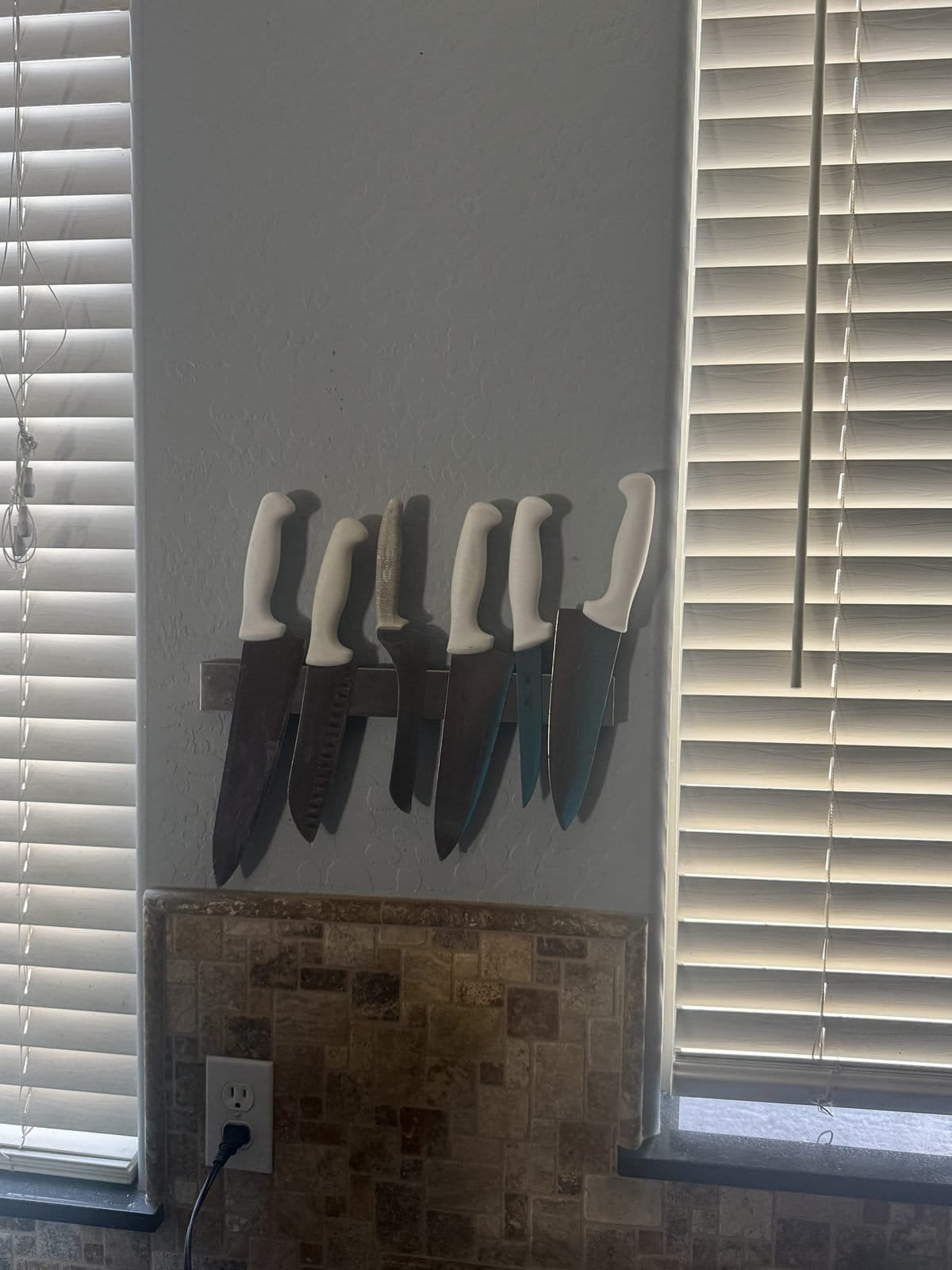
Knives loose in a drawer is how good blades go dull and fingers find trouble, the edges banging against each other and against everything else every time it opens. Proper knife storage fixes both problems at once: it protects the edge, keeps the blade away from groping hands, and puts the right knife where you can grab it fast. The best knife storage ranges from countertop blocks to wall-mounted magnetic strips to in-drawer organizers, and the right one depends on your space and your knives. Five of the solutions below are research-based, and the fifth is the wall-mount magnetic strip I have used in my own kitchen for years.
Quick Verdict
For flexibility, a universal block like the Kapoosh fits any knife. For saving counter space and instant access, a wall-mount magnetic strip like the one I use is hard to beat, and for hiding knives from small kids, an in-drawer organizer like the Kuhn Rikon wins.
Why Trust This Guide
I store my own kitchen knives on a wall-mounted magnetic strip and have for years, so I can speak firsthand to how that method holds up and how it feels to use daily. The other five solutions are research-based, chosen for blade protection, access, capacity, and space, with sources cited. I keep my own experience and the researched picks clearly separate.
Key Takeaways
- Any proper storage beats a loose drawer, which dulls edges and risks cut fingers.
- Blocks suit counters; magnetic strips save space; in-drawer hides knives from kids.
- Magnetic and bristle designs fit any knife size, unlike fixed slots.
- Wall strips need drilling, so they suit owners more than renters.
- Whatever you choose, dry knives fully before storing to protect the edge.
Disclosure: SmartLifeItems is reader-supported. As an Amazon Associate, we earn from qualifying purchases made through links on this page, at no extra cost to you.
How We Picked the Best Knife Storage
We weighed blade protection, ease of access, capacity, space use, and hygiene across the main storage types. The first job of any knife storage is protecting the edge and keeping blades from contacting each other, so that led the ranking. We covered universal blocks, traditional wood blocks, in-drawer organizers, wall strips, and edge guards, since each suits a different kitchen. Five solutions are research-based; the wall strip is the one I use. Pair good storage with regular sharpening from our knife sharpeners guide to keep edges in shape.
1. Kapoosh Universal Knife Block: Best Flexible
The Kapoosh-style universal block uses flexible plastic rods that part to accept any knife size, so it does not lock you into specific slot dimensions. It fits everything from paring knives to bread knives and looks reasonably presentable on a counter.
Why It Stands Out
The flexible rods accept any blade and pull out for washing, which solves the hygiene problem that plagues fixed-slot blocks. For mixed-brand collections that will not fit standard slots, it is the answer. Larger versions hold a full set plus shears and a steel.
Worth Knowing
The look is functional rather than premium, and the rods need occasional cleaning to stay hygienic. It takes up counter space like any block.
Get the Kapoosh if your knives are mismatched and will not fit slotted blocks. Skip it if you want a refined wood-block look or to save counter space.
2. Schmidt Brothers Acacia Block: Best Traditional Wood Block
The Schmidt Brothers block is for buyers who want a traditional wood block with a refined design. Acacia construction and magnetic side panels that hold knives by the blade, plus interior slots, give a dual-storage approach within a classic look.
Why It Stands Out
The hybrid of slots plus magnetic side panels solves the slot-versus-magnetic question by including both, and the acacia looks like a counter design element. For a block that doubles as decor, it is the pick. It holds a generous full kitchen lineup.
Worth Knowing
Premium pricing matches the build, and it takes real counter space. The magnetic panels need an occasional wipe to stay clean.
Choose the Schmidt Brothers if the block is a design element, not just storage. Skip it if you want budget storage or to free up the counter.
3. Wusthof 17-Slot Magnetic Block: Best Premium Block
The Wusthof magnetic block is a traditional countertop block with magnets embedded in the slots to hold knives more securely. The slots take a full lineup including shears and a sharpening steel, and the brand pedigree shows in the build.
Why It Stands Out
The magnetic reinforcement matters more than it seems, since standard-slot knives shift and bang during a drawer-pull while magnetically held blades stay put. For a complete, quality branded setup, it leads. The build and finishing justify the price.
Worth Knowing
It is a premium-priced block that takes up counter space, and the slot count suits larger collections. Beech construction matches most kitchens.
Get the Wusthof for a complete, premium block that holds knives securely. Skip it if you want to save counter space or money.
4. Kuhn Rikon Drawer Knife Organizer: Best In-Drawer
An in-drawer organizer stores knives out of sight, individually held so blades do not touch. The Kuhn Rikon design uses a wood frame with elastic bands that grip blades by the spine, fitting different sizes in one organizer.
Why It Stands Out
It frees the counter and keeps knives hidden from curious kids, while the elastic grip protects each edge. For small kitchens with contested counter space, it is the smart choice. It fits a standard drawer and holds a full working set.
Worth Knowing
The downside is the extra step of opening a drawer, and it uses a drawer you might want for other things. Knives stay out of sight rather than on display.
Choose the Kuhn Rikon if counter space is tight or you have young children. Skip it if you want knives visible and instantly grabbable.
5. Wall-Mount Magnetic Knife Strip: What I Use
This is how I store my own knives, a stainless steel magnetic strip mounted on the wall, and it is the method professional kitchens lean on: blades held by strong magnets, fully visible, and instantly within reach. Among named options, the Coninx 16-inch strip is a well-reviewed one with neodymium magnets strong enough for heavy knives.
Why It Is My Pick
Mine has lasted years, kept the knives safe and in good shape, and made them easy to grab, and I have never once had trouble getting the knife I want when I want it. That instant, see-everything access is the whole appeal, and it frees up the counter and drawers entirely. That is firsthand experience with the strip I use; the other solutions here are research-based.
Worth Knowing
A wall strip needs drilling to mount, so it suits owners more than renters, and you place knives blade-first with a little care. No brand is visible on mine, so I do not name it. Multiple strips can sit side by side for a larger collection.
Get a magnetic wall strip for space-saving, instantly accessible storage. Skip it if you cannot drill into the wall or prefer knives out of sight.
6. Knife Edge Guards: Best Budget Drawer-Safe Option
Edge guards, also called blade sheaths, slip over each knife’s edge so you can store knives safely in a drawer without a full organizer. For a few dollars, they protect both the edge and your fingers in an existing drawer.
Why It Stands Out
They are the cheapest way to make a drawer knife-safe, protecting edges from contact and hands from exposed blades, and they travel well for camping or a packed kitchen kit. For a budget fix, they work. Sets cover several knife sizes.
Worth Knowing
You add and remove a guard each time, which is an extra step, and loose knives still slide around the drawer. They protect blades but do not organize a collection like a frame.
Get edge guards for cheap, drawer-safe protection or travel. Skip them if you want true organization or instant access.
Knife Storage at a Glance
| Solution | Where It Lives | Standout | Best for |
|---|---|---|---|
| Kapoosh Universal Block | Counter | Fits any knife | Mismatched sets |
| Schmidt Brothers Acacia | Counter | Wood plus magnetic | Design element |
| Wusthof Magnetic Block | Counter | Secure slots | Premium full set |
| Kuhn Rikon Organizer | In drawer | Hidden, kid-safe | Tight counters |
| Magnetic wall strip (mine) | Wall | Instant access | Space-saving (what I use) |
| Edge guards | Any drawer | Cheap protection | Budget, travel |
How to Choose Knife Storage
Space
Counter blocks need free counter, wall strips need wall space and drilling, and in-drawer organizers or edge guards use a drawer. Pick the method that fits the space you can spare. In a small kitchen, a wall strip like mine frees both counter and drawer.
Access vs Concealment
Wall strips and blocks keep knives visible and instantly grabbable, while in-drawer organizers and guards keep them hidden, which matters with young kids. Decide whether speed or concealment matters more. Both can be safe when used correctly.
Fit for Your Knives
Magnetic and bristle designs accept any blade size, while fixed slots only fit certain knives, so match the storage to a mixed or matched set. A universal or magnetic option avoids the slot-fit problem. Measure your largest knife if buying a slotted block.
Protecting the Edge
Whatever you choose, it should keep blades from touching each other and from banging around, and you should dry knives fully before storing. A protected edge stays sharp longer between sharpenings. Good storage is the cheapest way to extend an edge.
Related Knife and Kitchen Guides
- how to store knives safely
- knife sharpeners
- How to Sharpen a Knife
- chef knives
- knife sets under 100
- how to organize your kitchen
- kitchen drawer organizers
- bread knives
- paring knives
Frequently Asked Questions
What is the best way to store kitchen knives?
The best method depends on your space: a universal block suits counters, an in-drawer organizer hides knives from kids, and a wall-mount magnetic strip, which is what I use, saves space and gives instant access. Any of these beats loose knives in a drawer. Match the method to your kitchen and knives.
Are magnetic knife strips good?
Yes, they are a professional-kitchen favorite, holding knives visibly and within instant reach while freeing counter and drawer space. Mine has worked well for years with easy access every time. They do need wall drilling and a little care placing blades, so they suit owners more than renters.
Do magnetic strips damage knives?
No, a quality magnetic strip holds knives by the flat of the blade without harming the edge, as long as you place and remove them with a little care rather than dragging the edge. Lay the spine or flat against the strip. The magnets themselves do not dull or damage the steel.
Is a knife block or magnetic strip better?
A block keeps knives on the counter and suits any kitchen, while a magnetic strip saves space and offers faster, see-everything access, which is why I use one. Blocks can harbor crumbs in fixed slots; strips stay open and easy to wipe. Choose based on space and whether you want instant access.
How do I store knives safely with kids around?
An in-drawer organizer with a drawer lock or a wall strip mounted out of a child’s reach both keep blades away from small hands. Avoid countertop blocks within a toddler’s grasp. The goal is keeping sharp edges inaccessible to children.
Can I store knives in a drawer safely?
Yes, with an in-drawer organizer that grips each blade or with edge guards over each knife, so blades do not touch or sit exposed. Loose knives in a bare drawer dull fast and risk cuts. A simple set of edge guards is the cheapest safe fix.
Do wall-mounted magnetic strips work for renters?
They can, but most need drilling to mount securely, which not all rentals allow, so check your lease first. Some lighter strips offer adhesive mounting, though it holds less weight. Renters who cannot drill may prefer a block or in-drawer organizer.
How do I keep stored knives sharp?
Store each knife so the edge does not contact other blades or hard surfaces, dry it fully first, and sharpen regularly regardless of storage. Good storage protects the edge between sharpenings rather than replacing them. Pair your storage with a sharpener and honing routine.
Related Reading
Explore more: shoe racks and storage, wine fridges home storage, and chef knife vs santoku. Also explore: stockpots, and refrigerator organizer bins.
Recommended Reading
See also our guides to shoe racks and storage, and wine fridges home storage.
- how to choose the right cookware
- carbon steel pans
- cast iron skillets
- a meat cleaver, a heavy blade worth storing safely.
- what makes knives rust
- wall-mounted magnetic strips
