
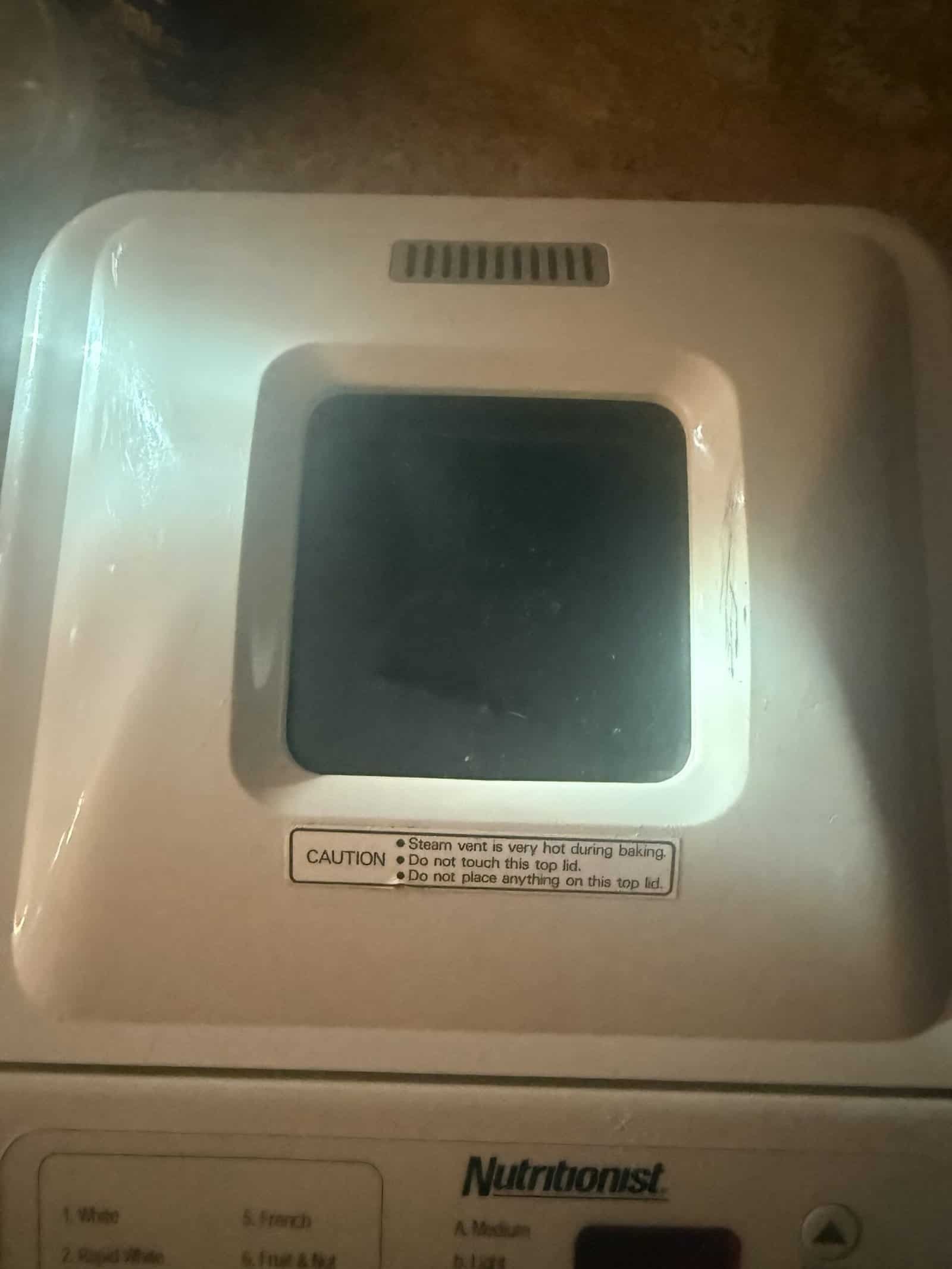
My first loaf came out dense, and the reason was that I had not used enough flour. My machine, a Nutritionist, has a viewing window in the top lid, and the dough would have looked visibly wrong through it during the knead: too wet, too slack, not pulling into a proper ball. I could have seen the problem. I just did not know yet what I was looking at.
That is the honest case for and against this feature in one story. The best bread machines with viewing windows let you check dough consistency without breaking the cycle, which is genuinely useful once you know what correct dough looks like and close to worthless before then. For the wider buying decision, see our guide to choosing a bread machine.
How We Picked These Bread Machines
Quick Verdict
A machine with a large, well-placed window is worth choosing if you plan to learn dough by sight rather than only by recipe. Pick a horizontal-loaf model for the clearest view of the whole dough ball, a compact model if storage is tight, and a dual-paddle machine if you bake larger loaves. Window size matters more than window presence.
We prioritized window size and placement, because a small port that shows one corner of the pan tells you very little. A window that reveals the dough ball as it forms is the version of this feature that actually does something. Our how we research, choose and make money is set out on the editorial page.
We then looked at whether the window fogs. Steam is the enemy of a viewing window, and machines that vent poorly end up with a lid you cannot see through for most of the cycle, which defeats the purpose entirely.
Cycle range and loaf format came third, since a window is only one input into the decision. Every pick here is a widely available line, and product descriptions stay in research-voice. First-person notes reflect my own machine only.
Horizontal-Loaf Machine With Large Lid Window
Why It Stands Out
Horizontal-loaf machines are wider than they are tall, which means the lid sits closer to the dough and a window in it shows more of the pan. You see the whole dough ball rather than a slice of it, which is what makes visual checking practical.
The wider format also produces the conventional sandwich-loaf shape most people expect.
Worth Knowing
Horizontal machines have a larger footprint, which matters if the machine has to live in a cabinet between bakes. It is the pick for the clearest view.
Best for people who want to learn dough by sight. Skip it if counter or storage space is tight.
Vertical-Loaf Machine With Window
Why It Stands Out
Vertical machines have a smaller footprint, which is the main practical advantage when the machine gets stored rather than left out. A window in the lid still lets you check the dough, just from further above.
This is the format my own machine uses, and the window is genuinely usable for checking dough consistency mid-knead.
Worth Knowing
The taller pan means you are looking down a deeper well, so the view is less complete than on a horizontal model. The tall loaf shape also differs from standard sandwich bread. Our guide to whether bread machines are worth it covers the storage tradeoff.
Best for kitchens where footprint matters. Skip it if you want the fullest possible view or a conventional loaf shape.
Beginner Machine With Simple Controls and a Window
Why It Stands Out
For someone learning, a window paired with a simple cycle list is the combination that actually teaches you something. You run a basic cycle, look at the dough partway through, and start building the association between what you see and how the loaf turns out.
Complexity works against that, because a machine with thirty programs invites fiddling with settings instead of watching the dough.
Worth Knowing
Simpler machines have fewer specialty cycles, so you may outgrow the program list before you outgrow the machine. Our guide to bread machines for beginners covers this in depth.
Best for first-time bakers. Skip it if you already know you want gluten-free or artisan programs.
Dual-Paddle Machine With Window
Why It Stands Out
Dual-paddle machines knead larger quantities more evenly, and watching that through a window is genuinely informative because uneven mixing is visible before it becomes a dense loaf. Two paddles pull the dough together faster.
For bigger loaves, this combination gives you both the capacity and the ability to check it.
Worth Knowing
Dual paddles mean two holes in the finished loaf rather than one, and two paddles to clean. It is the pick for larger batches.
Best for households baking bigger loaves. Skip it if you bake small and want less cleanup.
Compact Machine With Window for Small Kitchens
Why It Stands Out
A smaller machine that still has a window keeps the useful feature while cutting the footprint, which matters when the machine lives in a cabinet and comes out only to bake. Storage is a real constraint on how often a bread machine gets used.
Smaller machines are also lighter to move in and out of storage.
Worth Knowing
Compact machines make smaller loaves and often have shorter cycle lists. The window is proportionally smaller too. Our guide to bread makers under $100 covers the budget end.
Best for apartments and tight storage. Skip it if you need large loaves.
Programmable Machine With Window and Custom Cycles
Why It Stands Out
Programmable machines let you set your own knead, rise, and bake times, and a window is what makes that worth doing, since adjusting a custom cycle without being able to see the dough is guesswork. The two features complement each other directly.
This suits bakers who want to move past preset programs.
Worth Knowing
Custom programming has a learning curve and most people never use it. Our guide to bread machines for sourdough covers where custom cycles matter most.
Best for bakers who want control over the cycle. Skip it if presets cover what you make.
Bread Machines With Windows at a Glance
| Type | View quality | Footprint | Best for |
|---|---|---|---|
| Horizontal loaf | Best | Large | Learning dough by sight |
| Vertical loaf | Good | Smaller | Storage-limited kitchens |
| Beginner simple | Good | Varies | First-time bakers |
| Dual paddle | Good | Large | Bigger loaves |
| Compact | Adequate | Smallest | Apartments |
| Programmable | Good | Varies | Custom cycles |
What the Window Did and Did Not Do for Me
The Dense Loaf I Could Have Caught
My first loaf was dense because I under-measured the flour. The window was right there in the lid the entire time, and the dough would have looked wrong through it during the knead. It would have been slack and wet rather than pulling into a tidy ball against the sides of the pan.
I did not catch it, because I did not yet know that a proper dough ball is what you are supposed to see. The window gave me the information and I could not read it.
A Window Is a Skill Multiplier, Not a Safety Net
That is the honest framing I would give anyone shopping on this feature. A window does not warn you. It shows you, and showing only helps if you can interpret what you are seeing. For a complete beginner, the first few loaves are going to teach you more than the glass will.
Once you have made a good loaf and a bad one, the window becomes genuinely useful, because you finally have a reference for what correct looks like. Our guide to why bread machine loaves come out dense covers what to look for.
It Also Stops You Opening the Lid
The practical daily benefit is smaller and more consistent: you can check on things without lifting the lid. My machine has a caution label about the steam vent on the top lid, and there is a good reason not to be opening it mid-bake. A window lets you satisfy curiosity without venting heat or interrupting the cycle.
That is the version of the benefit that applies from day one, before you know anything about dough consistency.
What to Look For Beyond the Window
Window Size and Position
A large window centered over the pan is worth far more than a small port off to one side. If you can only see a corner of the dough, you cannot judge the ball. Check photos of the lid before buying rather than trusting the feature list.
Whether It Fogs
Steam condensing on the inside of the lid can make a window useless for much of the cycle. Machines that vent well keep the view usable. This is rarely in the specifications, so reviews are more informative than spec sheets here.
Cycle List You Will Actually Use
Mine runs white, rapid white, whole wheat, rapid whole wheat, French, fruit and nut, dough, and pizza dough, with light, medium, and dark crust. That covers far more than I have used so far. Our guide to using a bread machine walks through the cycles.
Where It Will Live
Mine lives in a cabinet and comes out when I decide to bake, because counter space is what I do not have to spare. That friction shapes how often I use it, and it is worth being honest with yourself about before buying a large machine. Our guides to bread machine versus stand mixer and bread machine versus oven baking cover the alternatives.
Window vs No Window
What You Gain
You can check dough consistency mid-knead without opening the lid, and you can watch the rise and bake without interrupting anything. For someone learning, it is a feedback loop that a windowless machine simply does not offer.
What It Costs
Very little in practice, since windows are common and rarely carry a meaningful price premium. The real cost is that a window can encourage hovering over a machine whose entire appeal is that it runs unattended. Our guide to the best bread machines overall covers the full picture.
What Trips People Up
Assuming a Window Prevents Mistakes
It shows you the dough; it does not tell you what is wrong. Learning what correct dough looks like is the actual skill.
Buying on Window Presence Rather Than Size
A small port that reveals one corner of the pan is close to useless. Look at how much of the dough you can actually see.
Opening the Lid Anyway
The window exists so you do not have to. Lifting the lid mid-cycle vents heat and interrupts the rise.
Ignoring Where the Machine Will Be Stored
A machine you have to haul out of a cabinet gets used less. Footprint matters more than most feature comparisons admit.
Recommended Reading
- How to choose a bread machine
- Why bread machine loaves come out dense
- Using a bread machine step by step
- Bread machines for beginners
- Why bread does not rise
- How yeast actually works
Frequently Asked Questions
Is a viewing window on a bread machine worth it?
It is useful once you know what correct dough looks like, and much less useful before then. My own first loaf came out dense from under-measured flour, and the window would have shown me slack, wet dough during the knead if I had known to look for a tidy ball. It also lets you check progress without opening the lid, which applies from day one.
What should dough look like through the window?
During the knead you want the dough pulling together into a smooth ball that clears the sides of the pan. Dough that stays slack, wet, and spread across the bottom generally means too much liquid or too little flour. Dough that looks stiff and cracked usually means the opposite.
Do bread machine windows fog up?
They can, since steam condenses on the inside of the lid during baking, and on some machines that makes the view unusable for a large part of the cycle. Machines that vent well stay clearer. This is rarely listed in specifications, so buyer reviews tend to be more informative than the spec sheet.
Can you open the lid instead of using a window?
You can during the knead, but it vents heat and interrupts the cycle, and lids carry caution labels about hot steam vents for good reason. The window exists precisely so you do not have to. Checking through the glass is safer and does not disturb the rise.
Do all bread machines have viewing windows?
No, though they are common enough that you can usually find one at any price point. Window size varies far more than presence does, so a machine that technically has one may show you very little of the pan. Look at photos of the lid rather than relying on the feature list.
Does a window help with a dense loaf?
Only if you can interpret what you are seeing. A dense loaf usually traces back to flour measurement, yeast, or liquid ratio, and those show up visually in the dough during the knead. Knowing what a correct dough ball looks like is what turns the window into a useful diagnostic rather than just a viewport.
Where the machine lives affects how often you use it. Setting up a baking station covers placement and workflow.
