
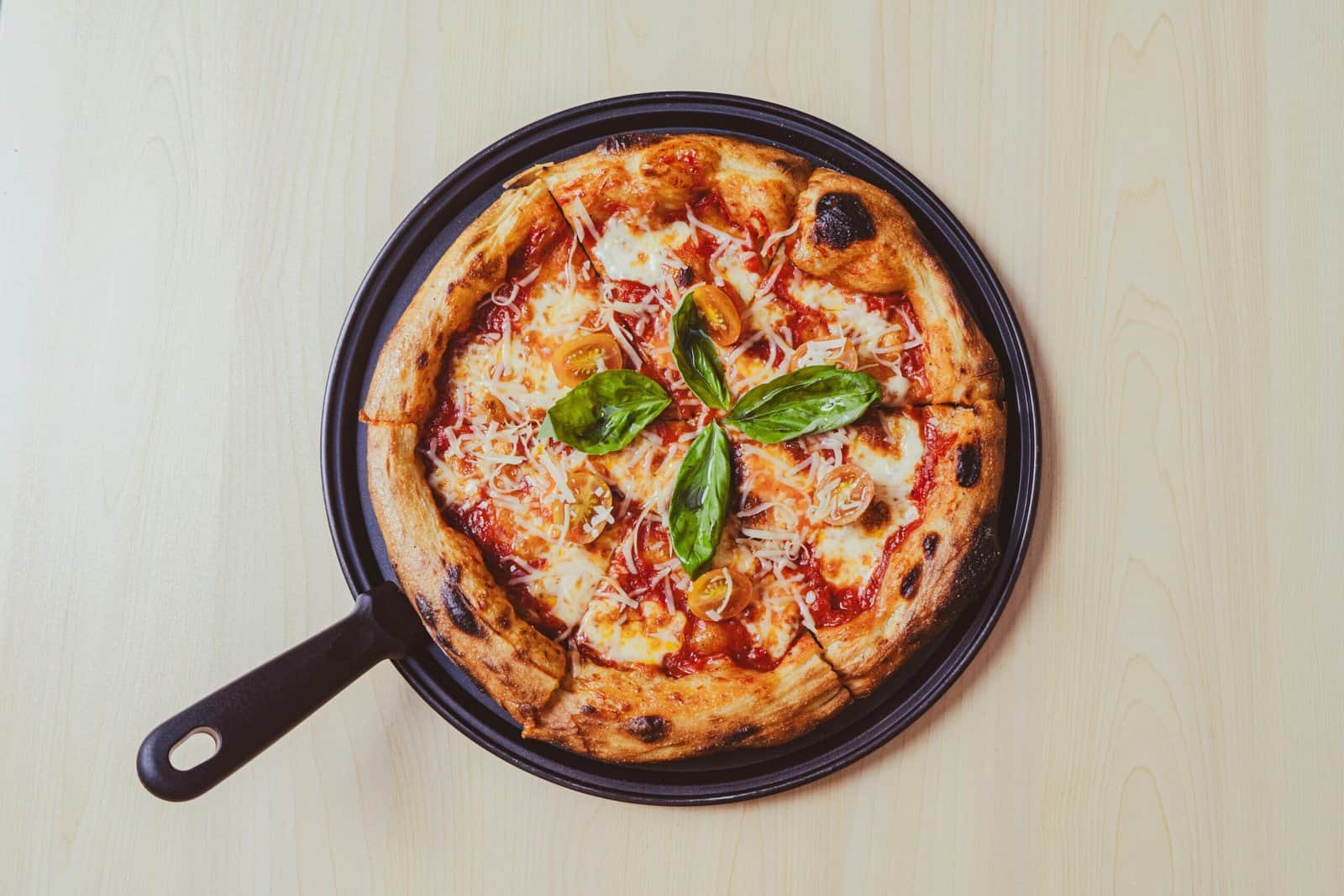
A cast iron pizza pan crisps the base of a home-oven pizza by storing a large amount of heat and dumping it into the dough on contact, which is the same effect a pizza stone provides but with better durability and no risk of cracking. The best cast iron pizza pans differ mainly in shape and depth, since a flat round, a deep dish, and a handled skillet produce quite different pizzas. For the material fundamentals, see our guide to choosing cast iron cookware.
Quick Verdict
A flat round cast iron pizza pan is the versatile default for standard thin and medium crust. Choose a deep dish pan for Chicago or pan-style pizza, a handled skillet if you want one piece that also cooks other things, and a griddle-style pan if you make rectangular or flatbread-shaped pizzas. Preheat whichever you buy. Not every pizza pan handles moisture the same way, and our note on rust on a pizza pan covers the difference.
Key Takeaways
- Cast iron stores heat and transfers it fast, which is what crisps a base.
- Preheating the pan is essential; a cold pan produces a soft bottom.
- Flat rounds suit thin crust; deep pans suit pan and Chicago styles.
- Cast iron will not crack from thermal shock the way a stone can.
- Handles make loading and unloading much easier at oven temperature.
How We Picked These Pizza Pans
We prioritized heat retention and thickness, since the whole reason to use cast iron for pizza is its ability to hold a large heat reserve and release it into the dough quickly. Thin pans lose that advantage.
We then looked at shape and depth against pizza style, because a flat round and a deep dish are not interchangeable. The pan largely determines what kind of pizza you can make.
Handling was the third filter, since a heavy pan at oven temperature needs somewhere safe to grip. Every pick is a widely available type and all descriptions are research-based rather than drawn from personal use.
Flat Round Cast Iron Pizza Pan
Why It Stands Out
A flat round pan is the direct cast iron equivalent of a pizza stone, giving an unbroken hot surface for thin and medium crusts. Preheated properly, it delivers the burst of bottom heat that produces a crisp base rather than a pale one.
Unlike a stone, it will not crack from a temperature change, so it can go from oven to counter without worry.
Worth Knowing
Flat pans have shallow or no sides, so sliding a loaded pizza on needs a peel or parchment. They are heavy at temperature. Our guide to pizza stones for home ovens covers the alternative.
Best for thin and medium crust in a home oven. Skip it if you want deep dish or easy loading.
Deep Dish Cast Iron Pizza Pan
Why It Stands Out
Deep pans with straight sides are built for Chicago and pan-style pizza, where dough is pressed up the walls and the sides fry in oil as the pizza bakes. That fried edge is the defining feature of the style and a flat pan cannot produce it.
The depth also handles generous toppings without overflow.
Worth Knowing
Deep pans are heavier and slower to preheat, and they are poorly suited to thin crust. Our guide to personal pizza pans covers smaller formats.
Best for deep dish and pan pizza. Skip it if you make thin crust.
Cast Iron Skillet for Pizza
Why It Stands Out
A standard cast iron skillet makes excellent pan pizza and has the advantage of being a pan you already use for everything else. Its sloped sides give a slightly different crust edge than a straight-sided deep dish.
For anyone unwilling to buy a dedicated pizza pan, this is the option that requires nothing new.
Worth Knowing
Skillet size caps pizza diameter, and sloped sides are less suited to true Chicago style. Our guide to cast iron skillets covers the general-purpose pan.
Best for pan pizza without buying anything extra. Skip it if you want a large or thin-crust pizza.
Handled Cast Iron Pizza Pan
Why It Stands Out
Pans with proper loop handles solve the practical problem of moving several pounds of iron at oven temperature. Getting a loaded pan in and out safely is a real consideration and handles make it far less awkward.
Some designs place handles low so they clear standard oven racks.
Worth Knowing
Handles add width, so check the pan fits your oven. They get extremely hot and need mitts regardless. Our guide to cast iron accessories covers handle covers.
Best for anyone who finds handling heavy pans awkward. Skip it if oven space is tight.
Cast Iron Griddle for Flatbread Pizza
Why It Stands Out
A flat cast iron griddle handles rectangular pizzas, flatbreads, and Detroit-adjacent shapes that a round pan cannot. The large flat surface also cooks multiple small pizzas at once.
Griddles double as general cooking surfaces, so the pan earns its storage space.
Worth Knowing
Rectangular griddles are large and heavy, and reversible models add weight. Our guide to cast iron griddles covers the format.
Best for rectangular pizza and flatbread. Skip it if you only make round pizzas.
Enameled Cast Iron Pizza Pan
Why It Stands Out
Enameled pans give cast iron heat retention without seasoning maintenance, and the coating resists the acidity of tomato sauce that would otherwise strip a bare pan’s seasoning over time.
They also go from oven to table without the appearance of a working pan.
Worth Knowing
Enamel can chip if knocked or subjected to sudden temperature swings, and it costs more. Our guide to enameled cast iron covers the tradeoffs.
Best for avoiding seasoning upkeep with acidic toppings. Skip it if you want the cheapest durable option.
Cast Iron Pizza Pans at a Glance
| Type | Pizza style | Preheat time | Best for |
|---|---|---|---|
| Flat round | Thin and medium crust | Moderate | Stone-style results |
| Deep dish | Chicago, pan pizza | Longer | Fried crust edges |
| Skillet | Pan pizza | Moderate | Using what you own |
| Handled pan | Thin and medium | Moderate | Easier handling |
| Griddle | Rectangular, flatbread | Longer | Non-round shapes |
| Enameled | Any | Moderate | No seasoning upkeep |
What to Look For in a Cast Iron Pizza Pan
Thickness and Heat Retention
Thicker iron stores more heat, which is the entire mechanism behind a crisp base. A thin pan cools when cold dough hits it and produces a soft bottom. Weight is a reasonable proxy for thickness when specifications are vague.
Shape for Your Pizza Style
Flat rounds suit thin crust, deep straight-sided pans produce Chicago and pan styles, and griddles handle rectangular shapes. The pan constrains what you can make more than the recipe does.
Size Against Your Oven
Measure your oven interior before buying, particularly with handled or rectangular pans, since a pan that does not fit with clearance is unusable. Our guide to pizza cutters covers what happens after the bake.
Bare or Enameled
Bare cast iron needs seasoning and is vulnerable to acidic tomato sauce over time; enameled avoids both at higher cost and with chip risk. Our guide to cast iron versus nonstick covers surface choices generally.
Getting a Crisp Base at Home
Preheat Long and Hot
The pan needs to reach full oven temperature before the pizza goes on, and that takes considerably longer than the oven itself takes to reach temperature. Heavy iron absorbs heat slowly, which is the same property that makes it release heat well once loaded. Rushing this step is the most common reason a cast iron pizza still comes out soft underneath.
Load Fast, Close the Door
Every second the oven door is open costs heat, and the pan surface is what you are trying to protect. Building the pizza on parchment or a peel beforehand means the transfer takes seconds rather than a minute of assembling in place.
Do Not Overload the Toppings
Wet toppings release moisture that steams the base from above while the pan crisps it from below, and the moisture usually wins. Cast iron gives you a real advantage on the bottom crust; a heavily loaded pizza gives it away again. Our guide to pizza cutters covers finishing.
Cast Iron vs Pizza Stone
Where Cast Iron Wins
It will not crack from thermal shock, it can be moved while hot, it is effectively indestructible, and it doubles as cookware for other dishes. Stones crack, absorb odors, and stain permanently.
Where a Stone Still Wins
Stones are porous and pull moisture from the dough, which some bakers prefer for a drier, crisper base. They are also lighter to handle and cheaper. The choice comes down to durability against that specific moisture-wicking property.
Caring for a Pizza Pan Specifically
A pan used mainly for pizza faces one wear pattern more than others: repeated contact with acidic tomato sauce at high heat. That strips seasoning faster than most cooking does, so a bare iron pizza pan generally needs re-seasoning more often than a skillet used for meat and vegetables.
Cheese and sugar in sauces also carbonize onto the surface at pizza temperatures. Scraping while the pan is still warm removes that far more easily than letting it cool and harden, and a chainmail scrubber handles what remains without damaging bonded seasoning.
If the maintenance sounds like more than you want, an enameled pan avoids the acid problem entirely. Our guide to cleaning cast iron covers technique.
Common Mistakes
Not Preheating the Pan
A cold pan produces a soft base. The pan needs to be fully heated before the pizza goes on.
Buying a Thin Pan
Thin iron holds too little heat to crisp a base. Weight is the useful indicator.
Using Bare Iron for Very Acidic Sauce
Tomato sauce strips seasoning over repeated use. Season regularly or choose enameled.
Ignoring Oven Dimensions
Handled and rectangular pans often do not fit standard ovens with clearance. Measure first.
Recommended Reading
- How to choose cast iron cookware
- Pizza stones for home ovens
- Cast iron skillets
- Cast iron griddles
- Seasoning cast iron
- Personal pizza pans
- pizza pans and crisper trays
Frequently Asked Questions
Is cast iron good for making pizza?
Yes, because it stores a large amount of heat and transfers it quickly into the dough, which is what crisps a base in a home oven that cannot reach pizza-oven temperatures. The pan needs to be fully preheated for that to work. Cast iron also avoids the cracking risk that comes with stones.
Cast iron pizza pan or pizza stone?
Cast iron is far more durable, will not crack from temperature changes, can be moved while hot, and doubles as ordinary cookware. Stones are porous and draw moisture from the dough, which some bakers prefer for a drier crust, and they are lighter and cheaper. Durability versus moisture-wicking is the real trade.
Do you need to preheat a cast iron pizza pan?
Yes, and it matters more than almost anything else. The crisp base comes from stored heat transferring into the dough on contact, so a cold pan simply bakes the bottom slowly and leaves it soft. Heating the empty pan in the oven before loading is the standard approach.
Will tomato sauce damage cast iron seasoning?
Acidic foods including tomato sauce do strip seasoning over repeated exposure, which is a genuine consideration for a pan used mainly for pizza. Regular re-seasoning handles it, or an enameled pan sidesteps the issue entirely at higher cost. Brief contact during a bake is less damaging than a long simmer.
What size cast iron pizza pan should you buy?
Measure your oven interior first and allow clearance around the pan, especially with handles. Beyond that, size to the pizza you actually want to make, remembering that larger cast iron gets heavy quickly. Many home cooks find a moderate size easier to handle than the largest that fits.
Can you use a regular cast iron skillet for pizza?
Yes, and it makes very good pan pizza without buying anything new. The sloped sides give a different crust edge than a straight-sided deep dish, and the skillet diameter caps pizza size. For thin crust across a larger area, a flat round pan works better.
Cast iron suits some jobs and not others. Where each cookware material performs best is worth reading before adding more.
