
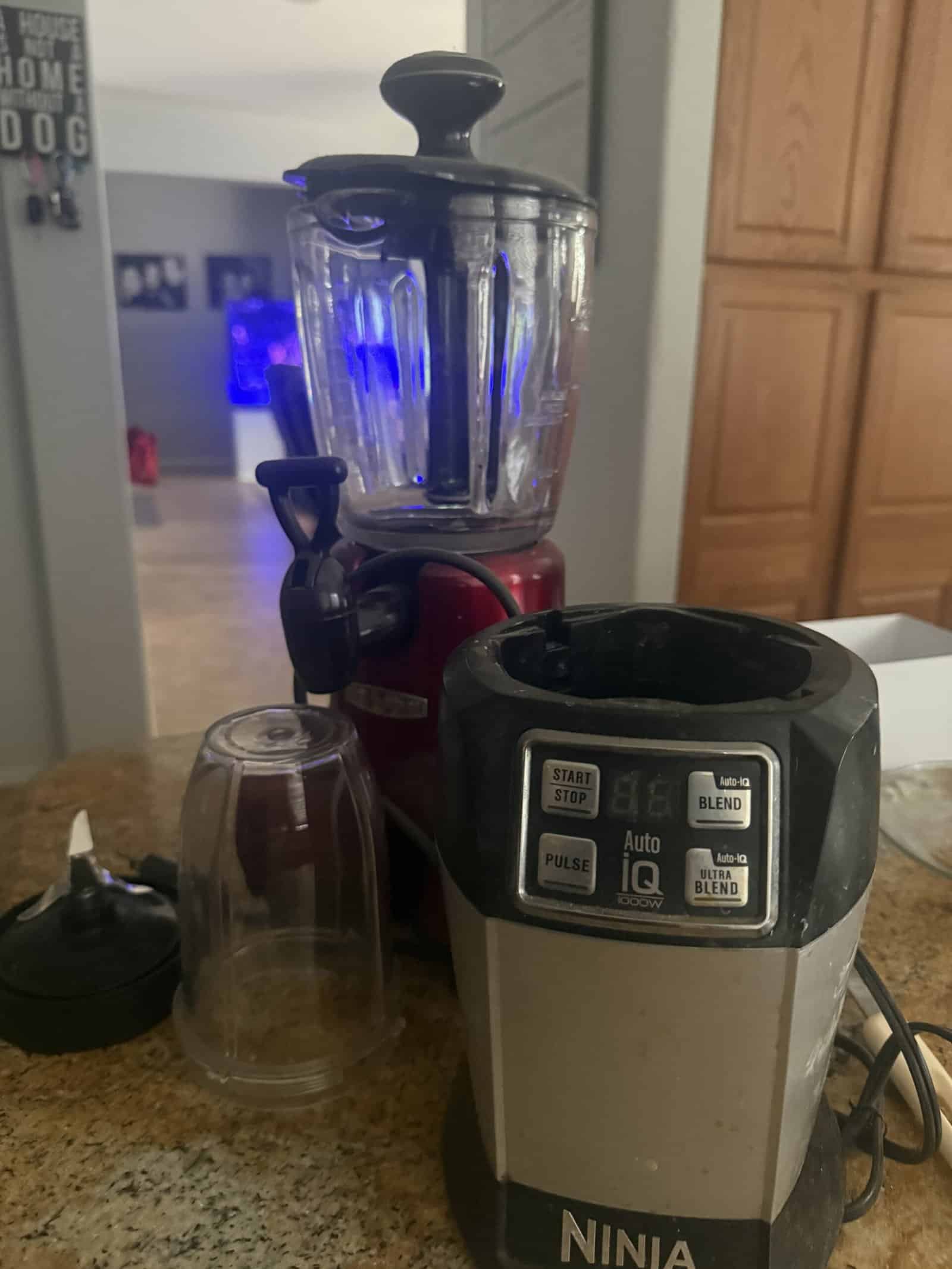
Most people buying their first blender assume the full-size one is the real purchase and a personal blender is a lesser version of it. Owning both tends to change that view, because the machine that gets used is usually the one that is quickest to clean, and on that measure the small one wins nearly every time.
Capacity matters when you need it and it is not the deciding factor for most households. Our guide to choosing a blender covers the wider category.
Quick Verdict
A personal blender suits single servings, protein shakes, and smoothies, which is what most people actually make. A full-size jar earns its place for batches, hot liquids, and anything needing real power. Owning both is common and the small one usually gets the mileage.
The Core Difference
A personal blender blends directly into a cup you then drink from, which removes pouring and washing a jar. A full-size blender blends into a jar you pour out of and then clean.
That sounds trivial and it is the whole thing. A machine with three parts to rinse gets used for a two-minute job; a machine with a heavy jar, a lid, and a blade assembly often does not.
Power is the other axis. Full-size motors handle ice, frozen fruit, nuts, and fibrous vegetables that a personal blender labors over. Our comparison of immersion and countertop blenders covers a third option.
Personal Blenders
What they do well
Single servings, protein shakes, smoothies with soft or partly frozen fruit, and anything you intend to drink rather than cook with. Cleanup is a rinse of the cup and the blade.
Where they struggle
Hard ice, large frozen chunks, nut butters, and dense fibrous ingredients. Motors are smaller and overheating protection cuts in on long runs.
Capacity
Typically one to two cups usable, which is less than the cup size on the packaging suggests, since a completely full cup gives the ingredients nowhere to circulate.
The convenience factor
Blend, unscrew, drink, rinse. That sequence is why these get used daily while larger machines sit on the counter waiting for a job worth the cleanup.
Full-Size Blenders
What they do well
Batches for more than one person, soups, sauces, crushing ice properly, nut butters, and anything needing sustained power.
Where they struggle
Small quantities. A single serving in a large jar spreads too thin for the blades to catch, which is a genuine limitation rather than a preference.
Hot liquids
Many full-size jars handle hot soup with a vented lid. Personal blenders generally should not, since sealed cups trap steam pressure.
The cleanup cost
Jar, lid, and often a separate blade assembly. Some are dishwasher safe and it is still more than rinsing a cup. Our note on cleaning a blender covers the routine.
At a Glance
| Personal | Full-size | |
|---|---|---|
| Usable capacity | 1 to 2 cups | 4 to 8 cups |
| Ice and frozen fruit | Struggles | Handles it |
| Hot liquids | Generally no | Usually yes, vented |
| Cleanup | Rinse cup and blade | Jar, lid, blade |
| Counter space | Minimal | Significant |
| Best for | Daily single servings | Batches and cooking |
Which I Actually Use
I own both, and I use the personal one nearly all the time. That was not a decision so much as what happened once both were in the kitchen.
What goes in it is protein shakes, milkshakes, and smoothies, which is exactly the workload a personal blender is built around. Single serving, blend, drink from the cup, rinse it. There is nothing in that sequence where the full-size machine would help.
The full-size one comes out when there is a reason for it, and most weeks there is not. That is not a criticism of it, it is that the jobs I actually do are the small ones.
My honest read is that if I were buying from scratch and could only have one, I would want to know what I actually make before assuming bigger is better. For me the answer would have been the personal blender, and I would have guessed the opposite beforehand.
What I cannot tell you is how a personal blender handles hot soup or nut butter, since I have never asked mine to do either. Those limits come from research rather than from things I have pushed it through.
Which Should You Buy?
Buy a personal blender if
You make single servings, drink what you blend, and want something you will actually use on a weekday morning. Protein shakes and smoothies are the core case.
Buy a full-size blender if
You cook with it, make batches, blend hot soups, or regularly crush ice. Households of more than one or two tend toward this.
Buy both if
You do both jobs and have the counter space. This is common, and worth knowing the small one will probably dominate.
Buy neither if
You mostly blend soup in a pot, in which case an immersion blender does that job with less washing up. Our roundup of immersion blenders covers it.
What to Look For
Usable capacity, not stated capacity
A 20-ounce cup does not blend 20 ounces. Ingredients need room to circulate, so plan on considerably less.
Blade and cup material
Tritan and similar plastics resist cracking better than cheaper ones, and cups take abuse from being screwed on and off daily.
Motor rating for what you blend
Frozen fruit and ice are what separate machines. If that is your routine, wattage matters more than any other spec.
How many parts get washed
This decides whether the machine gets used. Count the pieces before buying rather than after. Our roundup of quiet blenders covers another daily-use factor.
Common Mistakes to Avoid
Buying for the occasional job
People size a blender for the batch of soup they make twice a year rather than the shake they make four times a week.
Filling a personal cup to the line
Overfilling stops circulation and strains the motor. The line is a maximum rather than a target.
Sealing hot liquid in a personal blender
Steam builds pressure in a closed cup. Full-size jars vent for a reason and personal cups generally do not.
Letting residue dry
Rinsing immediately takes seconds and dried protein powder does not come off easily. Our note on blenders for smoothies covers daily use.
Recommended Reading
See our roundup of blenders under a hundred dollars, our comparison of blenders and food processors, our guide to choosing a coffee maker, and a note on food processors under seventy-five dollars, and what size blender you need.
Personal vs Full-Size Blender FAQ
Is a personal blender powerful enough?
For shakes, smoothies with soft or partly frozen fruit, and anything liquid-based, generally yes. Hard ice, large frozen chunks, and nut butters are where the smaller motor shows its limits.
Can I make smoothies in a personal blender?
That is the job they are built for. Adding liquid first and keeping frozen fruit to a reasonable proportion helps considerably, since a cup packed with frozen ingredients will not circulate.
Can I put hot soup in a personal blender?
Generally no. Sealed cups trap steam and pressure builds, which is why full-size jars have vented lids. Check your manufacturer’s guidance, and assume no unless it says otherwise.
Which is easier to clean?
The personal blender, decisively. Rinsing a cup and a blade takes seconds, while a jar, lid, and blade assembly is a small chore. That difference is why the small one gets used more.
Do I need both?
Only if you genuinely do both jobs. Plenty of households buy a full-size blender, use it for single servings, and find it awkward. Working out what you actually make first saves money either way.
How much can a personal blender hold?
Less than the cup size suggests, typically one to two cups of usable volume, because ingredients need room to move. Filling to the line stops circulation and strains the motor.
Are personal blender cups durable?
They take repeated screwing on and off, so material matters. Tritan and similar plastics resist cracking better than cheaper alternatives, and a cracked cup is usually replaceable rather than fatal to the machine.
Which should I buy first?
Whichever matches what you make most often. If that is a daily shake, the personal blender will see far more use. If you cook with it or feed several people, the full-size jar is the one that earns its place.
