
Homemade bread has no preservatives, and how you store it decides whether you get three good days or two. The trade is always the same: anything that keeps the crumb soft also softens the crust.
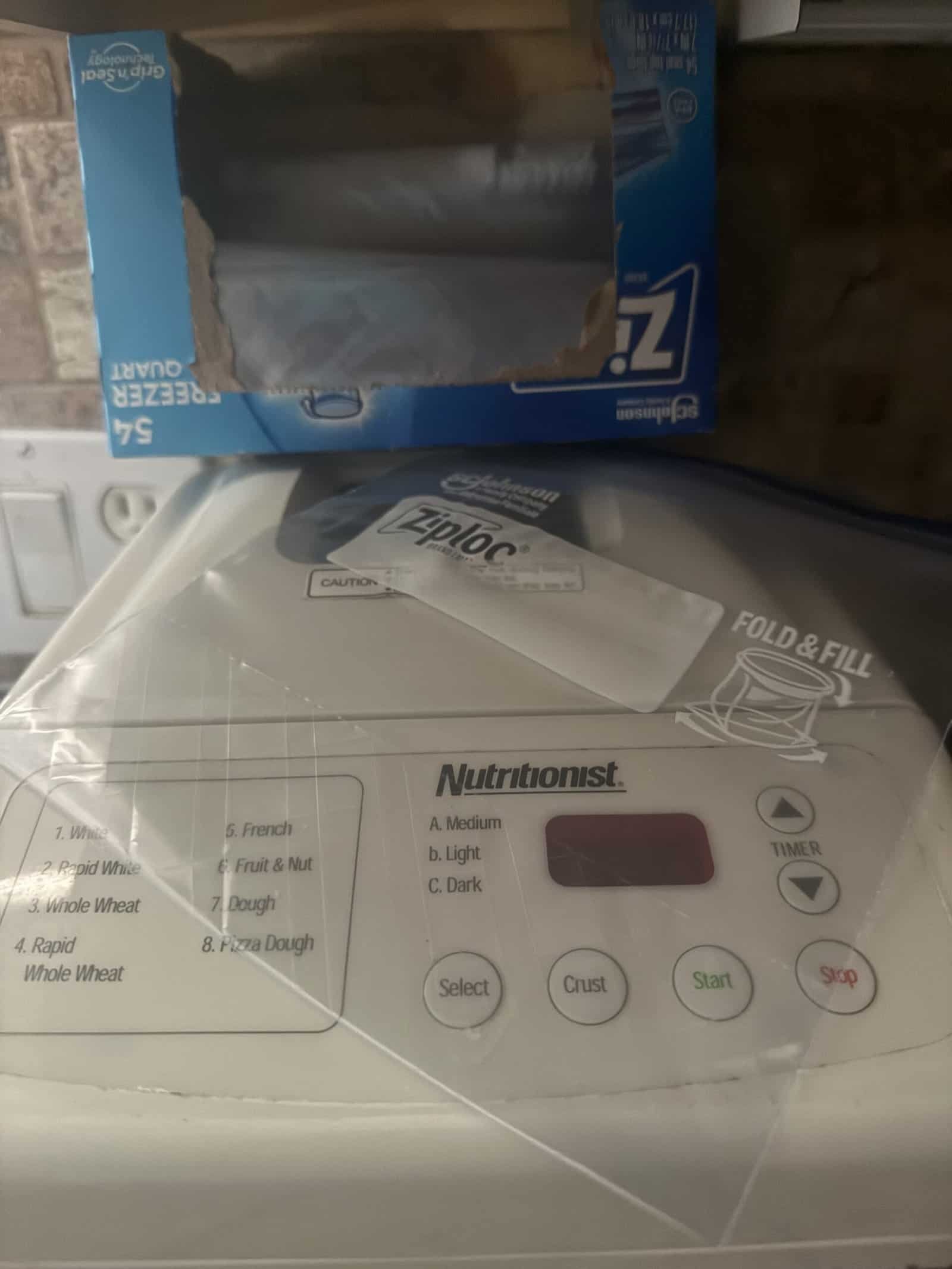
I let the loaf cool completely and then store it in a plastic zip-top bag. One loaf did go moldy on me, and that was because it sat several days and we simply took too long to eat it rather than anything wrong with the storage. Our roundup of bread boxes covers the countertop option.
Storage Methods Compared
| Method | Keeps | Trade |
|---|---|---|
| Plastic zip-top bag | Crumb soft longest | Crust goes soft |
| Cloth or linen bag | Crust crisp | Crumb dries faster |
| Beeswax wrap | Cut face, short term | Not for a whole loaf |
| Paper bag | A day, crust intact | Dries out quickly |
| Bread box | Balance of both | Takes counter space |
| Freezer | Weeks or months | Needs slicing first |
How We Picked
Selections are grouped by what each method protects, since no single option keeps both a crisp crust and a soft crumb at the same time.
Descriptions come from documented product characteristics alongside my own use of zip-top bags for machine loaves.
1. Plastic Zip-Top Bags, Best Overall
Why It Stands Out
Nothing keeps a crumb soft longer, because the bag traps the loaf’s own moisture instead of letting it escape into the room.
This is what I use. For a sandwich loaf out of a machine, soft crumb matters more than a crisp crust.
Worth Knowing
The crust softens within hours, which is the cost of the moisture retention.
The loaf must be completely cool first, since trapped steam creates condensation. Our note on using a bread machine covers cooling.
This suits sandwich bread. Skip it if a crisp crust is the point.
2. Reusable Bread Bags, Best for Regular Baking
Why It Stands Out
Sized for a whole loaf rather than forcing one into a bag meant for sandwiches, and built to be washed and reused.
A better fit means less trapped air around the loaf.
Worth Knowing
They need washing between loaves, which a disposable bag does not.
Fabric-lined versions behave more like cloth than plastic. Our roundup of food storage containers covers other reusables.
This suits weekly baking. Skip it for an occasional loaf.
3. Linen and Cotton Bread Bags, Best for Crust
Why It Stands Out
Breathable fabric lets moisture escape slowly, which keeps a crust crisp rather than turning it soft overnight.
The traditional choice for crusty loaves and the reason bakeries use paper rather than plastic.
Worth Knowing
The crumb dries faster, so a loaf is good for less time overall.
Better suited to loaves eaten within a day or two. Our roundup of machines for sourdough covers crustier styles.
This suits artisan loaves. Skip it for soft sandwich bread.
4. Beeswax Wraps, Best for Cut Faces
Why It Stands Out
Molds around the cut end of a loaf, which is where staling starts, while leaving the crust exposed.
Reusable, and useful for half a loaf rather than a whole one.
Worth Knowing
Not practical for wrapping an entire loaf.
Needs cool water washing, and heat damages the wax. Our note on organizing a kitchen covers the wider setup.
This suits a partly eaten loaf. Skip it as your only method.
5. Freezer Bags, Best for the Half You Will Not Eat
Why It Stands Out
Freezing stops staling outright, and bread frozen on the day it was baked thaws close to fresh.
The only method that genuinely extends a homemade loaf beyond a few days.
Worth Knowing
Slice before freezing, since you cannot cut a frozen loaf and thawing the whole thing defeats the purpose.
Thicker bags resist freezer burn better. Our roundup of bread slicers covers cutting evenly.
This suits baking more than you eat. Skip it if a loaf disappears in two days.
6. Bread Boxes, Best Balance
Why It Stands Out
Controlled airflow sits between plastic and cloth, holding enough moisture to keep the crumb soft without turning the crust completely soft.
No bag to wash and nothing to replace.
Worth Knowing
Takes permanent counter space, which is the real cost in a small kitchen.
Performance varies with how well it seals. Our roundup of pantry storage containers covers the styles.
This suits daily bread eaters. Skip it if counter space is tight.
Cool It Completely First
A warm loaf is still releasing steam, and bagging it traps that steam against the crust.
The result is condensation inside the bag, a soggy crust, and considerably faster mold growth because the surface stays wet.
Cooling on a rack rather than a solid surface lets air reach the bottom, which otherwise stays damp against the counter.
I let mine cool completely before bagging, and that single step does more for how a loaf keeps than the choice of bag does.
Complete cooling takes longer than people expect, and a loaf that feels cool on the outside can still be warm in the middle. Our note on why a loaf comes out dense covers the rest of the process.
Why Homemade Goes Faster
No preservatives
Commercial bread contains mold inhibitors that homemade does not.
No packaging control
Store bread is bagged in controlled conditions immediately.
Higher moisture
Machine loaves are frequently softer and wetter than shelf bread.
Real ingredients spoil
Which is the point rather than a flaw.
The Refrigerator Is the Wrong Answer
Refrigerating bread feels like it should help and it makes bread stale faster than leaving it on the counter.
Staling is starch retrogradation rather than moisture loss, and that process runs fastest at refrigerator temperatures rather than at room temperature.
A loaf in the fridge goes firm and dry within a day or two while looking perfectly fine.
The freezer works because it is cold enough to halt the process entirely rather than accelerating it.
So the useful rule is counter for a few days or freezer for longer, with the fridge being worse than either. Our roundup of bread knives covers slicing before freezing.
Slicing Changes the Clock
An uncut loaf keeps far better than a sliced one, and the reason is simply surface area.
The crust is a barrier, and every cut opens the crumb to air that dries it out from the newly exposed face inward.
Slicing as you go rather than slicing the whole loaf at once is the practical answer, since only one face is exposed at a time.
Storing a partly eaten loaf cut side down on a board is the traditional version of the same idea, and it works because the board seals the exposed face.
That is also why beeswax wrap suits a cut end specifically. It covers the vulnerable face while leaving the crust breathing, which no bag manages. Our roundup of cutting boards covers the surface.
Realistic Timelines
A plain homemade loaf in a plastic bag at room temperature is generally good for two to four days depending on the recipe and the room.
Mine went moldy at several days, which was simply longer than it should have been sitting rather than a storage failure.
Enriched loaves with milk, egg, or butter keep slightly longer because fat slows staling. Loaves with cheese or fresh additions keep less.
Warm humid rooms shorten every one of those figures, which is why the same recipe behaves differently in summer.
Baking half-size loaves more often is the other answer, and it suits a machine well since the cycle is unattended. Our note on how often you actually use a bread machine covers baking rhythm.
Reviving a Loaf That Went Firm
Bread that has gone stale rather than moldy is recoverable, and the fix works because staling is reversible in a way spoilage is not.
Starch retrogradation, which is what makes bread firm, partly undoes itself with heat, so a stale loaf warmed through comes back noticeably softer.
A brief spell in a warm oven restores much of the original texture, and a light spray of water on the crust first helps considerably.
The effect is temporary. A revived loaf goes firm again faster than it did the first time, so it wants eating the same day.
None of that applies to mold. A loaf with visible mold goes in the bin rather than the oven, since the growth extends further through the crumb than the visible spots suggest. Our note on making white bread covers the base loaf.
What to Look For
Sized for a whole loaf
Excess air around the bread works against you.
The right material for your bread
Plastic for soft crumb, cloth for crisp crust.
A seal you will actually use
A closure that annoys you gets left open.
Washable if reusable
Crumbs and moisture accumulate.
Common Mistakes to Avoid
Bagging a warm loaf
Trapped steam means condensation, a soggy crust, and faster mold.
Refrigerating bread
Staling runs fastest at fridge temperatures. Counter or freezer, not between.
Freezing a whole unsliced loaf
You cannot cut it frozen, and thawing all of it defeats the purpose.
Expecting store-bread shelf life
Homemade has no preservatives, and a few days is the normal window.
Recommended Reading
See our roundup of loaf pans, our note on storing flour long term, our roundup of bread machine pans and paddles, and a note on whether bread machines are worth it.
Bread Storage FAQ
What is the best way to store homemade bread?
Plastic keeps the crumb soft longest, cloth keeps the crust crisp. Pick based on which matters more for the loaf you baked.
How do you store yours?
Completely cooled, then a plastic zip-top bag. For a machine sandwich loaf, soft crumb matters more than crisp crust.
How long does homemade bread last?
Usually two to four days at room temperature. There are no preservatives in it, so the window is shorter than store bread.
Why did my loaf go moldy?
Usually just time. Mine did at several days, which was longer than it should have been sitting. Bagging a warm loaf also causes it by trapping moisture.
Should I refrigerate bread?
No. Staling is starch retrogradation and it runs fastest at fridge temperatures. Counter for a few days or freezer for longer.
Can I freeze homemade bread?
Yes, and it works well if you freeze it on the day you bake. Slice first, since you cannot cut a frozen loaf.
Does the loaf need to be cool before bagging?
Completely. A warm loaf releases steam, which condenses inside the bag and makes both the crust and the mold problem worse.
Do mix-ins change how long it keeps?
Yes. Cheese and moist additions shorten it. Nuts, seeds, and dried herbs change very little.
