
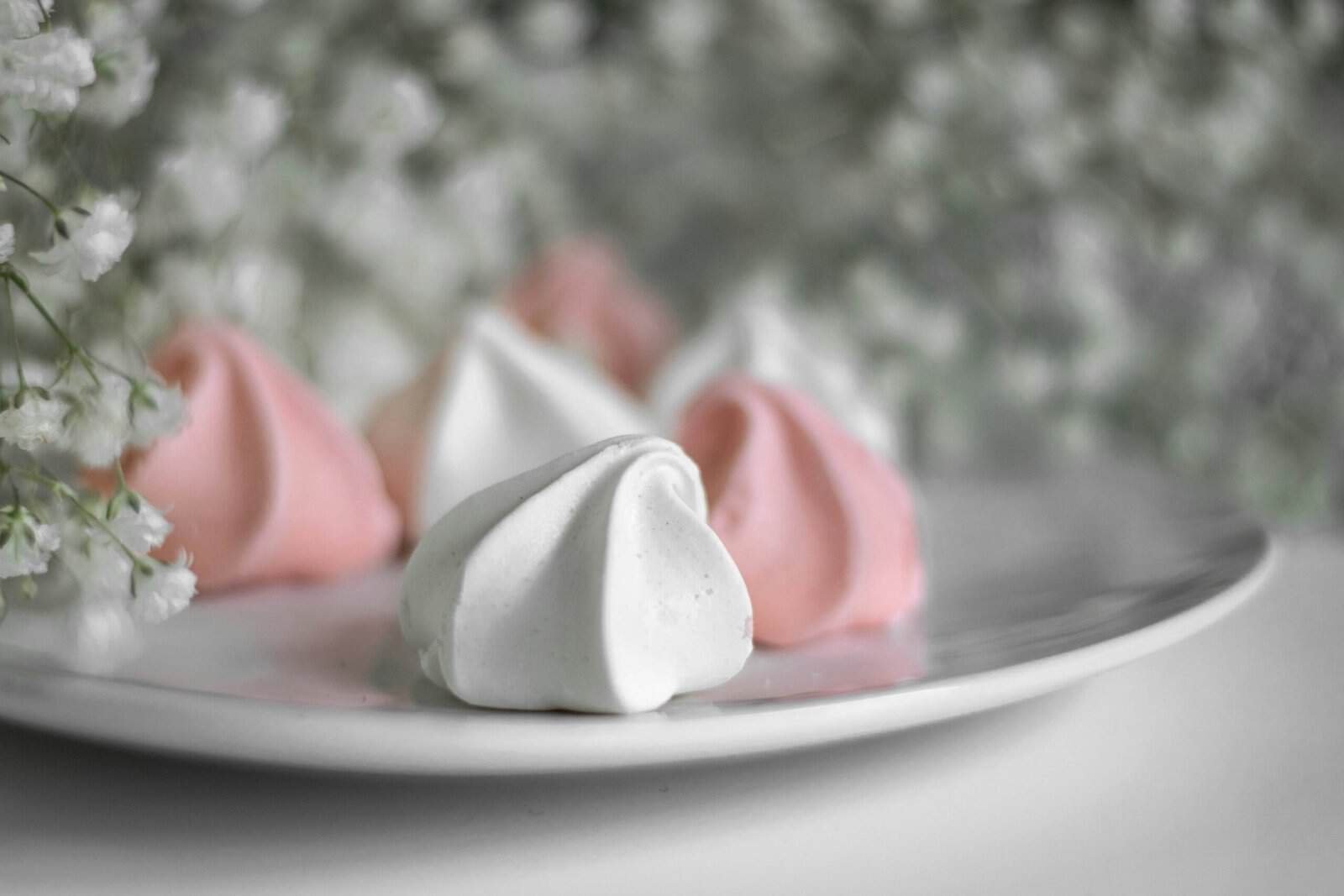
You’ve been whipping egg whites for what feels like forever, and instead of glossy, billowing peaks, you have foamy liquid that refuses to firm up. Or you got it to soft peaks and then the structure collapsed when you tried to add sugar. Or your meringue looked perfect coming out of the mixer, then deflated in the oven. Meringue failures have specific causes, and once you know what to look for, the success rate goes from “sometimes” to “almost always.”
The two most common reasons meringue won’t stiffen are trace fat contamination in the bowl, mixing tools, or eggs, and adding sugar too quickly or too early. Both undermine the protein structure that holds the foam together. Several other factors (the eggs themselves, humidity, temperature, type of sugar, type of mixer) can also affect the outcome.
This guide walks through what’s actually happening when egg whites whip into meringue, the main reasons it fails, and how to consistently get the structure you want.
Key Takeaways
- Meringue is whipped egg whites stabilized by sugar; the structure depends on egg proteins unfolding and forming a network around air bubbles.
- Any trace of fat (from yolks, oily residue on tools, or even fingerprints on the bowl) will prevent stiff peaks from forming.
- Sugar should be added gradually after the whites reach soft peaks; adding too early or too fast prevents proper structure.
- Acid (lemon juice, cream of tartar, vinegar) helps stabilize the foam, especially in humid conditions.
What’s Actually Happening
Egg whites are mostly water with proteins suspended in it. When you whip egg whites, the mechanical action does two things: it unfolds the protein molecules (denaturing them), and it incorporates air into the liquid, creating bubbles.
The denatured proteins then bond with each other around the air bubbles, forming a flexible network that holds the foam together. As you whip more, you get more bubbles, smaller bubbles, and a stronger network. The foam goes through stages: foamy, soft peaks (peaks that flop over), stiff peaks (peaks that stand straight up), and eventually over-whipped (granular, dry-looking, broken structure).
Sugar gets added during this process to stabilize the foam. The sugar dissolves into the water phase, raising its viscosity and helping the protein network resist collapse. A properly made meringue is shiny, smooth, and holds its shape without weeping or deflating.
The whole process depends on the proteins being able to form their network properly. Anything that interferes with that network (fat, sugar added too early, mechanical issues) results in failed meringue.
Reason 1: Fat Contamination
This is the most common cause of meringue failure. Even trace amounts of fat disrupt the protein network and prevent stiff peaks from forming. The whites will foam but won’t develop structure beyond loose foam.
Common sources of fat contamination:
Egg yolk in the whites. Even a speck of yolk introduces significant fat. When separating eggs, work over a small bowl first; if any yolk gets in, that batch is unusable for meringue (use it for scrambled eggs and start over with a clean bowl).
Plastic bowls. Plastic holds onto oils from previous uses, no matter how well you wash it. Stainless steel, glass, or copper bowls are far better for meringue work.
Greasy whisks or mixer attachments. Same problem as plastic bowls. Wash thoroughly with hot soapy water before whipping.
Residue from other ingredients. A bowl that recently held butter, oil, or fatty foods retains microscopic traces.
Hand cream or skin oils. Touching the inside of the bowl with hands recently moisturized or naturally oily can contaminate it.
The fix is the prevention: use clean stainless steel or glass bowls, wash with hot water and dish soap, dry completely, and wipe with white vinegar or lemon juice for extra insurance. Some bakers also rub the bowl with a cut lemon as a final defat step.
Reason 2: Sugar Added Wrong
Sugar stabilizes meringue but also interferes with foam formation. Add it too early, and you’ll prevent the proteins from unfolding and networking properly. Add it too fast, and you’ll deflate what foam you have.
The standard approach: whip the whites to soft peaks (peaks that flop over when you lift the whisk) before starting to add sugar. Then add sugar gradually, typically a tablespoon at a time, with continued whipping between additions. This lets each addition dissolve into the foam before adding more.
Common sugar mistakes:
Adding all the sugar at once. Overwhelms the foam, dramatically reduces volume, and prevents stiff peaks from developing.
Adding sugar before soft peaks. The proteins need to start unfolding and networking before sugar’s stabilizing effect helps; too early, and the proteins can’t get started.
Using granulated sugar that doesn’t dissolve. Undissolved sugar produces gritty meringue and can cause weeping (liquid leaking from the foam) later. Superfine (caster) sugar dissolves more reliably than standard granulated sugar. Some bakers grind regular granulated sugar in a food processor to get a fine consistency before use.
To check that your sugar has dissolved properly, rub a small amount of meringue between your fingers. It should feel smooth, not gritty.
Reason 3: The Eggs Themselves
Egg quality and condition affect meringue success.
Egg age. Older eggs whip to a larger volume but with a somewhat weaker structure. Very fresh eggs (within a few days of laying) have tighter, thicker whites that whip more slowly but produce more stable meringue. Slightly older eggs (a week or two old) often produce better meringue volume.
Egg temperature. Room temperature egg whites whip to a greater volume than cold whites because the proteins move more easily. But cold whites are easier to separate cleanly without breaking yolks. Common technique: separate the cold, then let the whites warm to room temperature for 30 minutes before whipping.
Pasteurized whites from cartons. Carton egg whites sometimes don’t whip as well as fresh ones because the pasteurization process partially denatures the proteins. They work but may take longer and produce less volume.
Reason 4: Humidity
Meringue is sensitive to atmospheric moisture. Humid air interferes with foam stability, and humid conditions can prevent meringue from drying properly (for baked meringue) or cause it to weep and collapse.
If your meringue refuses to stiffen on a particularly humid day, the humidity may be the issue. There’s not much to do about it short of air conditioning. Bakers who do meringue work professionally often avoid the most humid weather for these products.
Adding more acid (lemon juice or cream of tartar) provides some protection in humid conditions.
Reason 5: Acid (Too Little or None)
A small amount of acid stabilizes meringue. Most recipes call for either cream of tartar (a dry acid) or lemon juice. The acid:
Helps the proteins unfold and form a stronger network. Increases stability against humidity. Improves the texture of the final meringue. Reduces the tendency to weep.
Without acid, you can still make meringue, but it’ll be less stable and more prone to issues. The acid is cheap insurance, about 1/8 teaspoon of cream of tartar per egg white, or a teaspoon of lemon juice per few whites.
For more on chemistry-based baking interventions, see our guide on baking soda vs baking powder, different leaveners with their own chemistry requirements.
📑 Recommended Read: Hand-whisking meringue takes far longer and is much harder than using a stand mixer with the whisk attachment, especially for stiff-peak applications. Check out our tested breakdown of the stand mixers under 200 to find machines that handle meringue, dough, and frosting reliably.
Reason 6: Mixer Speed
The speed at which you whip affects the foam quality.
Starting too fast. Whipping at high speed from the start incorporates large bubbles that aren’t as stable as smaller ones. The result is less stable foam.
Better approach. Start at low or medium speed until the whites are foamy, then increase to medium-high. This produces smaller, more uniform bubbles and a more stable foam.
Don’t over-whip. Past stiff peaks, the foam starts to break down. Over-whipped meringue looks granular and dry, eventually separating into clumps and liquid. Once over-whipped, you can’t recover it; start over.
Different Meringue Types
Three main meringue styles exist, each with different stability and uses.
French meringue. The simplest form. Egg whites are whipped with sugar, gradually added. Least stable of the three, but the easiest to make. Used for soft toppings, soufflés, and as a folded-in component. For background on how sugar dissolves into baked goods more broadly, see our companion article on why cookies spread too much.
Swiss meringue. Egg whites and sugar are warmed together over a water bath before whipping. The warming dissolves the sugar completely and partially cooks the proteins, producing a more stable foam. Used for piping, smooth buttercream, and decorative work.
Italian meringue. Hot sugar syrup is poured into whipped whites. The hot syrup cooks the proteins and creates a very stable, glossy meringue. Used for marshmallows, buttercream, and applications needing maximum stability. The most technically demanding of the three.
If your French meringue keeps failing, switching to Swiss or Italian sometimes solves the problem because the sugar-handling is more controlled.
How to Tell If Your Meringue Is Done
Several visual and texture cues indicate properly whipped meringue.
Stiff peaks. When you lift the whisk, the peaks stand straight up without flopping over.
Glossy appearance. The surface looks shiny and smooth, not dull or grainy.
No grit when rubbed between fingers. The sugar has dissolved fully.
Holds shape inverted. The classic test is to turn the bowl upside down briefly. Properly whipped meringue stays in place; under-whipped meringue starts sliding.
The bowl can be tilted without movement. Less dramatic than the inversion test, but the same principle.
Why Meringue Weeps (Liquid Pooling)
If your finished meringue starts releasing liquid (called “weeping” or “syneresis”), several causes are likely:
Under-mixed sugar. Undissolved sugar attracts moisture later, leading to liquid release.
Over-whipping. Past optimal, the foam structure starts breaking down and can’t hold water.
Humidity. The meringue absorbs moisture from humid air and weeps.
Sitting too long. Even perfect meringue eventually weeps. For best results, use meringue soon after making it.
Improper baking. For baked meringue, the structure needs to set properly. Under-baked meringue weeps; over-baked meringue cracks and weeps.
Common Mistakes and How to Avoid Them
Using a plastic bowl. Switch to stainless steel or glass.
Skipping the acid. A small amount of cream of tartar or lemon juice significantly improves results.
Adding sugar too fast or too early. Wait for soft peaks, then add gradually.
Not testing for grit. If sugar isn’t dissolved, the meringue will be gritty and prone to weeping.
Starting at high speed. Start low to medium, then increase. Builds better foam structure.
Trying again with the same contaminated bowl after a failure. If the first batch didn’t stiffen, the bowl may have been the issue. Wash thoroughly with vinegar, wipe before trying again.
Making meringue on a humid day for a critical application. If you have weather flexibility, pick a drier day.
Frequently Asked Questions
Can I rescue meringue that won’t stiffen? Sometimes. If you suspect under-whipping, keep going. If you suspect fat contamination, no, the foam won’t develop regardless of how long you whip. If you suspect humidity, adding more acid (extra cream of tartar) might help; otherwise, probably not. Starting over with a clean bowl and fresh eggs is often faster than trying to rescue.
Why does my meringue collapse after baking? Several possibilities: under-whipped before baking (insufficient structure to hold up), over-baked (structure dried out and cracked), or moved/cooled too suddenly after baking. Stable meringues come out of the oven and cool gradually.
Can I make meringue without a mixer? Technically, yes, but it takes a long time of vigorous hand whisking. The arm fatigue alone usually means people stop before reaching stiff peaks. A hand mixer is far more practical; a stand mixer is best.
Why does my meringue look grainy? Usually, undissolved sugar. Use superfine sugar, add gradually, and check by rubbing between fingers. If you can feel grit, keep whipping; the sugar isn’t fully dissolved yet.
Can I freeze meringue? Baked meringue freezes reasonably well. Unbaked meringue doesn’t freeze well; the structure deflates when thawed.
Why does meringue go brown in the oven? Sugar caramelizes at high temperatures, and the egg proteins brown through Maillard reactions. Most meringue is baked at low temperatures (a slow oven) specifically to dry without browning. Higher temperatures produce golden meringue with caramelized notes; lower temperatures produce white meringue.
More Kitchen Guides
Recommended Reading
See also our guides to why pie crust gets tough, and why room temperature butter matters.
See also the comprehensive kitchen organization methodology.
